




CES 2021: Magna Execs Warn of Impending EV Complexities
The growing mix of architectures, motor specs, power levels and drivelines presents challenges to suppliers and OEMs.
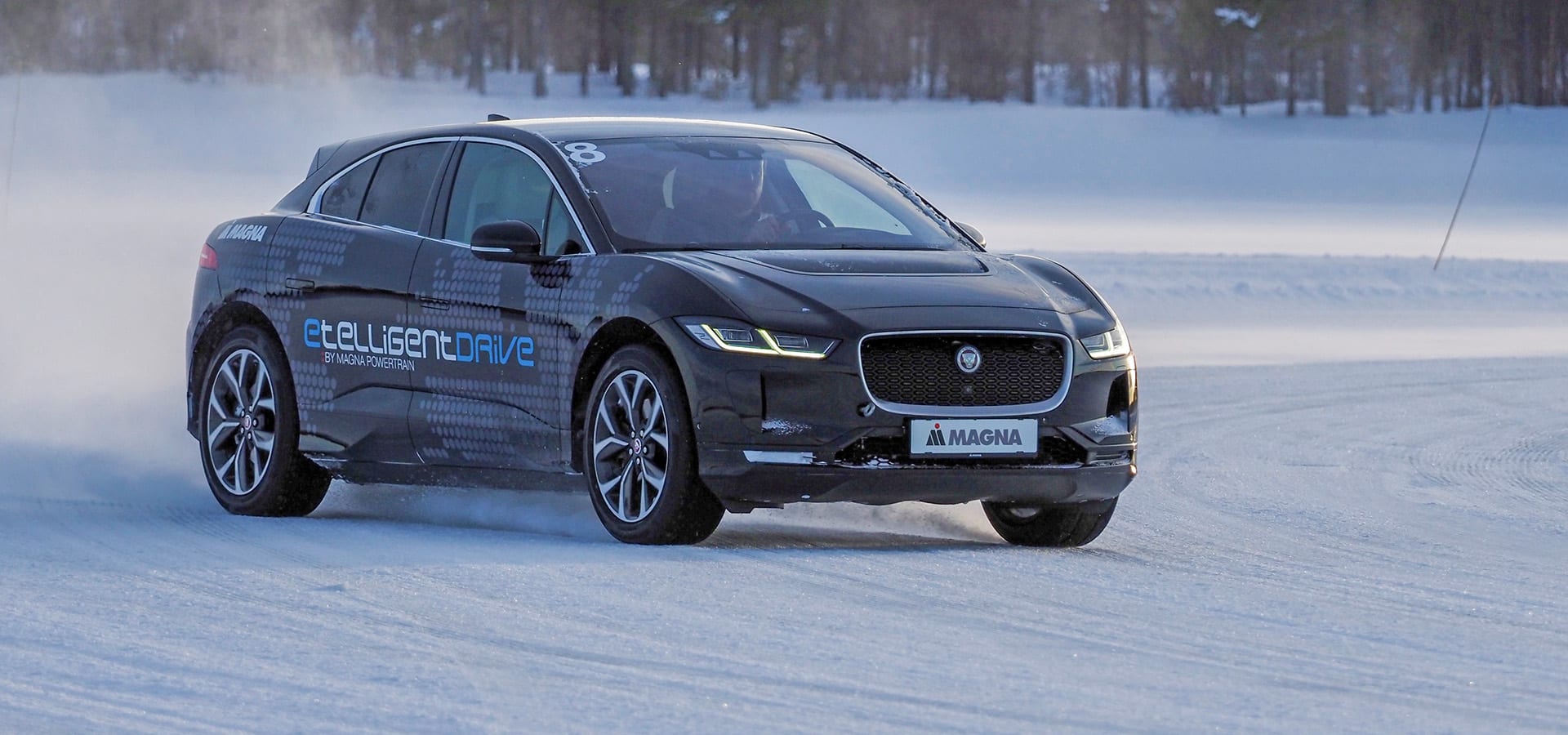
The industry’s transition to electrified, and ultimately fully electric, vehicles is bringing far greater complexity in product development and technology-management overall, according to Magna Powertrain executives, speaking in an online media session during the 2021 Consumer Electronics Show (CES).

Magna’s traditional strengths in lightweight structures, driver-assistance sensor technologies, active aerodynamic systems, powertrain/drivelines and full-vehicle assembly serve as the foundation for the company as it moves further into vehicle electrification and automated-driving solutions, noted Sherif Marakby, the company’s recently hired executive VP. Markaby is a veteran leader of Ford’s hybrid and EV programs and headed the automaker’s Team Edison autonomous R&D group before joining Magna.
But even global Tier-1 suppliers can’t go it alone: “Partnerships are very critical,” Marakby told the CES audience, briefly noting Magna’s current strategic relationships with LG (e-motors, inverters, batteries), Innoviz Technologies (lidar) and Uhnder (digital radar), and China’s HASCO (e-drive systems). Even with the alliances, however, the market’s shift from today’s combustion-engine predominance to a fully electric future presents significant challenges for engineers at all levels, indicated Ron Frawley, head of strategy for Magna’s Powertrain Group.
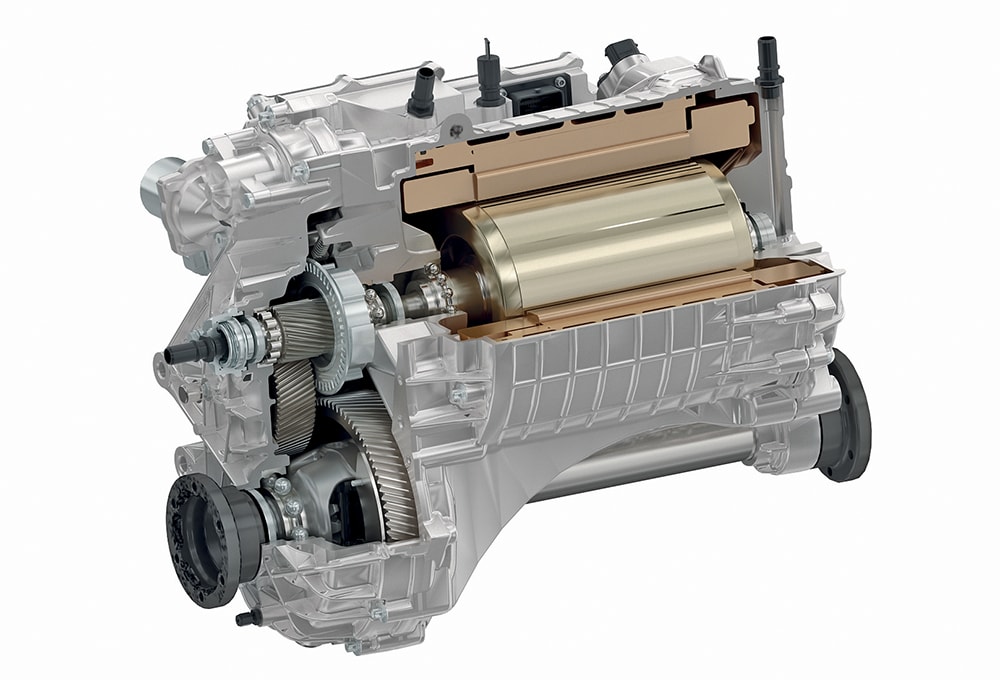
“The ‘traditional’ powertrain market [as of 2021] has eight to 10 basic powertrain configurations,” Frawley noted, with the total of engine/transmission combinations declining due to air-quality regulations worldwide. He cited a Magna forecast for 2030 in which the total slice of electrified systems is expected to be over 50% of the powertrain mix. Most of that will be hybrids of various types; full-EVs will be 12-16% of the mix. Non-hybridized ICEs will still represent about 23% of powertrains in 2030, according to Magna.
This protracted and costly transition “brings a lot of complexity and proliferation into the picture,” Frawley explained. It starts with architectures to support plug-in hybrid, hybrid-electric and electric vehicles, on top of the surviving legacy architectures. Added to that are e-motors “in a wide variety of power classes.” Magna is getting requests from OEMs for power levels from 15 kW up to 300 kW, with operating voltages from 48V to 800V. The motors can be positioned in five different places on the vehicle, from the accessory drive (BSG) to an electrified axle or even a wheel-end drive.

“The advent of electric all-wheel drive and four-wheel drive come into play as well,” he said. “This means that many vehicles on the road will have more than one e-motor and more than one inverter. And more than one electric powertrain system within the vehicle. A lot of complexity is being added.” Magna is seeing “as many as 40 additional powertrain configurations that are being asked of us by our OEM customers.”
Frawley asserted that e-motors and inverters play a significant role in the economics of electric powertrain systems, with the two components delivering “as much as 70% of the value-add” in an e-drive system, he said.
More From SAE Media Group
Automotive Engineering
Actuating Hybrid and EV Efficiency
Off-Highway Engineering
Mercedes-Benz Details All-New Platform for EV Vans
Automotive Engineering
BorgWarner Demos Next-Step Electrification Components
Automotive Engineering
Millbrook’s New California EV Testing Facility
Automotive Engineering
Suppliers Prepare for a Drop in EV Market Share
Automotive Engineering
Do AWD EVs Need Two Motors? GKN Does the Math.
Automotive Engineering
Top Transmission Engineers Project Big Future for E-Axles, Advanced Motors
Automotive Engineering
SAE Launches New Standards Document to Rate Power of Electrified Vehicles
Automotive Engineering
Mahle Prepares for First Passenger Car E-Motor Application
Automotive Engineering
First Electrified Dodge Arrives for 2023 MY
Automotive Engineering
Toyota Stretches SUV Line-Up with World Debut of Grand Highlander
Automotive Engineering
SAE WCX 2022: Driveline Flexibility Is Key for Electrification
Automotive Engineering
Hyundai Reveals Market-Sized 2022 Tucson SUV
Automotive Engineering
BorgWarner Integrated Drive Module in Testing Phase
Automotive Engineering
GKN Demos ETwinster, World’s-First 2-Speed Torque-Vectoring BEV Transmission
Automotive Engineering
Schaeffler Heads Back to CES with New Acquisition, Capabilities
Automotive Engineering
Making the Torque-Transfer Transition
Automotive Engineering
BMW Brings EV Motor Production to Steyr in Austria
Off-Highway Engineering
Transmission Talk: Eaton Discusses Its Portfolio of Commercial Gearboxes
Automotive Engineering
E-Axles Speed Electrification
Automotive Engineering
Mazda’s 2024 CX-90 Offers Turbo I-6, PHEV Propulsion
Automotive Engineering
Tuning the 2024 Corvette E-Ray for Exceptional Drivability
Automotive Engineering
Gearing Dana for the EV Future
Automotive Engineering
ICE and Hybrid-Electric Propulsion Show Staying Power
Automotive Engineering
Electrification Brings Supplier Value Closer to Home
Automotive Engineering
Lincoln Aviator: New Rear-Drive Platform, Plug-In Option
Automotive Engineering
Toyota, Mazda, Subaru Agree Carbon Is ‘Enemy' with Internal Combustion Engine Announcement
Automotive Engineering
Valeo Debuts New Lidars, EV Tech at CES 2022
Automotive Engineering
Tension and the Electric Takeover
Automotive Engineering
Seeking More Traction in Budding EV Market, VW Adds AWD to ID.4
Top Stories
NewsRF & Microwave Electronics
 Microvision Aquires Luminar, Plans Relationship Restoration, Multi-industry Push
INSIDERAerospace
 A Next Generation Helmet System for Navy Pilots
INSIDERDesign
 New Raytheon and Lockheed Martin Agreements Expand Missile Defense Production
INSIDERMaterials
 How Airbus is Using w-DED to 3D Print Larger Titanium Airplane Parts
NewsPower
 Ford Announces 48-Volt Architecture for Future Electric Truck
ArticlesAR/AI

Webcasts
Electronics & Computers
 Cooling a New Generation of Aerospace and Defense Embedded...
Automotive
 Battery Abuse Testing: Pushing to Failure
Power
 A FREE Two-Day Event Dedicated to Connected Mobility
Unmanned Systems
 Quiet, Please: NVH Improvement Opportunities in the Early Design Cycle
Automotive
 Advantages of Smart Power Distribution Unit Design for Automotive &...
Energy
 Sesame Solar's Nanogrid Tech Promises Major Gains in Drone Endurance