




2019 Vehicle Technology Review
Reviewing the latest tech applications in the automotive space and the trends they’re serving.

With massive shifts looming in the automotive engineering space – the titanic trio of Autonomy, Mobility and Electrification (AME) – it’s easy to forget that the pace of innovation continues unaltered in the here and now. We’ve reviewed the latest technologies on the newest OEM models and how they point to current trends in the automotive landscape. Though the AME macro trends represent the majority investment in the automotive space, and work on traditional engineering projects including new powertrains continues, small features that resonate often serve as a guide-posts to what’s next.

Parts from sustainable materials
To reduce a vehicle’s overall environmental impact, sustainable materials are being implemented (slowly) in manufacturing. Substituting for a material such as carbon fiber, this can mean not just sequestering but actively capturing CO2 while source materials are grown. The new Porsche 718 Cayman GT4 Clubsport (shown above) is the first production track-day/race car to feature body parts made of a natural-fiber composite material, Porsche claims. The outer door panels and rear wing of the GT4 Clubsport are made of an organic-fiber mix, sourced from agricultural by-products including flax and hemp fibers, exhibiting properties similar to carbon fiber in its weight and stiffness.

BMW’s i3 uses eucalyptus (one of the world’s fastest-growing tree species) for sections of the dashboard and trim, and Kenaf (a sustainably grown and harvested type of hemp) to reinforce the dashboard and door trims. A similar material from International Automotive Components called “FiberFrame” is used as a weight-saving sunroof frame of the Mercedes-Benz E-Class.
Biometric control
The keyless car fob has become ubiquitous and using a smartphone in its place recently became an option. Soon, however, a dedicated object needed to gain access and engage a vehicle might be passé, as the age of biometric control is here. Hyundai is offering a fingerprint scanner in select markets on the 2019 Santa Fe that allows owners to unlock doors and start the vehicle. The system also can store driver preferences automatically, adjusting seating positions, connected car features and side-view mirror angles.
Sensors located on the Santa Fe’s door handle and ignition button send the encrypted fingerprint information to the fingerprint controller inside the vehicle. The scanner uses capacitance recognition in various parts of the fingertip to prevent forgeries and faked fingerprints. Hyundai claims the technology’s chance of misrecognizing another person’s finger print as the driver’s is only 1 in 50,000, making it five times more effective than conventional vehicle keys, including “smart” key fobs.
Can AWD stop the sedan slide?
The unprecedented marketplace shift away from sedans and into SUVs is not just about all-wheel drive (AWD). An SUV’s profile, ride height and driver H-point often bring perceived traits such as visibility and capability, along with a more practical and functional package for transporting people and stuff. But that hasn’t stopped manufacturers from adding part-time AWD systems to long-running sedan nameplates for additional all-conditions traction, while minimizing the fuel-efficiency penalty.
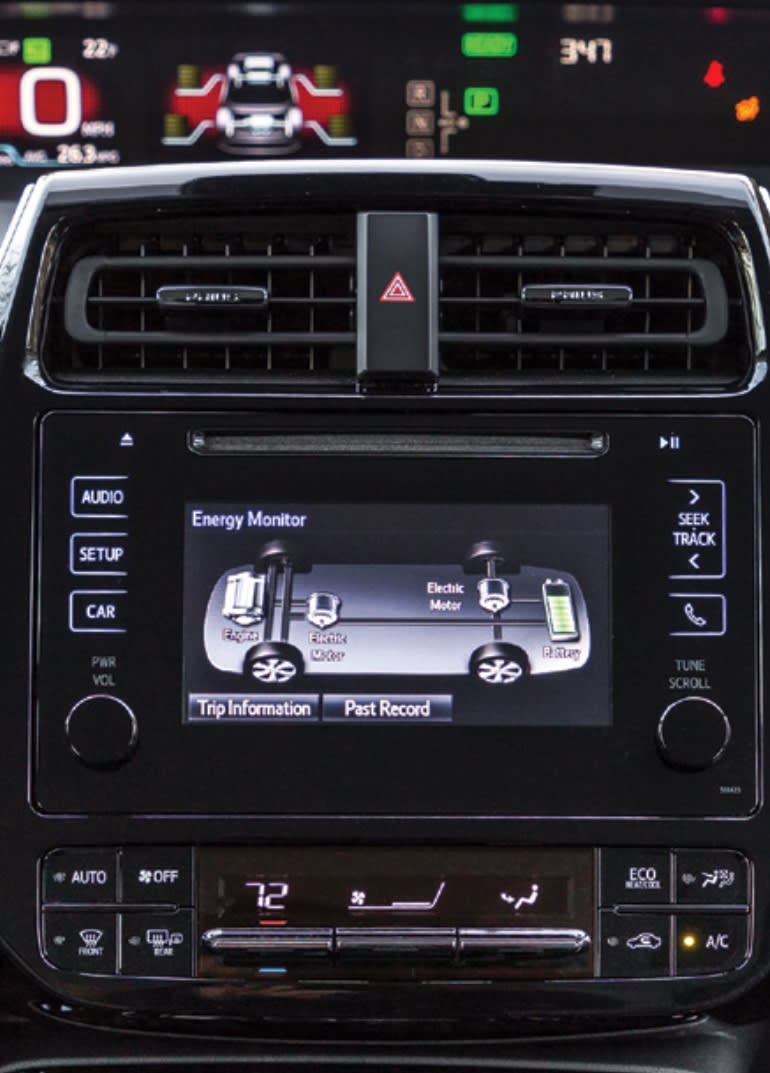
The all-new 2019 Nissan Altima and 2019 Mazda 3 are both adding mechanical part-time AWD to their option sheets, but one of the slickest new part-time AWD applications is debuting on the 2019 Toyota Prius. The new e-AWD system installs Toyota’s first-ever magnet-less induction-style electric motor (7 hp/5 kW; 40 lb·ft/54 N·m) within the independent rear suspension of the Prius to provide full-time AWD assist from 0-6 mph (0-10 km/h), then part-time assist up to 43 mph (69 km/h). With no mechanical connection to the FWD powertrain, the e-AWD setup adds only 150 lb (68 kg) to the Prius, while still permitting an EPA-estimated rating of 50 mpg combined.
Trick tailgates expand truck demographics
As domestic production continues to rely more on profit-generating pickup trucks, expanding their demographic is a savvy business goal. Ford introduced its first tailgate step in 2008 on its SuperDuty pickups, with an updated, enclosed design debuting on the 2015 F-150. This has recently morphed into a mechanical engineering tail-gate tour-de-force that is expanding the usability and appeal of the traditionally trade-focused vehicles.
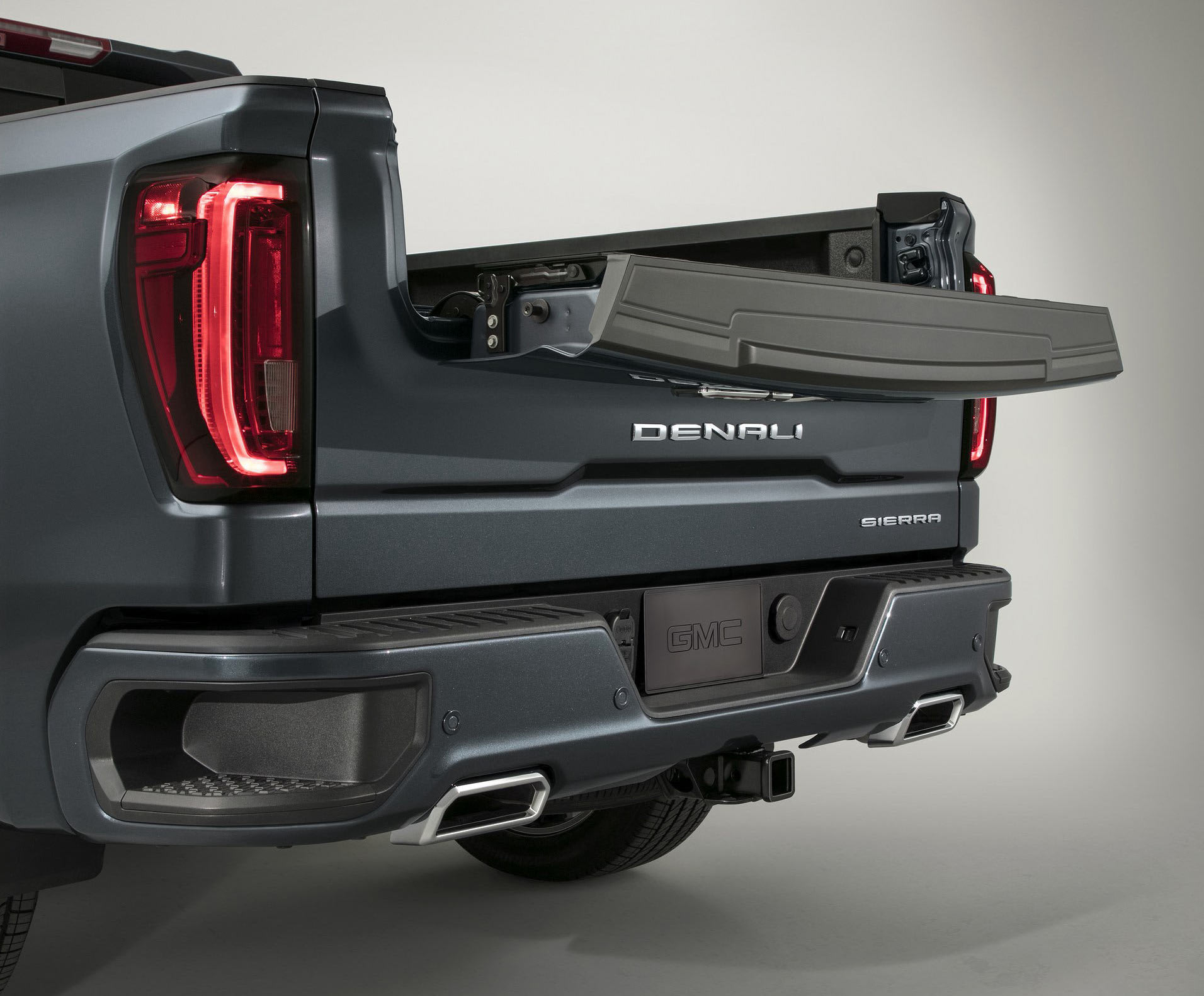
The 2019 Chevy Silverado and Silverado HD feature fully-powered (lowering and closing) tailgates. The 2019 Ram 1500 pickup features a swing-gate function similar to what debuted on the 2006 Honda Ridgeline, but configured in a 60/40 barn-door arrangement. One of the craftiest so far is the 2019 GMC Sierra MultiPro six-way tailgate that offers a flip-up “load stop” spoiler, and an “inner gate” that permits greater proximity to the load floor and converts to a tailgate step, a second-tier loading platform and/or a horizontal work shelf.
Quiet in the age of voice control
The quest for quieter interiors has been a goal since the industry’s inception, but now there’s new motivation to control cabin noise: voice control. The smart-device revolution taking place with Amazon’s Alexa, Apple’s Siri and Google’s Assistant is already taking hold in the car, with some Alexa functionality already available in models from BMW, FCA, Ford, Hyundai, Jaguar, Mercedes-Benz, Toyota, and Nissan.
As consumers grow to expect more consistent performance of voice commands, a quiet cabin will become a more important enabler for this functionality. A host of NVH materials, techniques and electronics are evolving constantly throughout the automotive space, and Ford recently demoed several advances for its upcoming 2020 Explorer. These including unique materials for body cladding, advanced Active Noise Cancellation for hybrid models and a dual-wall engine shroud to attenuate powertrain NVH close to its source.
Electronic soft-roader capabilities
Traditional off-road vehicles continue to offer robust, full-time, mechanical 4x4 systems that typically provide low-range transfer cases and mechanically locking differentials to enable extended rock-crawling capability. However, the latest crop of what have been traditionally been labeled “soft-roaders” are adding digital tools to more fuel-efficient part-time AWD set-ups to provide impressive on-demand capabilities, widening the sales base for already popular SUVs.
Upper trims of the 2019 Chevy Blazer make smart use of the new twin-clutch rear-drive unit (RDU) in Off-Road mode to provide a low-speed, locking-type function with relaxed yaw and traction-control parameters to ably handle occasional loose or slippery terrain. Honda’s new Passport and Pilot/Ridgeline apply smart controls to dedicated modes within its i-VTM-4 AWD system, keenly apportioning torque and the brakes to enable surprising off-road prowess. Toyota’s new 2019 RAV4 uses a sophisticated AWD Integrated Management (AIM) system and condition-specific Multi-Terrain modes to provide surprisingly off-pavement grip to match the tougher looks of the new Adventure trim.
Fuel cells quiet down

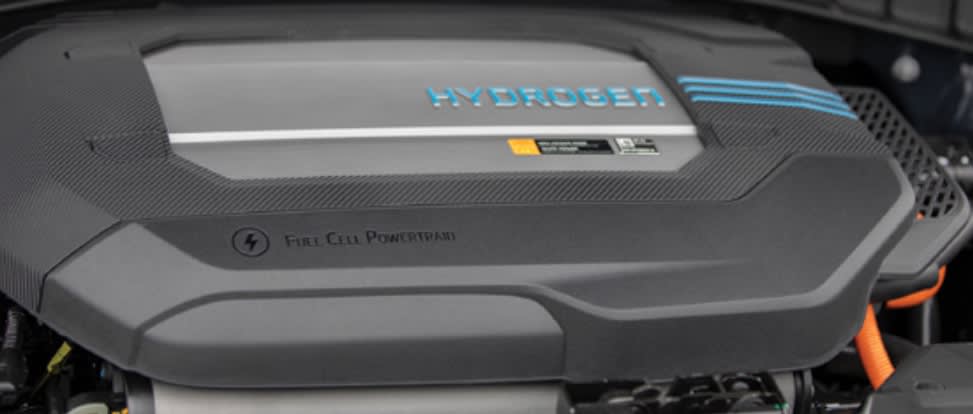
Three manufacturers currently offer limited availability of production fuel-cell electric vehicles (FCEV): Honda and Toyota with their Clarity and Mirai sedans, and Hyundai with its new Nexo SUV. Of the three machines, the newest Nexo not only optimizes its SUV packaging, but operates without the whirring and clicking “haunted house” noises of its competitors. Unless told it was a fuel-cell vehicle, you’d think the nearly silent Nexo was just another BEV, making it an FCEV milestone.
According to Dr. Bo Ki Hong, fuel-cell research fellow for Hyundai Motor R&D, the fuel-cell process itself is silent, so any powertrain noises arise from supporting systems such as the intake pump, which provides more air to the stack under higher demand. The Nexo’s new integrated air-processing system manages this without any noticeable racket from the driver’s seat. Hyundai says one of its next goals is to scale up the technology for commercial applications, including commercial trucks and buses, which may soon become the tech’s first large-volume applications.
Head-up displays preview AR prompts
Head-up displays (HUD) appeared in light-duty vehicles in the late ‘80s, but a new crop of brighter and customizable displays will prime the market for the next phase of driver assistance: augmented reality (AR). New full-color HUD entries from Acura (on the 2019 RDX) and Jaguar (2019 I-Pace, 2020 XE), provide customizable data to supplement driver info with minimal distraction, and Lincoln now boasts the largest and brightest full-color HUD, available on its Continental and Navigator models.
The new Lincoln display is driven by a digital micro-mirror device (DMD), a computer chip housing 400,000 tiny movable mirrors to help project a brighter image unaffected by polarized sunglasses. Selected info is only displayed when relevant, and as its importance increases (i.e., for an upcoming navigation prompt or incoming call), the physical placement and size of the information presented becomes more prominent. The next step is adding AR cues to the HUD, which supplier Continental has been previewing for several years and is due in-market soon.
Camera magic

As camera and display technologies have become sharper and more compact, the “view” from the driver’s seat is constantly improving. Surround-view displays have become common and camera-based rearview mirrors – which permit unobstructed aft vision regardless of passengers and cargo – are already available on models from GM, Toyota, JLR and Nissan. Ford’s F-150 Raptor has an off-road camera that lets you see what’s directly in front of the vehicle, while the Range Rover Evoque’s Ground View overlays the vehicle’s chassis on a similar live display to show where you might contact obstacles in your path.
Applying a sort of movie magic, the Transparent Trailer View available as part of the ProGrade Trailering System on the 2020 GMC Sierra HD lets you “see” right through a trailer you might be towing. When paired with an available accessory camera mounted on the rear of the trailer, the Sierra HD uses the feed from the tailgate camera and some innovative processing to create an unobstructed rearward “view” as if the trailer were transparent. The feature should provide a huge boost in confidence when navigating with a large trailer.
More From SAE Media Group
Automotive Engineering
Toyota Stretches SUV Line-Up with World Debut of Grand Highlander
Autonomous Vehicle Engineering
AV Powers Bring May Flowers
Automotive Engineering
2026 Toyota RAV4 Review: All Hybrid, All the Time
Automotive Engineering
OEMs Deny Suppliers the Limelight
Automotive Engineering
Steel Stands Tall
Automotive Engineering
Getting a Grip on AWD Efficiency
Automotive Engineering
2019 Ford Ranger XL STX
Automotive Engineering
Flex4 System Leads Magna's Wave of New Fuel-Saving Technologies
Automotive Engineering
2024 Lexus GX Ready for Off-Road Adventure with New Platform, E-KDSS
Automotive Engineering
Democratizing Hybrid Technologies
Automotive Engineering
Steel Red-hot for Weight Reduction
Automotive Engineering
Making over the World’s Leading Hybrid
Automotive Engineering
2019 Subaru Ascent Premium
Automotive Engineering
ICE and Hybrid-Electric Propulsion Show Staying Power
Off-Highway Engineering
First Drive: Drifting in the Electric 2027 Mercedes GLC 400
Automotive Engineering
Problems Persist for Vehicle Owners Using Technology, J.D. Power Study Finds
Automotive Engineering
2021 Toyota Supra 2.0
Automotive Engineering
Packaging Honda’s all-new Insight
Off-Highway Engineering
Komatsu Targets Productivity, Operator Comfort With New WA480-8 Wheel Loader
Automotive Engineering
Electrification Brings Supplier Value Closer to Home
Automotive Engineering
2019 Chevrolet Silverado 2.7L
Automotive Engineering
Wrecking Ball
NASA Spinoff
NASA ‘RAMPT’ Up 3D Printed Engine Size
Automotive Engineering
Mid-engine History of The Future
Autonomous Vehicle Engineering
Volvo Leads the Shift to ‘Driver Understanding’
Automotive Engineering
Chevrolet Ups the Performance Ante with MY2015 Corvette Z06
Off-Highway Engineering
Yanmar CE Adds to Growing Compact Track Loader Segment
Automotive Engineering
First Drive: 2027 Mercedes-Benz CLA Hybrid
Autonomous Vehicle Engineering
When Steering Isn’t Steering Anymore
Automotive Engineering
2020 Chevrolet Corvette Stingray Coupe
Top Stories
INSIDERManufacturing & Prototyping
 How Airbus is Using w-DED to 3D Print Larger Titanium Airplane Parts
INSIDERManned Systems
 FAA to Replace Aging Network of Ground-Based Radars
NewsTransportation
 CES 2026: Bosch is Ready to Bring AI to Your (Likely ICE-powered) Vehicle
NewsSoftware
 Accelerating Down the Road to Autonomy
EditorialDesign
 DarkSky One Wants to Make the World a Darker Place
INSIDERMaterials
 Can This Self-Healing Composite Make Airplane and Spacecraft Components Last...
Webcasts
Defense
 How Sift's Unified Observability Platform Accelerates Drone Innovation
Automotive
 E/E Architecture Redefined: Building Smarter, Safer, and Scalable...
Power
 Hydrogen Engines Are Heating Up for Heavy Duty
Electronics & Computers
 Advantages of Smart Power Distribution Unit Design for Automotive...
Unmanned Systems
 Quiet, Please: NVH Improvement Opportunities in the Early Design...
