




Automotive Engineering - October 2015
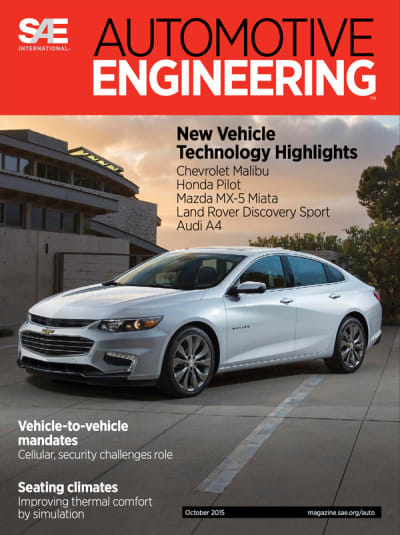
Inside this issue
Overview
The October 2015 issue of Automotive Engineering presents a comprehensive overview of the latest advancements and trends in the automotive industry, focusing on vehicle technology, materials, and engineering innovations. This issue highlights several key features, regular sections, and upcoming publications that reflect the dynamic nature of automotive engineering.
Key Features:
-
New Vehicle Technology Highlights:
- The issue opens with a spotlight on the 2016 Chevrolet Malibu, which has undergone significant weight reduction (sheds 300 lbs) and introduces a new hybrid system aimed at enhancing fuel economy and comfort. This model is positioned to revitalize GM's presence in the midsize sedan market.
- The 2016 Honda Pilot is also featured, showcasing a sleek redesign and advanced technology that improves performance and safety. The third-generation SUV emphasizes efficiency and modern aesthetics.
- The 2016 Mazda MX-5 Miata is celebrated for maintaining its core identity while innovating in design and performance, serving as a benchmark for affordable small sports cars.
- The Land Rover Discovery Sport is highlighted for its space-efficient design and the integration of JLR’s new Ingenium modular engines, which aim to enhance efficiency across the lineup.
- Audi's new A4 is discussed in terms of its cautious design evolution, focusing on lightweight construction and technological advancements that improve efficiency and driver support.
-
Powertrain Innovations:
- The issue features an article on V-Charging, a technology designed to enhance the performance of downsized engines, indicating a trend towards more efficient powertrains in the automotive sector.
- A report on high-strength aluminum powder developed for additive manufacturing showcases the industry's shift towards advanced materials that support lightweighting and manufacturing efficiency.
Materials and Manufacturing:
- The magazine discusses high-integrity, low-cost aluminum components produced through semi-solid casting, which represents a significant advancement in manufacturing techniques that can reduce costs while maintaining quality.
- The importance of materials in automotive design is underscored, with a focus on lightweighting strategies that are becoming increasingly critical for improving fuel efficiency and meeting regulatory standards.
-
Cybersecurity and Vehicle-to-Vehicle Communication:
- An article addresses the challenges of cybersecurity in vehicle-to-vehicle (V2V) communication systems. It highlights the benefits of telematics links while emphasizing the need for secure communications to ensure the successful rollout of V2V technologies.
-
Thermal Comfort Innovations:
- The issue also explores advancements in optimizing thermal seat comfort, which requires complex seat designs and detailed thermal simulation methods. This reflects a growing focus on enhancing passenger comfort through innovative engineering solutions.
Regular Sections: The magazine includes regular sections such as "What’s Online," "Technology Report," and "Big Picture," which provide readers with updates on industry trends, technological advancements, and insights into the automotive landscape. The "Q&A" section features an interview with Mike Sweers, Chief Engineer of Toyota Tacoma and Tundra pickup trucks, offering expert perspectives on current challenges and innovations in the industry.
Upcoming Publications: The issue outlines a schedule of upcoming publications and technology newsletters, including editions focused on off-highway engineering, aerospace engineering, and mobility engineering. This highlights the magazine's commitment to keeping readers informed about the latest developments across various sectors of engineering.
Conclusion: Overall, the October 2015 issue of Automotive Engineering serves as a vital resource for professionals in the automotive industry, providing insights into new technologies, materials, and engineering practices that are shaping the future of vehicle design and manufacturing. The emphasis on lightweight materials, advanced powertrains, and the integration of technology into vehicle systems reflects the industry's ongoing evolution towards greater efficiency, safety, and sustainability. As automotive engineering continues to advance, this issue encapsulates the critical developments that are driving the sector forward.
Features
-
Articles
Audi Chooses High Technology but Cautious Design Evolution for New A4
Lighter, More Powerful 3rd-Gen Pilot Debuts Honda’s NPD Process
2016 Malibu Sheds 300 lb, Adds New Hybrid System
2016 Mazda MX-5 Stays True to Its Roots
2016 Discovery Sport Spearheads More Efficient Land Rovers
Regulars
-
Global Vehicles
2016 Chevrolet Cruze Is Larger, Longer, and Sheds 250 Lb
-
Technology Reports
V-Charging Aims to Add Muscle to Downsized Engines
Blizzard Conditions Test FCA's 4WD and AWD Vehicles
High-Integrity, Low-Cost Aluminum Components Produced by Semi-Solid Casting
-
Product Briefs
Stories
-
News
Searching for V2V's Hidden Data
Schaeffler's Electric Powertrain Primed for FIA Formula E Racing
Cadillac Fortifies CTS for V Duty
Bentley Takes SUV to Super Premium Level
Toyota Gives a Look at Its Re-Engineered 2016 Prius
Audi All-Electric Concept to Take on Tesla Model X
BMW Lightens 7 Series, but Bulks up on Tech
Millbrook’s Latest Sound Advice to the Auto Industry
Nissan Shows Gripz Crossover Concept
Volkswagen Re-Engineers Tiguan
Honda Shows Radical Project 2&4
Jaguar’s Making of a Sports Sedan
Composites and Economic Success
Tenneco Unveils Emission-Control Solutions for Euro 6c
Understanding the Importance of Electrostatic Discharge Standards
Top Stories
INSIDERManufacturing & Prototyping
 How Airbus is Using w-DED to 3D Print Larger Titanium Airplane Parts
INSIDERManned Systems
 FAA to Replace Aging Network of Ground-Based Radars
NewsTransportation
 CES 2026: Bosch is Ready to Bring AI to Your (Likely ICE-powered) Vehicle
NewsSoftware
 Accelerating Down the Road to Autonomy
EditorialDesign
 DarkSky One Wants to Make the World a Darker Place
INSIDERMaterials
 Can This Self-Healing Composite Make Airplane and Spacecraft Components Last...
Webcasts
Defense
 How Sift's Unified Observability Platform Accelerates Drone Innovation
Automotive
 E/E Architecture Redefined: Building Smarter, Safer, and Scalable...
Power
 Hydrogen Engines Are Heating Up for Heavy Duty
Electronics & Computers
 Advantages of Smart Power Distribution Unit Design for Automotive...
Unmanned Systems
 Quiet, Please: NVH Improvement Opportunities in the Early Design...
Power

Similar Stories
ArticlesAutomotive
 Improving Thermal Seat Comfort
Product BriefsTest & Measurement

ArticlesDesign
 2016 Mazda MX-5 Stays True to Its Roots
Product BriefsManufacturing & Prototyping

ArticlesManufacturing & Prototyping
 Lighter, More Powerful 3rd-Gen Pilot Debuts Honda’s NPD Process
NewsTransportation
 Mercedes' Concept Stresses Connectivity, Record-Breaking Aerodynamics