




Helium Leak Detectors

Helium leak detection systems are helping transmission suppliers improve quality and reduce the cost of producing new automatic transmissions. Kuka Assembly and Test Corp., for example, has developed leak-detection systems that it claims are faster and more reliable than more traditional air-test methods. Kuka now uses Inficon helium-leak detectors to test advanced transmissions such as newer aluminum automatic 9- and 10-speed transmissions. By detecting leaks soon after the original casting takes place, the system reduces cost by eliminating defective castings early in the build process. Air-pressure testing might take days to detect certain types of leaks; helium leak detection takes seconds, the company notes, with a total part-to-part test time of roughly 30-40 sec.
More From SAE Media Group
Automotive Engineering
SAE J-3277 Covers Leak Testing for Every EV Battery
Automotive Engineering
Venting for EV Battery Packs
Automotive Engineering
Greater Precision for EV Battery Leak Testing
Battery & Electrification Technology
Proposed Standards and Methods for Leak Testing Lithium-Ion Battery Packs
Motion Design
Built-In Vibration Control to Soundproof Spaces

Sensor Technology
New Products
Motion Design INSIDER
NIST is Calibrating Gear Artifacts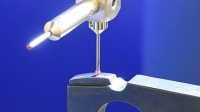
Tech Briefs
New on the Market
Medical Design Briefs
Winter 2022 Resource Guide
Medical Design Briefs
Summer 2022 Resource Guide
Off-Highway Engineering
Addressing Electromagnetic Compatibility in the Context of Aircraft Electrification
Medical Design Briefs
Summer 2023 Resource Guide
Medical Design Briefs
New Products And Services

Tech Briefs
Device Measures Laser Power in Real Time
Off-Highway Engineering
Knapheide Saves Costs, Time by Moving Vehicle Life Testing In-House
Tech Briefs
How to Remove a Coiled Spring Pin
Power Electronics INSIDER
Highly Conductive Aluminum Can Equal Copper
Medical Design Briefs
2020 Product Buyer's Guide
Sensor Technology
Energy Harvesting Can Enable 1 Trillion Battery-Free Sensors in the IoT


Medical Design Briefs
Winter 2021 Resource Guide

Autonomous Vehicle Engineering
GM Announces Door-To-Door Ultra Cruise ADAS
Tech Briefs
2025 Award Finalists
Medical Design Briefs
Medical Design Briefs: 2021 Technology Leaders

Top Stories
INSIDERManufacturing & Prototyping
 How Airbus is Using w-DED to 3D Print Larger Titanium Airplane Parts
INSIDERManned Systems
 FAA to Replace Aging Network of Ground-Based Radars
NewsTransportation
 CES 2026: Bosch is Ready to Bring AI to Your (Likely ICE-powered) Vehicle
NewsSoftware
 Accelerating Down the Road to Autonomy
EditorialDesign
 DarkSky One Wants to Make the World a Darker Place
INSIDERMaterials
 Can This Self-Healing Composite Make Airplane and Spacecraft Components Last...
Webcasts
Defense
 How Sift's Unified Observability Platform Accelerates Drone Innovation
Automotive
 E/E Architecture Redefined: Building Smarter, Safer, and Scalable...
Power
 Hydrogen Engines Are Heating Up for Heavy Duty
Electronics & Computers
 Advantages of Smart Power Distribution Unit Design for Automotive...
Unmanned Systems
 Quiet, Please: NVH Improvement Opportunities in the Early Design...
