




Inside Slate's Warsaw Factory
The Complexity of Simplicity

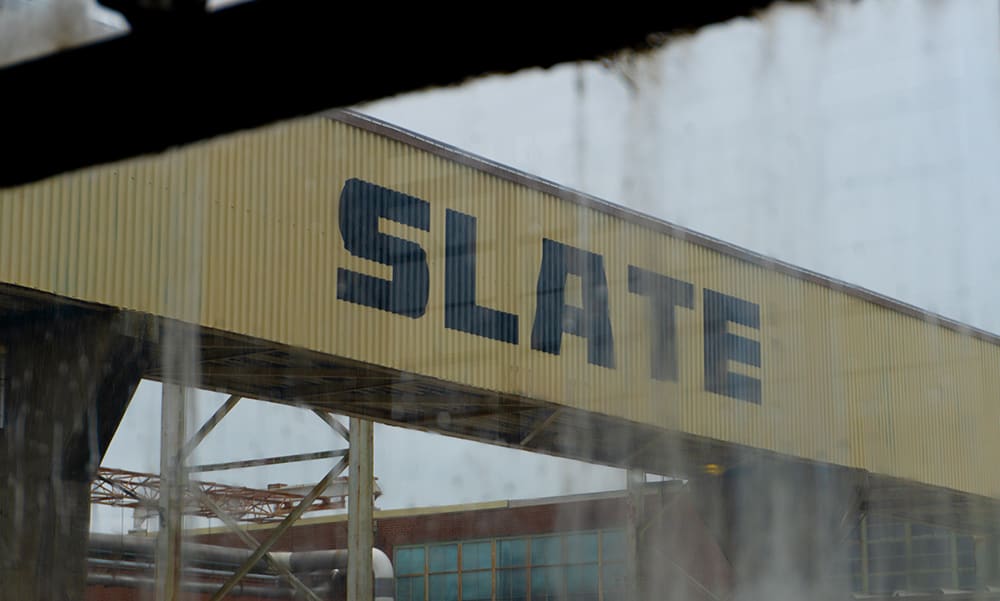
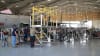
Slate bought a factory. The 1.4 million sq. ft. (130,000 m3) facility was formerly a printing company. Sears, JCPenny, and Radio Shack catalogs emerged from the RR Donnelley & Sons printing plant for decades. Beginning late next year, Slate says it will begin production of its low-cost, highly customizable pickup truck.
Factory settings
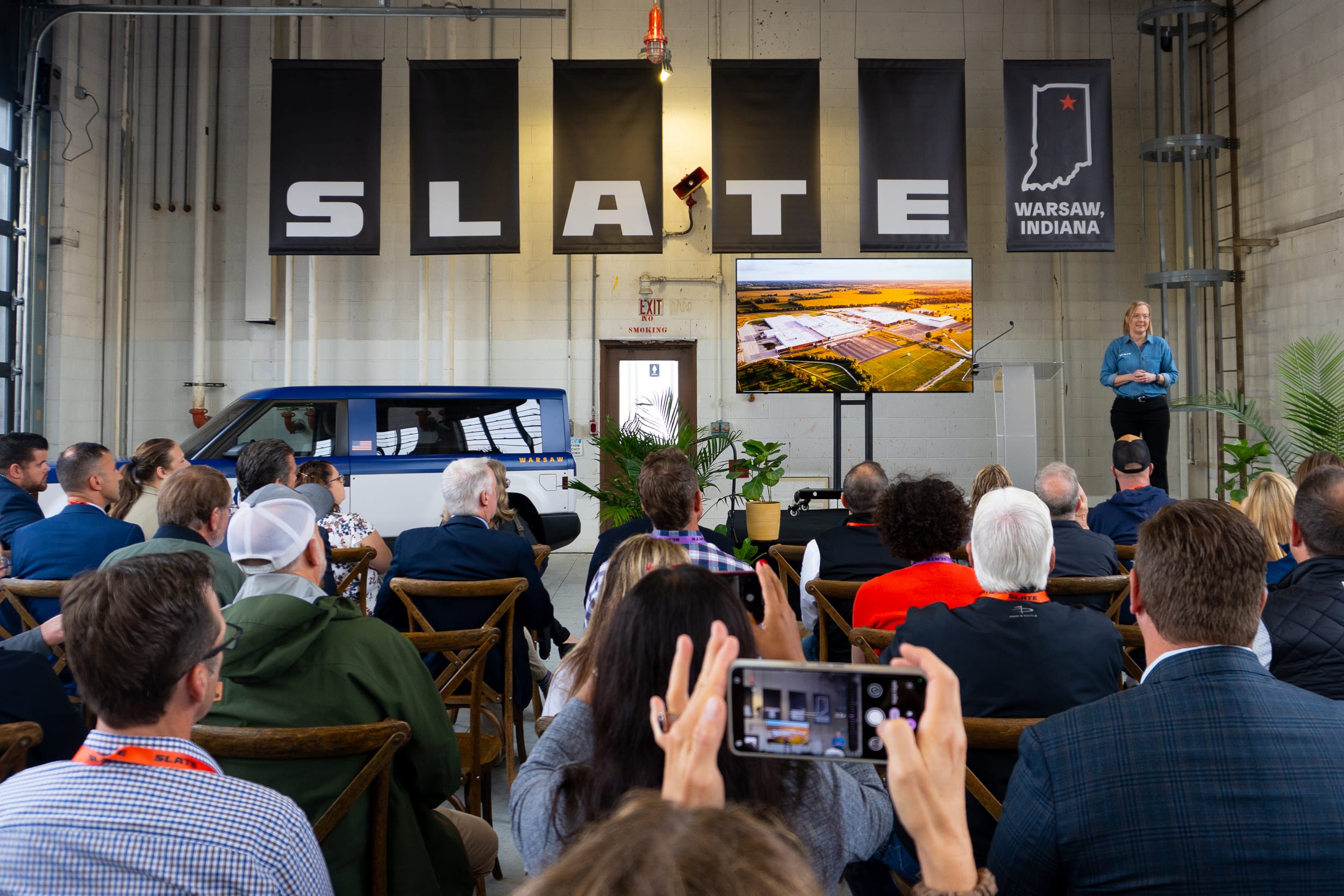
Slate held a community event recently to reiterate its dedication to bringing an EV to market starting in the "mid-twenties." CEO Chris Barman addressed the audience of community leaders, lawmakers, and press inside a brick and glass building that will eventually become a customer service center.
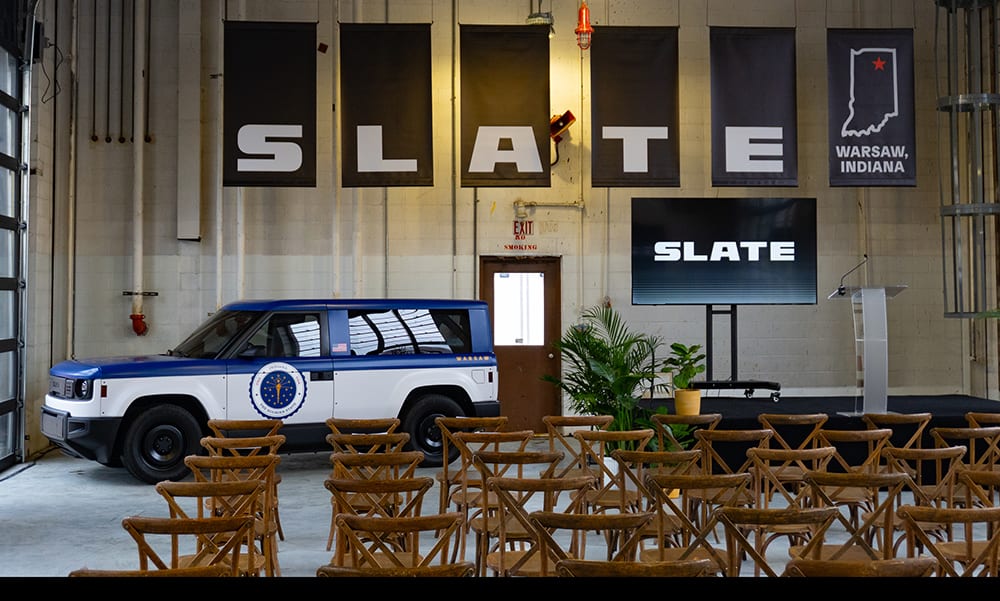
While smaller than a traditional automotive factory, the footprint of the Warsaw, Indiana, factory seems to be perfect for Slate's plans. The vehicle's gray molded exterior panels negate the need for an expensive and space-intensive paint shop. There is no need for large casting machines. Barman noted that a typical pickup is built from 5,000 to 6,000 parts.
"The Blank Slate has just over 600 parts and one configuration," Barman told the audience. “Let that sink in for a moment, just 10% of the parts of its typical truck to build upon. We're retooling the factory in such a way that truly allows for manufacturing simplicity and rapid scaling.”
That dedication to simplicity has a snowball effect on cost savings. In addition to not having to buy the parts, there are inventory savings, the factory line moves quicker because there are fewer items to put into the vehicle, and quality control becomes less intensive because again, fewer items.
"We removed everything that is in our car to improve reliability and efficiency and deliver the value customers want over time. Removing the unnecessary content gets back to the basics and allows customers to enjoy a simple and pure, thriving experience," Barman said.
Simplifying the build while creating a vehicle that's incredibly customizable is a daunting task.
Simply the complex
"The team definitely had a different mindset and took a different approach in knowing that we wanted it to be accessorized,” Barman told SAE Media. “So you had to be very thoughtful about designing in accessory points or access points where you can very easily install the accessories, because we're working to make it as Do It Yourself as possible, so that people can work on their vehicle."
Barman also said that the design team had to figure out how to take multiple larts, merge them into a single part while also figuring out how to make sure that part fit in as a whole and allowed for the vehicle to be customized in the future by the owners, "It's a lot of creativity, a lot of thinking about what the future use of the vehicle may be and how people may want it." Then, to "continue to refine it and improve it and see what you can do to bring the cost out, but not just the cost of the part, but the cost throughout the whole operation," Barman said.
Partners new and old
At its unveiling in Los Angeles in April, Slate announced its partnership with Korean battery makers SK On. At the time, SK On CEO Lee Seok-hee told SAE Media, "When I first saw the presentation, I was immediately moved. Because in my mind, the general public really needed an affordable vehicle, and we're not offering that."
Slate may have found a friend in SK On, but not every company was initially sold on the idea. "We found a lot of really good partners that wanted to partner with us at that time (pre-launch), but we did see that there were some individuals who were, you know, hesitant. After we announced, and within a little over two weeks, we had over 100,000 reservations. It then opened more doors for us than what we had seen previously," Barman said.
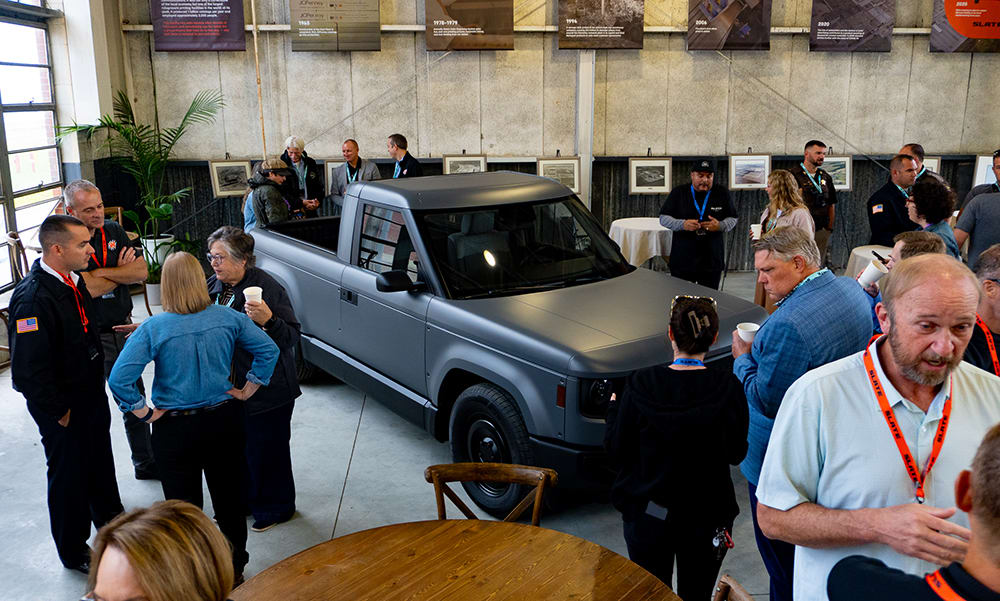
As the Indiana event wound up, the eventual customer service center was abuzz with individuals mulling around the two Slate vehicles in the room. One is a pickup, the other a pickup outfitted to become an SUV with an Indiana-themed wrap. A nod to the community that helped make the revitalization of the factory possible.
"We found a great partner in the community here in Warsaw," Barman said.
The company says there's the potential that customers will be able to pick up their Blank Slate from the factory, and the delivery will happen in this building. No word on whether a delivery fee will still be charged in that instance.
The final employees left their jobs at the RR Donnelley & Sons printing plant for the last time in September 2023. In 2026, Slate is expected to build out and begin production, and that means new jobs for the region.
Some of those jobs might lead to employees buying the Slate truck, a deceptively simple vehicle that was designed to be built in a way that defies how current vehicles are brought to market.
More From SAE Media Group
Automotive Engineering
WCX 2025: Intel’s Weast Says China Leaping Ahead Due to Focus on Innovation
Automotive Engineering
The Ford We Didn’t Know
Aerospace & Defense Tech Briefs
SAE International Extends Call for Abstracts, Seeks Submissions for AeroTech Conference
Automotive Engineering
Nissan’s Reed Is Not Your Typical R&D Boss
Automotive Engineering
Industry Vet: Rapid Change Required to Catch up to Chinese EV Maker
Automotive Engineering
WCX 2024: Traditional OEMs Vs. Startups: Report to Cite Strengths, Weaknesses
Automotive Engineering
Engineers Are Re-Engineering Ford
Automotive Engineering
Ford Unveils Its Universal EV Platform
Automotive Engineering
Vinfast Needs to Stop Digging
Automotive Engineering
2024 Honda Prologue Is a Cautious Invitation to Drive Electric
Automotive Engineering
Magna Charging Ahead on Contract EV Production
Off-Highway Engineering
Truck Racing Demonstrates New Technology, Aero Design
Automotive Engineering
VW’s Newest Battery Pack Facility Is Production-Line Adjacent
Automotive Engineering
Martinrea's New Tech Center Focuses on Subframe Innovation
Automotive Engineering
2016 SAE Congress: Clemson University and Toyota Unveil UBox Concept
Automotive Engineering
BMW Takes Multi-Modal Route to Manufacturing
Automotive Engineering
GM Deploying Electricals of the Future
Automotive Engineering
Tesla Casts a New Strategy for Lightweight Structures
Automotive Engineering
NAIAS 2019: Infiniti Debuts QX Inspiration SUV Concept
Automotive Engineering
Altair Honors Weight-Saving Innovations
Automotive Engineering
Tenneco Opens Engineering, Simulation Center in Poland
Automotive Engineering
GM Confirms Cause of Bolt Battery Fires, Rolls out New Monitoring Software
Aerospace & Defense Tech Briefs
Industry Invited to Participate in AeroTech Aerospace and Defense Technical Program
Automotive Engineering
VinFast: Vietnam’s First Car Company Has Big Ambitions
Automotive Engineering
Porsche Study: Europe Missing out on Tooling Battery Gigafactories
Automotive Engineering
Slate and SK Executives on Bringing the Inexpensive EV to Market
Off-Highway Engineering
Transmission Talk: Eaton Discusses Its Portfolio of Commercial Gearboxes
Automotive Engineering
Hyundai Bears down on EV Charging, Sustainability
Automotive Engineering
Airflow Concept Presents Chrysler EV Direction
Automotive Engineering
2026 Toyota BZ: Improved, but Still Not a WheeeeeEV
Top Stories
INSIDERRF & Microwave Electronics
 FAA to Replace Aging Network of Ground-Based Radars
PodcastsDefense
 A New Additive Manufacturing Accelerator for the U.S. Navy in Guam
NewsSoftware
 Rewriting the Engineer’s Playbook: What OEMs Must Do to Spin the AI Flywheel
Road ReadyPower
 2026 Toyota RAV4 Review: All Hybrid, All the Time
INSIDERDefense
 F-22 Pilot Controls Drone With Tablet
INSIDERRF & Microwave Electronics
 L3Harris Starts Low Rate Production Of New F-16 Viper Shield
Webcasts
Energy
 Hydrogen Engines Are Heating Up for Heavy Duty
Energy
 SAE Automotive Podcast: Solid-State Batteries
Power
 SAE Automotive Engineering Podcast: Additive Manufacturing
Aerospace
 A New Approach to Manufacturing Machine Connectivity for the Air Force
Software
 Optimizing Production Processes with the Virtual Twin
