




2026 Toyota BZ: Improved, but Still Not a WheeeeeEV
We review the updated bZ and find there’s still some life in Toyota’s only all-electric model in the U.S.

The Toyota bZ is growing into a real EV. Following complaints-a-plenty from buyers of the bZ4x, the clunky name given to previous versions, Toyota has improved everything from the design to the charging port to the horsepower. But what hasn’t changed, yet, is that Toyota is fully embracing the changes electric powertrains make possible.
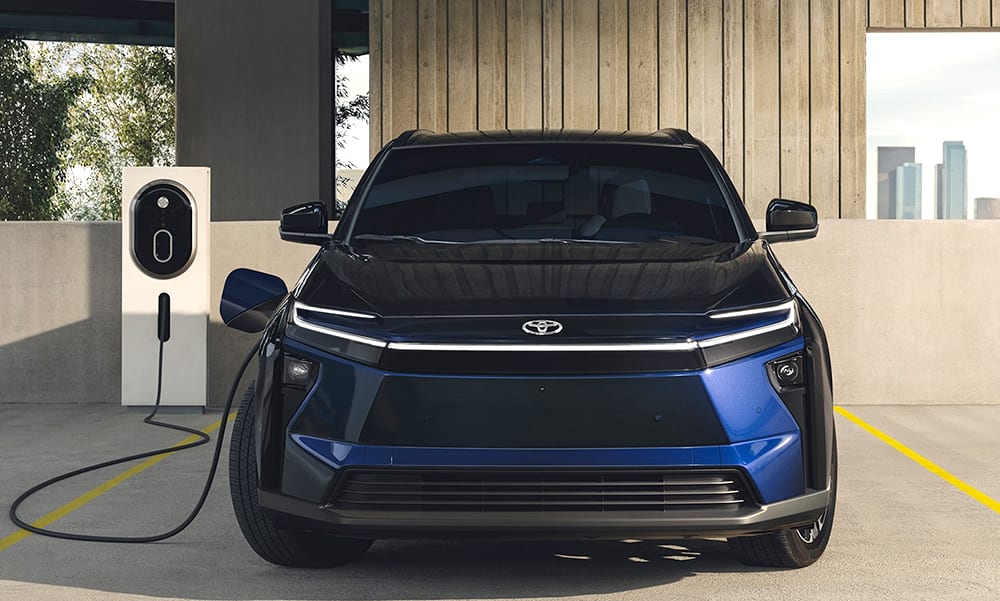
Toyota made plenty of updates with the 2026 bZ, including cutting the name in half and adding a new trim, the bZ Woodland, an AWD-only, 375-hp (280-kW) trim that will arrive in early 2026. For the new bZ, which arrives later this year, the biggest changes are also the ones that will have the biggest impact on people’s daily lives, as they both relate to charging.
First, Toyota is joining the industry in moving to the North American Charging System (NACS) standard with Plug & Charge communication capability for public charging authentication. The new bZ will also come with a dual-voltage (120/240) NACS charging cable for home use and a CCS adapter for DC fast charging at those stations. As before, the bZ has a maximum DC charging input of 150 kW. Second, the bZ now has an 11 kW on-board charger, up from a 7.6-kW unit in the previous versions. This will reduce Level 2 charging times from 10% to 100% to 7 hours from 9.5.
Refreshed powertrain, freshened design
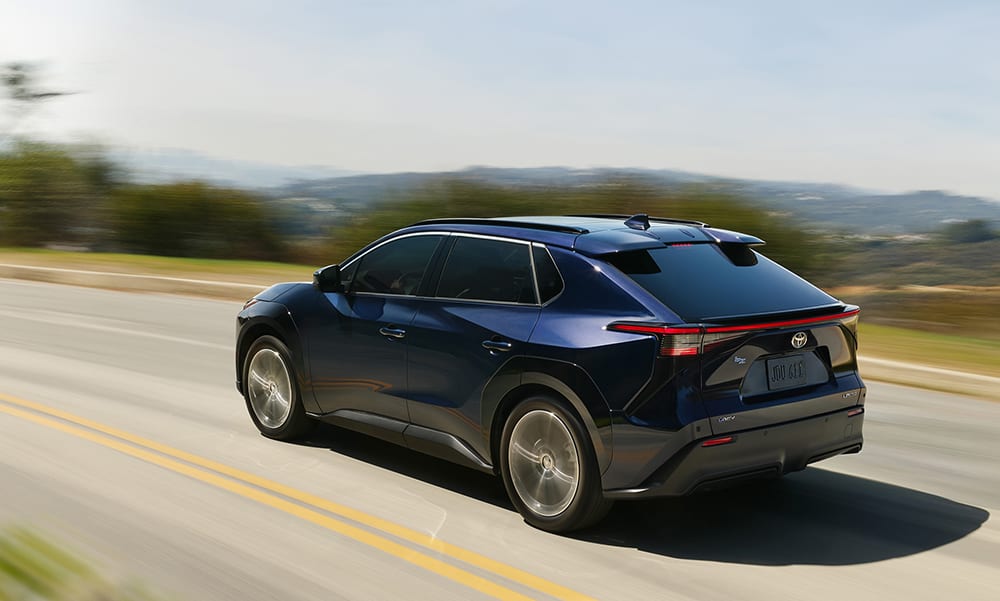
The 2026 bZ can be differentiated from its predecessors with a redesigned front facia with new LED lights integrated into Toyota’s Hammerhead design. The bZ can also now be had with color-match fenders with some paint options. All XLE trims come with 18-inch wheels, while Limited versions come with 20-inch wheels. In back, there’s a kick-activated power lift gate.
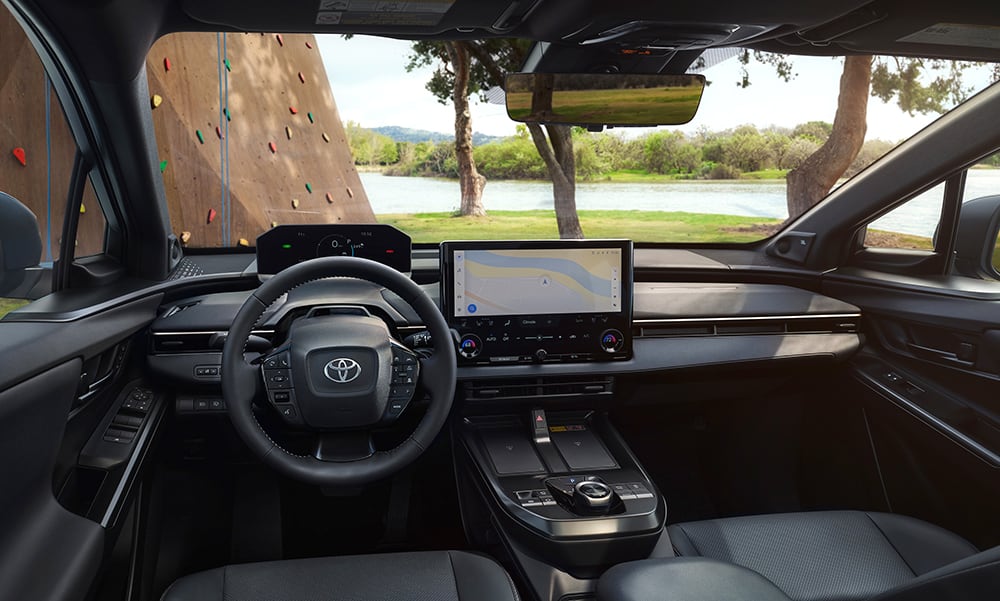
Inside, a redesigned dashboard puts the gauges a bit higher in the driver’s sightline, making them easier to see in the bZ’s still-somewhat-off arrangement. Under a new, larger center touchscreen, the center console is now less obtrusive and comes with two Qi wireless chargers and two USB-C ports (two more are in the rear). Comfort and lifestyle features include heated and ventilated front seats, 64-color ambient lighting and a 1500-watt AC inverter for powering household electronics away from the household.
As before, the 2026 bZ is available with either front-wheel or all-wheel drive. The FWD bZ produces 225 hp (168 kW), while the AWD produces up to 338 hp (252 kW), 50% more than the previous model. The bZ’s estimated range has also been increased for 2026. The longest-range 2025 bZ4X – the XLE FWD trim – had an official range of 252 miles (406 km). For 2026, this jumps up to a maximum of 314 miles (505 km) for the XLE FWD Plus trim, and Toyota has accomplished this 25% increase without throwing additional cells into the battery pack. Last year, the largest bZ pack was 72.8 kW. For 2026, it’s 74.7 kW. A smaller, 57.7 kW battery is available on the XLE FWD and offers just 235 miles (378 km). Combined system output in the new bZ ranges from 338 hp (252 kW) from the Limited AWD trim to 168 hp (125 kW) in the XLE FWD.
According to bZ Woodland (and CHR) chief engineer Daisuke Ido, the performance boosts were made by increasing the efficiency of the mechanical and SiC electrical systems and adding a higher-power e-axle. That minor capacity boost in the battery was possible because Toyota made slight adjustments to some chassis components after re-testing their crash energy absorption capabilities.
“Our strategy is to avoid battery damage from the collision,” Ido said. “But our platform is very, very good, so we can [have] thinner [parts], then we have space to put in one more cell.”
Ido said this kind of testing is only possible because of simulations conducted with scans of 1,000s of parts.
“Let’s say, ten years ago, we only did crash tests by car, but nowadays we use simulations, so we don’t need to crash test by car at first,” he said. “We calculate fast, with 1,000 or 100,000 patterns - not millions - so that’s very helpful and very efficient.”
Don’t stop! (using one-pedal)
One thing Toyota didn’t change for the new model year was the bZ’s behavior, relative to how a standard ICE vehicle behaves. I’ve been speaking with EV drivers since before there was a Nissan Leaf, and I’ve repeatedly heard them praise one-pedal driving. But Toyota engineers didn’t tune the bZ to offer that kind of changed experience. Instead, the team started from scratch as they considered building in a one-pedal setting, chief engineer Ido said, and decided to have drivers maintain control of the vehicle until they make it come to a complete stop.
“We researched which is better, which is worse, but at the moment, Toyota believes the driver should press the brake pedal to stop the vehicle,” Ido told SAE Media. “If the customer gets used to one-pedal, the normal use case is no problem. But in an emergency situation, the driver may delay pressing the pedal. That’s why, at the moment, Toyota believes that to stop the vehicle, the driver should press the brake.”
Ido said Toyota is more than open to adding a one-pedal option if the majority of customers start to think of it as the standard. Point being, Toyota is thinking of the broader market as it updates its only EV in the U.S.
“Toyota has a very wide customer base, so we have the users of the ICE, the hybrids,” he said. “Sometimes, these customers get into the BEV and we hope they feel the same [when] driving and the same comfort. We don’t want to say, ‘Oh, this is a battery EV, so you drive a different way.' We believe [having] one pedal to completely stop is a little bit early for that customer.”
Quick spin
As the specs above indicate, the new bZ is noticeably quicker and more powerful than last year’s version. Model-year improvements are the name of the game, but what Toyota has done – what it needed to do – is make the bZ a contender in the compact electric SUV segment. The fact that the automaker also introduced a lower-cost, shorter-range battery version for customers who simply need an EV to get around town is also smart. The quickest bZ now runs from 0-60 mph (0-97 km/h) in a much-better 4.9 seconds (compared to 6.5 seconds in the 2025 version), but it’s the ride and handling improvements, the actually faster charging and the new creature comforts that bring the bZ up to speed.

My quick spin in the 2026 bZ Limited FWD proved that what you see on paper – and, in this case, in simulations – works as promised in the real world. The endless suburbia around Toyota’s Plano, Texas headquarters did not challenge the bZ in any way, but did provide a few empty straightaways where and highways to prove that the acceleration and power at hand deliver plenty of oomph, at least for city runs. You don’t need to put as much effort into steering, and with a more firmly tuned suspension, the overall experience is more direct. The bZ uses independent MacPherson strut-type front suspension and a multi-link rear suspension.
I did miss one-pedal driving, and Toyota should really take the plunge here and allow driver-selectable one-pedal drive settings. Until then, at least there are steering-wheel paddles that cycle through four levels of regeneration.
Pricing will be announced closer to launch. The new bZ is made in Japan and will therefore be subject to whatever tariffs exist at the time.
More From SAE Media Group
Automotive Engineering
2025 Hyundai Ioniq 5 Brings All the Right Updates
Automotive Engineering
2024 Honda Prologue Is a Cautious Invitation to Drive Electric
Automotive Engineering
Honda E Prototype Makes It Simple, Again
Automotive Engineering
Engineering a ‘Beast’ of an Electric SUV
Automotive Engineering
Mercedes Kicks off Dedicated EV Lineup with Flagship EQS
Automotive Engineering
GM’s Hummer EV Is Still like Nothing Else
Automotive Engineering
2019 S60 and V60 Volvo’s Newest Chips in the Transformation Game
Automotive Engineering
Vinfast Needs to Stop Digging
Automotive Engineering
Volkswagen Signals New EV Era with Launch of ID.3
Automotive Engineering
Nissan Leaf Gets Updates – and Stays the Same – Where It Matters Most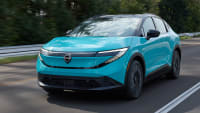
Automotive Engineering
BMW Engineers for the EV-Transition Reality
Automotive Engineering
2019 Frankfurt Auto Show: Porsche Unveils Taycan Electric Sedan
Automotive Engineering
Cadillac Reveals Lyriq Electric Vehicle
Automotive Engineering
2021 ID.4 Is Volkswagen’s First U.S.-Market Dedicated EV
Automotive Engineering
Nissan Reveals Production Ariya EV SUV
Automotive Engineering
2019 E-Tron SUV: Audi Goes Electric
Automotive Engineering
Honda Ready with First North American Crossover EV
Automotive Engineering
Audi Unveils Production Version of First-Ever EV: E-Tron
Automotive Engineering
Williams Debuts New Flexible Platform for BEVs and FCVs
Automotive Engineering
2026 Nissan Leaf First Drive: Fun and More Efficient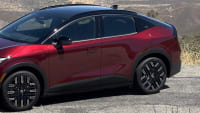
Automotive Engineering
2018 Nissan Leaf SV
Automotive Engineering
Ford Engineers Charged with a Blank EV Slate for the All-New 2021 Mustang Mach-E
Automotive Engineering
2020 Ford Explorer: Knockout Styling Caches All-New Engineering
Off-Highway Engineering
Quantron Launches 12-M Battery-Electric Bus; Fuel-Cell Variant to Follow
Automotive Engineering
2025 Lucid Air Review: Unnecessarily Fast, Astonishingly Efficient
Automotive Engineering
2019 Nissan Leaf plus Nets Extended EV Range
Automotive Engineering
Cadillac Counts on 2025 Escalade IQ for EV Sizzle
Automotive Engineering
New Ultium Battery System Underpins GM’s EV Future
Automotive Engineering
Slate Unveils Bare-Bones EV Mini Truck
Automotive Engineering
Acura’s 2024 ZDX Latest Example of Honda, GM Joint Engineering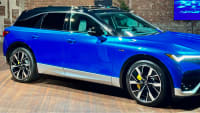
Top Stories
NewsRF & Microwave Electronics
 Microvision Aquires Luminar, Plans Relationship Restoration, Multi-industry Push
INSIDERAerospace
 A Next Generation Helmet System for Navy Pilots
INSIDERDesign
 New Raytheon and Lockheed Martin Agreements Expand Missile Defense Production
INSIDERMaterials
 How Airbus is Using w-DED to 3D Print Larger Titanium Airplane Parts
NewsPower
 Ford Announces 48-Volt Architecture for Future Electric Truck
ArticlesAR/AI

Webcasts
Electronics & Computers
 Cooling a New Generation of Aerospace and Defense Embedded...
Automotive
 Battery Abuse Testing: Pushing to Failure
Power
 A FREE Two-Day Event Dedicated to Connected Mobility
Unmanned Systems
 Quiet, Please: NVH Improvement Opportunities in the Early Design Cycle
Automotive
 Advantages of Smart Power Distribution Unit Design for Automotive &...
Energy
 Sesame Solar's Nanogrid Tech Promises Major Gains in Drone Endurance