




Hyundai Bears down on EV Charging, Sustainability
Non-functioning charging stations and drab vehicle interiors are stumbling blocks to higher EV sales.

Inoperative public charging stations are a major irritant to both EV owners and to Hyundai Motor North America, asserts Olabisi Boyle, the company’s VP of product planning and mobility strategy.

“Vehicle makers are on a journey, but we can’t stop and wait for the charging infrastructure to catch up,” Boyle told SAE Media in a recent interview.
A substantial hike in EV market share, rising steadily from the current 6% of the U.S. new-vehicle total, is widely forecast after 2025. In the interim, Hyundai has been working to “get the best partners that we can to help our customers with public charging and home charging,” Boyle said. The goal is to have significant uptime across the charging landscape.
Boyle is confident that charging station manufacturers will improve their products’ reliability over time. “A couple of years from now, this won’t be the most major issue that we have,” she said. But the industry’s commitment to electrification and product-development cadence cannot wait for the charging infrastructure to first be built out, she maintained. If that happens, “we’ll be even later on this journey to develop EV technology,” Boyle asserted.
Patented multi-charging system

Hyundai is gaining momentum via its first dedicated battery-electric architecture, the E-GMP (Electric-Global Modular Platform). The 2022 Ioniq 5 all-electric midsize CUV was the first Hyundai vehicle off the platform. The E-GMP provides standard 800V charging capability and can accommodate 400V charging without additional components or adapters.
A patented multi-charging system operates the vehicle’s motor and inverter to boost 400V to 800V for stable charging compatibility. With a public 350-kW DC fast-charger, the vehicle can charge from 10% SoC to 80% in 18 minutes, Hyundai claims.
The latest Hyundai vehicle that uses the E-GMP architecture is the 2023 Ioniq 6 sedan. It will be followed in 2024 by the Ioniq 7, a three-row SUV. E-GMP also underpins the Genesis GV60 luxury crossover.
For Hyundai, the in-vehicle experience is increasingly important with EVs, both while driving and while charging, according to Boyle. The company’s market-research team uses North American consumer feedback to help shape specific directions by the design and engineering groups in South Korea. “People want more than cupholders these days,” Boyle explained, noting that the EV cabin environment must be multidimensional.
“Do you want a bigger [infotainment] screen because you want to chill out inside the vehicle during that 18-minute re-charge? Do you want a front seat that fully reclines, so you can nap while the vehicle is re-charging? During a time of high Covid infection, would you like a special cubby-space for your mask,” Boyle asked.
Sustainability also is influencing Hyundai’s design and engineering direction. “We want to get to a point where almost everything on the vehicle will be made of something that can be recycled,” Boyle stated. Both the Ioniq 5 and Ioniq 6 use PET (polyethylene terephthalate, a 100% recyclable thermoplastic) as well as natural-wool yarns and other sustainable materials in the seats, door trim, headliner, armrest and carpet. “We have to know what’s important to EV buyers because this is what’s going to be expected in 2025,” she said.
More From SAE Media Group
Automotive Engineering
2025 Hyundai Ioniq 5 Brings All the Right Updates
Automotive Engineering
New Ultium Battery System Underpins GM’s EV Future
Automotive Engineering
BMW Engineers for the EV-Transition Reality
Automotive Engineering
Volkswagen Signals New EV Era with Launch of ID.3
Automotive Engineering
The EV Tech of BMW’s Neue-Klasse IX3
Automotive Engineering
Cadillac Counts on 2025 Escalade IQ for EV Sizzle
Automotive Engineering
Volvo’s Electric High-Wire Act
Automotive Engineering
Mahle Shows Urban Mobility Concept
Automotive Engineering
GM and Honda to Jointly Develop Honda’s Electric Vehicles
Automotive Engineering
Mercedes-Benz EQS Concept: The S-Class of Electric Vehicles?
Automotive Engineering
Electrification Brings Supplier Value Closer to Home
Automotive Engineering
Magna Charging Ahead on Contract EV Production
Automotive Engineering
2026 Escalade IQL Is Cadillac’s Biggest, Roomiest EV Yet
Automotive Engineering
Cadillac to Launch 2023 Lyriq EV Months Earlier Than Planned
Automotive Engineering
All-Electric Nissan Ariya Handles Ultra-Cold Temps on Pole to Pole Trek
Automotive Engineering
Hyundai Details First EV-Dedicated Vehicle Architecture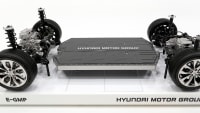
Automotive Engineering
CES: VinFast Previews Wild Concept Truck
Automotive Engineering
Williams Debuts New Flexible Platform for BEVs and FCVs
Automotive Engineering
Cadillac Lyriq Spearheads GM’s EV Assault
Automotive Engineering
Porsche Names First-Ever Electric Car: ‘Taycan’
Off-Highway Engineering
Next Steps Toward Battery-Electric Class 8 Trucks
Automotive Engineering
2025 Hyundai Ioniq 5 N Makes E-Shift Feel Real
Automotive Engineering
VinFast: Vietnam’s First Car Company Has Big Ambitions
Automotive Engineering
BMW Previews an HMI Future Without Dashboard Screens
Automotive Engineering
2018 Geneva Auto Show: Porsche Unveils 600-Hp Electric Crossover
Automotive Engineering
Honda Ready with First North American Crossover EV
Automotive Engineering
First Drive: Lucid's Gravity Electric SUV
Automotive Engineering
Mercedes-Benz Product Boss: Europe, North America EVs, EV Charging to Rapidly Get Better
Automotive Engineering
Making the BEV Commitment
Automotive Engineering
VW's MEB Platform: A Modularity Enabler
Top Stories
NewsSensors/Data Acquisition
 Microvision Aquires Luminar, Plans Relationship Restoration, Multi-industry Push
INSIDERRF & Microwave Electronics
 A Next Generation Helmet System for Navy Pilots
INSIDERWeapons Systems
 New Raytheon and Lockheed Martin Agreements Expand Missile Defense Production
NewsAutomotive
 Ford Announces 48-Volt Architecture for Future Electric Truck
INSIDERAerospace
 Active Strake System Cuts Cruise Drag, Boosts Flight Efficiency
ArticlesTransportation

Webcasts
Aerospace
 Cooling a New Generation of Aerospace and Defense Embedded...
Energy
 Battery Abuse Testing: Pushing to Failure
Power
 A FREE Two-Day Event Dedicated to Connected Mobility
Automotive
 Quiet, Please: NVH Improvement Opportunities in the Early Design Cycle
Electronics & Computers
 Advantages of Smart Power Distribution Unit Design for Automotive &...
Unmanned Systems
 Sesame Solar's Nanogrid Tech Promises Major Gains in Drone Endurance