




Aluminum: Toward 50% Body Content
Aluminum BIW and closure parts are the key to achieving both regulatory and OEM goals for improved vehicle efficiency going forward.

To vehicle-development teams, peaceful coexistence is the 2020’s way of describing the relationship between steel and aluminum. Sure, the two giant materials industries will continue their battle to conquest one another’s market share. But for vehicle planners and program-development teams, the ferrous and light metals are an increasingly effective and popular combination. As experts have noted elsewhere in this issue, the mixed-materials trend is becoming an enduring one, as evidenced across the landscape of recent new-vehicle introductions.
Aluminum crossmembers and sub-frames are engineered harmoniously into light-truck ladder frames whose finely-tailored use of various advanced high-strength steel grades could fill engineering textbooks. Suspension control arms have become the focus of new CAE-driven designs that have brought flip-flop applications within some OEMs — what was once a heavy steel fabrication is changed to a far lighter aluminum casting, then to a forging, only to be transformed again into an even lighter steel stamping full of precisely-located lightening holes. Further iterations in aluminum — or perhaps CFRP composite, or a combination of metal and composite — are likely to follow.
Honda R&D’s Stephen Frey, chief engineer on the 2019 Acura RDX, told Automotive Engineering during an appearance on Autoline TV that high-strength aluminum extrusions and use of aluminum sheet in closures will play an increasingly sympatico role in Honda’s use of new AHSS grades that are being deployed in new body structures for impact-resistance and crash safety. Frey also high-lighted how advanced joining technologies, led by the now-proven rivet-bonding process, have enabled Honda engineers to re-design entire body and chassis sections and thus increase aluminum’s vital role as a mass-reduction agent.
“The emerging pattern has more aluminum added with each model change-over over a 10-15-year period” driven by closures, crash management, steering knuckles and structural vacuum die cast parts,” explained Chris Brower, director of DuckerFrontier (formerly Ducker Worldwide).
He noted that the amount of growth will depend on the concentration of the weight savings on specific vehicle classes. A mass reduction of 20-25% on 20% of the vehicles is much more beneficial for aluminum than 5% mass reduction on all the vehicles, particularly if the fleet mix is more predominately large truck based or SUV platforms. Aluminum content growth also will depend on how much “mass creep” must be offset, and any improvements in the value proposition of other materials relative to aluminum.
Per technology-implementation pathways as cited in U.S. EPA and NHTSA studies, to achieve a 7% mass savings (approx. 270 lb./123 kg) while maintaining vehicle size, with a market concentration on light trucks, “high-growth aluminum components will continue to be a key to the equation,” Brower asserts.
“High-strength steel, magnesium and CFRP are critical,” he said. “Aluminum BIW and closure parts, however, are the key levers to achieving both regulatory and OEM goals for vehicle improvements over the next 10 to 15 years.”
More From SAE Media Group
Automotive Engineering
Aluminum Frame Rails, New Alloy Castings from Alcoa Help Cut 2500 Lb from Tractor-Trailers
Automotive Engineering
Gearing Up Drive Axle Innovations
Automotive Engineering
ZF's CEO Talks About Lightweight Vehicle Applications
Automotive Manufacturing and Machining
Aluminum’s Rising Star
Automotive Engineering
2015 F-150: Ford Drops an Aluminum Blockbuster
Automotive Engineering
Rethinking Aluminum for NVH Abatement
Automotive Engineering
Steel Stands Tall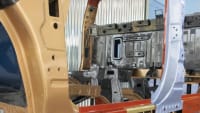
Automotive Engineering
Innovations for Lightweighting: Magna and Ford test carbon-fiber subframes
Automotive Engineering
Steel Targets EV Structures, Battery Boxes
Automotive Engineering
Cadillac Pursues Aluminum/steel Mix for New CT6 Luxury Sedan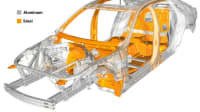
Automotive Engineering
Steeling for Reduced Mass and Higher Strength
Automotive Engineering
Innovations for Lightweighting: Audi brings CFRP to 2018 A8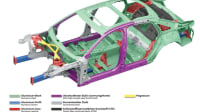
Off-Highway Engineering
Carbon-Fiber Concept Trailer from Great Dane Cuts Weight by 4000 Lb
Automotive Engineering
Multi-material Structures Move mpg Upward
Off-Highway Engineering
Western Star Adds ‘Weight Sensitive’ 47X to Vocational Lineup
Off-Highway Engineering
Yanmar CE Adds to Growing Compact Track Loader Segment
Automotive Engineering
2022 Honda Civic Hatchback Enjoys Premium Assembly, Weight-Cutting Measures
Automotive Engineering
2023 Cadillac Lyriq Executive Chief Engineer: New EV Her ‘North Star’
Off-Highway Engineering
REE’s P7 Brings Advanced Suspension Control to Medium-Duty Trucks
Automotive Engineering
Honda Pioneering New Manufacturing Tech for Zero Electrified Platform
Automotive Engineering
Pickup Shocker!
Automotive Engineering
Advanced Steels Making Inroads
Automotive Engineering
A Rebel’s Guide to Chassis Engineering
Automotive Engineering
In Search of the Lightweight, Multi-Material Car
Automotive Engineering
Engineering the 2022 Toyota Tundra
Automotive Engineering
Mass-Reducing Innovations Honored by Altair
Off-Highway Engineering
ZM Trucks Starts Production in Fontana, California
Tech Briefs
Pros & Cons of Advanced Lightweighting Materials
Automotive Engineering
Top Mass-Cutting Innovations Receive Altair Enlighten Awards
Off-Highway Engineering
EV Startup Prepares to Enter Commercial Market with Novel EAxle
Top Stories
NewsSensors/Data Acquisition
 Microvision Aquires Luminar, Plans Relationship Restoration, Multi-industry Push
INSIDERRF & Microwave Electronics
 A Next Generation Helmet System for Navy Pilots
INSIDERWeapons Systems
 New Raytheon and Lockheed Martin Agreements Expand Missile Defense Production
NewsAutomotive
 Ford Announces 48-Volt Architecture for Future Electric Truck
INSIDERAerospace
 Active Strake System Cuts Cruise Drag, Boosts Flight Efficiency
ArticlesTransportation

Webcasts
Aerospace
 Cooling a New Generation of Aerospace and Defense Embedded...
Energy
 Battery Abuse Testing: Pushing to Failure
Power
 A FREE Two-Day Event Dedicated to Connected Mobility
Automotive
 Quiet, Please: NVH Improvement Opportunities in the Early Design Cycle
Electronics & Computers
 Advantages of Smart Power Distribution Unit Design for Automotive &...
Unmanned Systems
 Sesame Solar's Nanogrid Tech Promises Major Gains in Drone Endurance