




Aluminum’s Rising Star
Constellium is fast emerging as a leader in EV structures and lightweighting technology.
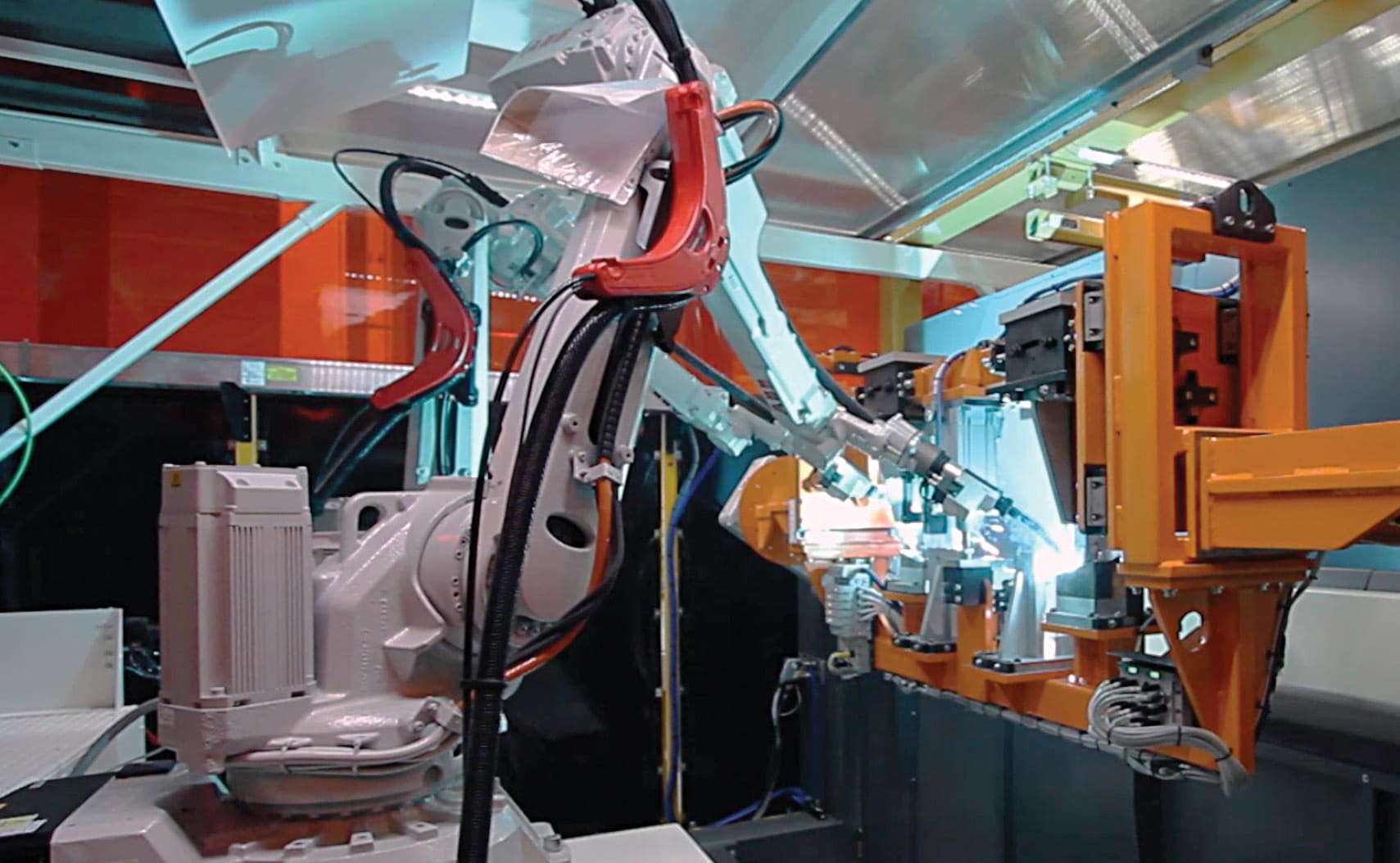
The impact aluminum is having on vehicle manufacturing, on sourcing — and on electric-vehicle engineering — was in full view on a recent visit to Constellium Automotive Structures’ 431,000-ft2 (40,000-m2) plant west of Detroit in Van Buren Township, Michigan.
Safety glasses and steel-toed shoes deployed for the shop-floor tour, we exit the office area — and spot a towering wall of brown boxes, each bearing the stylized red-T logo of a certain California EV maker. These are extruded - aluminum substructures, neatly packed, and outbound for Fremont.
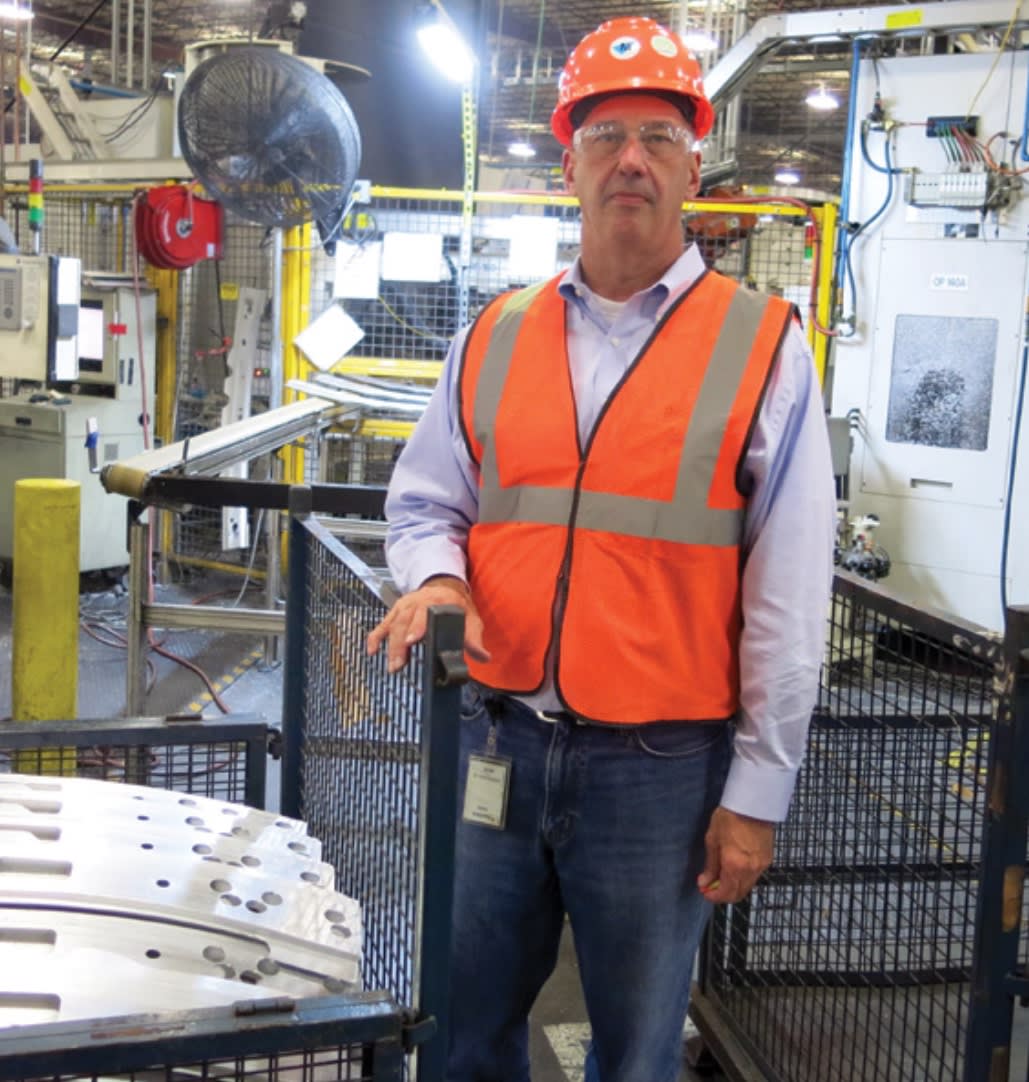
Walking briskly to keep pace with our host Eric Krepps, the VP and general manager, we observe cells of welding and assembly robots performing, with their human colleagues, an industrial ballet with light metal for customers including BMW, FCA, Mercedes-Benz and GM.
Tidy aisles. Clean floors. And the place is humming.
Then we enter Constellium’s Ford territory, where a variety of precision aluminum parts and substructures are processed for virtually every Ford truck and utility.
“When we won business for the 2015 aluminum F-150, it doubled our output,” Krepps noted. “We quickly realized that after launching this one big program, we had to move fast — or risk getting run over by larger competitors.”
Landing Ford’s biggest and most-profitable program ignited the North American fortunes of the Netherlands-based manufacturer. Then still unknown to many engineers and purchasing staffs in the U.S., Constellium did what Krepps describes as “a lot of missionary work” to give its name more visibility. Curious customers would visit and inquire: ‘Can you handle our parts?’
“But when they saw the F-150 line, the typical reply was, ‘Well, if you can handle that program, you can handle anything we’ve got,’” Krepps said.
The subsequent business growth “was like having a hot hand in basketball — you shoot, you score; shoot, score!,” he recalled. “Within 24 months, we went from having one plant in Michigan to launching one in Canada, another in Georgia [to where the Michigan plant’s BMW volume is shifting] and a new facility in San Luis Potosí, Mexico.”
A shift in demand
The big-ticket pickup-truck and SUV programs have opened many eyes to Constellium’s Automotive Structures, one of the parent company’s three business units—the others are Packaging and Automotive Rolled Products, accounting for 54 percent of total revenue in 2017, and Aerospace and Transportation with a 25 percent share. In Europe, the Structures unit claims to be No. 1 in large-profile aluminum sections for vehicles (including railcars and commercial truck), No. 2 in hard-alloy extrusions, and No. 2 worldwide in crash-management systems.
“Our customers are typically those adopting aluminum as their strategic lightweighting metal the fastest,” Krepps, a manufacturing veteran, noted.
When he joined in 2013, the division’s product mix in North America was 20 percent IP structures, 20 percent body structures, and 60 percent crash management systems. In 2018, the IP business is nearly gone, as body structures have grown to 70 percent of production, and crash-management systems [the highly engineered front and rear assemblies that are designed to absorb energy and deform progressively on impact] have shifted to about 30 percent of the mix.
More change is coming. “The product mix for Automotive Structures is shifting again,” Krepps revealed, “and a significant portion will soon become battery enclosures for EVs.” According to 2017 Ducker Worldwide research on aluminum-content use in North American light vehicles, based on industry interviews, adoption of the light metal in new vehicle construction through 2028 will increase at its fastest pace yet. Total aluminum content is expected to grow from 397 lb (180 kg) per vehicle (PPV) in 2015 to 565 PPV (256 kg) by 2028, representing 16 percent of total vehicle weight.
The trend is consistent with the widespread multi-material design approach, with aluminum dominating vehicle closures and crash structures, in addition to many areas in the body-in-white.
Aluminum “is entering its most unprecedented growth phase since we’ve been tracking the shifting mix of automotive materials,” explained Abey Abraham, managing director-automotive materials at Ducker Worldwide.
In the 2020-2028 projections, aluminum is expected to contribute more than half of the total mass reduction in multi-material vehicle construction.
Krepps and his team see the steel industry’s aggressive development of advanced, high-strength and lighter-weight products as vital competition that helps drive aluminum innovation. Some key OEMs including Audi (the latest A8), Tesla (Model 3), and BMW (the next-gen electric i3 and i8) have shifted to a multi-material approach, to mitigate cost and to leverage the properties of the various metals and composites.
“New steel technology is pushing us — and we’re pushing them. I see this battle continuing through the next two product cycles,” Krepps observed.
R&D competitive advantage
That battle, and the industry’s demand for supplier innovation, makes R&D a priority. Constellium, which develops its own aluminum alloys, operates within a facility at the U.K.’s Brunel University London, that is set up exclusively for R&D. Besides a metallurgy group, it has dedicated casting and extrusion lines, “and all the advanced joining technologies you can think of,” Krepps said, with Constellium researchers collaborating with adhesives- and aerospace-industry experts, among others. The R&D work has led to new alloys that allow welding of aluminum to steel, and extrusions to castings — important for EV battery structures.
“We’re an aluminum company — that’s our strength,” underscored Krepps. “The high-6000-series and 7000-series alloys that Ford uses, we supply for military land vehicles. And we make a 7000-series alloy for aerospace that’s lithium based. SpaceX uses it.”
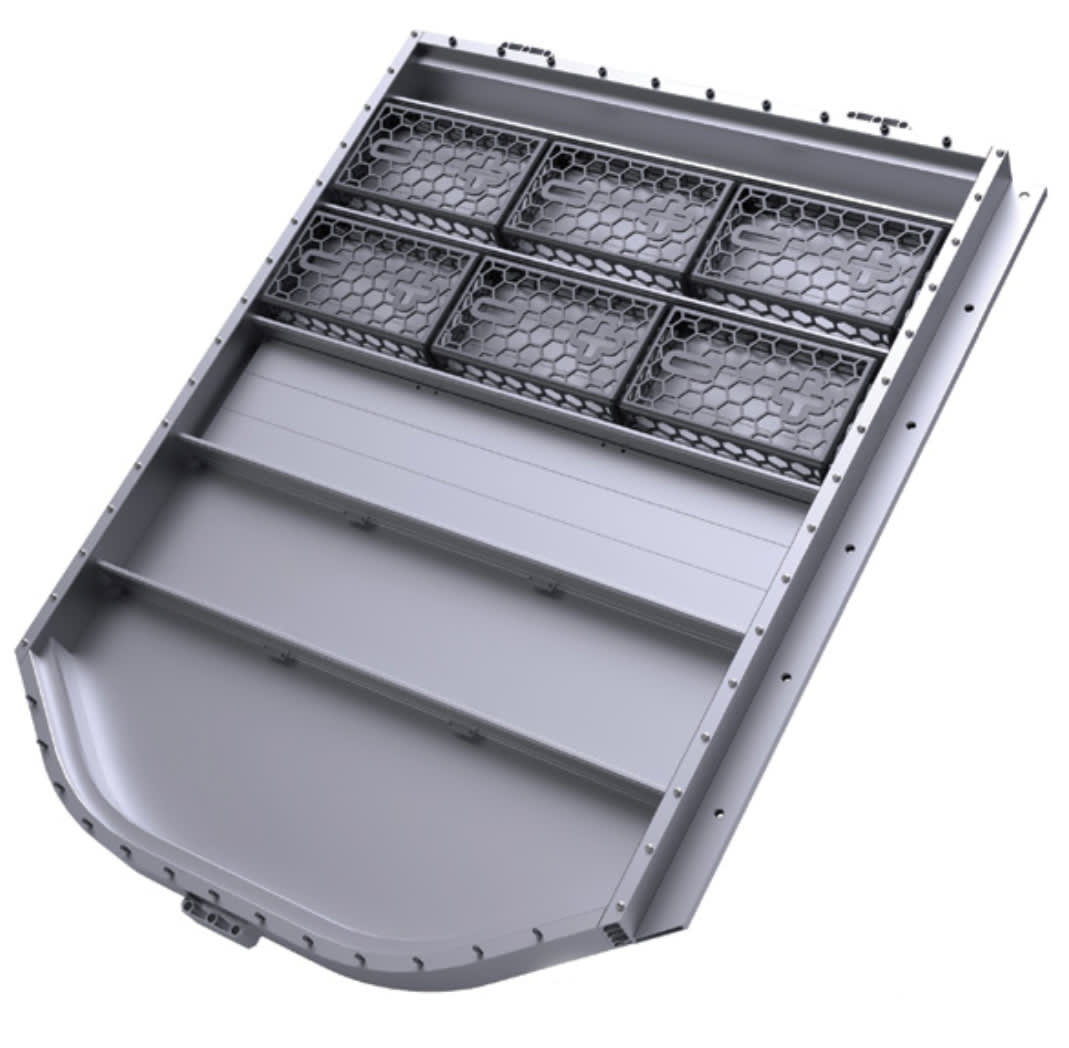
The next big volume play for Constellium Automotive Structures is “all around the electric vehicle — battery trays, packs and subframes,” Krepps reported. “Our goal is to be the leader in structural components for EVs.” He pointed to the 13 extrusions and multiple cast nodes in a 6-ft-long (1829-mm) production-spec EV battery structure standing near one of the production areas.
Constellium engineers are leveraging aluminum’s superior thermal-conductivity properties in various ways to help manage an EV’s thermal cycles, which also brings potential mass-reduction benefits.
“Within the chambers of our extrusions and between the battery cells, for example, we use the material properties to protect against thermal runaways, while also helping to keep the battery cell warm and cool depending on the operating environment,” Krepps explained.
Besides the dozens of new EVs coming from traditional OEMs, Constellium also recognizes “disruptors” with new assembly strategies. “These guys aren’t targeting Toyota and Ford — they’re after a different set of competitors,” he said. “They may want to sell 10,000 electric, autonomous vehicles in each of the major markets, so they don’t need a $3 billion body-shop investment.” Some may even use carbon-fiber bodies with an aluminum battery pack and subframe.
Distruptor companies such as Tesla, Lucid, Rivian, Nio and others will be part of the mobility future. They are far less risk-averse than the established OEMs, Krepps observed, and more accepting of technology advancements. On new ideas, “we won’t get an immediate ‘no,’ whereas the incumbent OEMs require us to bring terabytes of data to support an idea.”
And when a new player agrees to a new technology or application, Krepps said it helps “raise the comfort level” of the traditional makers.
“We see the disruptors as a way to advance vehicle engineering overall,” he opined.
More From SAE Media Group
Automotive Engineering
Steel Stands Tall
Automotive Engineering
Aluminum: Toward 50% Body Content
Automotive Engineering
Wrecking Ball
Automotive Engineering
Pickup Shocker!
Automotive Engineering
Rivian R1T Analyzed by Teardown Expert
Automotive Engineering
Ford Unveils Its Universal EV Platform
Battery & Electrification Technology
New Products
Automotive Engineering
Self-Piercing Rivets Shoot for Vehicle-Lightweighting Applications Beyond Aluminum
Automotive Engineering
BMW Takes Multi-Modal Route to Manufacturing
Automotive Engineering
Martinrea's New Tech Center Focuses on Subframe Innovation
Automotive Engineering
Industry Vet: Rapid Change Required to Catch up to Chinese EV Maker
Battery & Electrification Technology
Wire Feed Laser Welding for Battery Pack Aluminum Enclosure Manufacture in EVs
Automotive Engineering
Ford Starts the Hard Work of EV Battery, Raw Materials Security
Automotive Engineering
Electrifying the Two-Wheeler
Automotive Engineering
EV Battery Manufacturing Commitments Surge in U.S.
Automotive Engineering
Rethinking Aluminum for NVH Abatement
Automotive Engineering
Volvo’s Electric High-Wire Act
Off-Highway Engineering
F-150 and Mustang Hybrids Part of Ford's Global Electrified Vehicles Plan
Automotive Engineering
Constellium Develops New Alloys for EV Battery Enclosures
Automotive Engineering
Steel Targets EV Structures, Battery Boxes
Automotive Engineering
Honda Pioneering New Manufacturing Tech for Zero Electrified Platform

Automotive Engineering
Making the BEV Commitment
Automotive Engineering
Electrification Brings Supplier Value Closer to Home
Automotive Engineering
ZF's CEO Talks About Lightweight Vehicle Applications
Automotive Engineering
Ford Announces 48-Volt Architecture for Future Electric Truck
Battery & Electrification Technology
Battle for the Box

Automotive Engineering
New GM, LG Chem Joint Venture to Build EV Battery Plant in U.S.
Automotive Engineering
Battery Leasing Spurs VinFast’s EV Offensive
Top Stories
NewsSensors/Data Acquisition
 Microvision Aquires Luminar, Plans Relationship Restoration, Multi-industry Push
INSIDERRF & Microwave Electronics
 A Next Generation Helmet System for Navy Pilots
INSIDERWeapons Systems
 New Raytheon and Lockheed Martin Agreements Expand Missile Defense Production
NewsAutomotive
 Ford Announces 48-Volt Architecture for Future Electric Truck
INSIDERAerospace
 Active Strake System Cuts Cruise Drag, Boosts Flight Efficiency
ArticlesTransportation

Webcasts
Aerospace
 Cooling a New Generation of Aerospace and Defense Embedded...
Energy
 Battery Abuse Testing: Pushing to Failure
Power
 A FREE Two-Day Event Dedicated to Connected Mobility
Automotive
 Quiet, Please: NVH Improvement Opportunities in the Early Design Cycle
Electronics & Computers
 Advantages of Smart Power Distribution Unit Design for Automotive &...
Unmanned Systems
 Sesame Solar's Nanogrid Tech Promises Major Gains in Drone Endurance