




Automotive Engineering - February 2017
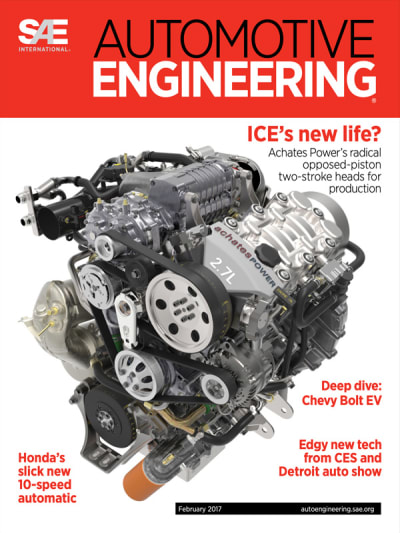
Inside this issue
Overview
The February 2017 issue of Automotive Engineering presents a comprehensive overview of current trends and challenges in the automotive industry, focusing on technological advancements, regulatory changes, and the evolving landscape of vehicle design and manufacturing.
Key Highlights:
-
Complexity and Reliability in Vehicle Design: The issue opens with a discussion on the increasing complexity of vehicle designs and its correlation with higher failure rates. An article by Mike Jobe emphasizes that vehicles manufactured between 1940 and 1970 had the lowest failure rates, suggesting that modern designs often compromise reliability for complexity. Jobe advocates for a focus on simpler, more reliable designs, improved quality control, and the use of advanced materials to enhance vehicle performance and reduce ownership costs.
-
Emerging Technologies: The magazine features insights into the growing need for processing power in vehicle electrical architectures. Ray Knight highlights the automotive industry's shift towards more sophisticated electronic systems, similar to trends observed in aerospace. This shift is driven by the dominance of a few top-tier suppliers in the technology space, raising concerns that automakers may become mere assemblers in the future.
Regulatory Landscape: The issue also addresses the regulatory challenges facing the automotive industry, particularly in light of the new U.S. administration's approach to environmental regulations. Bob Lutz comments on the potential for contentious debates as the government seeks to navigate the complex regulatory framework that has developed over the years. This discussion underscores the importance of a unified standard in the industry to streamline compliance and innovation.
-
Upcoming Publications and Events: The magazine outlines a schedule of upcoming technology newsletters and print issues, including special editions focused on connected cars, autonomous vehicles, and vehicle electrification. These publications aim to keep industry professionals informed about the latest developments and trends in automotive engineering.
-
Company Advertisements and Resources: The issue includes an advertisement index featuring various companies involved in automotive engineering, such as CD-adapco, MathWorks, and COMSOL, among others. These companies provide tools and resources that support engineers in their design and analysis efforts. The magazine also offers contact information for regional representatives and subscription details, ensuring that readers can easily access additional resources and support.
-
Editorial Insights: The editorial section poses a thought-provoking question regarding the future of automotive engineering, inviting readers to reflect on the balance between innovation and reliability. The editors encourage feedback from readers, fostering a sense of community and engagement within the industry.
Conclusion:
The February 2017 issue of Automotive Engineering serves as a vital resource for professionals in the automotive sector, offering insights into the challenges and opportunities presented by technological advancements and regulatory changes. By focusing on reliability, simplicity, and the integration of new technologies, the industry can navigate the complexities of modern vehicle design and manufacturing. The magazine not only highlights current trends but also sets the stage for future discussions and developments in automotive engineering.
Features
-
Articles
CES 2017: Automotive Suppliers Eclipsing OEMs in Advanced Tech
CES 2017: Faraday Future Shows Its First Vehicle—the FF 91
CES 2017: Your Car Is Talking to the Refrigerator
CES 2017: Schaeffler Surprises CES with 'Bio-Hybrid' Minicar for Urban Use
CES 2017: Car as Close Companion
NAIAS 2017: Stinger Gives Kia a Fast, Nimble Sedan
Regulars
-
SAE Standards News
-
Technology Reports
Exclusive First Drive: Torotrak’s V-Charge Technology
NAIAS 2017: Lightweight Door Module Aims to Trim Vehicle Weight
-
Road Ready
2018 Ford F-150 Diesel Aims to Beat 30 Mpg
NAIAS 2017: Power and More Underscore 2018 Toyota Camry
-
Product Briefs
Flat Aluminum Electrolytic Capacitors
Data Acquisition and Control System
Hardware-In-The-Loop Simulator
Stories
-
News
CES 2017: Honda Partners with VocalZoom to Advance Speech-Recognition Technology
Combating Motion Sickness in Autonomous-Driving Simulators
Waymo’s End Game: Beat Conti, Delphi and Valeo in Self-Driving Tech?
NAIAS 2017: The 2018 Lexus LS Gets Twin-Turbo V6, 10-Speed and Shiatsu
NAIAS 2017: Yanfeng Shows Concept Interior for Autonomous Driving
Simulation Squeezes More Range out of Formula-E Racers
Top Stories
INSIDERManufacturing & Prototyping
 How Airbus is Using w-DED to 3D Print Larger Titanium Airplane Parts
INSIDERManned Systems
 FAA to Replace Aging Network of Ground-Based Radars
NewsTransportation
 CES 2026: Bosch is Ready to Bring AI to Your (Likely ICE-powered) Vehicle
NewsSoftware
 Accelerating Down the Road to Autonomy
EditorialDesign
 DarkSky One Wants to Make the World a Darker Place
INSIDERMaterials
 Can This Self-Healing Composite Make Airplane and Spacecraft Components Last...
Webcasts
Defense
 How Sift's Unified Observability Platform Accelerates Drone Innovation
Automotive
 E/E Architecture Redefined: Building Smarter, Safer, and Scalable...
Power
 Hydrogen Engines Are Heating Up for Heavy Duty
Electronics & Computers
 Advantages of Smart Power Distribution Unit Design for Automotive...
Unmanned Systems
 Quiet, Please: NVH Improvement Opportunities in the Early Design...
Power

Similar Stories
NewsPropulsion
 NAIAS 2017: Power and More Underscore 2018 Toyota Camry
NewsTest & Measurement
 New 10-Speed Is a Delight in the 2017 F-150
Technology ReportAutomotive
 All-New 2018 Ford Expedition Gets Aluminum Body, 10-Speed
ArticlesRF & Microwave Electronics
 CES 2017: Schaeffler Surprises CES with 'Bio-Hybrid' Minicar for Urban Use
