




Nader: Are Glitch-Free Autonomous Vehicles Possible?
Artificial intelligence (AI) is emerging as a mainstay of automated driving technologies, sparking a steady cadence of partnerships and product announcements. But the increased implementation of AI is also driving consumer advocates including Ralph Nader to question whether its complexities will cause safety issues.
A growing number of industry suppliers feel that some form of computer learning, including deep learning and machine learning, will be needed for vehicles to navigate the challenges of driverless transportation. One reason is that AI provides more versatility and robustness than rule-based techniques which can’t easily account for all the oddities that occur on global roadways.

The CES 2017 conference highlighted broad industry-wide interest in AI. ZF and Audi both announced partnerships with Nvidia, a graphic processing unit provider that’s long focused on deep learning. Bosch, Continental and Visteon all discussed their development solutions. Toyota and Honda demonstrated AI concept vehicles.
But while AI is becoming a hot topic in automotive development circles, skepticism remains. Nader, the veteran automotive safety advocate and industry critic, said during CES that it will be quite difficult for automakers to determine whether AI-based systems can operate without dangerous glitches. He noted that defects in Takata airbags, GM ignition switches and the causes of Toyota’s sudden-deceleration problems were all simple technical technologies to debug relative to the many nuances of AI and related autonomous software.
“The maximum possible simplicity is the genius of engineering,” Nader said. “If companies can’t produce comparatively simple systems without shipping defective products, how can we expect someone to find problems with complex autonomous vehicles?”
Proponents counter that AI will provide enhanced safety for autonomous vehicles, far outweighing any glitches that occur. That’s similar to the benefits that accrued with air bags and antilock braking systems, even though there have been defects and recalls in those technology arenas.
The emergence of AI will likely follow a growing trend towards partnerships between technology suppliers that understand emergent technologies and companies that have experience creating systems that work in the complex automotive environment.
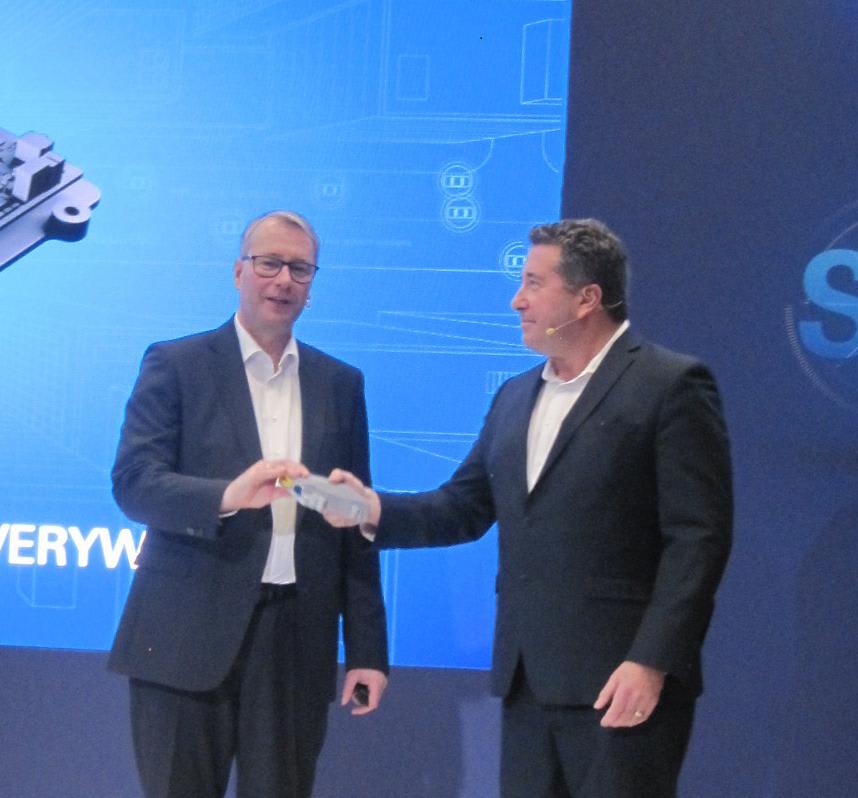
“We learn from each other,” said ZF CEO Dr. Stefan Sommer. “The auto industry needs to learn from the computing industry, about software engineering, new processor, AI and adding speed. These industries need to learn that the automotive industry is different. We each want to take the best of both worlds.”
More From SAE Media Group
Automotive Engineering
SAE Publishes Terminology Standard for Automated Driving Systems
Automotive Engineering
Integrated Electronic Stability Control
Automotive Engineering
Nissan's ProPILOT Assist Is More Than Lane-Keeping
Automotive Engineering
Cameras Are Focal Point at ZF TRW's New Global Tech Center in Michigan

Off-Highway Engineering
Forward-Looking Lidar Can Revolutionize Driver-Assistance Systems
Off-Highway Engineering
Autonomous Trucking Tech Hits High Gear
Automotive Engineering
JLR Sheds Light on R&D Projects in Advanced HMI, Automated Driving
Automotive Engineering
Harman Advanced Concept Brings Intuitive HMI to Automated Driving
Automotive Engineering
Intel Inside the Cloud-Based Data Future
Automotive Engineering
Artificial Intelligence Becomes a Reality
Automotive Engineering
CES 2025 Preview: All the Tech That’s Fit to Print
Autonomous Vehicle Engineering
Platform-Agnostic Interface Aims to Accelerate Truck Autonomy
Automotive Engineering
BorgWarner Prepares Manual Gearchange for ADAS Vehicles
Off-Highway Engineering
Level 1 Automated Driving Coming to Class 8 Truck Fleets
Off-Highway Engineering
Daimler Truck and Torc Intensify Pursuit of Autonomous Trucks
Automotive Engineering
Sensor Fusion Expanding in Step with Advancing Vehicle Sophistication
ADAS & Autonomous Vehicle Engineering
Automated Driving’s Journey: One Step Forward…
Autonomous Vehicle Engineering
The Future of Automated Vehicle Cabins
Autonomous Vehicle Engineering
Predicting the Road to Efficiency
Automotive Engineering
GM Announces SAE Level 3 Autonomy and SDV Technology
ADAS & Autonomous Vehicle Engineering
AV Life After Argo AI
Autonomous Vehicle Engineering
ZF’s Autonomous Systems Head Takes a Pragmatic View of the ‘Levels’ Playing Field
Off-Highway Engineering
Volvo Trucks, FedEx Demonstrate 3-Truck Platoon on North Carolina Highway
Automotive Engineering
CES 2017: Automotive Suppliers Eclipsing OEMs in Advanced Tech
ADAS & Autonomous Vehicle Engineering
Tesla’s FSD Recall Impacts AV Industry
Automotive Engineering
Taking ‘Eyes-Off’ the ADAS Future
Off-Highway Engineering
WCX 2021: Top Engineers Talk Industry Transformation
Autonomous Vehicle Engineering
Making Safety Standard
Automotive Engineering
The Navigator: Traversing the Autonomous Trust Gap
Top Stories
INSIDERManufacturing & Prototyping
 How Airbus is Using w-DED to 3D Print Larger Titanium Airplane Parts
INSIDERManned Systems
 FAA to Replace Aging Network of Ground-Based Radars
NewsTransportation
 CES 2026: Bosch is Ready to Bring AI to Your (Likely ICE-powered) Vehicle
NewsSoftware
 Accelerating Down the Road to Autonomy
EditorialDesign
 DarkSky One Wants to Make the World a Darker Place
INSIDERMaterials
 Can This Self-Healing Composite Make Airplane and Spacecraft Components Last...
Webcasts
Defense
 How Sift's Unified Observability Platform Accelerates Drone Innovation
Automotive
 E/E Architecture Redefined: Building Smarter, Safer, and Scalable...
Power
 Hydrogen Engines Are Heating Up for Heavy Duty
Electronics & Computers
 Advantages of Smart Power Distribution Unit Design for Automotive...
Unmanned Systems
 Quiet, Please: NVH Improvement Opportunities in the Early Design...
