




Harman Advanced Concept Brings Intuitive HMI to Automated Driving
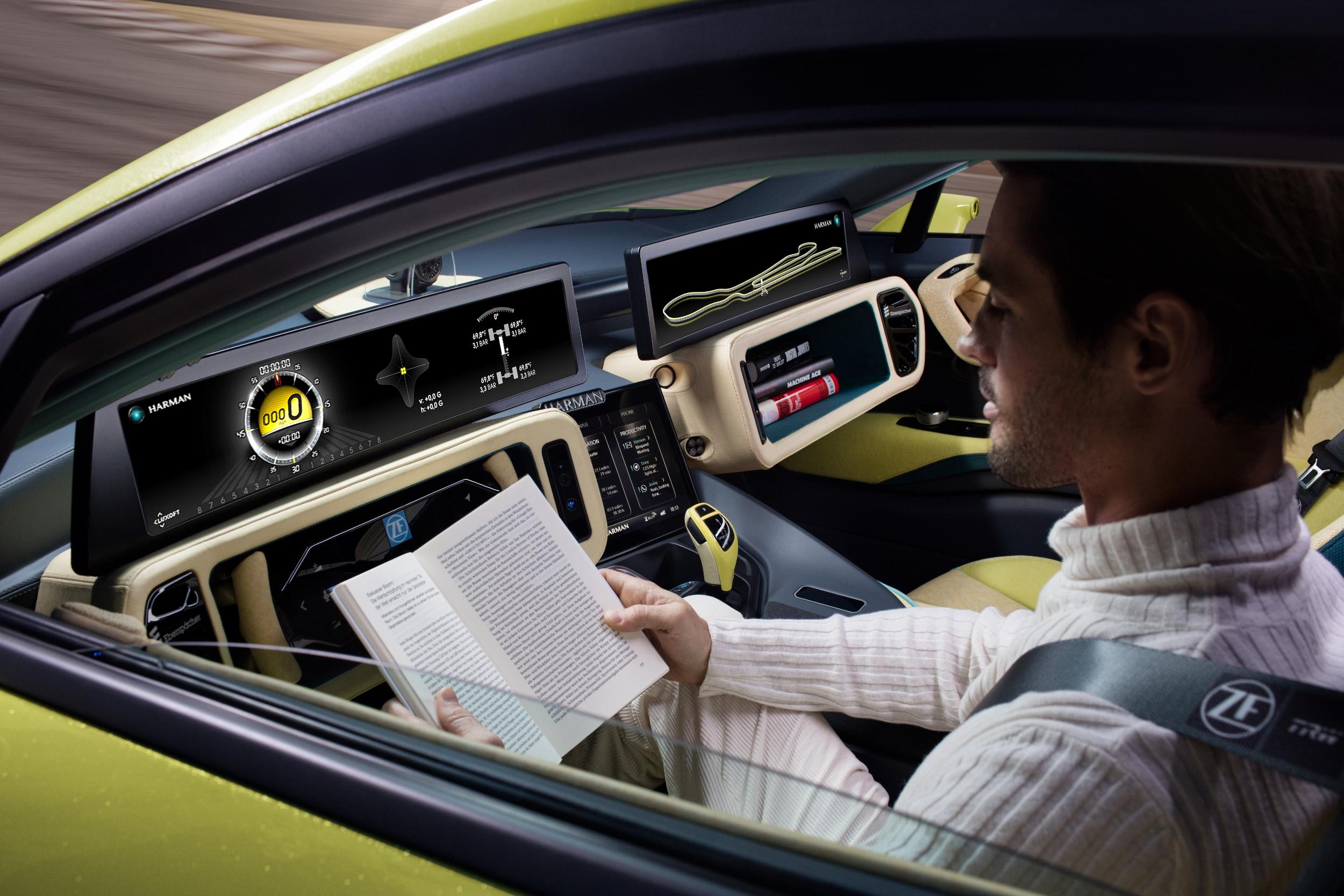
Harman International is demonstrating an advanced connected-car platform that previews a fundamental shift in the human-machine interface of automated and autonomous vehicles. For this project Harman is collaborating with Swiss-based concept vehicle specialist Rinspeed, which developed the BMW i8-based Etos demonstrator featuring V2X (vehicle to everything) capability and incorporating the latest Microsoft "driver assistant."
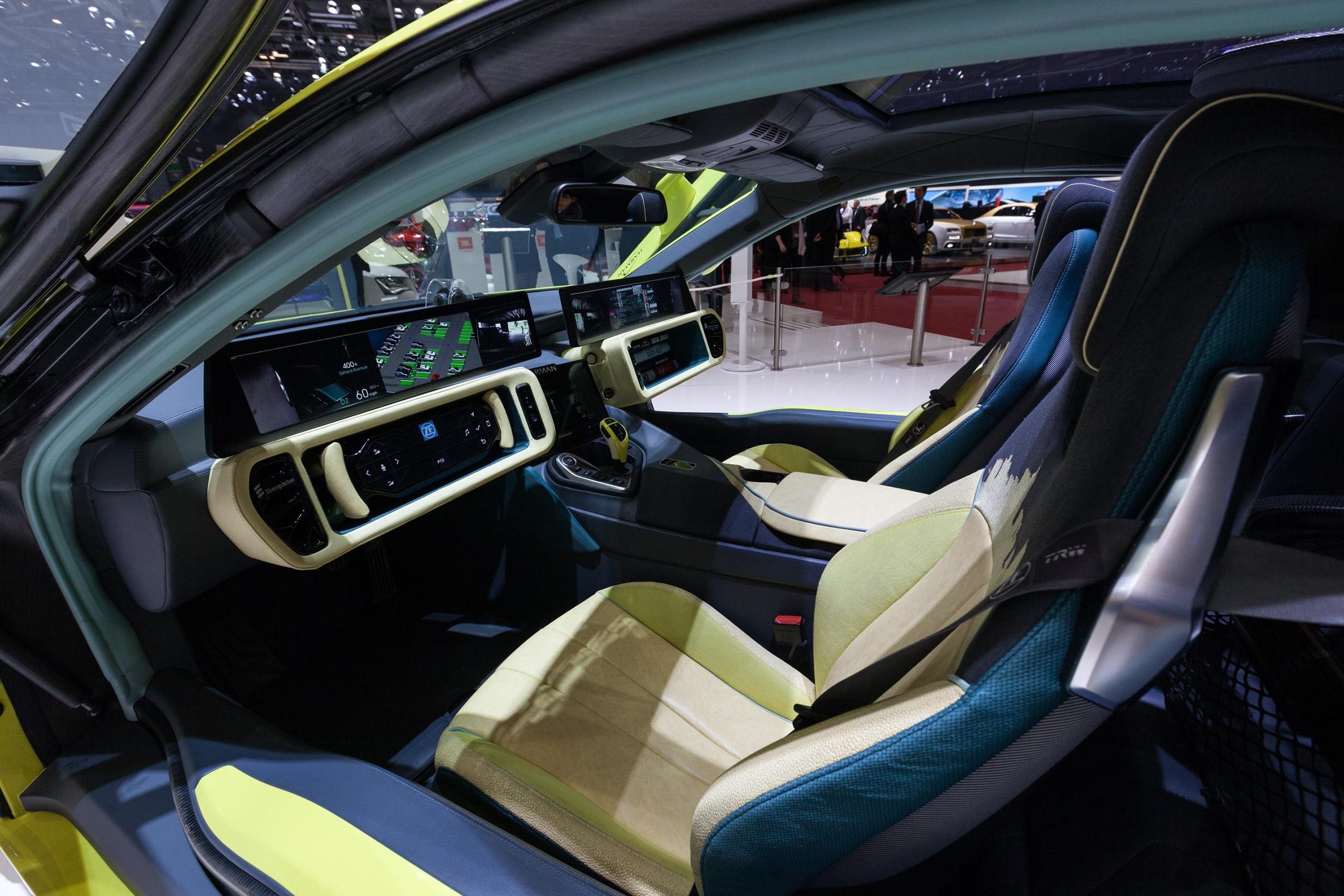
The Harman platform, known as LIVS (Life-Enhancing Intelligent Vehicle Solution), is based on RoadLINK technology from NXP Semiconductors. The demonstrator shows how vehicle occupants will safely interact with the outside world, whether driving in SAE Level 2 or 3 automated mode, or in fully autonomous SAE Level 5.
Harman’s aspiration is to develop an “intelligent, intuitive system that, like an executive assistant, always reads what the boss wants, when you’re in a good or bad mood, under stress, not putting that irritating ‘phone call through or when you need a tea or coffee,” explained Phil Eyler, President, Harman Connected Car Division.
Microsoft assistant 'learns'
To demonstrate that potential at the 2016 Geneva Salon, Eyler ‘drove’ the author through an animation depicting a future commute in the Etos concept from home to the office.
“The key is moving from disparate technologies to more integrated ones in the overall experience,” he explained. Although the car is stationary during this virtual drive, it is always "live" and connected to "the Cloud" via Harman intelligent vehicle technologies. The first thing it does is authenticate the passenger and driver, via their mobile devices, as they approach. This in effect "personalizes" the vehicle to the occupants' individual tastes as Microsoft personal assistant "welcomes" the occupants to the car.
Sitting in the car, you're facing a pair of ultra-high-definition (4000 resolution), 21.5-in screens, “curved for the first time in a car,” noted Eyler. The screens can be individually configured to the driver and passengers preferences plus a smaller 2000-resolution center display. Both screens welcome driver and passenger whilst seamlessly integrating their home and car networks,
“Because it’s connected to 'the Cloud' and exchange server with Microsoft, the car has access to all their contacts, calendar, etc., and can 'see' that the next destination is his office,” Eyler explained.
As the vehicle emerges from the driveway it is already warning the driver of oncoming traffic in the blind spot: Etos is equipped with eight HD cameras to give the driver a surround view of the car, including objects in blind spots and ‘curb’ cameras for close proximity parking either in the street or in narrow bays.
However, unlike Continental's rear-view camera system shown last year with its trio of cameras (one each side and a third in the ‘bee-sting’ aerial mount’), the Harman system depends on two backward-facing cameras with the images displayed on the screens. Eyler admitted, however, that a third rearward facing camera could be installed and that the location of the display screens would be determined by the OEM customer.
Once en route, if the driver regularly asks the navigation system to guide him or her via a particular coffee shop, for instance, the Microsoft’s personal assistant will "learn" this and the personal assistant will, in the future, pre-empt the driver using voice activation rather than waiting for a request.

Depending on the driving mode, the electronic "butler" will stream music via Harman’s intelligent player that categorizes music based on its genre, such as classical, jazz, etc., or play the driver or passenger’s favorite movie on their individual sides of the cockpit. If the car is in full autonomous mode with the steering wheel furled back into the fascia then the driver could enjoy a game on the embedded X-Box One.
If, however, the electronic assistant is aware of an impending conference call, for example, it will patch the call through complete with Power Point presentations.
Monitoring driver awareness
“Discounting the fully autonomous mode, we’re already working with OEMs to offer Microsoft in cars by the end of this year/early 2017, some as facelifts of existing platforms," Eyler said, "whilst we’re also developing with the display manufacturers to integrate them into our new generation of platforms.”
Integral to the car’s communication strategy is the technology's ability to determine if the driver is capable of receiving information under safety critical conditions. To this end the interior features five tracking cameras, including one that monitors the driver’s iris to measure cognitive load to understand the driver’s condition. There are also gaze tracking cameras measuring biometric rates, as well as mood detection to see if the driver is alert or needs prompting to rest and refresh themselves before continuing the journey.
Unlike some concepts this one studiously avoids the vexed "how" question when it comes to autonomous driving and driver/passenger safety.
More From SAE Media Group
Automotive Engineering
Cameras Are Focal Point at ZF TRW's New Global Tech Center in Michigan

Automotive Engineering
SAE Publishes Terminology Standard for Automated Driving Systems
Automotive Engineering
JLR Sheds Light on R&D Projects in Advanced HMI, Automated Driving
Automotive Engineering
Nissan's ProPILOT Assist Is More Than Lane-Keeping
Off-Highway Engineering
Forward-Looking Lidar Can Revolutionize Driver-Assistance Systems
Automotive Engineering
Intel Inside the Cloud-Based Data Future
Automotive Engineering
Nader: Are Glitch-Free Autonomous Vehicles Possible?
Automotive Engineering
Integrated Electronic Stability Control
Automotive Engineering
BorgWarner Prepares Manual Gearchange for ADAS Vehicles
Off-Highway Engineering
Autonomous Trucking Tech Hits High Gear
Autonomous Vehicle Engineering
Platform-Agnostic Interface Aims to Accelerate Truck Autonomy
Off-Highway Engineering
Level 1 Automated Driving Coming to Class 8 Truck Fleets
Automotive Engineering
CES 2025 Preview: All the Tech That’s Fit to Print
Automotive Engineering
Sensor Fusion Expanding in Step with Advancing Vehicle Sophistication
Autonomous Vehicle Engineering
The Future of Automated Vehicle Cabins
Autonomous Vehicle Engineering
Predicting the Road to Efficiency
Off-Highway Engineering
Daimler Truck and Torc Intensify Pursuit of Autonomous Trucks
Autonomous Vehicle Engineering
ZF’s Autonomous Systems Head Takes a Pragmatic View of the ‘Levels’ Playing Field
Automotive Engineering
Artificial Intelligence Becomes a Reality
Automotive Engineering
AVSC Develops Best Practices for Traceable AV Safety Inspection Protocols
Off-Highway Engineering
Volvo Trucks, FedEx Demonstrate 3-Truck Platoon on North Carolina Highway
Off-Highway Engineering
Continental, Aurora Finalize Design of Scalable Autonomous Trucking System
Automotive Engineering
Are Today’s Sensors Ready for Next-Level Automated Driving?
Automotive Engineering
Autonomous Transit Bus Nears Its First Year of Operation
Autonomous Vehicle Engineering
Navigating the Language of Vehicle Autonomy
Automotive Engineering
V2X Communications Face Many Challenges Before Deployment
Automotive Engineering
Chassis Brakes International Debuts First NA-Produced Products
Automotive Engineering
Provizio Eyes Safety with Radar, Not LiDAR
Autonomous Vehicle Engineering
The Navigator: Mapping the Way to Safe Automated Driving
Top Stories
INSIDERManufacturing & Prototyping
 How Airbus is Using w-DED to 3D Print Larger Titanium Airplane Parts
INSIDERManned Systems
 FAA to Replace Aging Network of Ground-Based Radars
NewsTransportation
 CES 2026: Bosch is Ready to Bring AI to Your (Likely ICE-powered) Vehicle
NewsSoftware
 Accelerating Down the Road to Autonomy
EditorialDesign
 DarkSky One Wants to Make the World a Darker Place
INSIDERMaterials
 Can This Self-Healing Composite Make Airplane and Spacecraft Components Last...
Webcasts
Defense
 How Sift's Unified Observability Platform Accelerates Drone Innovation
Automotive
 E/E Architecture Redefined: Building Smarter, Safer, and Scalable...
Power
 Hydrogen Engines Are Heating Up for Heavy Duty
Electronics & Computers
 Advantages of Smart Power Distribution Unit Design for Automotive...
Unmanned Systems
 Quiet, Please: NVH Improvement Opportunities in the Early Design...
