




CES 2017: Car as Close Companion

Let’s face it. For you (and everybody else), it’s all about you, you—and by the way, you. You know, me, the big "I."

That is, perhaps unless you have a mini-you/mini-me along for the ride, a close clone companion to help you make it safely and happily down the road of life.
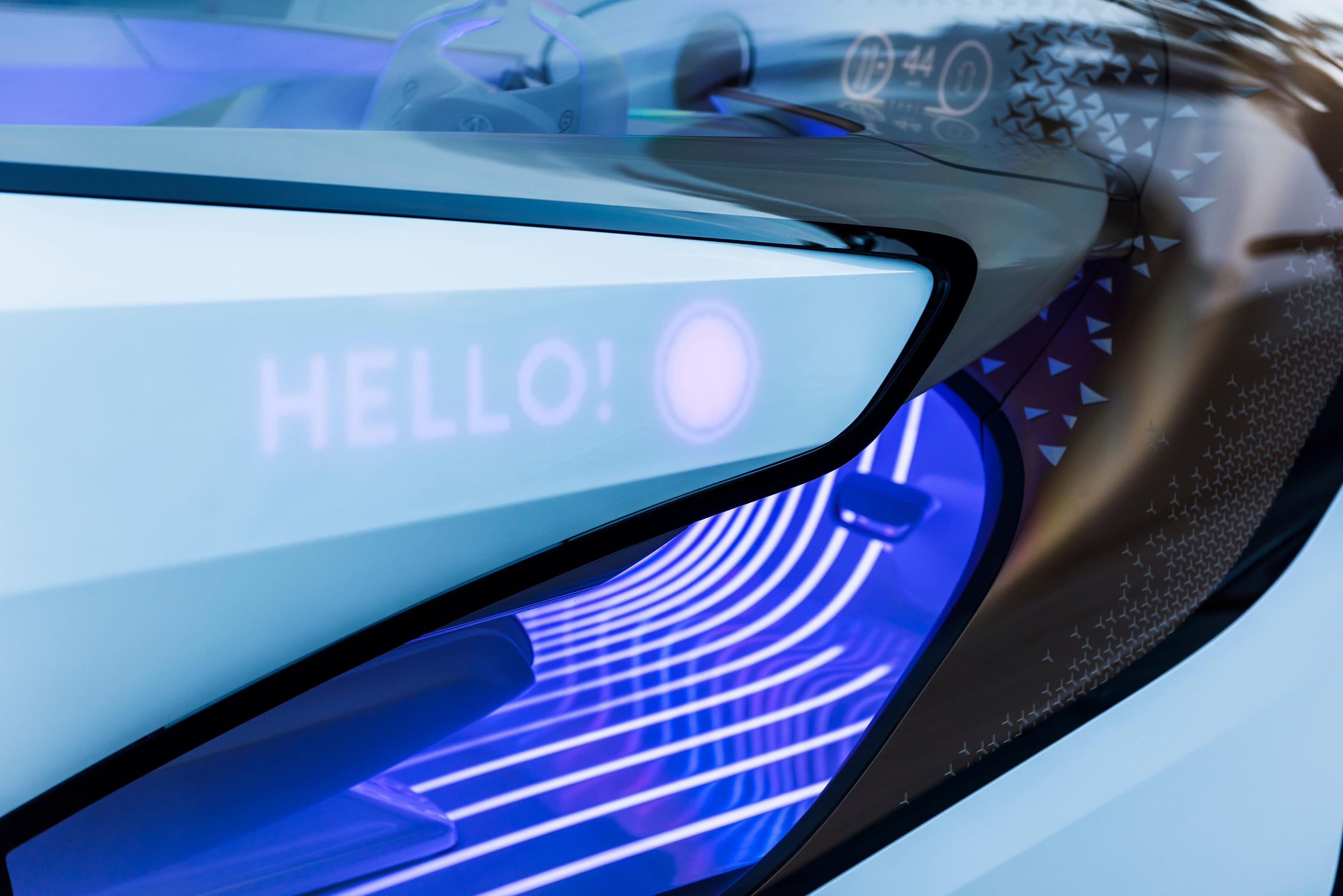
Enter Yui (pronounced ‘you-ee’), Toyota’s new personal assistant in the automaker’s Concept-i vehicle just unveiled at CES 2017. Yui is a dashboard-dwelling, AI-based drivers’ aide whose aim is to create a closer relationship between you and your car. Yui, your devoted virtual-twin buddy and clever little helper, watches your every move like your dog to better know you and predict your preferences. And maybe even extend you emotionally into the vehicle you control, even if you usually let Yui and Concept-i do the driving.

Yui is Toyota’s first smart ambassador to a new kind of personalized, "relationship-based" driving environment that Toyota hopes can augment the user experience in its future cars. The Concept-I designers at Calty Design Research in California exploited everything from floor lighting cues to haptic feedback to exterior text displays and a giant windshield head-up display to help cultivate this link.
“We’ve designed a lot of concept cars,” observed chief designer Ian Cartabiano, “but this is our first ‘philosophical’ design in a while.” The Concept-i is designed, he continued, “from inside out to foster a warm and friendly user experience while presenting a futuristic vision of 2030. The idea is to explore how we might most harmoniously connect the driver and car to society, and create a bond strong enough to help reignite a love for cars in the future.
The vehicle’s “inside-out” design attempts to wrap the occupants in an ubiquitous intuitive interface that helps make communications easy—because almost every surface can double as an information display.

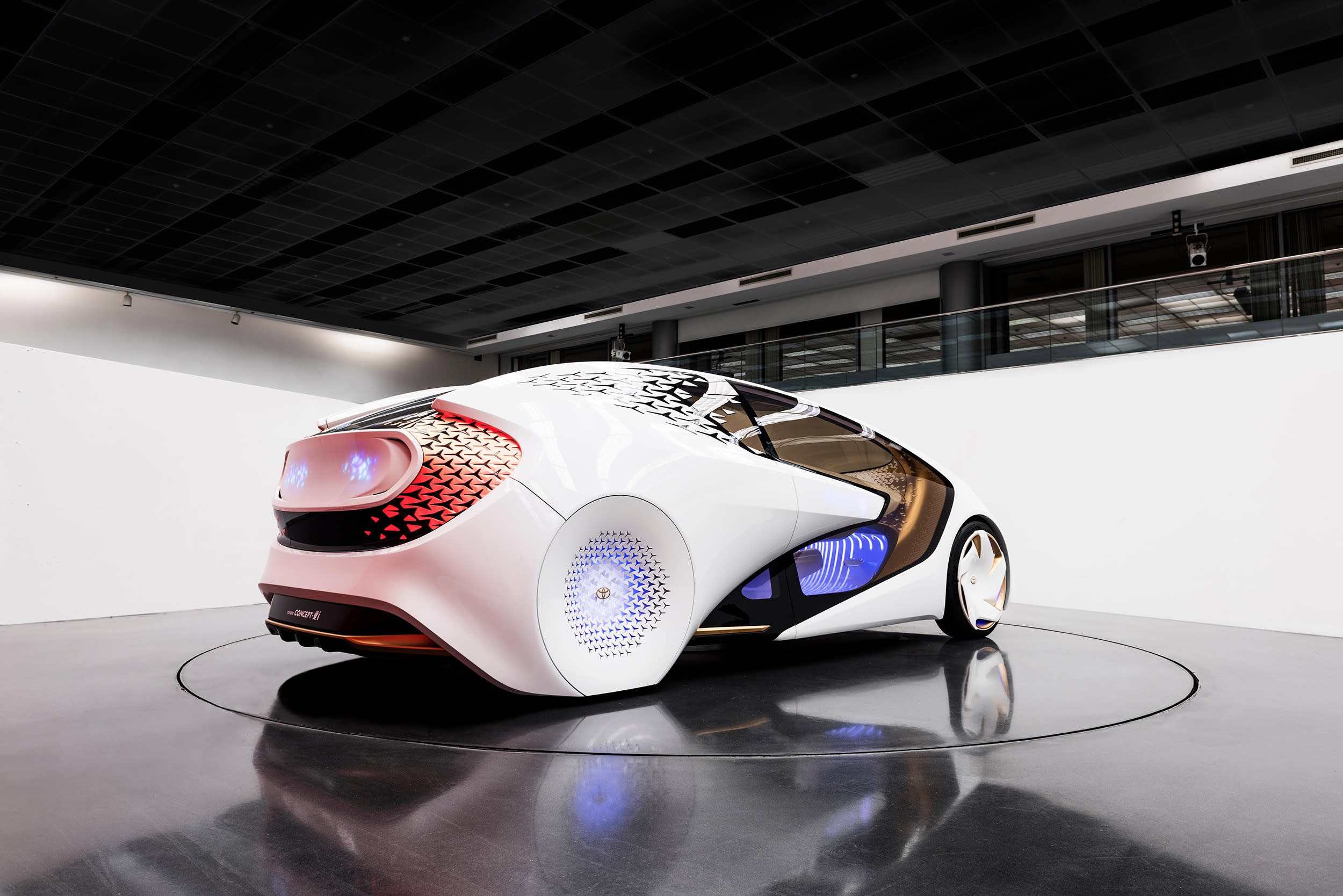
Steadily learning your likes, dislikes, and interests as it monitors your actions and digital correspondence, Yui can offer informed suggestions regarding routes or destinations and strives to keep you safe and healthy. For example, like any loyal wingman, it might suggest that you relinquish the wheel to autodrive after it observes you exhibiting bio-signs of agitation, fatigue, or even over-consumption of alcohol.
More From SAE Media Group
Automotive Engineering
Chrysler Group LLC and Messring Partner to Create Crash Test Facility (Video)
Off-Highway Engineering
Israeli Startup REE Reinvents the Wheel with a Modular Approach to Future EV Design
Automotive Engineering
Integrating a Plug-In Hybrid Jeep

Automotive Engineering
Lexus Unveils Concept Flagship Crossover

Off-Highway Engineering
Math to Road Cycle Is Similar Yet Diverse for Trains, Trucks, and Tractors
Autonomous Vehicle Engineering
Origin of the Species
Automotive Engineering
Tenured Production CEO Leading VW’s U.S. Electrified Manufacturing Push

Automotive Engineering
Waymo’s End Game: Beat Conti, Delphi and Valeo in Self-Driving Tech?
Automotive Engineering
Engineering the 2022 Toyota Tundra
Automotive Engineering
Innovative ‘Afreecar’ Wins SAE’s 2021 Create the Future Design Award
Automotive Engineering
OEMs Continue to Diversify MaaS, Expand UX
Automotive Engineering
Land Rover's Discovery Vision Concept Has Real Future for 2015
Automotive Engineering
Lexus Unveils A-Segment Crossover Concept
Automotive Engineering
Subaru Uses ANSYS Tools to Accelerate Hybrid Vehicle Design
Automotive Engineering
2023 Cadillac Lyriq Executive Chief Engineer: New EV Her ‘North Star’
Aerospace & Defense Tech Briefs
AeroMobil Debuts Special Edition Sky Dragon Personal Transport Aircraft Targeted at Fast-Growing Market in China
Automotive Engineering
Virtual Road Traffic
Automotive Engineering
Simulation Model for Traffic and Environment Simulations
Automotive Engineering
Planning for a Digital World
Automotive Engineering
Jaguar, Exa Say Simulation to Eliminate Prototypes by 2020
Automotive Engineering
Rolls-Royce Reveals a Vision of Its Future
Automotive Engineering
New 40%-Scale Wind Tunnel Increases GM's Aero-Development Capacity
Automotive Engineering
Hyundai Enters the Metaverse Via Its PnD Technology
Automotive Engineering
BUDD-E Concept Forecasts What VW Zero-Emission Van Could Be in 2019
Automotive Engineering
Peugeot Fractal Demonstrates a New Take on Sound Design
Automotive Engineering
EU Group Develops Electric ‘Microsupercar’ Concept
Automotive Engineering
Ford Refines Interior, Exterior on 2025 Explorer
Top Stories
INSIDERManufacturing & Prototyping
 How Airbus is Using w-DED to 3D Print Larger Titanium Airplane Parts
INSIDERManned Systems
 FAA to Replace Aging Network of Ground-Based Radars
NewsTransportation
 CES 2026: Bosch is Ready to Bring AI to Your (Likely ICE-powered) Vehicle
NewsSoftware
 Accelerating Down the Road to Autonomy
EditorialDesign
 DarkSky One Wants to Make the World a Darker Place
INSIDERMaterials
 Can This Self-Healing Composite Make Airplane and Spacecraft Components Last...
Webcasts
Defense
 How Sift's Unified Observability Platform Accelerates Drone Innovation
Automotive
 E/E Architecture Redefined: Building Smarter, Safer, and Scalable...
Power
 Hydrogen Engines Are Heating Up for Heavy Duty
Electronics & Computers
 Advantages of Smart Power Distribution Unit Design for Automotive...
Unmanned Systems
 Quiet, Please: NVH Improvement Opportunities in the Early Design...
