




Planning for a Digital World
Volkswagen development chief Heinz-Jakob Neusser details how do-it-yourself model updating, digital interiors, broad-spectrum modularity, autonomous driving, and software upgrades will create transports of delight.
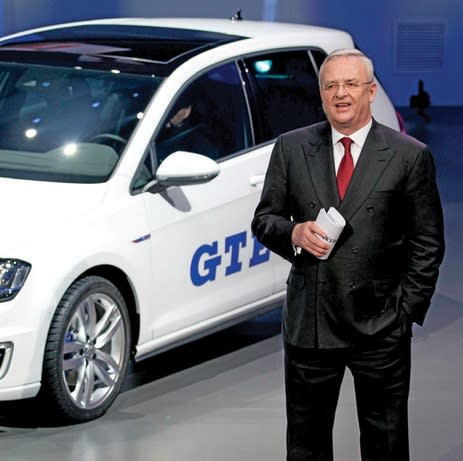
Volkswagen Group’s Chairman, Prof. Dr. Martin Winterkorn, believes the automotive industry is poised to undergo a huge technological and cultural upheaval: “And digitalization is increasingly redefining the way we live and work. Progressive digitalization will challenge conventional model strategies.”
To begin to meet the challenges that this signals, VW Group R&D spending has soared, topping €10 billion last year, an increase of 15%, and there is no sign of the spending slackening as a parallel focus on environmental requirements continues.
Buyers will expect change and choice at a rate never before seen: “Over the next few years, our industry will face one of the greatest upheavals since the invention of the automobile; people’s mobility expectations are undergoing a fundamental transformation,” said Winterkorn. It will be part of the transition of the car from a mere piece of transport to become a mobile computer that will, in Winterkorn’s words, have “revolutionary consequences for the future.”
He and his top R&D chiefs across the Group — as with those of other OEMs — know they have to think long term but be able to react in the short term to changing end-user expectations, and whether every current model would automatically have a successor or if broader variant choice will be necessary.
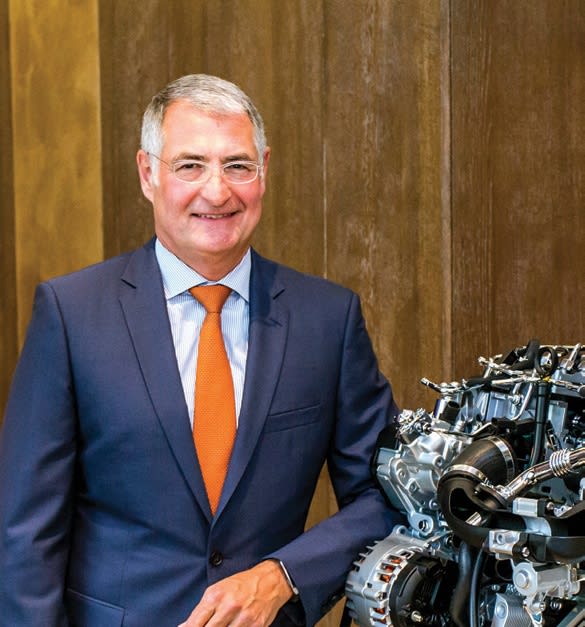
One of those chiefs is Dr. Heinz-Jakob Neusser, Board Member for Development at Volkswagen, who is confident that individual customers will one day be able to implement certain model updates at home. This could initially include such areas as navigation maps via software upgrades as available now on smartphones.
The real beginning of this shift is now being seen in the cabin, said Neusser: “We will see car interiors that are increasingly digital. Drivers will have much more choice over how much [or how little] information they see and the style in which it is presented. They will be able to choose the size and design of dials and where they are placed on a display. If a pure digital display is preferred then this can be provided as you might choose it for your mobile phone. Even the number of instruments on show could be selected, although warnings and important information will always appear automatically. When it is safe to do so, and the vehicle is at rest, the driver will be able to view a large and convenient screen replication of their smartphone and to play videos. When on the move, navigation mapping can appear on the same display, taking as much available space as the driver desires.”
Short-term updating
The digital dashboard of the new Audi TT is an indicator of what the VW Group will be introducing across its model ranges. As with the Group’s MQB platform, it is an example of long-term thinking but with the capability of short-term modification or updating. “We currently build the Golf with gasoline, diesel, CNG (compressed natural gas), electric hybrid, and pure electric powertrains. We could also build it on the same line as a CNG hybrid or a fuel-cell vehicle without modification to its structure,” said Neusser.
To achieve such flexibility, VW has had to rethink the design of its production facilities as well as its products. Said Neusser: “We can now be flexible in our planning and production globally. If demand for a particular powertrain is greater at a particular time in a particular part of the world, then we can adapt easily and immediately.”
Neusser, a powertrain specialist who previously held senior posts at Porsche, now part of the VW Group, emphasized the importance of engine modularity: “We have also redesigned our small TSI and TDI engine ranges to be modular as well as being lighter, stronger, more fuel efficient, and with more torque. The gasoline engines are the first four-cylinder units in production with cylinder deactivation; it is incorporated within the cylinder head module. We can fit a head with deactivation or one without to the same engine in production.”
The MQB could also accommodate a fuel-cell powertrain in models such as the Golf. However, Neusser is cautious about the technology: “We have not been communicating on this lately as the adoption of this powertrain must await the availability of a hydrogen infrastructure. Hydrogen fuel-cell technology may also be in competition with CNG or BEVs/PHEVs (battery electric vehicles/plugin-hybrid electric vehicles) technology and their respective infrastructures.” VW’s involvement in lithium-air battery development may place a further question mark over fuel-cell potential.
Modular infotainment
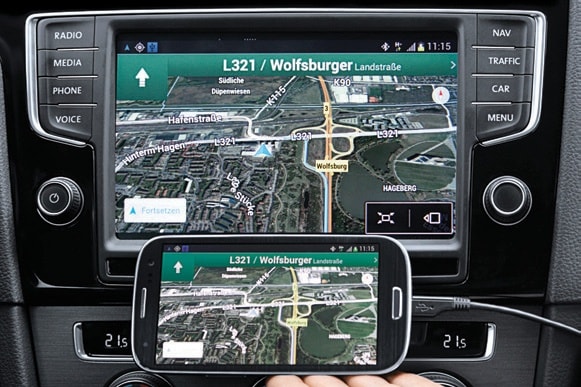
Modularity also figures in VW’s product cycle for infotainment, said Neusser: “Our Modular Infotainment System almost reaches the product cycles of consumer market gadgets. This has been realized by introducing a flexible and scalable hardware and software design. The first generation of the system was launched in 2012. In 2013, we implemented the online services, and this year the second generation offered in the new Polo has the MirrorLink feature, facilitating display content from smartphone apps (approved by VW) on the car’s central screen.”
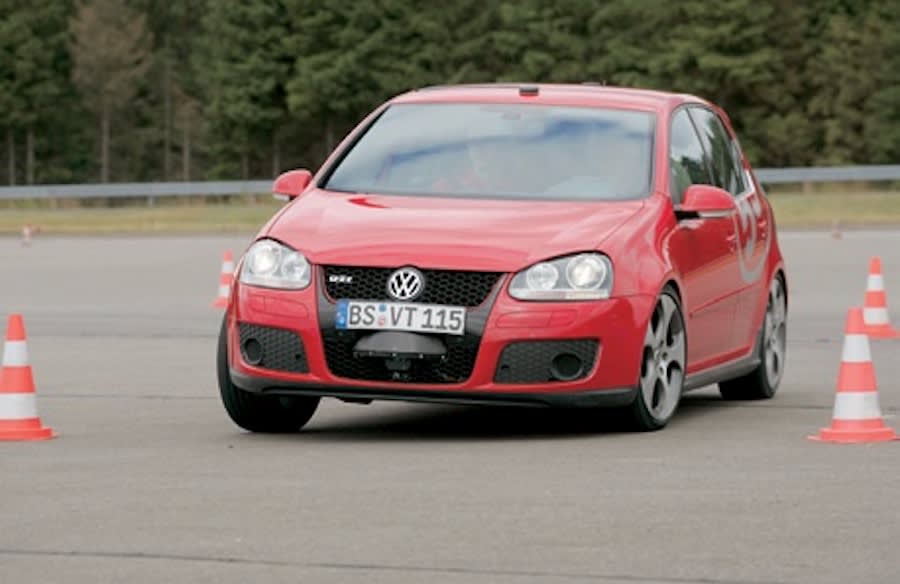
Development of fully autonomous vehicles including projects such as the first U.S. Department of Defense DARPA Challenge, the DARPA Urban challenge in conjunction with Stanford University in the U.S., and the Pikes Peak autonomous Audi TT, represents another important area of Neusser’s responsibilities: “We have also demonstrated the fully autonomous Golf 53+1 that is able to learn a circuit marked out by cones on its own, then drive it as fast as a highly competent race driver. We continue such projects mainly through our Electronics Research Laboratory in California. Driver assistance functions will continue to develop, and we will probably see the law changing in the future to allow the car to take more and more control as the technologies become more sophisticated. However, the topic for discussion remains one of who might be liable if something goes wrong. Is it the car or the driver?”
Biggest challenges
Asked which areas continue to be the most salient in terms of bringing the biggest challenges to the motor industry — and the Volkswagen Group in particular — Neusser stressed the need for broad-spectrum ecofriendly solutions: “We continue to meet successfully ever more stringent emissions, CO2, and fuel-efficiency targets in safer, better-performing, and better-equipped vehicles. We have also set ourselves ambitious targets to reduce CO2 output worldwide in vehicle manufacture. In Spain, we have built the largest solar array at any car factory, and in Brazil we have a factory using the largest car hydroelectric plant.”
VW Group is also launching the biggest initiative for e-mobility in China’s automotive history, starting with the electric e-up! and e-Golf. The VW Group and its Chinese joint ventures will spend €18 billion on new vehicles, technologies, and plants in China by 2018.
The company’s ultra-economical low emissions XL1 also represents part of its environmental-centric development program, exploring current limits for minimum energy consumption for a practical, legal road car, requiring only 6.25 kW (8.38 hp) to sustain 100 km/h (62 mpg) with CO2 emissions of just 21 g/100 km.
Added Neusser: “We are pushing the boundaries in all areas whether this be in powertrain, vehicle construction, material use, production methods, and as an employer.”
More From SAE Media Group
Automotive Engineering
Systems-engineering a New 4x4 Benchmark
Aerospace & Defense Tech Briefs
AeroMobil Debuts Special Edition Sky Dragon Personal Transport Aircraft Targeted at Fast-Growing Market in China
Automotive Engineering
Will ‘Recalls’ Become ‘Upgrades’?
Aerospace & Defense Tech Briefs
SAE International Extends Call for Abstracts, Seeks Submissions for AeroTech Conference
Aerospace & Defense Tech Briefs
Industry Invited to Participate in AeroTech Aerospace and Defense Technical Program
Aerospace & Defense Tech Briefs
SAE International Issues, Revises Technical Reports for Aerospace Engineering
Aerospace & Defense Tech Briefs
Quality Management Experts Provide Guidance on AS9100 Standard, Equipment Calibration
Aerospace & Defense Tech Briefs
SAE International Launches Aerospace Technology Symposium at Japan Aerospace 2018
Aerospace & Defense Tech Briefs
Personal Air Transport Drives Need for Advanced VTOL Technologies, Standards
Aerospace & Defense Tech Briefs
Turn Growing Complexity into Competitive Advantage Through Digitalization -- Focus of AeroTech Keynote Thursday
Off-Highway Engineering
Allison Builds a Testing Powerhouse
Aerospace & Defense Tech Briefs
Additive Manufacturing Adoption Up, Growing Rapidly in Aerospace
Aerospace & Defense Tech Briefs
Air Mobility Innovations Take Center Stage at Aerospace Systems and Technology Conference
Automotive Engineering
Automated Vehicle Safety Series Addresses Design, Testing, Verification, and Validation
Aerospace & Defense Tech Briefs
Boeing and NASA Unveil Lightweight, Ultra-Thin, More Aerodynamic Transonic Truss-Braced Wing Concept
Aerospace & Defense Tech Briefs
Connected Aircraft Technologies Benefit Manufacturers, Airlines, and Travelers
Autonomous Vehicle Engineering
Making the Strategic Move into AV Testing
Aerospace & Defense Tech Briefs
Barker Approaches Aircraft as System of Systems in Latest SAE International Book

Aerospace & Defense Tech Briefs
SAE International Issues First Technical Standards for Aerospace Additive Manufacturing
Aerospace & Defense Tech Briefs
First Airbus A330-800 Airliner Goes Airborne in Maiden Flight, Enters Flight Test Phase

Aerospace & Defense Tech Briefs
Collins Aerospace Taps Wind River Helix Virtualization Platform to Future-Proof Avionics
Off-Highway Engineering
Addressing Electromagnetic Compatibility in the Context of Aircraft Electrification
Aerospace & Defense Tech Briefs
Aireon to Launch Free, Real-Time Emergency Aircraft Location Service
Aerospace & Defense Tech Briefs
GoFly Prize Invites Innovators to Shape Future of Flight, Compete for $1.8M in Prizes
Aerospace & Defense Tech Briefs
Aerion Taps Siemens’ Xcelerator Portfolio to Enable Next-Generation Global Transportation Networks
Automotive Engineering
Tension and the Electric Takeover
Aerospace & Defense Tech Briefs
AIA Predicts Flying Air Taxis, Supersonic Air Travel, and Space Industry for 2050
Aerospace & Defense Tech Briefs
SAE International Anti-Counterfeit Standards Integral to Obsolescence Management
Top Stories
NewsSensors/Data Acquisition
 Microvision Aquires Luminar, Plans Relationship Restoration, Multi-industry Push
INSIDERRF & Microwave Electronics
 A Next Generation Helmet System for Navy Pilots
INSIDERWeapons Systems
 New Raytheon and Lockheed Martin Agreements Expand Missile Defense Production
NewsAutomotive
 Ford Announces 48-Volt Architecture for Future Electric Truck
INSIDERAerospace
 Active Strake System Cuts Cruise Drag, Boosts Flight Efficiency
ArticlesTransportation

Webcasts
Aerospace
 Cooling a New Generation of Aerospace and Defense Embedded...
Energy
 Battery Abuse Testing: Pushing to Failure
Power
 A FREE Two-Day Event Dedicated to Connected Mobility
Automotive
 Quiet, Please: NVH Improvement Opportunities in the Early Design Cycle
Electronics & Computers
 Advantages of Smart Power Distribution Unit Design for Automotive &...
Unmanned Systems
 Sesame Solar's Nanogrid Tech Promises Major Gains in Drone Endurance