




Integrating a Plug-In Hybrid Jeep
Vehicle synthesis manager Eunjoo Hopkins talks about tackling challenges on the 2022 Jeep WL program.
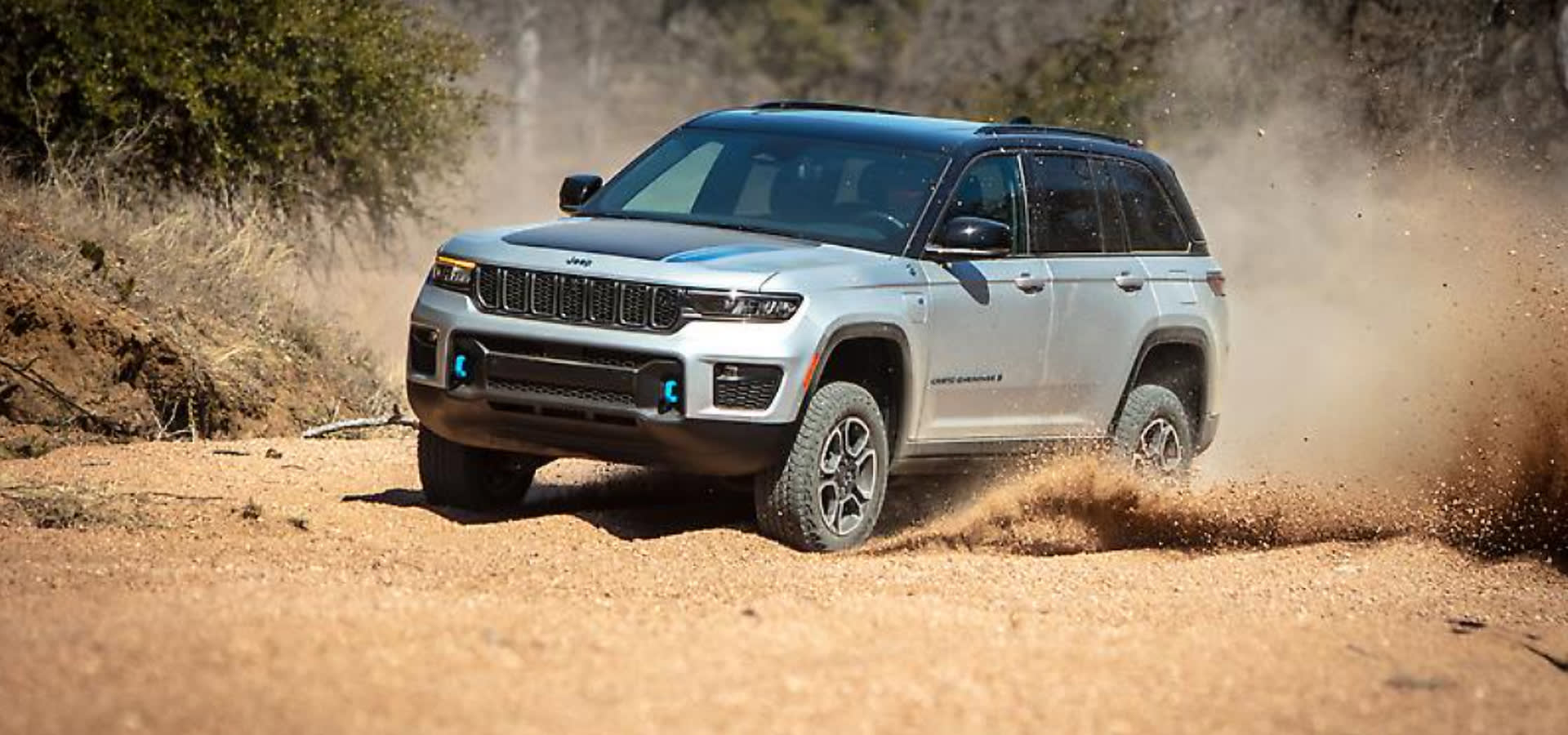
At no other time in the auto industry’s history has the role of vehicle integration and synthesis been so important. The growth of electronic content, the melding of mechanical and electrical engineering and the increased focus on electrified propulsion have made integration/synthesis teams vital to ensuring that design spec and requirements are maintained through prototypes, testing, and validation, in order to meet market standards and exceed customer expectations.

Eunjoo Hopkins (right) is vehicle synthesis manager on the 2022 Jeep Grand Cherokee 4xe plug-in hybrid (called “4-by-e” by Stellantis engineers). She joined the former FiatChrysler in 2009 as a Powertrain engineer and only recently moved over to vehicle integration. “I’ve worked in propulsion systems for most of my career here thus far, including the [Chrysler] Pacifica Hybrid,” she told SAE Media during the Grand Cherokee 4xe media launch in Texas. “I moved into integration/synthesis because I wanted to experience the other aspects of vehicle development.”
Integration, she explained, “is all about what we call ‘the sciences’ – aerodynamics, safety, NVH, vehicle dynamics. We have to make sure we meet the ‘science’ goals established for the program, all the way back to component design,” she noted. For the Grand Cherokee 4-by-e, that includes metrics such as foundation braking feel as well as regen braking. Calibration falls under Powertrain, however. “If there is a metric we don’t meet, we go back and redesign the component,” Hopkins asserted. “We’re also responsible for holding ride-and-drives with our executives to get their inputs and buy-in to make sure our products meet customer expectations.” Highlights of our conversation with Hopkins follow.
Is most of the Grand Cherokee 4xe’s PHEV powertrain carried over from the Jeep Wrangler 4xe?
Yes, but with more refinements. Being able to pick up the propulsion system from Wrangler allowed us to move the program along much more quickly. The challenge, however, was the different electrical architectures of the two vehicles. The Wrangler’s architecture is very different from the WL [internal code for the new Grand Cherokee] in how it does ‘wake up’ and ‘sleep,’ for example. That’s where a lot of complication came in for us, in integrating [the hybrid system] with the vehicle architecture. Grand Cherokee and Grand Wagoneer have all-new electrical architectures, as Tom Seel [Grand Cherokee vehicle line engineer] has noted.
The PHEV system combines P1 and P2 electric machine positions. What do you call that combination?
We call it a ‘P1-P2.’ Integrating the hybrid transmission into the Grand Cherokee, seamlessly, is where our learnings from Wrangler came in. To make its engagement and disengagement smooth in all operating modes, including engine-on/engine-off and at launch, required a lot of hard work in terms of control-algorithms and calibration. The vehicle has a separate transmission controller, which ‘plays nice’ with the supervisory controller.
A key to any electrified Jeep is thorough and robust sealing of the battery, controllers and the high-voltage harness from water intrusion. Did sealing the Grand Cherokee pose challenges?
We used industry standard specifications for sealing. We didn’t do anything special. We made sure that we validated those requirements at the VP [prototype] stage. When we hand-build our prototype vehicles, we use as much of the actual factory processes as possible. Before we put this vehicle through our first water fording test, we contacted all the DREs [design release engineers] to make sure the parts they supplied truly did pass the component-level testing.
The WL team drove the Grand Cherokee 4xe over the 22-mile Rubicon Trail on electric power only. How much did regen braking play a role in getting through that journey?
That’s interesting. Doing the Rubicon Trail is a low-speed event; not a lot of power is used. When you tip out of the throttle, you’re using the electric machine to absorb that energy. On that run, we typically used the forward motion of the vehicle and the driver’s foot to modulate vehicle speed. In the end I believe we still had some battery energy left.
More From SAE Media Group
Automotive Engineering
Innovative ‘Afreecar’ Wins SAE’s 2021 Create the Future Design Award
Automotive Engineering
Subaru Uses ANSYS Tools to Accelerate Hybrid Vehicle Design
Automotive Engineering
Tenured Production CEO Leading VW’s U.S. Electrified Manufacturing Push

Automotive Engineering
2022 Grand Cherokee Plugs In
Automotive Engineering
Mitsubishi PHEV Concept Destined for Production?
Automotive Engineering
Engineering the 2022 Toyota Tundra
Automotive Engineering
Toyota Stretches SUV Line-Up with World Debut of Grand Highlander
Automotive Engineering
WCX 2024: Tier 1s Rolling with the Rocky Transition to EVs
Automotive Engineering
Volvo’s Polestar Powerhouse Plug-In Hybrid
Automotive Engineering
E-Axles Speed Electrification
Automotive Engineering
2016 Volt: GM Gives Its PHEV Longer Range, less Weight, Easier Charging
Automotive Engineering
Ford Engineers Charged with a Blank EV Slate for the All-New 2021 Mustang Mach-E
Automotive Engineering
Preparing for the New, Faster EV Product Cadence
Automotive Engineering
2022 Toyota Tundra: V8 Out, Twin-Turbo Hybrid Takes Over
Automotive Engineering
Engineering a Marvel of a Maverick Hybrid Transmission
Automotive Engineering
Ford Brings “No Compromise” Hybrid Tech to 2020 Explorer
Automotive Engineering
Corvette Hybrid Development Defies GM’s All-Electric Mantra
Automotive Engineering
Automated Vehicle Safety Series Addresses Design, Testing, Verification, and Validation
Automotive Engineering
Suppliers Prepare for a Drop in EV Market Share
Automotive Engineering
Mazda’s 2024 CX-90 Offers Turbo I-6, PHEV Propulsion
Automotive Engineering
Volvo XC90 Line-Up Keeps Hybrid Futures Safe
Automotive Engineering
2018 Chrysler Pacifica Hybrid Limited
Automotive Engineering
Stellantis Unveils STLA Large Platform for D, E Segments
Automotive Engineering
Nissan Leaf Gets Updates – and Stays the Same – Where It Matters Most
Automotive Engineering
All-Electric Nissan Ariya Handles Ultra-Cold Temps on Pole to Pole Trek
Automotive Engineering
Battery Leasing Spurs VinFast’s EV Offensive
Off-Highway Engineering
Allison Builds a Testing Powerhouse
Automotive Engineering
Hub-Motoring in Lordstown’s Novel Endurance
Automotive Engineering
2025 Kia Carnival MPV Hybrid Brings Unplugged PHEV Power
Top Stories
NewsSensors/Data Acquisition
 Microvision Aquires Luminar, Plans Relationship Restoration, Multi-industry Push
INSIDERRF & Microwave Electronics
 A Next Generation Helmet System for Navy Pilots
INSIDERWeapons Systems
 New Raytheon and Lockheed Martin Agreements Expand Missile Defense Production
NewsAutomotive
 Ford Announces 48-Volt Architecture for Future Electric Truck
INSIDERAerospace
 Active Strake System Cuts Cruise Drag, Boosts Flight Efficiency
ArticlesTransportation

Webcasts
Aerospace
 Cooling a New Generation of Aerospace and Defense Embedded...
Energy
 Battery Abuse Testing: Pushing to Failure
Power
 A FREE Two-Day Event Dedicated to Connected Mobility
Automotive
 Quiet, Please: NVH Improvement Opportunities in the Early Design Cycle
Electronics & Computers
 Advantages of Smart Power Distribution Unit Design for Automotive &...
Unmanned Systems
 Sesame Solar's Nanogrid Tech Promises Major Gains in Drone Endurance