




Honeywell Wins $1.04 Billion U.S. Air Force Power Systems Contract
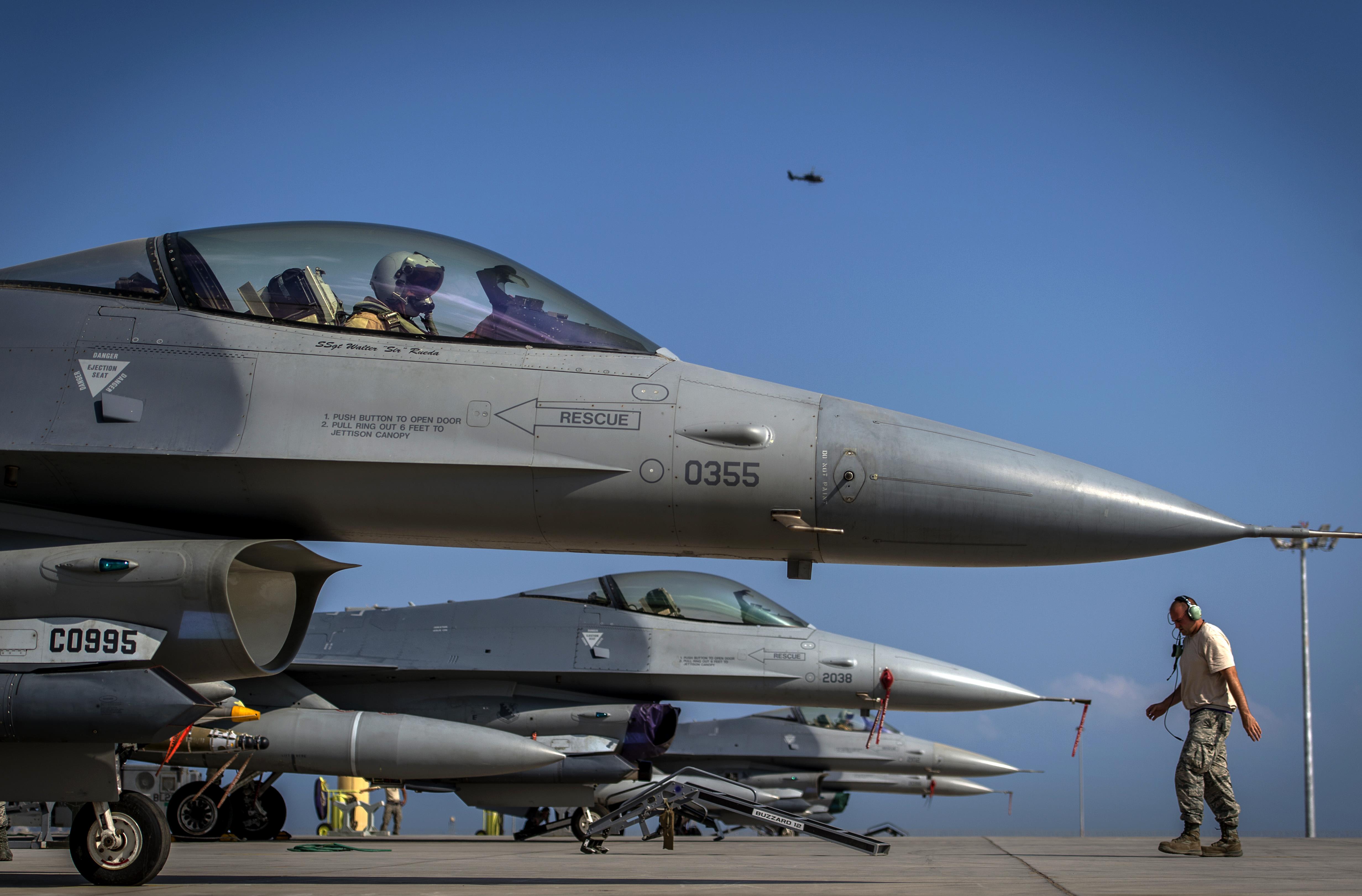
The U.S. Air Force awarded Phoenix-based Honeywell Aerospace with an exclusive $1,036,726,575 performance-based sustainment contract to provide end-to-end logistics support for secondary power systems and ground based auxiliary power systems for multiple aircraft types.
Honeywell Aerospace will support secondary power systems and ground systems for seven aircraft types operated by the U.S. Air Force:
- McDonnel Douglas F-15 Eagle tactical fighter – now manufactured and supported by Boeing Defense, Space & Security (Boeing)
- General Dynamics F-16 Fighting Falcon multirole fighter – now manufactured and supported by Lockheed Martin Corporation
- Fairchild Republic A-10 Thunderbolt II close air support and attack aircraft – now supported by Northrop Grumman
- Rockwell B-1B Lancer heavy bomber – now supported by Boeing
- Northrop Grumman B-2 Spirit stealth bomber
- Boeing E-3 Sentry airborne early warning and control aircraft
- Lockheed Martin C-130 Hercules transport aircraft
Secondary power systems, or auxiliary power units (APUs), are turbine engines that provide pneumatic and shaft power that can be used to start an aircraft’s main propulsion engines. They also provide electrical and hydraulic power for critical aircraft systems on the ground and in flight.
Honeywell engineers developed the first auxiliary power system in the mid-1940s and the company has produced more than 95,000 to-date for a wide range of military and civilian aircraft. The company is the largest gas turbine APU producer, with more than 36,000 APUs currently in service that support power requirements ranging from 50 equivalent shaft horsepower (SHP) up to 1,700 equivalent SHP.
“We’re excited about this opportunity to continue a highly successful public-private partnership with the Air Force,” says Steven Williams, Honeywell vice president for Defense & Space Americas Aftermarket. “Over the past decade, we have built a strong team with the Air Force and DLA teams, which have enabled Honeywell to deliver superior results, including dramatic improvements in availability rates and backorders. These and other improvements have resulted in significant cost-savings for the Air Force and the American taxpayer.”
The three-year, six-month base contract was announced by the Defense Logistics Agency (DLA) and includes an option for an additional three-year, six-month term, for a potential total length of 10 years. The contract completion date is July 31, 2028.
The contract includes provisions for hardware such as ground stage carts, miscellaneous F-15 components, F-16 turbine power units, and A-10, B-1B, B-2, E-3, and C-130 APUs. Honeywell Aerospace’s Phoenix office will manage the contract while performing the majority of turbine engine support work in Utah.
The Secondary Power Logistical Solutions Program was the Air Force’s first subsystem-level Performance Based Logistics (PBL) program – also known as Performance Based Life Cycle Product Support. PBLs are an outcome-based product support strategy for the development and implementation of an integrated, affordable, product support package. They are designed to optimize system readiness and meet military requirements in terms of performance outcomes for a system through long-term product support arrangements with clear lines of authority and responsibility.
Honeywell received a PBL of the Year award for its work on the program in 2017.
William Kucinski is content editor at SAE International, Aerospace Products Group in Warrendale, Pa. Previously, he worked as a writer at the NASA Safety Center in Cleveland, Ohio and was responsible for writing the agency’s System Failure Case Studies. His interests include literally anything that has to do with space, past and present military aircraft, and propulsion technology.
Contact him regarding any article or collaboration ideas by e-mail at
More From SAE Media Group
Aerospace & Defense Tech Briefs
Old Bird Learns New Tricks
Aerospace & Defense Tech Briefs
Boeing's Latest Contract Secures New Wings for Remaining A-10 Fleet
Automotive Engineering
T-X Competition to End in September with Selection of New USAF Trainer Aircraft
Aerospace & Defense Tech Briefs
First F-35 Crash; Pilot Safe
Aerospace & Defense Tech Briefs
GA-ASI Maximizes Fuel Capacity for MQ-25 Entry
Aerospace & Defense Tech Briefs
The Air Force’s New Unmanned Wingmate Completes Inaugural Flight
Aerospace & Defense Tech Briefs
Boeing Wins MQ-25 Contract
Aerospace & Defense Tech Briefs
Airbus and Dassault Aviation Will Start Development of the “New Generation Fighter” for European FCAS Program
Aerospace & Defense Tech Briefs
Maintainers Design a $400 Maintenance Fixture to save the U.S. Air Force $500k per Year
Aerospace & Defense Tech Briefs
Air Force Begins 3D Printing Nonstructural Aircraft Parts
Aerospace & Defense Tech Briefs
J-10B Fighter Aircraft Debuts Chinese Thrust Vectoring Technology
Aerospace & Defense Tech Briefs
OA-X Phase Two Kicks Off
Aerospace & Defense Tech Briefs
The F-35 Is Getting Life-Saving Automatic Ground Collision Avoidance Systems from the F-16
Aerospace & Defense Tech Briefs
A-10C Pilots Will Get 3D-Audio to Increase Situational Awareness
Aerospace & Defense Tech Briefs
J-10B Fighter Demonstrates Thrust-Vectoring Supermaneuverability at Airshow China
Aerospace & Defense Tech Briefs
Ahead of USAF T-X Decision, Leonardo Finds Market for T-100’s Little Brother – the Single-Engine Aermacchi M-345
Aerospace & Defense Tech Briefs
Curtiss-Wright Will Provide Data Technology Support for Boeing’s MQ-25 Unmanned Air Refueling Platform
Aerospace & Defense Tech Briefs
Aitech Defense Will Provide Data Interface Technology for Boeing’s Unmanned MQ-25 Refueling Platform
Aerospace & Defense Tech Briefs
Future of British Air Power: The Next-Gen Tempest
Aerospace & Defense Tech Briefs
Collins Aerospace Provides Avionics for C-130H Modernization Program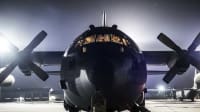
Aerospace & Defense Tech Briefs
Astronautics to Upgrade Cockpit Displays on U.S. Customs and Border Protection P-3 Orions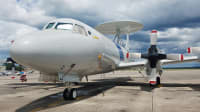
Aerospace & Defense Tech Briefs
General Atomics Plans First Trans-Atlantic Flight of Medium-Altitude, Long-Range Remotely Piloted Aircraft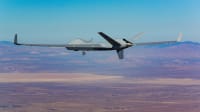
Aerospace & Defense Tech Briefs
South Africa’s Paramount Group Will Provide New Mission System for Combat Version of the Aermacchi M-345 Jet Trainer
Aerospace & Defense Tech Briefs
MTSI’s Latest Project Gives Fixed-Wing Aircraft Vertical Cargo Lift Capabilities
Aerospace & Defense Tech Briefs
When It Comes to Fifth-Generation Assets, Air Force Values Virtual Training over Live Flying
Aerospace & Defense Tech Briefs
Collins Aerospace Brings Next Gen Avionics to Portuguese C-130s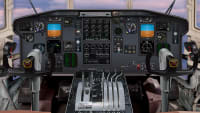
Aerospace & Defense Tech Briefs
New Design Wins over Upgrades for Next US Air Force Military Jet Trainer Aircraft
Aerospace & Defense Tech Briefs
Flight Testing Microvanes and Riblets
Aerospace & Defense Tech Briefs
L3 Makes Its C-130 Modernization Package Available to Global Operators
Aerospace & Defense Tech Briefs
F-35 and F-16 Ground Collision Avoidance Software Team Takes Collier Trophy
Top Stories
NewsSensors/Data Acquisition
 Microvision Aquires Luminar, Plans Relationship Restoration, Multi-industry Push
INSIDERRF & Microwave Electronics
 A Next Generation Helmet System for Navy Pilots
INSIDERWeapons Systems
 New Raytheon and Lockheed Martin Agreements Expand Missile Defense Production
NewsAutomotive
 Ford Announces 48-Volt Architecture for Future Electric Truck
INSIDERAerospace
 Active Strake System Cuts Cruise Drag, Boosts Flight Efficiency
ArticlesTransportation

Webcasts
Aerospace
 Cooling a New Generation of Aerospace and Defense Embedded...
Energy
 Battery Abuse Testing: Pushing to Failure
Power
 A FREE Two-Day Event Dedicated to Connected Mobility
Automotive
 Quiet, Please: NVH Improvement Opportunities in the Early Design Cycle
Electronics & Computers
 Advantages of Smart Power Distribution Unit Design for Automotive &...
Unmanned Systems
 Sesame Solar's Nanogrid Tech Promises Major Gains in Drone Endurance