




Automotive Engineering - May 2019
Inside this issue
Supplements
Overview
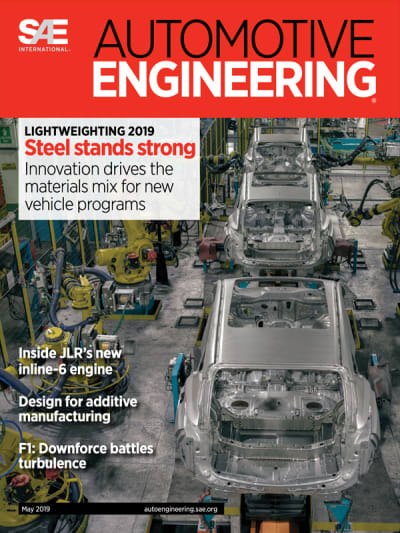
The May 2019 issue of Automotive Engineering presents a comprehensive exploration of current trends, innovations, and discussions within the automotive industry. This edition features a blend of editorial insights, technical reports, and reader feedback, all aimed at enhancing the understanding of automotive engineering and its future directions.
Editorial Insights: The editorial section, led by Bill Visnic, addresses the ongoing challenges and debates in the automotive sector, particularly focusing on the environmental impacts of vehicle emissions and the regulatory landscape in California versus federal standards. This discussion sets the tone for the issue, emphasizing the need for innovation and adaptation in the face of regulatory pressures.
Cover Story - Lightweighting: The cover story highlights advancements in lightweighting technologies, particularly the use of Advanced High Strength Steel (AHSS) in vehicle construction. The 2019 Acura RDX serves as a case study, showcasing how Honda R&D engineers utilized new grades of AHSS, along with aluminum and carbon fiber reinforced plastics (CFRP), to enhance vehicle performance while reducing weight. This section underscores the importance of material selection in achieving regulatory compliance and improving fuel efficiency.
Technical Reports: The issue includes several technical reports that delve into specific areas of automotive engineering:
-
Propulsion Technologies: A report on Jaguar Land Rover (JLR) discusses the revival of the inline-six engine, exploring its benefits in terms of performance and efficiency. This move reflects a broader trend in the industry to balance traditional engine designs with modern technological advancements.
Electrification Challenges: Another report examines how cold temperatures affect the range of electric vehicles (EVs). Studies indicate that battery performance can significantly decline in low temperatures, presenting challenges for EV manufacturers in ensuring reliability and customer satisfaction.
-
Manufacturing Innovations: Ford's latest digital tools for transmission manufacturing are showcased, highlighting how digitalization is transforming traditional manufacturing processes. This includes the integration of advanced technologies to improve efficiency and reduce production costs.
-
Materials Science: A detailed analysis of bonding dissimilar materials discusses the challenges and solutions associated with using adhesives in automotive applications. This is crucial for modern vehicle design, where different materials are often combined to achieve desired performance characteristics.
Reader Feedback: The issue features a section dedicated to reader feedback, where industry professionals share their thoughts on various topics, including the importance of STEAM (Science, Technology, Engineering, Arts, and Mathematics) education in engineering. Contributors emphasize the need for a holistic approach to education that fosters creativity alongside technical skills.
Product Briefs and Industry Updates: The magazine also includes product briefs that spotlight the latest tools and technologies in test and measurement, as well as 3D printing and additive manufacturing. These innovations are critical for advancing automotive engineering practices and enhancing product development timelines.
Future Directions: The issue concludes with a forward-looking perspective on the automotive industry, emphasizing the need for continuous innovation in materials, manufacturing processes, and vehicle design. The discussions around lightweighting, electrification, and digital manufacturing reflect the industry's commitment to meeting future challenges, including sustainability and regulatory compliance.
Overall, the May 2019 issue of Automotive Engineering serves as a valuable resource for professionals in the automotive sector, providing insights into current trends, technological advancements, and the ongoing dialogue surrounding the future of automotive engineering. The combination of technical reports, editorial commentary, and reader engagement creates a well-rounded exploration of the industry's landscape, encouraging readers to stay informed and adaptable in a rapidly evolving field.
Features
-
Articles
The Economics of Materials Selection
A Step-change in the Cost of CFRP
Aluminum: Toward 50% Body Content
Regulars
-
What We're Driving
-
Technology Reports
AAA Studies Thermal Effects on EV Range
For Bonding Dissimilar Materials, Adhesives Can Be a Sticking Point—or Lack of It
Ford Demos Latest Digital Tools at Flagship Transmission Plant
Stories
-
News
European Union Approves Mandatory Vehicle Speed-Limiting Feature
Nano Dimension Creates the First Printed Circuit Boards with Side-Mounted Features
Wind River, Collins Aerospace Explore the Future of AI/ML in Avionics
Airbus’ Connected Cabin Concept Is Materializing with First Round of Partnerships
New-Mobility Visionary Burns: Automated Driving ‘Getting Close’
SAE International, Ford, General Motors, and Toyota Form Automated Vehicle Safety Consortium
Engineers Balance Today’s Programs with Tomorrow’s Mobility Future
“The Grid” Promises to Be the Most Advanced Electric Propulsion Laboratory in the Aerospace Industry
2019 HEICE Symposium Kicks off Week of Valuable Engineering Insights
WCX 2019: Start Your Self-Driving Racecars
WCX 2019: Cybersecurity Hackers Help Vet Vehicle Systems
WCX 2019: The AV “Money Race” Is On
WCX 2019: Regulators Grapple with Autonomous Challenges
WCX 2019: Validation Can’t Replace Roadway Tests
WCX 2019: Mobileye’s Quest for Super-Human Perception
Bridgestone Joins JAXA and Toyota on International Space Exploration Mission
Chevrolet Finally Confirms Mid-Engine Corvette, Marks July Reveal
Volocopter’s All-Electric UAM Vehicle Benefits from Honeywell’s Advanced Navigation and Flight Tech
2019 New York Auto Show Wrap Up
Lincoln Corsair Leverages Global Architecture to Differentiate Latest C-Segment Luxury SUV
Automated Vehicle Safety Series Addresses Design, Testing, Verification, and Validation
Ford and University of Michigan Team up on First-Ever Sustainability Study of Urban Air Mobility
BlackBerry’s CTO Points to a Holistic and Standards-Based Future for Vehicle Cybersecurity
Wing’s UAS Delivery Service Has FAA Certification
Novelis Creates First Aluminum Sheet Battery Enclosure for Mass Electric Vehicle Production
-
Features
'Road Race' for AV Testing May Be Slowing
Waymo, GM and Ford Pegged as Autonomous “Leaders” by Latest Navigant Report
5G Cellular May Be Transformational for Automakers, Suppliers
Automated-Vehicle ‘Goiters’ Be Gone!
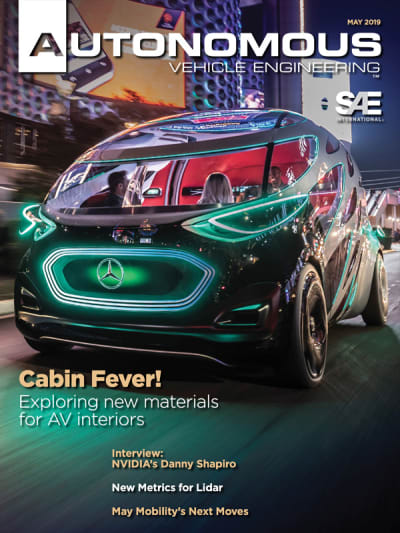
Designs to Dye for: Autonomy’s New-Materials Revolution
New Performance Metrics for Lidar
Top Stories
NewsSensors/Data Acquisition
 Microvision Aquires Luminar, Plans Relationship Restoration, Multi-industry Push
INSIDERRF & Microwave Electronics
 A Next Generation Helmet System for Navy Pilots
INSIDERWeapons Systems
 New Raytheon and Lockheed Martin Agreements Expand Missile Defense Production
NewsAutomotive
 Ford Announces 48-Volt Architecture for Future Electric Truck
INSIDERAerospace
 Active Strake System Cuts Cruise Drag, Boosts Flight Efficiency
ArticlesTransportation

Webcasts
Aerospace
 Cooling a New Generation of Aerospace and Defense Embedded...
Energy
 Battery Abuse Testing: Pushing to Failure
Power
 A FREE Two-Day Event Dedicated to Connected Mobility
Automotive
 Quiet, Please: NVH Improvement Opportunities in the Early Design Cycle
Electronics & Computers
 Advantages of Smart Power Distribution Unit Design for Automotive &...
Unmanned Systems
 Sesame Solar's Nanogrid Tech Promises Major Gains in Drone Endurance