




First Drive: 2027 Mercedes-Benz CLA Hybrid
Power is a little slow getting to the drive wheels, but there’s time before the CLA’s late 2026 debut.

It's a crisp day in the Austrian Alps. A closed road has been plowed just for us. Specifically, most of the snow has been pushed aside. Still, the road is white. This is the type of drive usually reserved for an SUV or all-wheel-drive outfitted vehicle sporting cladding and a robust following amongst dog owners. Instead, I'm behind the wheel of the 2027 Mercedes-Benz CLA hybrid, and everything is going great. Well, mostly everything.
The 2027 CLA hybrid uses one of two powertrains coming to the German sedan, alongside an electric version. Both will be available in the second half of 2026, according to Mercedes, and both are built on the new MMA (Mercedes Modular Architecture) platform. A platform that supports both EV and ICE (internal combustion engine) powertrains and, Mercedes says, allows the company to meet customer demand.
Air supply
The hybrid variant of the CLA220 (available in front- and all-wheel drive) is built with efficiency in mind. A 1.5-liter turbocharged inline-four is running the efficient Miller-cycle combustion, characterized by the very early closing of the inlet valve. As the piston sucks air into the cylinder, the inlet valve stays open until the piston hits the end of its movement. The Miller-cycle closes the valve during the downward movement, reducing air intake. The result is a higher compression ratio, increasing the engine’s efficiency while reducing performance. This is where the turbocharger comes in, covering for the engine's lack of power. This setup generates 188 hp (140 kW) and 221 lb-ft (299 Nm).

Unfortunately, we don't have EPA ratings yet on the vehicle's actual efficiency. But it should be helped by the electric motor integrated into the 8-speed transmission. In addition to the dual-clutch, the transmission has an additional clutch that disengages the motor and allows for gliding. It's a slick setup that should increase the vehicle's MPG numbers. The electric motor itself generates 30 hp (22 kW) and 148 lb-ft (200 Nm) for a combined total of 208 hp (155 kW) and 280 lb-ft (379 Nm).
The system runs off a 48-volt lithium-ion battery with 1.3kWh (usable) of capacity. Recuperation is available at 25 kW regardless of the current gear. That all sounds great, and the engineering is impressive.
The problem is accelerating off the line and when coming out of corners. There's a noticeable lag between depressing the pedal and the vehicle taking off. It feels like turbo lag, but it's at all speeds, even from a standstill. On the snow-covered road in the Alps, Mercedes wanted us to kick the back end out while exiting a corner. But creating the oversteer required me to anticipate when the power would be sent to the tires, which wasn't nearly as quick as I would anticipate from a modern vehicle.
A quick reminder that this vehicle will not be out until the second half of 2026, and there's plenty of time for Mercedes to address this issue by remapping the acceleration and how the turbo and motor engage. But the entire system is best experienced in Sport mode, where everything is kicked up a notch for increased power.
Chassis control
Meanwhile, the CLA handled the mountain corners and curves in areas without the added slickness of snow with aplomb. The small sedan is agile with tight but easy steering that, as in many modern vehicles, felt a bit like a video game, even while it still delivered an enjoyable driving experience in both the tight switchbacks of the mountain and on the long, high-speed Autobahn jaunts. The vehicle felt stable, and the decoupling of the engine did lead to smoother cruising.
This is where the vehicle shines. At all times, it delivers on the Merdes promise of a luxury sedan in a smaller package.
The exterior continues the automaker’s current design language with a slightly bulbous feel, not nearly as rounded as the previous EQS lineup. The Hybrid and EV CLA variants are barely distinguishable from one another. The only exterior differences can be found in the front grille and rear diffuser.
Comfort zone
Inside, the CLA is not just comfortable, but its level of pampering by the seats exceeded that of the E-Class I would drive later in the week. After hours behind the wheel and in the passenger seat over the course of two days, I found these seats to be the most comfortable I've encountered in a long time.
The rest of the interior conformed to the expectations of a Mercedes-Benz experience with quality materials throughout. The seating position did feel more cockpit-like due to the size of the vehicle and the unbroken line of the center console.
The infotainment system uses the latest version of MBUX with the Zero Layer setup that makes the map the main focus of the display, with widgets algorithmically added based on the driver's preferences. It's one of the best in the business because it forgoes random data and details and focuses on the main piece of information someone behind the wheel needs, where they are and how they get to their destination. The system itself is built on the automaker's new MB.OSupdates and supports CarPlay and Android Auto.
On the passenger side, Mercedes continues to add a passenger screen with access to video content (YouTube, Disney+, etc), games, and the ability to control the media being played in the vehicle. While I've yet to find this screen all that engaging, these additional screens are huge in China.
We don't have pricing or EPA fuel economy information. Those typically come a few months before release. Until then, it'll be interesting to see if Mercedes tweaks the vehicle's acceleration, taking advantage of the software-defined vehicle’s capabilities. Let's see if Mercedes leverages that power in the next few months.
More From SAE Media Group
Automotive Engineering
Toyota Stretches SUV Line-Up with World Debut of Grand Highlander
Automotive Engineering
Making over the World’s Leading Hybrid
Automotive Engineering
2024 Lincoln Nautilus: The Brand’s First Global SUV
Automotive Engineering
Volvo Concept Estate Shows Clues for New XC90
Automotive Engineering
5 More HP for 2026 Kia Sportage: First Drive
Automotive Engineering
Volvo’s Electric High-Wire Act
Off-Highway Engineering
First Drive: Drifting in the Electric 2027 Mercedes GLC 400
Automotive Engineering
2016 Mazda MX-5 Stays True to Its Roots
Tech Briefs
Making EVs Accessible for All
Off-Highway Engineering
Cat 745 Articulated Truck Boasts Next-Gen Cab, New Machine-Control Features
Automotive Engineering
2025 Kia Carnival MPV Hybrid Brings Unplugged PHEV Power
Automotive Engineering
Mazda’s 2024 CX-90 Offers Turbo I-6, PHEV Propulsion
Automotive Engineering
2026 Nissan Sentra Review: Putting the Pieces Together
Automotive Engineering
Suppliers Struggling to Keep Pace with Faster Product Cycles, Says IHS
Automotive Engineering
Kia Announces New Interior Features for 3rd-Gen Sorento
Automotive Engineering
Systems-engineering a New 4x4 Benchmark
Automotive Engineering
2015 F-150: Ford Drops an Aluminum Blockbuster
Automotive Engineering
Electronic Stability Control Builds the Foundation for Safer Roads
Automotive Engineering
Poland is Making Moves to Be a Larger Automotive Supplier
Automotive Engineering
Hyundai Reveals Market-Sized 2022 Tucson SUV
Automotive Engineering
Audi Shows Design, Fuel-Cell Directions
Automotive Engineering
Q80 Inspiration Concept Previews Future Top-Range Infiniti, New Engine Family
Automotive Engineering
AVSC Develops Best Practices for Traceable AV Safety Inspection Protocols
Automotive Engineering
A Formula for Real-World Experience
Automotive Engineering
Next-gen Nsx: A Twin-turbo, Multi-material Ferrari-fighter
Automotive Engineering
ZF's CEO Talks About Lightweight Vehicle Applications
Automotive Engineering
2019 S60 and V60 Volvo’s Newest Chips in the Transformation Game
Automotive Engineering
Lincoln Unveils Redesigned 2024 Nautilus SUV
Automotive Engineering
2026 Nissan Leaf First Drive: Fun and More Efficient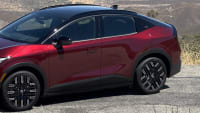
Transcript
00:00:01 This is the 2027 Mercedes-Benz CLA. I'm here in the Austrian Alps to drive this vehicle. And if you're thinking to yourself, "Well, cool. He's driving a new EV." Nope. This is actually the CLA hybrid. Thanks to [music] Mercedes new MMA architecture, they can build ex almost the exact same car on either a gas platform or an EV platform. >> [music]
00:00:32 >> Under the hood sits a modified turbocharged 1.5 L inline 4 motor. The motor itself uses a Miller cycle for combustion. In that cycle, as the piston comes down, the air intake valve closes relatively sooner than in a typical engine. This creates a high 12:1 compression ratio. It's paired with a turbocharger and a 30 horsepower electric motor situated in the
00:00:56 dualclutch 8-speed transmission. Take that all together and the vehicle outputs 28 horsepower and 280 lb feet of torque. Behind the wheel, you can really tell that this vehicle is built for efficiency. You know that Miller cycle essentially built for additional efficiency. Yes, they've added the turbochargers to sort of help that out, [music] but a turbo is a turbo, which
00:01:19 means you have turbo lag. And I would have thought that the inclusion of that electric motor in the transmission would have [music] made a difference, but it kind of doesn't. And this only happens when you are trying to essentially come out of a corner very quickly. You come into the corner, you pull out, you really got to put the hammer down in order to get the engine to engage and
00:01:40 get and move forward. there is a a bit of a lag that anyone who drives this vehicle who's looking for more spirited driving, you're going to be a little disappointed until you learn how to really put that hammer down earlier than you would in another vehicle. One thing you can do is while there are no paddle shifters, which I think is a mistake, you can use the actual shift stock to
00:02:05 shift uh gears. The problem is is that when I pull back it instead of going faster, you you typically on your right hand side, you pull back on paddle shifters to go up to the next uh gear. Uh [music] this one is different. You have to push forward to the next gear. And I didn't realize that I was doing it wrong until my co-driver pointed out. They're like, "Yeah, you
00:02:28 were you were doing it the wrong way." Because I'm so used to with your right hand with pedal shifters, you pull back in order to, you know, go faster. and and this with this setup, it you you just can't do that. It's very [music] weird. And I'm assuming 99% of people who drive this vehicle will never use that uh stock in order to shift gears manually.
00:02:49 While the powertrain can be tricky, the chassis control is topnotch. This was made more apparent on a closed, snowy alpine road in the Austrian Alps. The vehicle handled tight switchbacks without issue, and we were encouraged to push it coming out of corners to engage over steer. The stability of the vehicle is made even more apparent during high speeds on the autobond, and the vehicle
00:03:12 steering was tight without being twitchy. [music] The powertrain also does a fun thing with a third clutch in the transmission. The motor will detach from the wheels and allow the vehicle to glide, which increases the vehicle's efficiency. When the accelerator was depressed, I really didn't notice any difference in how the vehicle performed. The engagement and disengagement of the
00:03:32 clutch is that quick and seamless. >> Visually, it's difficult to determine well whether or not someone's driving the hybrid CLA or the EV CLA. And that a lot of that has to do with the MMA, the Mercedes modular architecture platform because they've created the platform so that they can build vehicles regardless of powertrain based [music] on customer demand. So if CLA comes out and most
00:03:57 people want an EV, they're going to build a lot of EVs. The CLA comes out and most people want a hybrid, they're going to build a lot of hybrids. As for the incar infotainment, you do have, [music] you know, a very easy to read dash cluster. Uh, it's very traditional, which I am a fan of. I don't need weird crazy [music] uh space age graphics in order to tell
00:04:17 me how fast I'm going and what my RPMs are. Um, I am a big fan of the uh MBUX MBUX uh infotainment system because it just shows you the map and then a bunch of little widgets for the things you want to do. Um, that's it. It's the CLA does have the passenger screen which uh in the United States I have not encountered anyone who actually will use that
00:04:41 screen. I think everyone I show that screen to excited about it for about 2 minutes and then immediately pick up their phones. I have heard that [music] in China that it it is a very big deal. So, if you're building a, you know, a car for the world, you know, if one of the largest market and and emerging [music] markets wants a passenger screen, you you put a passenger screen
00:05:05 in your car. [music] While I am sad that [music] there are no uh climate control physical buttons, everything is in the screen. I am happy that there are physical buttons. There's a rocker button on the left and a roller button on the right on the steering wheel to you know on the right adjust your volume on the left to adjust your
00:05:30 uh adaptive cruise control. Uh the seats themselves pretty comfy. We've been driving in this car for for you know for a few days for uh long periods of time. Um yeah, nice comfy uh back seats. Uh tall person don't sit in the back seat. That's what I have to tell you. Um, I'm sure if you're shorter than me, it's a very comfortable experience. Um, I would not
00:05:54 be back there longer than 30 minutes if I could help it. The 2027 Mercedes-Benz CL8 [music] will be available in the second half of 2026. So whether you're looking for an electric version or this mild hybrid, Mercedes-Benz has got you covered. For more automotive coverage, be sure to subscribe to SAE International. [music]
Top Stories
INSIDERRF & Microwave Electronics
 FAA to Replace Aging Network of Ground-Based Radars
PodcastsDefense
 A New Additive Manufacturing Accelerator for the U.S. Navy in Guam
NewsSoftware
 Rewriting the Engineer’s Playbook: What OEMs Must Do to Spin the AI Flywheel
Road ReadyPower
 2026 Toyota RAV4 Review: All Hybrid, All the Time
INSIDERDefense
 F-22 Pilot Controls Drone With Tablet
INSIDERRF & Microwave Electronics
 L3Harris Starts Low Rate Production Of New F-16 Viper Shield
Webcasts
Energy
 Hydrogen Engines Are Heating Up for Heavy Duty
Energy
 SAE Automotive Podcast: Solid-State Batteries
Power
 SAE Automotive Engineering Podcast: Additive Manufacturing
Aerospace
 A New Approach to Manufacturing Machine Connectivity for the Air Force
Software
 Optimizing Production Processes with the Virtual Twin
