




Poland is Making Moves to Be a Larger Automotive Supplier
At the center of the strategy is the Polish Automotive Group
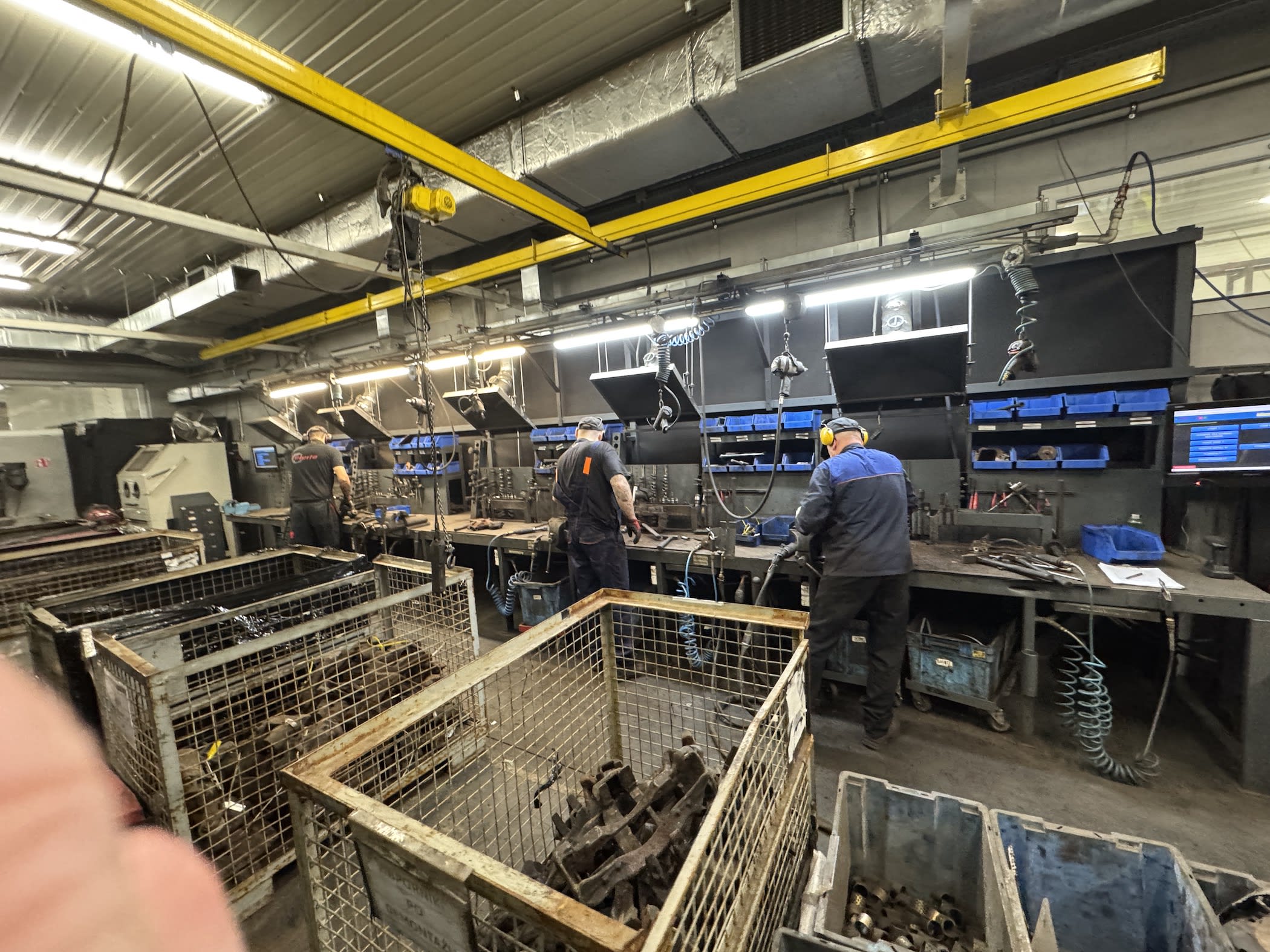
Like many from Poland, Tomasz Łuczyński moved to the UK for better wages. Following Poland's joining of the UE in 2004, hundreds of thousands of people from Poland have settled in the United Kingdom. Currently, over 1% of the UK population is Polish. But Tomasz Łuczyński didn't stick around. After working in a facility that remanufactured automotive parts, he returned to Poland to start his own large-vehicle parts refurbishing company, Elerte.
Poland has a history of rebuilding. Much of Warsaw needed to be rebuilt after the Nazis had razed the city following an uprising of the Polish people. The country's break from communism in the late 80s and early 90s required the entire system to be redeveloped into a market economy. As of 2024, the country's GDP is 21st in the world. To see how Poland is increasing its stake in the world of automotive suppliers and technology, I visited a wide range of individually owned and government-funded companies and research facilities to where the country is and where it's going. At the center of all this is PGM (Polska Grupa Motoryzacyjna), the Polish Automotive Group.
Stronger, together
Established in 2016, PGM's goal is to cultivate and help introduce the world to Poland's automotive sector. The majority of the companies PGM works with are family-owned, and of all those companies, 75% of their components are exported out of Poland. Managing Director Bartosz Ossowski made a point to note that all these companies are producers. "What is pretty different from many other organizations of this kind is that we are uniting only Polish-owned companies, so no multinational corporations," Ossowski told SAE Media.
The organization works to help expand the market of the roughly 100 companies it works with, including working on their behalf to contract with large OEMs like Toyota. PGM helped prepare the companies to be better suppliers to the automaker while also meeting with automakers on their behalf. With the umbrella PGM brand creates recognition is created within the larger market so that a small business doesn't have to be recognized in order to secure a contract.
Unfortunately, while PGM has been able to help secure contracts, the PGM Automotive brand was sidelined by COVID. But it's likely to be reintroduced.
According to PGM, the automotive sector in Poland employs over 200,000 people, with indirect employment numbers potentially hitting 350,000 people. That makes it Poland's second-largest sector after the food industry, with exports exceeding $52 billion.
What's interesting is that many of these family-owned companies are always poised for diversification. Many understand and are known within the aviation supply chain, furniture, and railways. That knowledge gives them a leg up, especially with the current headwinds within the automotive sector and the growth of the military.
That doesn't mean that these companies lack fun.
Faster, stronger

PMC Motorsports builds bespoke high-performance autoparts. From rally to drifting, the company designs and builds various parts for enthusiasts, including brackets to marry various transmissions to engines. It's an engine swapper's dream. The company designs and builds a variety of tuning components and works with individuals looking for custom conversion kits. The brainchild of owner Elizabeth Jędrzejowska, the company not only sells parts within the EU but also in North America.
Larger and precise

The opposite of keeping drifters happy is making sure that large diesel engines stay on the road. That's where Wutzetem comes in. The company supplies highly precise injectors for diesel engines not only for l; large trucks but also train engines.
For the locomotive market, its largest market is the United States, which still uses diesel-powered trains to move goods. It also builds dedicated injectors for tanks.
A tour of the facility which essentially included going from raw materials to a finished product, revealed an incredibly intricate setup that results in items with a quality control specification of 0.0001mm. To be sure to deliver exactly what a customer needs, Wuzetem has its own R&D and quality control department.
The facility produces over 800,000 nozzles and products a year from a team of 270 employees.
Bus driver assistance
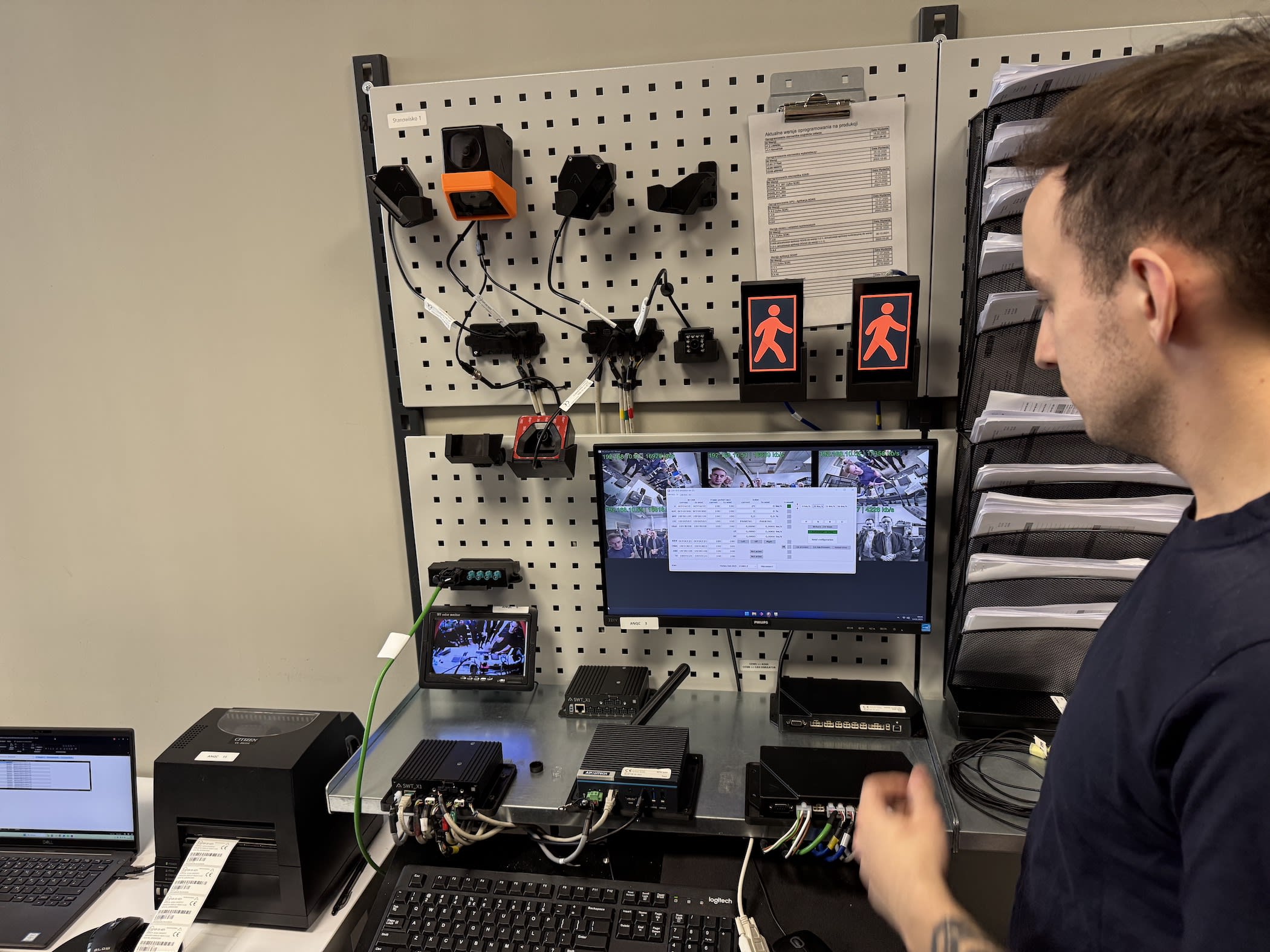
Driver assistance systems on buses could reduce incidents. ADAS company AutonomyNow is building and supplying its system to OEMs looking to increase the safety of their public transportation vehicles.
While many companies are looking to replace human drivers, AutonomyNow is building a system that complements the current driver with an impressive sensor package that includes ultrasonic sensors, side, rear, and front cameras, giving the system a 360-degree view of the world. A 77 GHz Radar is also employed to monitor the traffic and items ahead of the bus as it travels through an urban environment. Inside, an infrared camera monitors the drivers for signs of fatigue or distractions. The interior also uses displays near the rear view side mirrors that shares basic information about the bus's blind spot and provides simple directions.
The result is an unobtrusive system that increases safety. The sensors are fed into an Nvidia processor, and the company's system can determine the difference between items like leaves and paper blowing in front of the vehicle and a human walking into the street.
The system works in tandem with the driver. An automatic braking system on a passenger car will typically bring the vehicle to a screeching halt. That's not acceptable on a public transportation-enabled passenger bus. Many riders are likely standing up, and no one is wearing a seat belt. Instead, the system enables mild braking after warning the driver via audio and visual cues of an imminent collision.
Buses in cities typically do not operate at high speeds but they do have to navigate a highly complex environment. This likely creates a huge cognitive load on the drivers that this system could help reduce. The driver is still in charge but having a system that helps warn of potential incidents could increase peace of mind while transporting passengers.
AutonomyNow currently delivers about 5,000 units a year. CEO and Chief Innovation Officer Michal Wendeker notes that the company is not a big corporation; it's a small team that works closely with its customers to deliver their individual needs.
As for the decision to create a driver assistance system instead of going all in on an autonomous system, Wendeker said, "It's better to introduce something very fast to the market that already is saving lives than wait for another five or 10 years for the final solution." The company wanted to introduce safety from the start and will continue to work towards full autonomy. It's also working with Poland's ITS (Motor Transport Institute’s Connected and Autonomous Vehicles Competence Centre).
People and the road
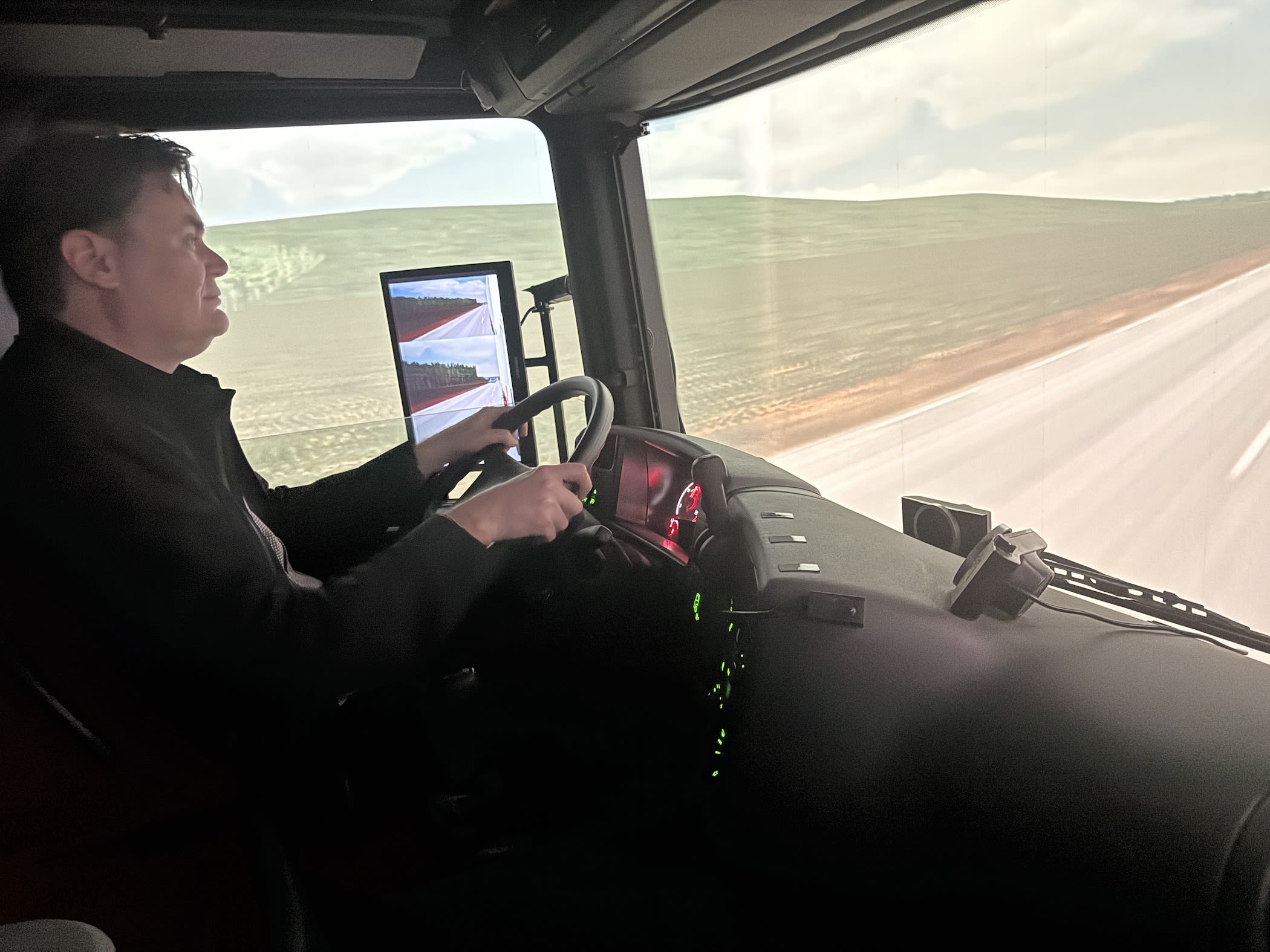
The ITS Motor Transport Institute is a research center in Warsaw that aims to not just help bring autonomous vehicles to the country, but do so in a way that makes sense for the country.
One of the larger issues with any sort of universal autonomous driving system is that not only are laws, road markings, and signs different all over the world, but drivers are also different. Each region, each culture handles driving in its own unique way.
To help any potential company that wants to deploy autonomy in Poland, ITS has undertaken a system of collecting data from particularly complex intersections. It drives its vehicle through an intersection again and again to collect information that it will share with companies. The open source information can then be used to train third-party vehicles to understand the intricacies of driving in the country, especially in complex scenarios.
The organization also researches how passenger and large vehicle drivers react to scenarios on the road via two simulators. Its traffic psychology work includes collecting data about distracted and fatigued driving. I had the opportunity to drive the large-truck simulator, and even without the fatigue associated with long stretches of driving, I nearly hit a digital moose that stepped into the road.
The researchers also help homologate vehicles for Polish roads and work with the government and other stakeholders on drafting traffic laws to increase public safety.
More research
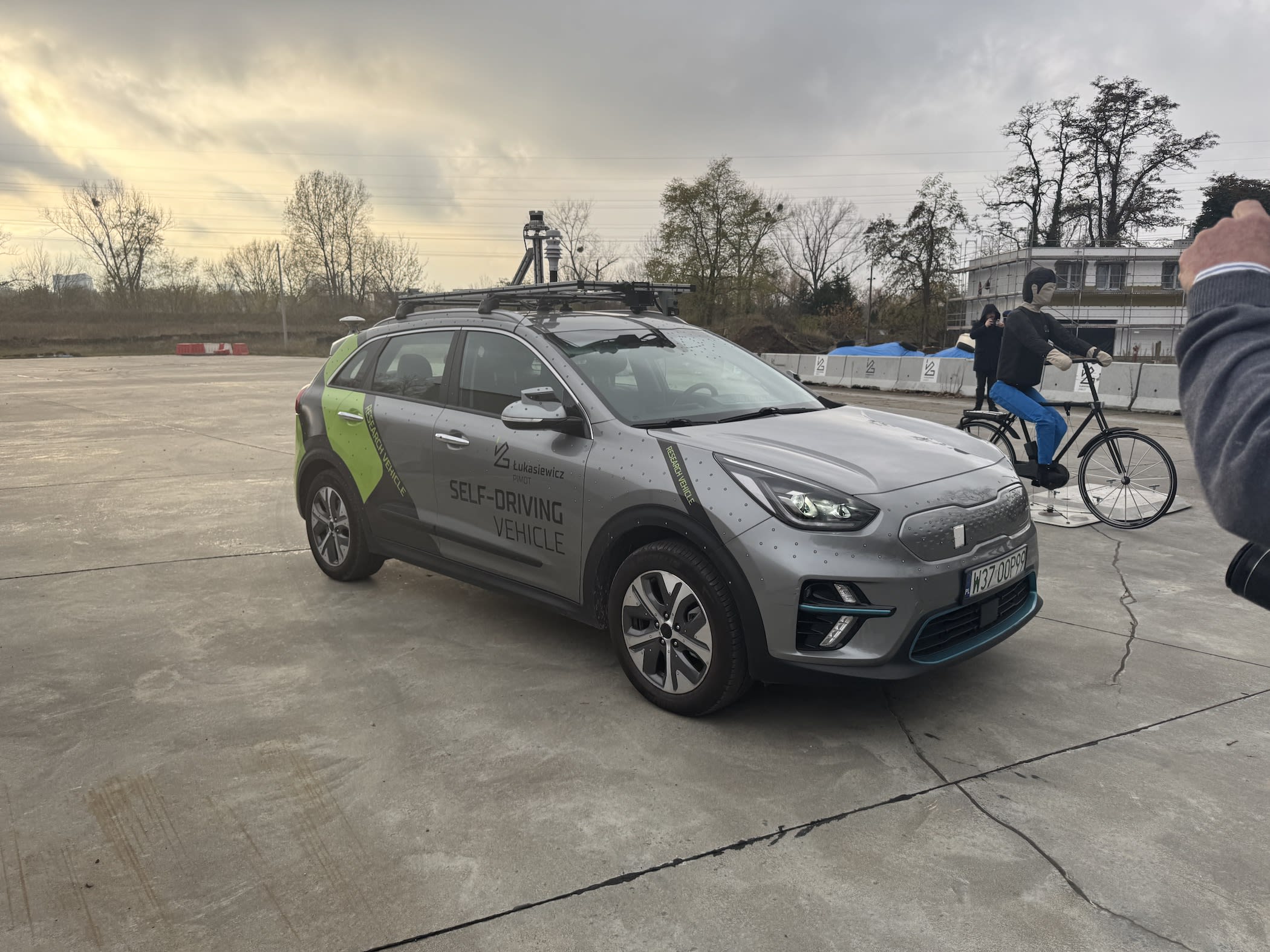
The Łukasiewicz Research Network, like ITS it is a research facility that focuses on applied science and industrial development. It works toward helping the Polish automotive sector achieve autonomy and move towards a greener transportation system.
The company also helps with vehicle homologation and electromagnetic compatibility via a very large Faraday chamber that can accommodate vehicles up to 50 tons. Once inside, the team can determine if a vehicle emits electromagnetic noise beyond what's allowed by law.
On the other side of the campus, battery testing is conducted in a facility that, if a battery encounters thermal runaway and is about to catch fire, can quickly move the battery into a large container of water and transport it outdoors into a fenced-off area.
Back to Poland
At Elerte, the tour takes us from the rusted, discarded piles of large brake calipers sitting in crates outside to the interior, where a team of men and women disassemble and resurrect the stopping power of these large pieces of machinery. Łuczyński's company is doing well. Its new warehouse is full, and employees are shipping refurbished calipers to clients looking to save money without sacrificing safety.
It's part of a growing Polish industry that's being helped by PGM to gather a larger piece of the automotive industry pie. While the food industry is number one in Poland, the automotive industry is shooting for the top spot by building a coalition of small companies working to become larger.
More From SAE Media Group
Autonomous Vehicle Engineering
AV Powers Bring May Flowers
Automotive Engineering
Electronic Stability Control Builds the Foundation for Safer Roads
Off-Highway Engineering
Mellor Bus Stresses Lightweight Construction for New Midsized Battery-Electric Buses
Automotive Engineering
Hands Off, Eyes Off, Brain Off
Tech Briefs
Making EVs Accessible for All
Autonomous Vehicle Engineering
Volvo Leads the Shift to ‘Driver Understanding’
Automotive Engineering
Vehicle-Dynamics Company Has a Friction Algorithm for You
Automotive Engineering
Volvo’s Electric High-Wire Act
Motion Design INSIDER
Autonomous Bus Sounds: It’s All About When, Not How
Automotive Engineering
Making over the World’s Leading Hybrid
Automotive Engineering
Core Ford, New Ford…One Ford?
Automotive Engineering
Can Product Planning Keep Pace with Technology?
Automotive Engineering
Automotive HMIs Aren’t Just for Driving Any More
Autonomous Vehicle Engineering
ZF Establishes Level 2+ ADAS
Automotive Engineering
Mercedes Reveals Its Experimental Safety Vehicle 2019 – Mobile Robot Included
Automotive Engineering
Snapdragon Ride Flex Puts Safety, Infotainment onto Single Chip

Automotive Engineering
Suppliers Struggling to Keep Pace with Faster Product Cycles, Says IHS
Tech Briefs
How Mercedes and NVIDIA Handle City Driving
Automotive Engineering
Active Seatbelt Retractor
Automotive Engineering
2016 Altair Enlighten Award Adds New Category to Honor Lightweighting Efforts
Automotive Engineering
Volvo’s New Scalable Architecture Puts Emphasis on Safety
Automotive Engineering
Porsche Expands Weissach R&D Campus, Consolidates Electronics Engineering
Autonomous Vehicle Engineering
ADAS Over the Horizon
Autonomous Vehicle Engineering
GM Announces Door-To-Door Ultra Cruise ADAS
Automotive Engineering
Mercedes-Benz Begins GLA Production in India
Automotive Engineering
Taking Hydraulics and Weight out of Active Aerodynamics
Automotive Engineering
NHTSA Moves on Driver-Impairment Regulation
Tech Briefs
Thermal Sensors for Smarter Cars, Safer Roads
Automotive Engineering
AVSC Develops Best Practices for Traceable AV Safety Inspection Protocols
Top Stories
NewsRF & Microwave Electronics
 Microvision Aquires Luminar, Plans Relationship Restoration, Multi-industry Push
INSIDERAerospace
 A Next Generation Helmet System for Navy Pilots
INSIDERDesign
 New Raytheon and Lockheed Martin Agreements Expand Missile Defense Production
INSIDERMaterials
 How Airbus is Using w-DED to 3D Print Larger Titanium Airplane Parts
NewsPower
 Ford Announces 48-Volt Architecture for Future Electric Truck
ArticlesAR/AI

Webcasts
Electronics & Computers
 Cooling a New Generation of Aerospace and Defense Embedded...
Automotive
 Battery Abuse Testing: Pushing to Failure
Power
 A FREE Two-Day Event Dedicated to Connected Mobility
Unmanned Systems
 Quiet, Please: NVH Improvement Opportunities in the Early Design Cycle
Automotive
 Advantages of Smart Power Distribution Unit Design for Automotive &...
Energy
 Sesame Solar's Nanogrid Tech Promises Major Gains in Drone Endurance