




Bosch Invested in Large-Scale Metal 3D Printing
The supplier’s Nuremberg facility added a new 3D printer that can produce up to 10,000 kg (22,050 lb) of metal parts per year.
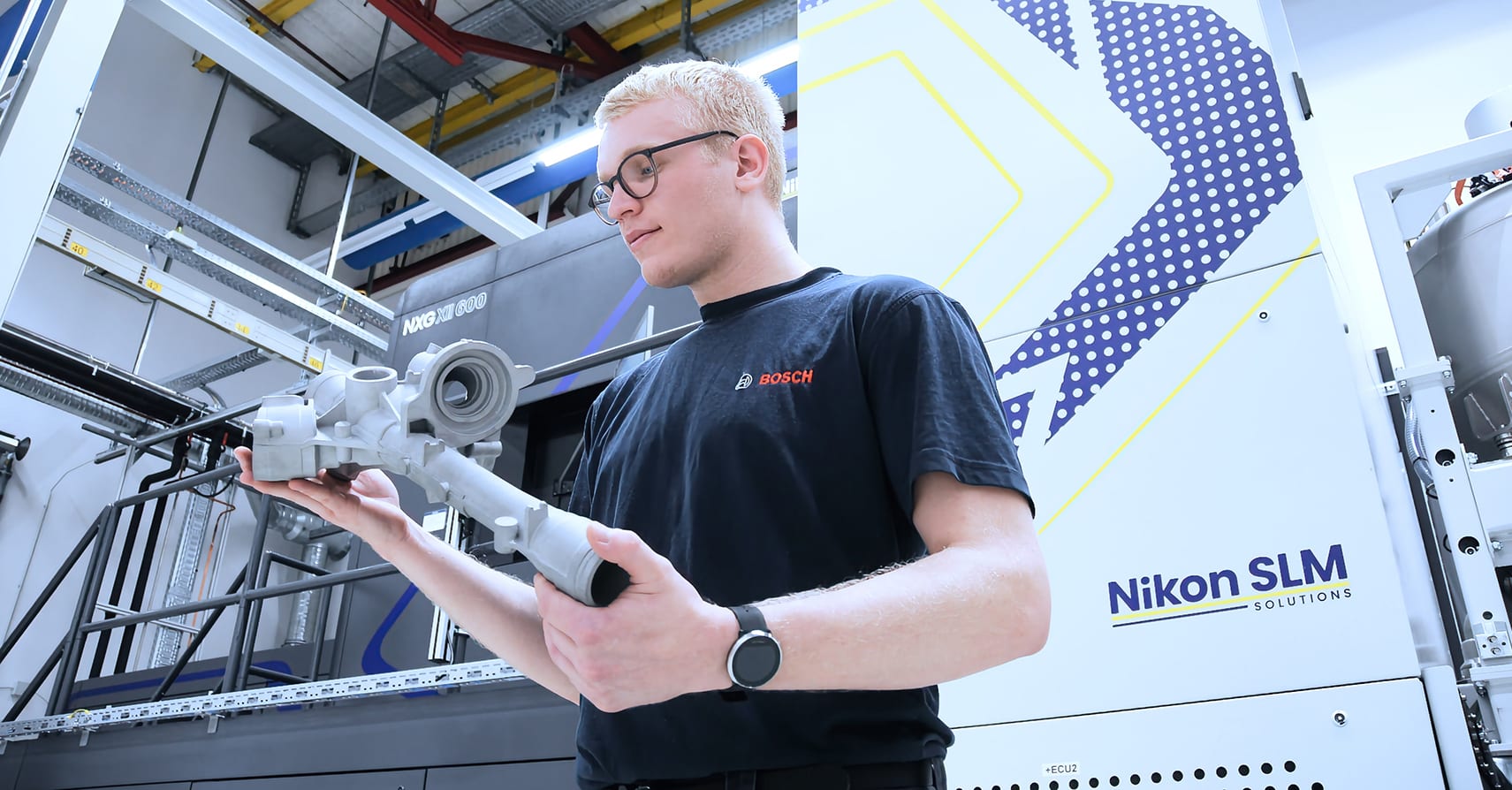
Bosch bolstered its 3D printing capabilities when it added a new metal 3D printer at its Nuremberg, Germany, plant earlier this year. The NXG XII 600 metal 3D printer from Nikon SLM Solutions met the supplier’s need – the need for speed – as well as the non-Top Gun-related precision, flexibility and energy efficiency when manufacturing complex metal parts for its in-house and third-party customers.

The Nuremberg plant invested nearly six million euros in the center, including the purchase and installation of the new metal 3D printer. Bosch claims to be the first Tier 1 automotive supplier in Europe to have a facility in this performance class.
“Bosch remains committed to Germany as an industrial location and is investing large sums of money here. By introducing new technologies in our plants, we are securing considerable sales potential,” said Klaus Mäder, the member of the Bosch Mobility sector board responsible for operations, including all plants worldwide.
Laser power
The new 3D printer is intended to accelerate development cycles, especially for metal parts that can take a long time to make using conventional manufacturing processes. “By making the manufacture of metal parts faster and more productive, this new facility will increase our competitiveness,” Alexander Weichsel, the commercial plant manager in Nuremberg, said at the facility’s official start of operations.
Technical plant manager Jörg Luntz added, “With this facility, we are setting the highest standards in metal 3D printing. In volume production, this will open up completely new possibilities for us.”
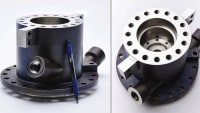
The supplier is targeting an array of applications with the printer, including components for hydrogen combustion engines and fuel cells, motor housings for electric vehicles, e-axle components and race engine blocks, for example.
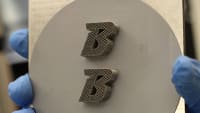
Working from a computer-aided design file developed in advance, the machine’s 12 lasers at 1,000 watts each melt metal powder layer-by-layer to create highly complex shapes. Bosch claims that the new metal 3D printer is up to five times faster than the four-laser 3D printing systems that it previously used.
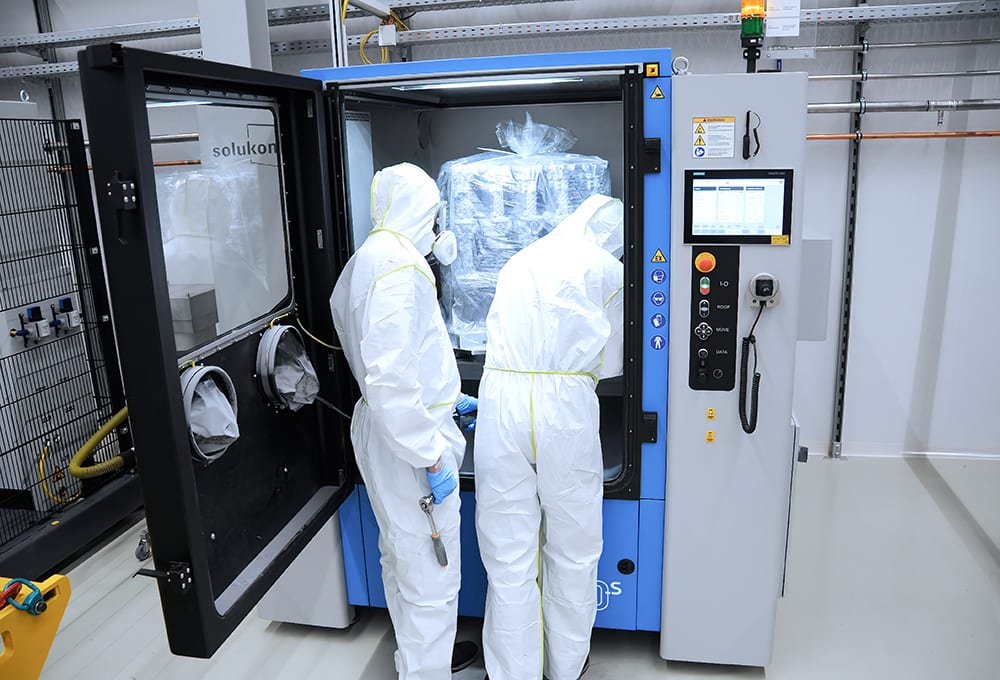
“Up to now it was not possible to build parts out of nickel-based alloys or steels with a laser power of more than 350 watts,” Gesa Rolink, team lead for material and parameters at Nikon SLM Solutions, said in a video posted to the company’s website. “The zoom functionality enables you to use increased laser power of up to 800 watts. In these material groups, we expect a larger jump regarding the build-up rates in comparison to aluminum, where we already achieved very high built-up rates in the past. Also, for aluminum alloys we expect higher build-up rates, especially through the use of 12 lasers.”
Rolink added that Nikon SLM Solutions expects “no limitation regarding the material which can be built on the NXG XII 600.” Materials available on the machine include titanium, aluminum, steel, Inconel-based alloys and copper.
Bosch says that the NXG XII 600 can create structures such as interior or curved channels that are not feasible with conventional milling processes. The printer also can produce unfinished parts on demand with no need for tooling. Another benefit that the supplier touts is the significant reduction in raw-material waste, down to almost zero.
“Using the 3D printer to manufacture components not only increases sustainability in production but also enables Bosch to respond flexibly to fluctuations in batch sizes and offer everything from a single source,” Weichsel said.
Printing a complete engine block

The engine block is an application that Bosch is excited to exploit with the metal 3D printer’s enhanced capabilities. The supplier notes that with conventional manufacturing, it can take up to three years to get from the first draft design to volume production. Completing the casting mold for the engine block alone can take up to 18 months, and it’s this step that 3D printing eliminates.
The design data is transmitted directly to the printer, eliminating the need for complex molds. The 3D printer delivers a finished engine block after just a few days, according to Bosch, greatly reducing overall product development time.
At full capacity, the facility can reportedly produce metal parts with a total weight of around 10,000 kg (22,050 lb) in under a year, achieving speeds of up to 1,000 cubic centimeters per hour. Faster component production allows Bosch to cut the time to market.
“We want to be faster than with traditional manufacturing processes and use this technology to get products to market more quickly,” Luntz said. “Even today, only a few companies can produce technology on an industrial scale the way Bosch does. We’re now going one step further, taking volume production in metal 3D printing to the automotive level.”
Bosch anticipates that this enhanced printing capability will lead to new opportunities in other industries as well, such as energy and aviation.
More From SAE Media Group
Off-Highway Engineering
Mahle Advances 3D Printing Capabilities
Off-Highway Engineering
Making Strides in Sustainable Transportation
Automotive Engineering
3D Printing Scales-Up
Off-Highway Engineering
Moving Metal AM Forward
Off-Highway Engineering
Additive Manufacturing Is Transforming Mobility Engineering, Driving the Factory of the Future
Aerospace & Defense Tech Briefs
SAE International Issues, Revises Technical Reports for Aerospace Engineering
Tech Briefs
Using 3D Printing to Strengthen Jet Engines
Off-Highway Engineering
MELD Exploits Plastic Deformation of Metals with Non-Melt Additive Manufacturing
Automotive Engineering
Demand up for Composite-Grade, High-Performance Plastics Across Aerospace, Automotive
Automotive Engineering
Casting Around for Lightweighting Solutions
Tech Briefs
5 Ws Of LEDs for 3D Metal Printing
Aerospace & Defense Tech Briefs
3-D Manufacturing of Titanium Components Takes Off
Aerospace & Defense Tech Briefs
Finding the Perfect Aluminum for Additive Manufacturing
Aerospace & Defense Tech Briefs
SAE International Issues First Technical Standards for Aerospace Additive Manufacturing
Off-Highway Engineering
EOS Releases Four New Metal Materials for Series Additive Manufacturing
Automotive Engineering
German OEMs Flex 3D Manufacturing Muscle
Aerospace & Defense Tech Briefs
High-Strength Aluminum Powder Developed for Additive Manufacturing in Aerospace, Automotive
Aerospace & Defense Tech Briefs
Orbex Debuts Innovative Smallsat Launch Vehicle
Automotive Engineering
New Ampere EV Motor Aims for Power, Torque Benchmarks
Aerospace & Defense Tech Briefs
SAE International Extends Call for Abstracts, Seeks Submissions for AeroTech Conference
Automotive Engineering
Porsche Partners to Develop 3D-Printed Pistons
Tech Briefs
Metal 3D Printing for Complex Heat Exchangers

Aerospace & Defense Tech Briefs
Lockheed Martin and Arconic Collaborate on 3D Printing and Advanced Aerospace Materials
Automotive Engineering
Directing GM’s 3D-Printed Future
Aerospace & Defense Tech Briefs
Equispheres Accelerates Additive Manufacturing Innovation with $5M from Lockheed Martin
Medical Design Briefs
Researchers Use Rust to Improve 3D-Printing Process
Off-Highway Engineering
Liebherr Reveals ‘Hybrid’ CFRP Cylinders and Parallel-Pump Concept
Top Stories
INSIDERDefense
 New Raytheon and Lockheed Martin Agreements Expand Missile Defense Production
NewsAutomotive
 Ford Announces 48-Volt Architecture for Future Electric Truck
INSIDERManufacturing & Prototyping
 Active Strake System Cuts Cruise Drag, Boosts Flight Efficiency
ArticlesTransportation
 Accelerating Down the Road to Autonomy
INSIDERMaterials
 How Airbus is Using w-DED to 3D Print Larger Titanium Airplane Parts
Road ReadyTransportation

Webcasts
Electronics & Computers
 Cooling a New Generation of Aerospace and Defense Embedded...
Power
 Battery Abuse Testing: Pushing to Failure
Connectivity
 A FREE Two-Day Event Dedicated to Connected Mobility
Automotive
 Quiet, Please: NVH Improvement Opportunities in the Early Design Cycle
Transportation
 Advantages of Smart Power Distribution Unit Design for Automotive &...
Aerospace
 Sesame Solar's Nanogrid Tech Promises Major Gains in Drone Endurance