




New Ampere EV Motor Aims for Power, Torque Benchmarks
3D printing key to new motor’s compact, lightweight and power-dense design.
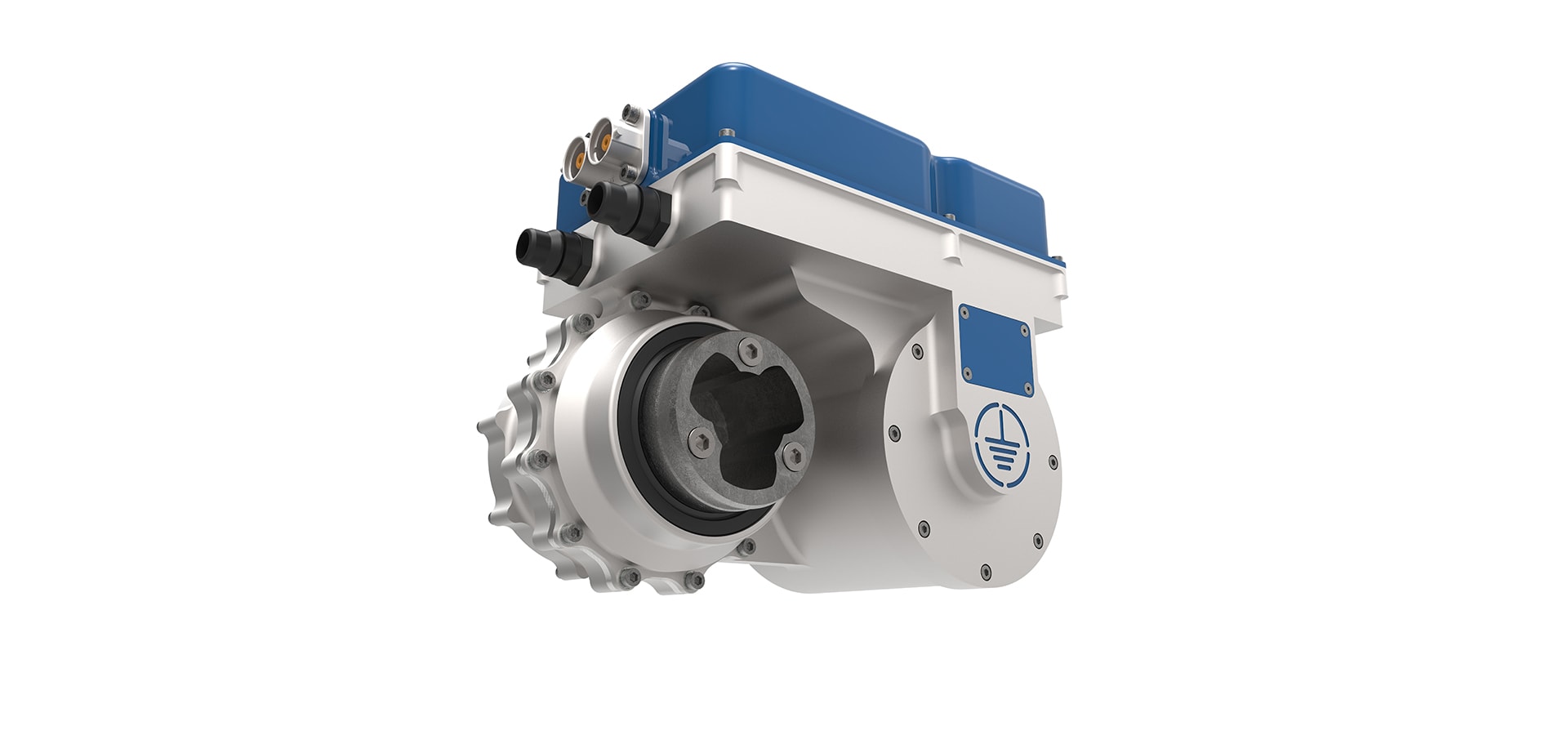
Consider an EV traction motor rated at 220 kW and weighing 10 kg (22 lb). Is it too good to be true? “We’ll find out within nine months when we build it,” said Ian Foley, managing director of Equipmake, a U.K.-based specialist electric powertrain company. The product under development, known as Ampere, may be the world’s most power-dense permanent magnet electric machine.
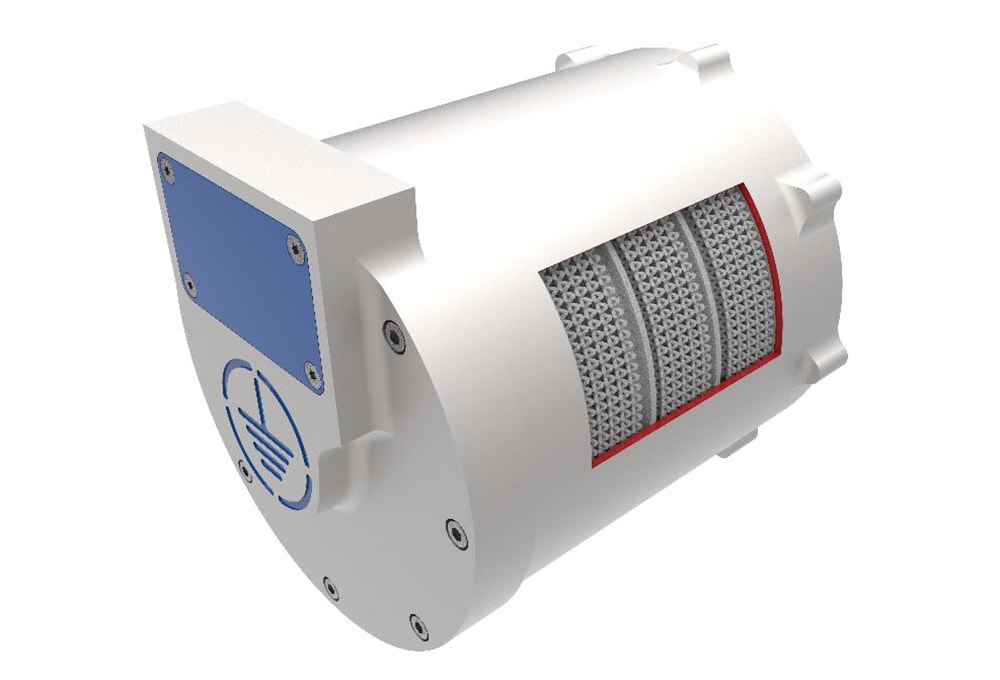
Ampere will spin up to 30,000 rpm to deliver its 20-kW/kg peak power output that is four times as power dense as a conventional electric motor. It was created using advanced additive-manufacturing technology from partner HiETA. According to Foley, the Equipmake and HiETA collaboration was ideal, with HiETA “bringing the added benefit of reduced parts count to achieve the results we are predicting,” he said.
Equipmake needed to achieve an exceptionally low weight to meet future requirements for both EVs and aerospace projects including manned drones. Additive manufacturing sees a metal structure 3D printed, rather than milled from a solid billet, explained Foley: “Metal is only put where it is needed and thermally efficient thin walls with optimized fine surface details can be combined directly with the motor’s structure,” thus reducing the unit’s bill of material.
The 3D-printed structure also improves cooling capability. The result is a low-inertia design that facilitates the rotational speed essential for high power output. Ampere will make minimal use of high strength alloys and will also minimize costly magnet materials, Foley noted. He believes the motor will offer best-in-class torque figure per kilogram of magnet mass.
3D printing is key

HiETA’s technology road map indicates additive manufacturing will become cost competitive for low-volume EV and aerospace applications within two to five years, Foley said. He anticipates costs will continue to fall as the operating rates of 3D printing equipment increase. Near-term, the Ampere project will focus on manufacturing-tolerance precision and further opportunities to reduce machining for production. “Certainly, additive manufacturing is the key to unlocking the next step change in compact, lightweight, powerful-motor design,” he said.
Given Ampere’s promising power-to-weight-ratio figures, Foley said he believes the development program is just the beginning of greater motor efficiencies. “The key to getting greater power density from an electric motor is for it to spin faster. But as it becomes ever smaller it will be more difficult to get the heat out,” he explained. Thermal management is the next major frontier for electric-machine and power-electronics development, he said, and is an area where Equipmake expects to leverage HiETA’s expertise in heat exchangers, underlining the strength of the companies’ partnership.
At present however, motor shaft speeds will remain in the range of 30,000 rpm due to their bearings’ thermal tolerance. Foley revealed that Ampere will use creased ceramic ball bearings, available off the shelf. While such bearings are more “exotic” than steel ball bearings, they also have a speed limit. “To go even faster would require oiled rather than greased bearings, which would bring complications regarding design,” he noted.
Higher shaft speeds also bring heat-dissipation challenges, as Equipmake engineers learned when developing an electric machine (for a gas turbine application) that was rated at 115,000-130,000 rpm. “Very high rpm is certainly achievable,” Foley said, “but for vehicle traction that speed would need to be geared down. A gearbox, big and heavy, would offset the gain.” Such tradeoffs are common in racecar engineering, where Foley worked in the 1990s (at Lotus F1). He was later part of a team that developed a flywheel-based energy storage system for Audi’s Le Mans program.
Integrated SiC inverter
The new Ampere motor will use a silicon-carbide (SiC) inverter manufactured using additive technology and integrated into the motor. This will aid overall cooling. HiETA’s use of selectable laser melting of the metal powders gives engineers “really high levels of design freedom,” according to Andy Jones, innovation program manager at HiETA.
The approach enables complex geometries, including lattices, and the integration of multiple components into single designs. “This enables us to create more compact and efficient components than with conventional manufacturing techniques,” Jones said. “I believe this exciting project has the potential to totally change both the automotive industry’s and the market’s concept of what an electric motor can offer.”
Equipmake recently opened a new U.K. facility with design, test and manufacturing capability ranging from a novel spoke motor to fully electrified platforms. The Ampere project is backed by the British government supported INNOVATE U.K., the country’s innovation agency and part of the U.K. Research and Innovation Organization.
More From SAE Media Group
Aerospace & Defense Tech Briefs
SAE International Issues, Revises Technical Reports for Aerospace Engineering
Automotive Engineering
German OEMs Flex 3D Manufacturing Muscle
Off-Highway Engineering
Mahle Advances 3D Printing Capabilities
Automotive Engineering
GM: Ultium Heat-Pump System Boosts EV Range, Reduces Charge Times
Automotive Engineering
Balancing the ‘Dominos’ in EV Thermal Management
Automotive Engineering
Supercharging the Fuel Cell
Off-Highway Engineering
Making Strides in Sustainable Transportation
Automotive Engineering
Air- or Water-Cooling Resistors for EVs: The Case for H2O
Automotive Engineering
ACeDrive Consortium Plans More Efficient EV Powertrain
Automotive Engineering
FEV and the Art of EV Testing
Automotive Engineering
Gearing Dana for the EV Future
Off-Highway Engineering
Bosch Invested in Large-Scale Metal 3D Printing
Automotive Engineering
How 3D Printing Could Add Efficiency to EV Power Electronics
Automotive Engineering
Charting the ICE Future with Mahle’s Martin Berger
Tech Briefs
New Fluids Coming for EV Thermal Management
Automotive Engineering
Demand up for Composite-Grade, High-Performance Plastics Across Aerospace, Automotive

Automotive Engineering
Schaeffler Heads Back to CES with New Acquisition, Capabilities
Automotive Engineering
The Push for E-Powertrain Progress
Off-Highway Engineering
Case Launches ‘Industry First’ Electric Backhoe Loader
Automotive Engineering
Intertek Rethinks the EV Test Facility
Automotive Engineering
Addressing Thermal Management for EVs
Off-Highway Engineering
Thermal Challenges of Electric Commercial Vehicles
Automotive Engineering
EV Energy-Management Powers-Up
Automotive Engineering
TI Fluid Systems Opens Facility to Create Cooling Products for EVs
Automotive Engineering
ZF Introduces Complete E-Drive System for Passenger, Commercial Vehicles
Automotive Engineering
In Pursuit of the Silky-Smooth EV
Aerospace & Defense Tech Briefs
SAE International Extends Call for Abstracts, Seeks Submissions for AeroTech Conference
Automotive Engineering
SAE J-3277 Covers Leak Testing for Every EV Battery
Off-Highway Engineering
Overcoming EV Drivetrain Testing Challenges
Top Stories
NewsAutomotive
 Microvision Aquires Luminar, Plans Relationship Restoration, Multi-industry Push
INSIDERDesign
 A Next Generation Helmet System for Navy Pilots
INSIDERWeapons Systems
 New Raytheon and Lockheed Martin Agreements Expand Missile Defense Production
NewsPower
 Ford Announces 48-Volt Architecture for Future Electric Truck
INSIDERAerospace
 Active Strake System Cuts Cruise Drag, Boosts Flight Efficiency
ArticlesTransportation

Webcasts
Aerospace
 Cooling a New Generation of Aerospace and Defense Embedded...
Test & Measurement
 Battery Abuse Testing: Pushing to Failure
Internet of Things
 A FREE Two-Day Event Dedicated to Connected Mobility
Transportation
 Quiet, Please: NVH Improvement Opportunities in the Early Design Cycle
Electronics & Computers
 Advantages of Smart Power Distribution Unit Design for Automotive &...
Aerospace
 Sesame Solar's Nanogrid Tech Promises Major Gains in Drone Endurance