




More Gears, More Challenges
Many strategies, as well as key software and hardware aspects related to controllers, networks, sensors, and actuators, must be considered to keep automatic transmissions shifting smoothly as more gears are added to improve fuel economy.

Transmission developers who added gears to meet tighter fuel economy/consumption requirements are adopting a range of strategies to make sure that efficiency and driveability are also improved. Reducing loss, communicating with engines, and maximizing module usability are among the challenges facing design teams.
Automatic transmissions have evolved rapidly since the days when six gears were derided as a marketing ploy. Six gears are now common, while seven-, eight-, and nine-speed units are emerging. In all these systems, one of the big challenges is to avoid wasting any energy.
“We look for technology that can be used to reduce losses in the transmission — for example, using more accurate real-time engine torque data to more accurately set control pressures in the transmission, which can reduce parasitic mechanical loads,” said Jim Kolhoff, General Motors Global Chief Engineer for Transmission Controls & Powertrain Electronics.
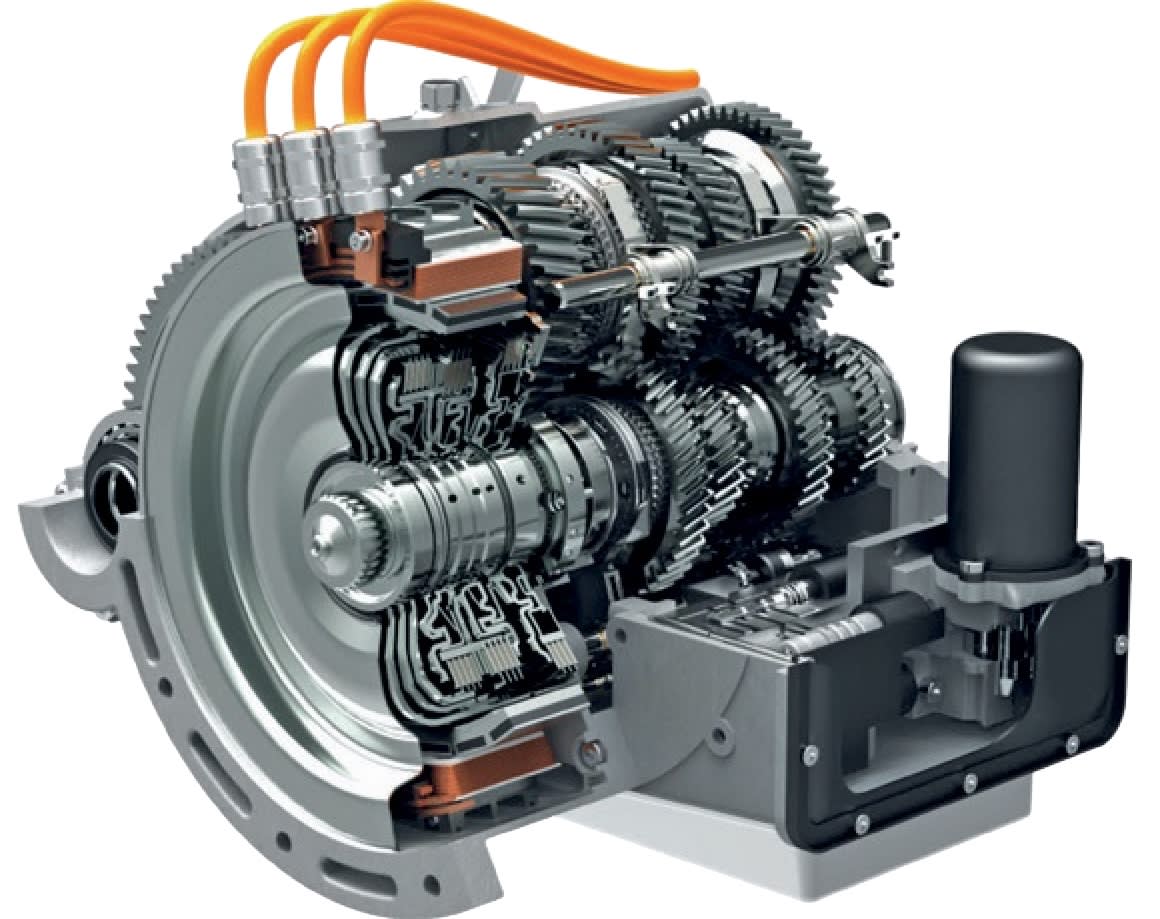
The controls can improve efficiency in automatic transmissions that have been adding more gears over the past few years. As these numbers rise, it becomes more difficult for systems to pick the best gear for operating conditions and get to it with minimal loss.
“A good control strategy must optimize gear selection correctly, keeping a good ratio even when you skip a gear,” said Christophe Laurent, Technical Specialist-Transmission Controls, Transmission & Driveline, IAV Automotive Engineering. “You also want to minimize loss during shifts. That becomes more important as you have more gears.”
Shifts occur constantly to keep engines running at optimal rpm levels. Powertrains are always ratcheting up theoretical limits for performance. Achieving these performance levels takes a lot of computing horsepower and memory.
“Efficiency in the gearbox has reached into the 90% range,” said Joe Funyak, Transmission Lead at Infineon. “Transmissions are always running up and down to keep the engine running in a tight range. The amount of computational power also grows substantially as the number of gears increases. A few years ago, one Mbyte of flash was overkill; now you’re seeing four to eight Mbytes of flash in dedicated transmission controllers.”
While controllers are a key aspect of the electronics segment of transmissions, they are far from the only facet of electronic designs. Networks, sensors, and actuators all play critical roles.
“Electronic controls in combination with faster vehicle networks and the latest sensor technology are key elements for better driveability through clutch and shift control and also for more efficient solutions for pressure accumulator and electric-motor-driven pump control,” said Martin Pischinger, Vice President of Electronics/Controls at FEV North America.
Complex architectures

As with many aspects of vehicle design, taking a holistic view of the challenge is becoming the norm. Getting all these elements to work in conjunction with the mechanical components means that all design teams and all systems must know what other elements are doing at all times.
“The design of the transmission controls system (both mechanical and electrical/electronic) is done as a system,” Kolhoff said. “This is a key to allow I/O of the transmission controller electronics to be optimally aligned with the selection of sensors and actuators for the transmission.”
While design teams have to focus on aligning controller designs with sensors and actuators, they also want to apply strategies that let them use these controllers on a range of powertrains. Reuse helps trim overall costs.
“Thanks to the modular design, controllers can be fitted in different transmission variants as well as in several vehicle platforms,” said a ZF Friedrichshafen engineering spokesman. “At the moment, all eight- and nine-speed automatic transmission variants are supplied by this modular system. There are different function modules for specific components only, such as manual shifting/automated shifting, torque converter lockup, clutch/starting clutch, and friction clutch/dog clutch.”
One or two?

Engineers must also decide whether they want to combine engine and transmission controllers. Some companies use a single powertrain control module for the engine and transmission. Others split it up with dedicated control units.
“If you have separate controls, you can be more flexible, using CAN to communicate between the transmission and engine controllers,” Funyak said. “If you have everything in one module, it’s easier from the communications side, and you can eliminate the cost of the second module. There’s always some back and forth; these strategies can move back and forth like a pendulum.”
When companies opt for a dedicated transmission controller, they have to decide where to house it. Some companies put the electronics as close to clutches and gears as possible to reduce latency and improve precision.
“There are a lot of advantages for placing transmission controllers and modules inside a transmission,” said David Helton, Global Chief Engineer, Engine Management Systems at Delphi. “The biggest advantage is to match the transmission control modules with individual transmission characteristics to achieve good shifts each and every time.”
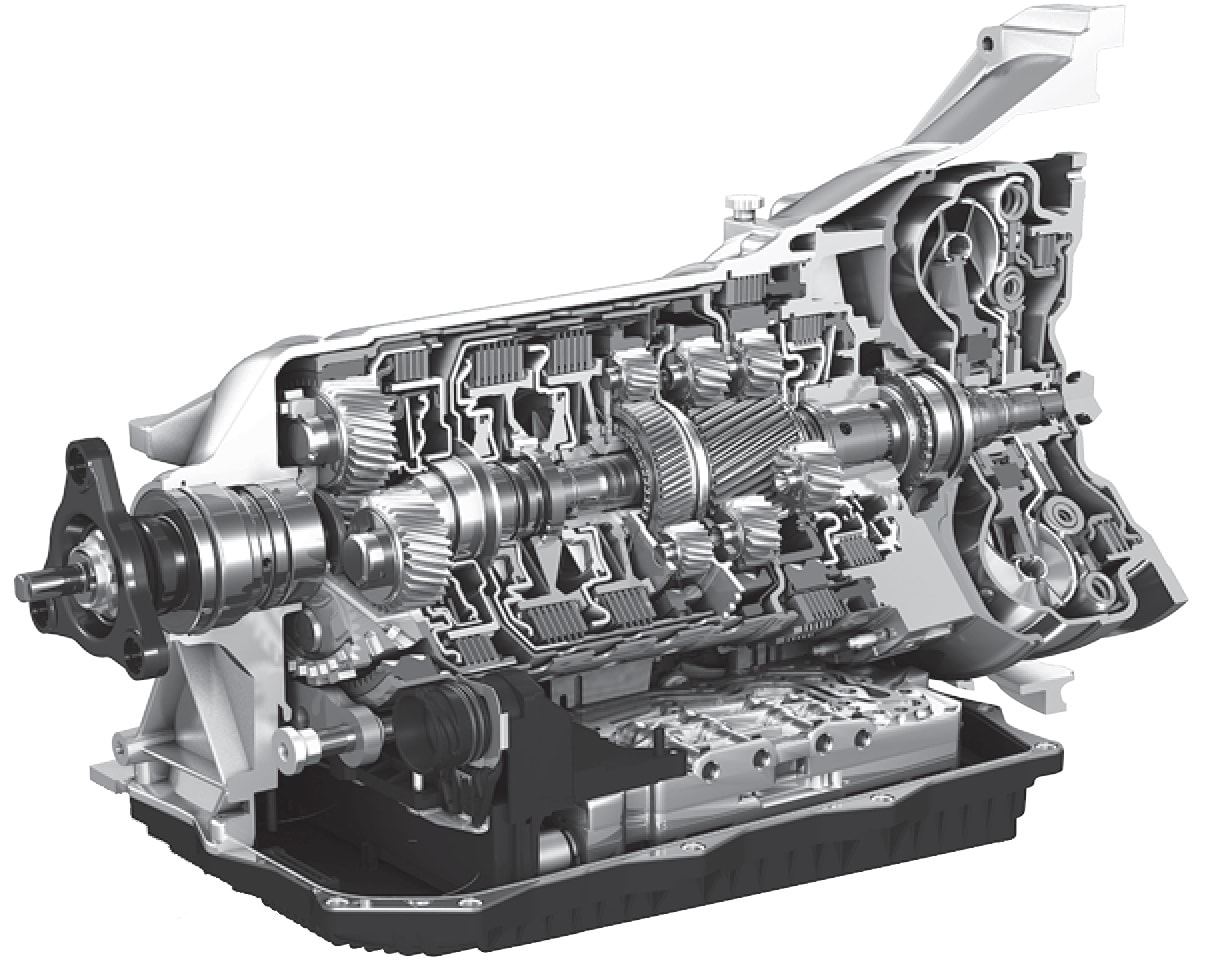
Others focus more on life-cycle costs. Long-term reliability for controllers is good, but if problems arise, this internal packaging strategy becomes quite costly to repair.
“If the sensor is inside the transmission, it’s difficult to replace the component if there’s a failure,” Laurent said.
Regardless of where the controllers sit, the emergence of standards and advances in modeling and simulation are helping make it more viable for engineers to employ these modules in multiple vehicles. All these trends help design teams meet shortened cycle times.
“Whether you integrate the engine control unit and transmission unit into one common controller or have stand-alone controllers, reuse of controls is required to keep pace with shortened development cycles,” FEV’s Pischinger said. “We address these challenges with an AUTOSAR-based modular software architecture and an automated verification and validation process.”
Creating code
The software and firmware that run on these hardware architectures is an equally complex part of overall powertrain designs. Programmers have to maximize efficiency while also ensuring that no elements within the code will cause failures.

“We are also developing advanced software designs to provide better dynamic optimization of powertrain operating points to operate more at the best combined efficiency of the engine and transmission and to provide better driving dynamics and driveability during ratio changes or when the driver inputs [accelerator pedal or shifter inputs] command a change in vehicle performance” Kolhoff said.
As this software becomes more complex, some companies are narrowing the focus of their design programs. They’re putting more effort into the control programs and getting outside help for operating systems.
“A few years ago, companies wanted to do their own operating systems,” Laurent said. “Now they’re more and more willing to buy an operating system.”

Regardless of who writes the code, reliability is paramount.
“The software implementation is performed through continuous integration and testing that not only handles increasing complex functionality but also safety standards like ISO 26262 that must be fulfilled in the development process,” Pischinger said. “Excellent software validation — both software and hardware-in-the-loop — is mandatory, as is in-vehicle testing. In the future, simulation will become more and more important due to increasing system complexity and shortened development time.”
More From SAE Media Group
Off-Highway Engineering
Gearshift Actuator Dynamics in a Dual Clutch Transmission
Off-Highway Engineering
FEV Simplifies Off-Highway Electrification
Automotive Engineering
Renault Applies Model-Based Systems Engineering to Dual-Clutch Transmission
Off-Highway Engineering
Freightliner’s Medium-Duty Makeover
Battery & Electrification Technology
Ultracapacitor Solutions to Address Energy-Storage Needs of Vehicles
Off-Highway Engineering
Miserly Power Systems
Off-Highway Engineering
Engine Developers Increase Efforts to Decrease Fuel Usage
Automotive Engineering
Transforming Propulsion with Tula’s Digital-Control Magic
Off-Highway Engineering
Daimler Trucks' Lessons Learned from SuperTruck Program
Automotive Engineering
Making the Torque-Transfer Transition
Automotive Engineering
Electrifying ‘The Ultimate Driving Machine’
Automotive Engineering
Dana Opens New Chapter on CVTs
Automotive Engineering
Gearing Dana for the EV Future
Off-Highway Engineering
EV Startup Prepares to Enter Commercial Market with Novel EAxle
Off-Highway Engineering
AxleTech Develops Electric Independent Suspension Concept for Vehicles Up to 58,000-lb GCWR
Autonomous Vehicle Engineering
Autonomy and Electrification: A Perfect Match?
Off-Highway Engineering
Reshaping the Mobile-hydraulic Ecosystem

Tech Briefs
SAE WCX™ Digital Summit Preview
Off-Highway Engineering
ZM Trucks Starts Production in Fontana, California
Off-Highway Engineering
Allison Purpose-Builds More Powerful TerraTran Transmission

Automotive Engineering
First Drive: 2027 Mercedes-Benz CLA Hybrid
Off-Highway Engineering
Transmission Talk: Eaton Discusses Its Portfolio of Commercial Gearboxes
Automotive Engineering
Bosch’s EV Efficiency Upgrade: Continuously Variable Transmissions
Automotive Engineering
Gearing EVs for Greater Efficiency
Off-Highway Engineering
Aftertreatment Comes With Challenging Diagnosis
Off-Highway Engineering
Dual-Clutch Transmission
Off-Highway Engineering
Cummins Unveils New B7.2 Diesel Engine
Automotive Engineering
Inside Tremec’s Corvette Dual-Clutch Transmission
Top Stories
INSIDERManufacturing & Prototyping
 How Airbus is Using w-DED to 3D Print Larger Titanium Airplane Parts
INSIDERManned Systems
 FAA to Replace Aging Network of Ground-Based Radars
NewsTransportation
 CES 2026: Bosch is Ready to Bring AI to Your (Likely ICE-powered) Vehicle
NewsSoftware
 Accelerating Down the Road to Autonomy
EditorialDesign
 DarkSky One Wants to Make the World a Darker Place
INSIDERMaterials
 Can This Self-Healing Composite Make Airplane and Spacecraft Components Last...
Webcasts
Defense
 How Sift's Unified Observability Platform Accelerates Drone Innovation
Automotive
 E/E Architecture Redefined: Building Smarter, Safer, and Scalable...
Power
 Hydrogen Engines Are Heating Up for Heavy Duty
Electronics & Computers
 Advantages of Smart Power Distribution Unit Design for Automotive...
Unmanned Systems
 Quiet, Please: NVH Improvement Opportunities in the Early Design...
