




Miserly Power Systems
Engineers push engine, transmission technologies to turn off fuel usage.

Commercial-truck powertrains are doing more with less. Engine developers are adding features that reduce fuel consumption, saving owners money while helping fleets reduce emissions.
Digital technologies continue to transform commercial trucking as powertrain providers devise new ways to eke more from each drop of fuel. Engines now adapt to road conditions, adjusting power and shutting down some or all of the cylinders as demands change.
Electric fans and maintenance monitoring now are being used to help keep engines running at maximum efficiency while using less fuel. Design teams also are refining technologies like start-stop and cylinder deactivation, working to make them smooth enough that drivers barely notice the systems are adapting to the environment.
Engine additions
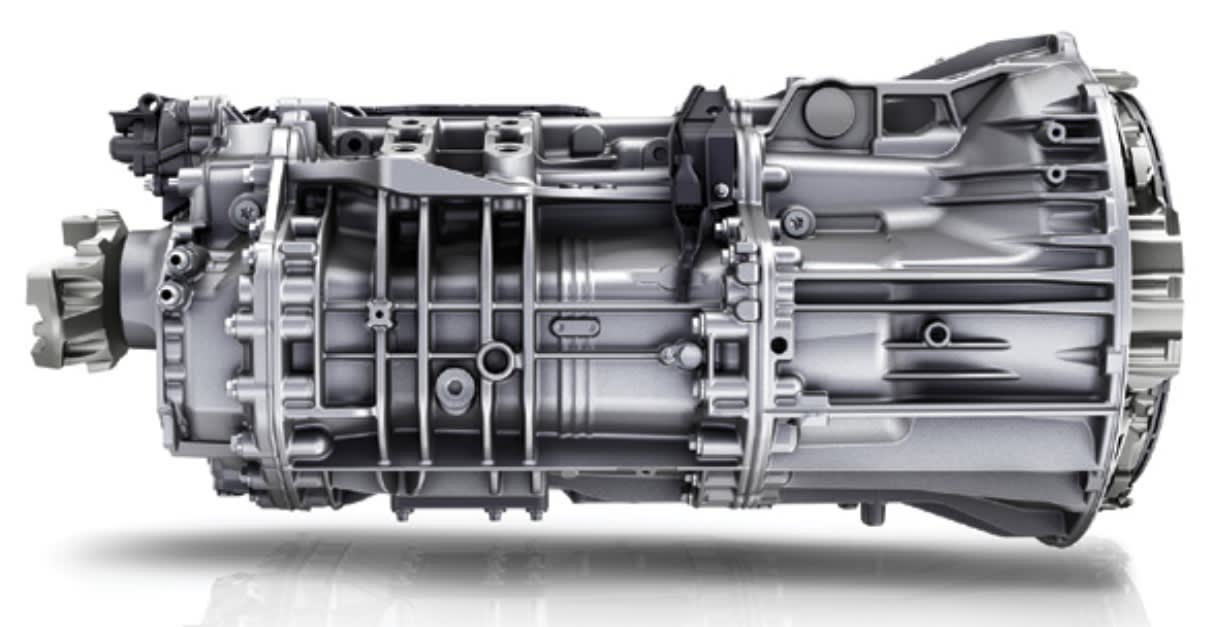
The role of sensors and controllers is expanding as engineers continue to push the limits of semiconductor technologies. Powertrain suppliers continue to add features and functions that make engines more miserly.
This fall, Detroit’s Integrated Powertrain with the Detroit DT12 AMT (automated manual transmission) was upgraded with Intelligent Powertrain Management, which adjusts engine operation based on environmental inputs. It can coast more often and skip gears while shifting to most efficiently match power output to driving conditions. Improved maps cover nearly 1 million miles of roadways, helping vehicles navigate efficiently and understand road conditions. The system can be further enhanced with several options.
“Our electronic fan control reduces fan on-time, which can save 40 hp and reduce fuel consumption,” said Brian Daniels, manager of Detroit Powertrain and Components product marketing. “The controlled water pump has a clutch that can reduce engine loads when conditions allow. With Optimized Idle, when the vehicle is parked, the engine will start and stop depending on outside conditions to maintain in-cab temperatures, which can reduce the amount of idling and preserve battery life.”
Other companies are working to broaden the acceptance of start-stop systems that shut down the engine when vehicles stop temporarily. Suppliers are moving to make start-stop technologies more viable by reducing harsh vibrations that occur when engines shut down. Turning off engines during stop-and-go traffic brings sizable fuel savings, but drivers have been critical of the technology that’s currently available.
“Start-stop has seen lousy acceptance—it’s too jerky,” said Joel Morrow, a fleet driver who’s head of R&D at Ploger Transportation. “Drivers find it annoying and people in sleeper cabs sometimes wake in a start because they think someone hit the truck.”
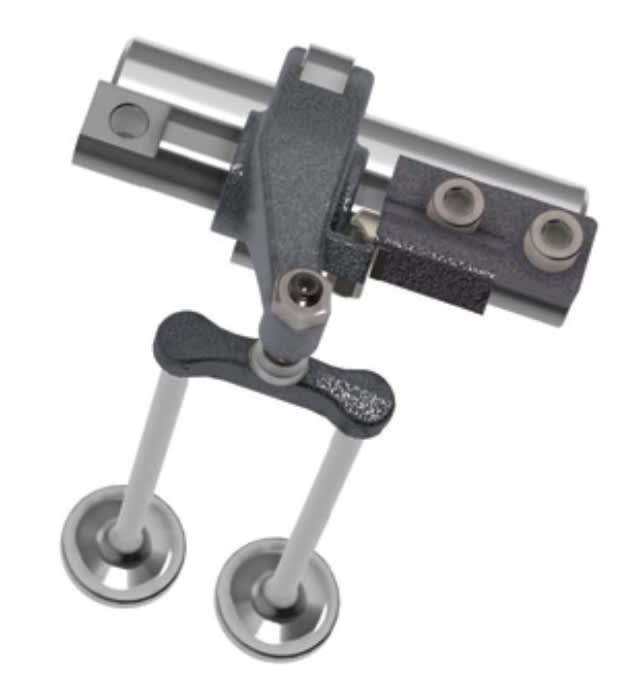
Jacobs Vehicle Systems is addressing that issue with its Active Decompression Technology (ADT), which reduces the magnitude of engine-shake during shutdown by 90%. It reduces engine wear in addition to conserving fuel.
“ADT works by keeping the engine valves open and the cylinders decompressed,” said Robb Janak, Jacobs’ director of new technology. “When it’s switched on, the engine coasts to a smooth shutdown without causing the cab to shake. When starting up, the engine is kept in a decompressed state, which decreases cranking torque by 40% and allows the engine to spin at up to twice its normal speed for smoother starting, faster priming of the fuel system and decreased wear on components.”
Improved accuracy
Adding sensors and controllers to powertrains also helps to reduce unscheduled downtime, which can substantially improve owners’ profits. The sensors that monitor many parameters within an engine can determine when it’s time for maintenance. As these systems become more sophisticated, the number of parameters and the accuracy of measurements are both improving.
“The Freightliner Cascadia maintenance system can accurately measure when scheduled maintenance is required,” Daniels said. “Detroit Connect monitors the powertrain and when a fault occurs, it notifies the fleet and they can use that info to understand the severity of the fault to plan the right course of action. The new maintenance system will compute optimal maintenance intervals based on actual operating conditions of the vehicle and optimize scheduled maintenance.”
Empty cylinders
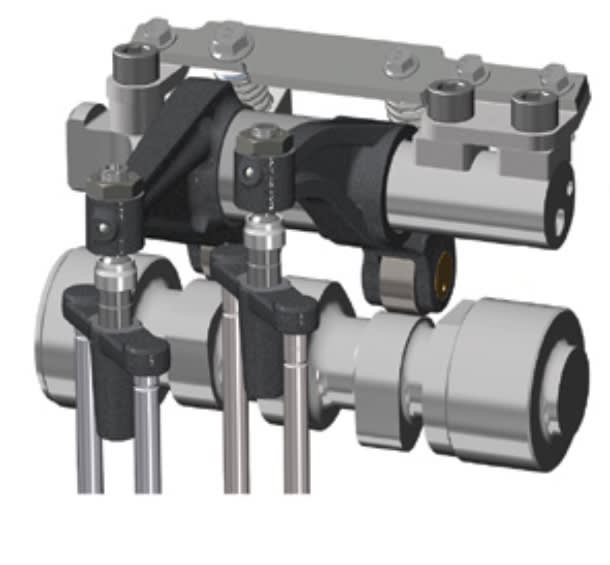
Cylinder deactivation (CDA) is another technique for reducing fuel consumption. Engineers are working to commercialize systems that shut down some cylinders when full engine power isn’t needed.
Reducing fuel consumption is one of the primary driving factors. Eaton plans to use CDA to increase engine temperatures so catalytic converters run efficiently. When trucks are idling for long periods, most cylinders are blocked off, causing heat to rise in those that are still active.
Detroit is working on a similar program.
“Detroit currently uses asymmetric injection to improve aftertreatment performance, which increases uptime,” Daniels said. “During an over-the-road regen, asymmetric injection varies the amount of fuel supplied to the cylinders to create a higher load and higher temperatures to improve regeneration of the DPF.”
Jacobs is focusing on using CDA to decrease consumption while driving. Preventing the intake and exhaust valves for designated engine cylinders from opening improves fuel consumption by up to 20% at the lowest engine loads and with three of six cylinders deactivated. Testing and validation on real vehicles show a solid product lifetime.
“CDA hardware so far has been demonstrated on seven different heavy-duty engine platforms (covering 9-, 11-, 13- and 15-L engines) and five different heavy-duty truck road tests,” Janak said. “It has undergone 4,300 hours and 45,000 kilometers of durability testing, there have been more than 1.2 billion cycles on CDA components and over 470 million cycles of fatigue and overload testing.”
More From SAE Media Group
Automotive Engineering
Transforming Propulsion with Tula’s Digital-Control Magic
Automotive Engineering
Bentley Develops W12 Cylinder Deactivation
Off-Highway Engineering
Dana Rexroth Completes Validation Testing on R2 HVT
Automotive Engineering
Porsche Unveils New Downsized, Boosted 3.0-L Boxer Six
Automotive Engineering
JLR's All-New 2015 Modular Engines Feature Roller-Bearing Cams, Balance Shaft
Automotive Engineering
Cooled EGR Shows Benefits for Gasoline Engines
Automotive Engineering
Audi's New V6 Diesel to Feature Electric Turbocharging, New NOx Technology
Off-Highway Engineering
FEV Simplifies Off-Highway Electrification
Automotive Engineering
Wheel-Hub-Motor Innovations in Flux
Off-Highway Engineering
Reshaping the Mobile-hydraulic Ecosystem
Off-Highway Engineering
Dana Rexroth Tests Latest-Generation Hydromechanical Variable Transmission
Automotive Engineering
Ford Tests Cylinder Deactivation on Its 1.0-L EcoBoost Triple
Automotive Engineering
2022 Nissan Rogue Gets a VC Turbo Triple
Automotive Engineering
Renault Applies Model-Based Systems Engineering to Dual-Clutch Transmission
Off-Highway Engineering
Turbo Compounding, I-Shift with Crawler Gears New to Volvo's 2017 Powertrain Lineup
Off-Highway Engineering
Navistar Updates A26 Engine, Improves FE by 4%
Off-Highway Engineering
Cummins Unveils New B7.2 Diesel Engine
Automotive Engineering
More Gears, More Challenges
Automotive Engineering
'Reman' Engine Market Steady, but Complexity Challenges Production Efficiency
Automotive Engineering
Preparing for a 48-volt Revival
Off-Highway Engineering
Freightliner’s Medium-Duty Makeover
Off-Highway Engineering
Allison Purpose-Builds More Powerful TerraTran Transmission
Off-Highway Engineering
SuperTruck REDUX
Off-Highway Engineering
Deere Tier 4 Final Construction-Class Dozers Feature New Electrohydraulic System
Automotive Engineering
Inside Honda’s New Two-motor 50-mpg Accord Hybrid
Off-Highway Engineering
Eaton Unveils DCT for Medium-Duty Trucks and Buses
Off-Highway Engineering
Navistar’s ‘Ground Up’ Approach to All-New Diesel Engine
Off-Highway Engineering
ZM Trucks Starts Production in Fontana, California
Automotive Engineering
Inside the Bolt EV
Off-Highway Engineering
Daimler Trucks' Lessons Learned from SuperTruck Program
Top Stories
INSIDERManufacturing & Prototyping
 How Airbus is Using w-DED to 3D Print Larger Titanium Airplane Parts
INSIDERManned Systems
 FAA to Replace Aging Network of Ground-Based Radars
NewsTransportation
 CES 2026: Bosch is Ready to Bring AI to Your (Likely ICE-powered) Vehicle
NewsSoftware
 Accelerating Down the Road to Autonomy
EditorialDesign
 DarkSky One Wants to Make the World a Darker Place
INSIDERMaterials
 Can This Self-Healing Composite Make Airplane and Spacecraft Components Last...
Webcasts
Defense
 How Sift's Unified Observability Platform Accelerates Drone Innovation
Automotive
 E/E Architecture Redefined: Building Smarter, Safer, and Scalable...
Power
 Hydrogen Engines Are Heating Up for Heavy Duty
Electronics & Computers
 Advantages of Smart Power Distribution Unit Design for Automotive...
Unmanned Systems
 Quiet, Please: NVH Improvement Opportunities in the Early Design...
