




SuperTruck REDUX
A year plus into phase two of the promising DOE program to dramatically improve freight efficiency, project leads from three of the participating truck OEMs share their progress thus far and technology paths moving forward.

In fall of 2016, truck makers that participated in the first five-year phase of the SuperTruck program made like the Blues Brothers and “put the band back together” for phase two of the U.S. Department of Energy-sponsored initiative. Navistar’s SuperTruck 2 (ST2) team, for example, is “almost 100% identical” to the one that finished SuperTruck 1, according to Dean Oppermann, chief engineer for advanced vehicle technologies and the company’s SuperTruck program.
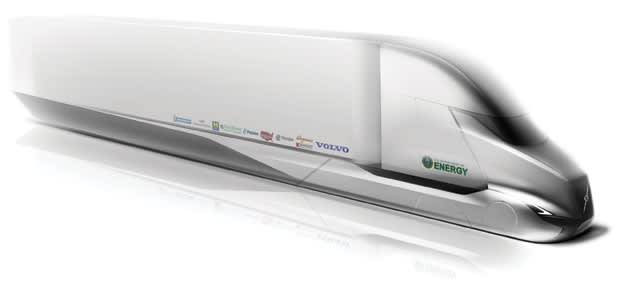
“The core team is about 15 engineers strong, who are responsible for multiple subsystems and controls,” he said. That number fluctuates at any given time, drawing upon resources throughout the entire organization — not just the advanced-technology group — depending on the work being done. “We get up to almost 50 people in some very high productivity months.”
Each of the teams — Cummins-Peterbilt, Daimler Trucks North America (DTNA), Navistar, and Volvo Trucks — successfully demonstrated big-rigs that far-surpassed the phase-one goal of a 50% freight efficiency improvement compared to each OEM’s best-performing 2009 Class 8 truck.
The five companies have committed to continue development of advanced technologies pursued the first go-round and to explore new systems and processes to achieve the even-more aggressive phase-two goal of a 100% increase in freight-hauling efficiency, which equates to about 198 ton-miles per gallon target. Demonstration of 55% engine brake thermal efficiency (BTE) is another not-so-easily-achieved mandate.

“The 55% BTE is a real challenge,” said the principal investigator for Volvo Trucks’ SuperTruck program, Pascal Amar. “It’s only 5% more than we did in SuperTruck 1 but it’s a tough 5%, starting to push the boundaries of physics. So we don’t want to limit ourselves to traditional four-stroke [engines]. We want to see what else could be done to make a stepped improvement.”
That spirit of innovation — of not being limited by tradition — is a trait shared by the engineering teams developing the next round of SuperTrucks.
48-V a major focus for Daimler Trucks
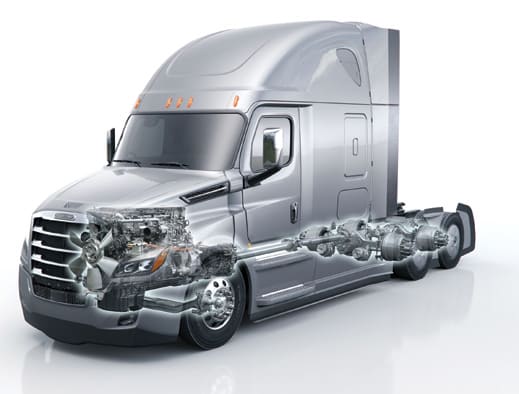
DTNA’s first SuperTruck was built off the previous Freightliner Cascadia platform. Since then, the next-generation 2018 model year Cascadia has gone into full production, providing the starting point for its SuperTruck 2.

“One of the questions that came up [early on] is, where are we with new Cascadia? Because we want to build off of the new truck,” explained the program’s principal investigator, Justin Yee. “There are some pretty major changes between the two, which prevents us from just taking the SuperTruck 1 and adding more components to it.”
The electrical architecture was changed for the new Cascadia, a different chassis is employed, and more obvious are the aerodynamic enhancements. “One of the things we’ve done internally is test our new Cascadia versus the SuperTruck baseline, which is a 2009 Cascadia, so we know where our starting point is moving forward,” Yee said.
This second go-round is being run a little differently than the first one, he said: “We don’t have a full-time dedicated team so it’s much more dispersed within the organization...We have a core team and we’re all sort of doing two jobs.” Approximately 40 people are attached to the program.
Despite the new vehicle platform, the team has been able to reuse some of the systems put in place for SuperTruck 1. “One of the real benefits was that it pushed organizations like ours to develop systems such as the simulation and analysis portion of developing trucks,” Yee said. “We were able to create an energy simulation package where we can look at running quick simulations, changing for example rolling resistance, or friction, or drag, and look at the overall benefits when you run that over a standard route.”
The first six or seven months of DTNA’s ST2 program have involved doing analysis to look at setting goals for different work streams, particularly in engine, powertrain, aerodynamics — both tractor aero and trailer aero — tires for rolling resistance, and energy management and controls. Yee and his team have been looking to identify how to achieve its internal goal of 115% freight-efficiency improvement.
“There’s no magic behind it. You know the physics involved, the engine and powertrain are a significant question, and then tractor aero and trailer aero. Those four main areas are the bulk of where we’re going to get our freight-efficiency improvements,” said Yee.
Weight reduction is also important, but Yee notes that “weight is difficult to justify because only a small portion of the industry is really weight-sensitive. And it takes so much weight to get an FE improvement — it’s hard to justify in production.”
The team is looking for low-cost ways to reduce weight, “but it’s not a huge part of the program,” he said.
Beyond the simulation package, other areas receiving further examination from the SuperTruck 1 program include downspeeding, axle technology “that required more developments to be ready,” and tires with help from its ST2 partner Michelin.
“Downspeeding is an industry-wide trend; everyone’s looking at downspeeding on the rear axles, which means you then need the higher torque on the engine side,” he said.
Other partners in this phase two include Oak Ridge National Laboratory and the University of Michigan on the engine development, and National Renewable Energy Laboratory, which is providing assistance with some of the HVAC simulation models.
Yee could not yet share specifics on engine development, but stressed that the industry is facing a challenge in ultra-low NOx. “So that’s something we’re considering in the program,” he said. “It’s possible [to achieve it] when you change the engine parameters, but what happens is your fuel economy decreases” — so fewer NOx but more CO2 emissions.
“One option that we’ve proposed to the EPA is to do geofencing — you only go into ultra-low NOx condition in specific areas that require it. I don’t know where they are in their discussions, but that’s one of the things on the engine side that we’ve considered out of this program.”
DTNA examined high-voltage hybridization — a 360-V system — for SuperTruck 1. For the second iteration the team is exploring a 48-V mild-hybrid setup.
“Above 60 volts you have to move into that orange wiring and cabling for high voltage, and that’s much more expensive and technicians need special certification to handle high voltage,” he explained. “We’re looking to leverage what’s going on in the passenger-car side. To meet CO2 regulations, they’re looking at moving to 48 V so they can do mild-hybrid start-stop, those types of things off of a 48-V motor-generator. “On the truck side we’re looking at sort of piggybacking off that technology. We’re looking at it for things like electrification of other components to also help that make sense.”
At the DOE annual merit review last June, Yee explained that the industry is looking to move towards 48 V but was struggling to find suppliers that are playing in the truck space. But the landscape is changing fast — at the inaugural North American Commercial Vehicle (NACV) Show this past fall, more suppliers were showing 48-V technologies in their booths, Yee observed.
“Both the OEs and the suppliers are starting to move forward and figure out what makes sense and where to put it. Right now, we don’t have final solutions; we’re still in that analysis phase...The last time we looked at change in our voltage architecture on a vehicle was 1950 when we moved from 6- to 12-V, so this is a pretty major change to [move] to 48 V.”
Yee noted that this is a global trend. “Europe pass car is probably leading the charge on 48 V,” he said. “So it could potentially lead us to a global architecture where we have 12-V and 48-V. Right now in the U.S. we have 12 V, in Germany they have 12 and 24 — so globalization in components is difficult. But if globally we move to a 12- and 48-V architecture, it could create some good synergies throughout the whole entire industry.”
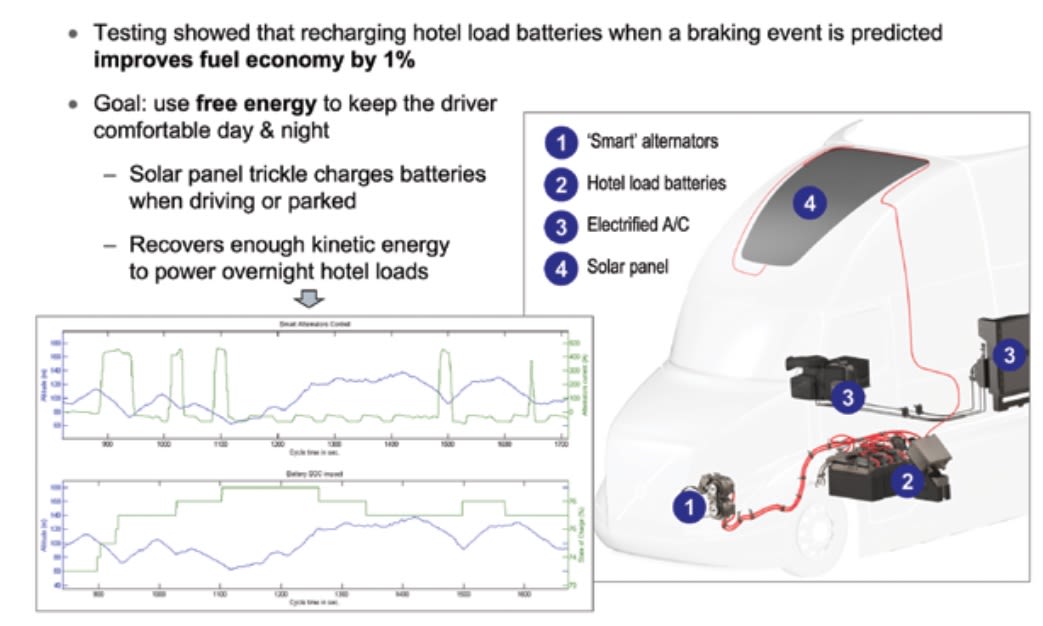
Yee is hopeful the ST2 program can help move the needle on the technology’s implementation. “We’re running simulation now to investigate those areas and trying to figure out what makes sense,” he said.
A new cooling concept is also in the works for ST2, Yee shared, but he could not provide any more details. “Right now it’s just ideas; it’s next in line to get simulation work done,” he said in mid-December.
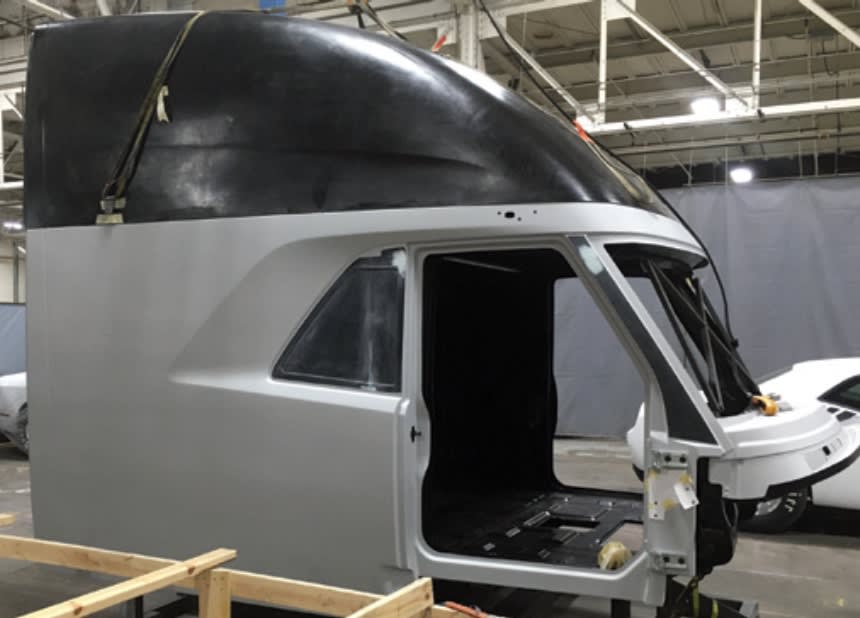
On the agenda for 2018 is developing the aero shape of ST2, “going from generic shape to split lines, to actual A-side surfaces and then B-side design,” he said. The team also plans to run bench testing on energy management, refine the engine technology and do some engine bay testing, and solidify the scope on the trailer side with its partner, Strick Trailers.
“The goal is to get enough design work done so that we can build parts towards the end of 2018, and then building what we call our A-sample vehicle in early 2019,” Yee said. “That’s the first time everything goes together, so that’s when we’ll be refining our controls integration — looking at, you have a new engine, new powertrain, new axles, how does it all work together, how do the predictive systems work, how does it also interface with 48 V?”
In 2019, fuel efficiency (FE) testing will begin that’ll feed through design work in 2020. At the end of 2020, the final demonstrator will be built, followed by the FE testing through mid-2021. Reports are due by the end of 2021.
“It’s like any other program where you start out, it’s the tip of the iceberg and then the scope just grows,” he said.
Navistar increases electrification efforts
Because Navistar released its final SuperTruck later than the others, its ST2 team has spent much of the past year testing that truck in an effort to determine where there are opportunities to make improvements. “We have close to 10,000 miles now on that SuperTruck,” said Oppermann. “We also spend a lot of time in defining what the subsystem changes will be and procuring hardware for an upgrade that’s happening over this winter. We are transforming that SuperTruck property for the first time into something new, so we’ve concentrated on design and procurement for that initial upgrade.”
The Navistar team plans to carryover certain areas of the first truck that are “long lead” items and technologies that they plan to eventually “push into production,” Oppermann said.
“Take the most obvious thing, the aerodynamics of the tractor change significantly with SuperTruck 1, and we’ve found significant benefit in that,” he explained. “So rather than start from scratch, what we would like to do is build off that [design] so it gives our platform team time to move it into production.” Body development is typically a five- or six-year development plan, he noted. Some new aero concepts will be added to this base design.
Initial upgrades for ST2 include continuing development of Navistar’s downspeeding activities. The team is moving to a higher number of gears for the new automated manual transmission (AMT) — from 10 speeds to 12 — as well as decreasing the rear axle ratio even more to drive down engine rpm. The first SuperTruck boasted a rear axle ratio of 1.91:1.
“We are going to further reduce that ratio; I’d rather not say exactly what the number is, but we are looking at about a 50-rpm reduction in cruise speed on the engine. And we are looking to use an electrification strategy to supplement engine torque at those lower speeds — to maintain the same driveability of the vehicle even though we are driving the cruise speed down.”
ZF is supplying and assisting on the AMT; Dana is the partner on axles.
Electrification was explored on Navistar’s Catalist SuperTruck, going to 48 V for one of its voltage buses. “We started small, because the cycles that are run on a Class 8 line-haul truck don’t lend themselves to a hybrid,” he explained. “We had a 15-kW motor-generator mounted to the engine and we saw a benefit in that. As we simulated more, we felt we left more on the table.
“The idea is to continue to increase that amount of power, that amount of energy storage capacity to understand where the tipping point is on a line-haul truck. It becomes complicated because it’s not just drive cycle-related; it has to do with how much you can effectively use in your accessories and in supporting other fuel-efficient technologies such as engine downspeeding — if you can use hybridization or electrical power to supplement such a strategy, then that needs to be factored in.”
As a result, the team is taking “the next step into high-voltage systems with SuperTruck 2,” he shared. “We will be running a 650-volt bus with hardware to support it.”
For ST2, a fully electric water pump will replace the previous variable-speed water pump; likewise, an electric air compressor will replace one that was mechanically driven off the engine in SuperTruck 1. Same goes for the power steering pump.
“We’re trying to electrify as many accessories as we can,” Oppermann said. “Now that we’re at higher voltage, it facilitates that in a couple ways: we can get higher power output, and we can do it at a lighter weight, so it becomes a more viable option.”
Is Navistar’s alliance with Volkswagen Truck & Bus helping in these activities? According to Oppermann, the ST2 team already had a lot of its technologies defined prior to the partnership with VW. “Their input has been minimal to date regarding the SuperTruck 2 program; however, as we learn more on the other projects that we’re working on with the alliance, we are bringing those learnings into the [fold].”
Navistar also is working with Stoneridge on a next-generation camera mirror system for ST2. Though safety is not part of the program’s scope, there’s an opportunity to leverage safety systems for fuel-economy gains, according to Oppermann.
“We are starting to implement ADAS [advanced driver-assistance system] hardware such as forward-looking cameras, radar and lidar, for a better understanding of how we can use that information in our predictive cruise control strategies,” he said. “Adding ADAS components to the GPS and our sophisticated predictive cruise control opens a lot more doors for optimization of the vehicle and engine control during cruise events.”
Another important activity is continuing to improve waste heat recovery (WHR) systems. According to Oppermann, the team has a “novel approach” to get more wasted heat energy out of the engine and supporting components. “That’s being redesigned, but I can’t go into it — it’s IP at this point,” he said.
Moving forward, the Navistar ST2 team’s strategy is to perform upgrades to the truck in the wintertime and run tests and evaluation in the warmer months. This winter, in addition to upgrading its SuperTruck, the team also will outfit one of its other mule vehicles with an electrified tag axle, with the evaluation phase following in summer.
“Next winter we’re going to increase the electrification on the SuperTruck 1 platform, and start working with higher voltage and cabling for that platform during the summer of 2019. At that time, we need to really finalize the design of the final SuperTruck 2,” Oppermann said.
Over the winter between 2020 and ’21, the team plans to build its ST2 platform. “This time we’re trying to give ourselves a little bit more time for tests than we did in the previous [program]. We will be going through a couple rounds of fuel-economy testing to optimize and fully understand what we can get out of that platform,” he said.
Volvo Trucks pursues high levels of integration
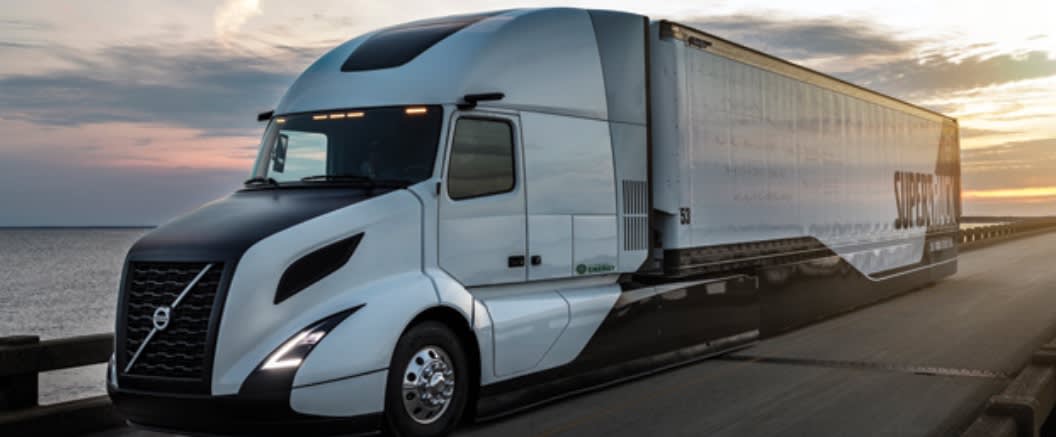
Amar says his team “hit the ground running” for SuperTruck 2, with all but one member of the core team from the first truck still on board, and with many of the same suppliers and partners as well. For example, the point person for Metalsa, which delivered a unique lightweight chassis frame concept for the first SuperTruck, is the same for ST2.
“Because we did hit the ground running this time around, we have almost an extra year or two to spend on engineering compared with the first truck,” he said.
None of the engineers are working solely on this project, Amar noted, and there’s a good reason for that: “We feel it’s better to tap into an engineering pool because then you secure that the knowledge is transferred; otherwise, you might end up designing a SuperTruck in a vacuum and not really benefitting the other design work.”
Metalsa and Michelin are official partners, conducting technology development with Volvo as an integrated part of the team. The Volvo team is also working with Johnson Matthey on catalysts and new aftertreatment solutions, Wabash National for the trailer, the University of Michigan on some combustion research, and Oak Ridge National Lab for aftertreatment and combustion evaluations.
As part of what Amar calls a “data-driven design” approach for ST2, the team is using data generated not only through SuperTruck 1 but also through closer collaboration with fleet partners, notably Knight Transportation and Wegmans, a regional supermarket chain based in New York.
“What we’re seeing as a trend is more and more long-haul fleets that have regional-haul operations,” he said. “We want to make sure that we capture the regional-haul requirements in our design to make sure that the SuperTruck 2 that we end up with is not too narrow spec, but rather versatile enough to handle whatever the transport infrastructure throws at it.”
Similar to other teams, Volvo is employing its SuperTruck 1 as a test mule, running it roughly 12,000 miles thus far, according to Amar. “That’s directly feeding into our concept selection work for SuperTruck 2. It’s a huge asset to have on a project like this, since it [already has] all the properties of a truck of the future in terms of aerodynamics and rolling resistance, power curves, etc.”
“What SuperTruck 2 is allowing us to do that we couldn’t do in SuperTruck 1 is to push the level of integration a lot harder,” he said, which is a big part of Volvo’s formula to achieve its “stretch goal” of 120% improvement in freight efficiency.
Powertrain integration and an optimized cooling package wasn’t fully explored in SuperTruck 1 due to time constraints, so that’s a possible “low hanging fruit” the team is tackling early on.
“We can propel a SuperTruck 2 type vehicle with a lot less horse-power than we need for a baseline truck,” he said. “If you reduce the heat rejection, you can make the front of the truck smaller, which makes your truck more aerodynamic, which means it uses less power, which means the engine rejects less heat, and so on. So targeting the more optimized cooling package in front, we can find the sweet spot between aero improvements and heat rejection.”
Amar refers to engine downsizing as “rightsizing,” a strategy key to Volvo’s aggressive weight-reduction goals for ST2. The first SuperTruck cut 3200 lb (1450 kg), even after adding weight with new systems; the team wants to double that reduction for the new truck — essentially improving payload capacity by 20%.
“We see this as a key to achieving real-world freight efficiency improvements,” he said. “It’s not lightweighting for the sake of finding exotic materials that give big weight savings; it’s finding ways to reduce the weight so that customers are going to see benefits...By circling back to the basics on each component and trying to verify that it is designed for how it will be used, oftentimes you find that it’s overdesigned by quite a bit.”
In its pursuit of the 55% BTE mark, Volvo’s team is continuing its exploration of a few different engine architectures from SuperTruck 1. “We found some interesting technology that we could apply to a more traditional four-stroke,” Amar said. “We’ve progressed the design, the hardware to be able to confirm that this is, indeed, a promising concept. We’re still evaluating this for a little while longer to see what it’s worth.”
Volvo has a go/no-go decision on that work package coming up in the next several months, “so we won’t be studying this too much longer if it doesn’t show the results that we expect to see,” he said.
A couple other architectures are still in the running, at this point. Amar notes that much of the development work benefits all the options. “Regardless of what engine architecture we choose, a lot of the energy that gets wasted in the combustion process is wasted in the form of heat. Anything we do to minimize that amount of heat transfer is going to benefit any engine architecture,” he explained. “So the work that we’re doing is, how can you insulate exhaust ports? How can you insulate the combustion chamber? How can you insulate the pistons or control the heat transfer through your liners or pistons?”
Predictive controls — a “fancier version” than what’s now in production trucks and SuperTruck 1 — are also being advanced. “We have the same cruise control that recognizes hills and manages them to minimize fuel consumption, but now we’re integrating more controls into this,” he said. “For example, the control of the kinetic energy recovery system, controlling the auxiliaries like the air compressor and A/C — there’s plenty you can do when you start controlling each auxiliary independently of engine speed or other things on the truck.”
Volvo’s goal was to have the complete vehicle concept defined and frozen by the end of 2017, meaning the truck maker and its partners agreed on the final configuration of the tractor and trailer to move forward.
“Without being able to say too much, we have a vehicle concept that is pretty aggressive in terms of achieving — actually overachieving — our goals, and feel this is something that’s going to pay off when we go through the design and demonstration phase,” Amar said.
In a few short years, completely reimagined big-rigs conceived from these SuperTruck 2 projects will be rambling down the highway, no doubt blowing past the aggressive efficiency targets set before them, traveling much further on a full tank of fuel than ever before.
Throw in sunglasses and a half pack of smokes, and Jake and Elwood Blues would approve.
More From SAE Media Group
Off-Highway Engineering
Freightliner’s Medium-Duty Makeover
Off-Highway Engineering
Eaton and BAE Gear up a New Electrified Truck
Off-Highway Engineering
Hexagon Agility Partners with Brudeli for Hybrid CNG Truck Powertrains
Off-Highway Engineering
‘Heavy’ Topics on Tap for WCX18
Off-Highway Engineering
Bosch Stresses Need for E/E Architecture Upgrade
Off-Highway Engineering
Detailing Kenworth’s Sleek SuperTruck 2
Off-Highway Engineering
ZM Trucks Starts Production in Fontana, California
Off-Highway Engineering
Hybrid Powertrains in the Product Mix
Off-Highway Engineering
Starship Road Trip
Off-Highway Engineering
Cummins Unveils PowerDrive Hybrid-Electrics, Euro 7 Diesel Concept
Off-Highway Engineering
Many ICE Paths Lead to Reduced Emissions
Off-Highway Engineering
Paccar Reveals New and Future Tech at CES 2018
Automotive Engineering
Orbis Says HaloDrive Axial-Flux Motor Available for In-Wheel, Other Uses
Automotive Engineering
Engineers Balance Today’s Programs with Tomorrow’s Mobility Future
Automotive Engineering
Engineering ‘Electron Guzzlers’
Off-Highway Engineering
Hybrids Are Having a Moment
Off-Highway Engineering
Daimler Trucks' Lessons Learned from SuperTruck Program
Automotive Engineering
In Support of Diesel’s Future
Off-Highway Engineering
Q&A: AVL Addresses Path to Greater Hybridization
Off-Highway Engineering
Hydrogen Shows Increased Commercial Interest
Off-Highway Engineering
Volvo CE Previews ConExpo 2023 Display
Off-Highway Engineering
Battery Innovation Key for Commercial and Off-Highway EVs
Autonomous Vehicle Engineering
Predicting the Road to Efficiency
Automotive Engineering
Off-Highway Hybrids Are Entering Prime Time
Off-Highway Engineering
Miserly Power Systems
Off-Highway Engineering
Volvo Reveals New VNL with SuperTruck Influence
Automotive Engineering
Executive Insights: BorgWarner VP and CTO Hakan Yilmaz
Off-Highway Engineering
Cummins and Isuzu Announce Battery-electric Truck Collaboration
Off-Highway Engineering
Electrification Not a One-Size-Fits-All Solution
Automotive Engineering
Climate Control Engineers Face New CAFE Test
Top Stories
INSIDERManufacturing & Prototyping
 How Airbus is Using w-DED to 3D Print Larger Titanium Airplane Parts
INSIDERManned Systems
 FAA to Replace Aging Network of Ground-Based Radars
NewsTransportation
 CES 2026: Bosch is Ready to Bring AI to Your (Likely ICE-powered) Vehicle
NewsSoftware
 Accelerating Down the Road to Autonomy
EditorialDesign
 DarkSky One Wants to Make the World a Darker Place
INSIDERMaterials
 Can This Self-Healing Composite Make Airplane and Spacecraft Components Last...
Webcasts
Defense
 How Sift's Unified Observability Platform Accelerates Drone Innovation
Automotive
 E/E Architecture Redefined: Building Smarter, Safer, and Scalable...
Power
 Hydrogen Engines Are Heating Up for Heavy Duty
Electronics & Computers
 Advantages of Smart Power Distribution Unit Design for Automotive...
Unmanned Systems
 Quiet, Please: NVH Improvement Opportunities in the Early Design...
