




Orbis Says HaloDrive Axial-Flux Motor Available for In-Wheel, Other Uses
Though sales growth of EVs has slowed down, the race to be part of the inevitable shift away from fossil fuels is still fierce. Orbis Electric hopes its new, thin HaloDrive can be part of that shift, from use as a traditional or in-wheel traction motor to generating electricity for refrigeration trucks.

After years of development, Orbis Electric is introducing its HaloDrive axial flux e-motor /generator that it says is “slimmer, lighter, lower cost and more powerful than existing motors and generators.” Orbis also claims it does all that while matching the torque of a V-8 internal combustion engine.

The company, based in Santa Rosa, California, introduced HaloDrive in a news release and online. Cited as top-line innovations: An injection-molded plastic stator and a tunable gearset. The company said that the unit has what it called greater thermal stability than other e-motors.
The motor can deliver 100Nm/kg of torque at up to 97% efficiency, and the company said it can be built for 35% less than radial flux motors.
Marcus Hays, founder and CTO of Orbis Electric, said the goal was to create and build a system that could meet current needs but also serve business needs and sustainability goals. “Our engineering team of EV, aerospace, fabrication and environmental experts have spent years developing this,” he said. The company is actively seeking Tier 1 supplier partners and is actively pitching OEMs, fleets and industrial clients. Orbis’ pitch to potential industrial customers emphasizes that old and ill-maintained industrial motors waste a tremendous amount of energy.
The HaloDrive can be deployed as an in-wheel motor or as part of a standard hybridized powertrain (P2 and P3, for example). The company also sees the unit as a replacement for a traditional diesel engine as a generator. In one test fleet deployment, HaloDrive improved fleet fuel efficiency by 61%,” the company said in a statement. When deployed within a wheel, Orbis said that range is improved by 20% thanks mostly to weight savings.

In some ways, the approach is similar to that taken by Texas-based Infinitum, except that company is focusing on industrial motors . Elaphe, a company that debuted an in-wheel motor at CES earlier this year, said its product was designed to fit in existing EV wheels.
One other potential deployment is in commercial trucking, where Orbis envisions its motors, branded as NetZero eTru, replacing diesel units for electric transport refrigeration units on trucks that carry perishables. When replacing such units, Orbis said, HaloDrive is 90% less expensive to operate and cuts diesel emissions by 100%. “Installed on a drive shaft or axle, the HaloDrive motor can convert a truck’s braking energy into electricity to power the mobile refrigeration,” the company’s statement said. Orbis CEO Chance Claxton said the company wants to speed the transition to electric transportation, even in the face of slower growth of the market. “[We are] removing electric motor barriers such as deployment costs, material and manufacturability risks,” he said.
More From SAE Media Group
Off-Highway Engineering
Hybrids Are Having a Moment
Off-Highway Engineering
Zeroing in on Zero Emissions
Off-Highway Engineering
Paccar Reveals New and Future Tech at CES 2018
Off-Highway Engineering
Many ICE Paths Lead to Reduced Emissions
Off-Highway Engineering
Hexagon Agility Partners with Brudeli for Hybrid CNG Truck Powertrains
Off-Highway Engineering
Starship Road Trip
Off-Highway Engineering
Hydrogen ‘Inevitable’ for Commercial Vehicles
Off-Highway Engineering
Battery of Issues Surrounds Large-Vehicle Electrification
Off-Highway Engineering
Cummins Unveils PowerDrive Hybrid-Electrics, Euro 7 Diesel Concept
Off-Highway Engineering
Electric Machines Find Their Niche
Off-Highway Engineering
Westport Awarded LNG Development Program
Off-Highway Engineering
Volvo Charts Its Path Towards Zero Emissions
Off-Highway Engineering
Navistar's Latest SuperTruck Features Emerson's Electric HVAC
Off-Highway Engineering
Toyota Launches Second-Gen Fuel-Cell Class 8
Off-Highway Engineering
Cummins, Tula Test ‘Dynamic’ Cylinder Deactivation for Diesels
Automotive Engineering
Battery Show Teems with All Things Rechargeable
Automotive Engineering
Suppliers Prepare for a Drop in EV Market Share
Automotive Engineering
For Aptiv, More EVs Mean More Profit with SVA
Automotive Engineering
Charting the ICE Future with Mahle’s Martin Berger
Automotive Engineering
Tula’s DMD Promises Gains in EV Efficiency
Automotive Engineering
Executive Insights: BorgWarner VP and CTO Hakan Yilmaz
Off-Highway Engineering
How Battery Technology Will Drive Truck Electrification
Off-Highway Engineering
Propane Powers Ahead for Medium Duty Sector
Off-Highway Engineering
Detailing Kenworth’s Sleek SuperTruck 2
Off-Highway Engineering
Battery Innovation Key for Commercial and Off-Highway EVs
Automotive Engineering
Intertek Rethinks the EV Test Facility
Off-Highway Engineering
Hyliion, Cummins Collaborate on Electric and NG Range-Extender
Automotive Engineering
ACeDrive Consortium Plans More Efficient EV Powertrain
Automotive Engineering
Do AWD EVs Need Two Motors? GKN Does the Math.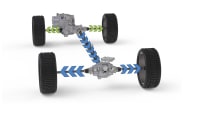
Automotive Engineering
Mazda Details Electrification Strategy, Confirms Rotary Engine’s Return
Top Stories
NewsRF & Microwave Electronics
 Microvision Aquires Luminar, Plans Relationship Restoration, Multi-industry Push
INSIDERAerospace
 A Next Generation Helmet System for Navy Pilots
INSIDERDesign
 New Raytheon and Lockheed Martin Agreements Expand Missile Defense Production
INSIDERMaterials
 How Airbus is Using w-DED to 3D Print Larger Titanium Airplane Parts
NewsPower
 Ford Announces 48-Volt Architecture for Future Electric Truck
ArticlesAR/AI

Webcasts
Electronics & Computers
 Cooling a New Generation of Aerospace and Defense Embedded...
Automotive
 Battery Abuse Testing: Pushing to Failure
Power
 A FREE Two-Day Event Dedicated to Connected Mobility
Unmanned Systems
 Quiet, Please: NVH Improvement Opportunities in the Early Design Cycle
Automotive
 Advantages of Smart Power Distribution Unit Design for Automotive &...
Energy
 Sesame Solar's Nanogrid Tech Promises Major Gains in Drone Endurance