




Toyota Launches Second-Gen Fuel-Cell Class 8
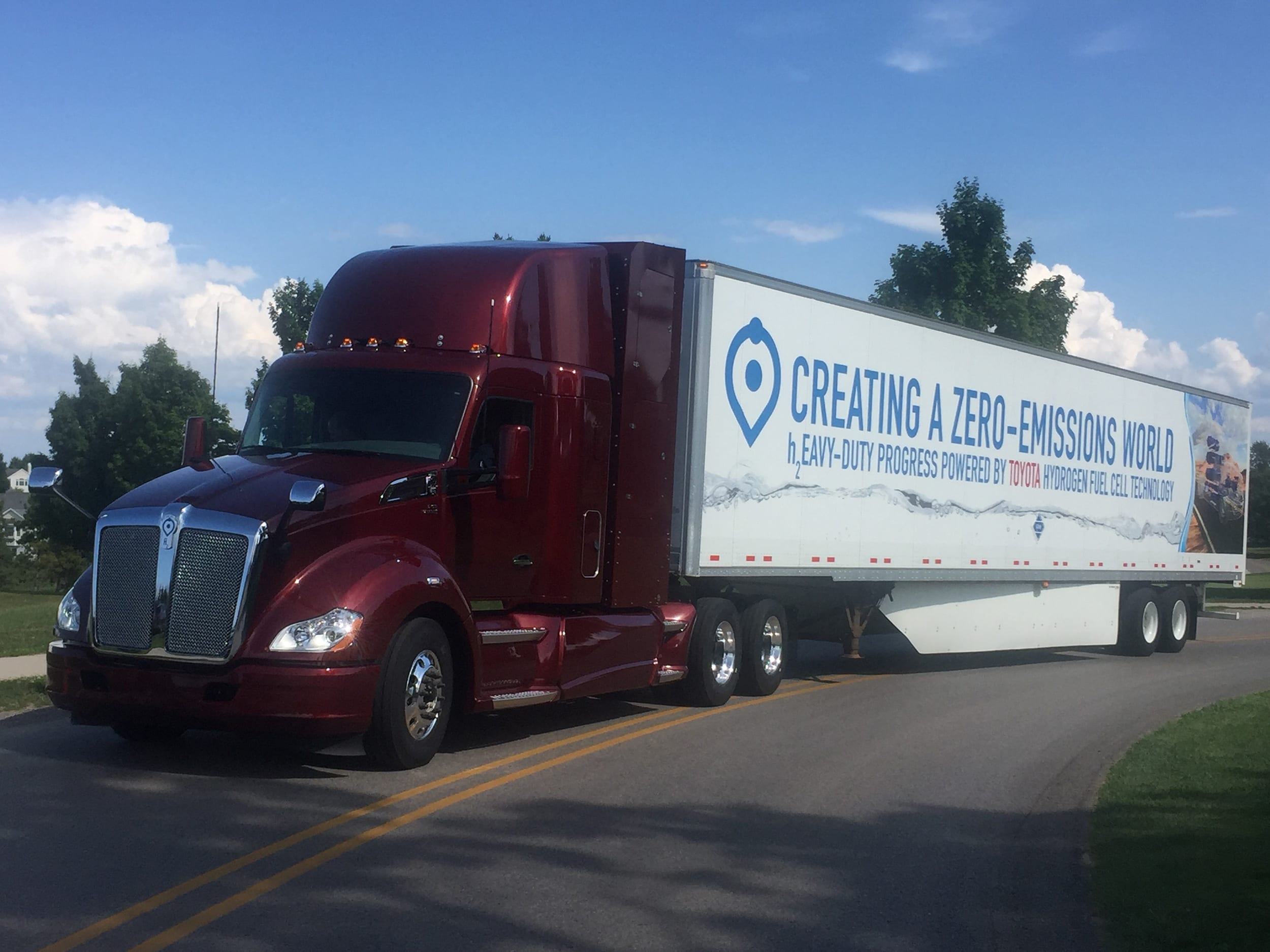
At a late-July auto-industry conference in Michigan, Toyota revealed the second generation of its Project Portal prototype Class 8 heavy-duty truck driven electrically from fuel-cell power. The Project Portal 2.0 maintains the burly power and hauling capacity of the first Project Portal truck, but adds 50% more driving range, said Andrew Lund, chief engineer for Toyota Motor North America Research & Development.
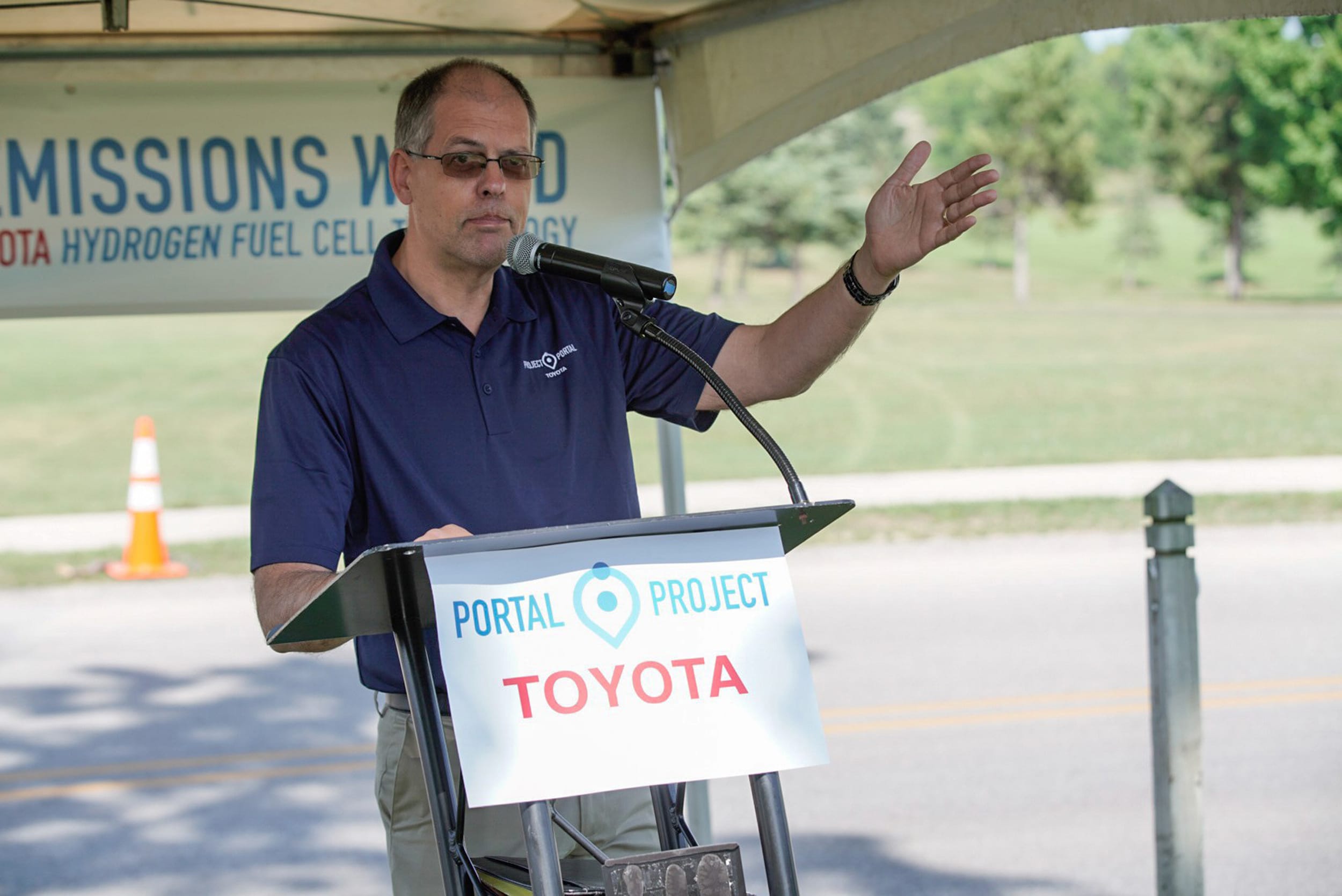
As the new truck glided up noiselessly behind him, Lund said this “Beta” version of the original Project Portal “Alpha” fuel-cell truck—powered by the pirated fuel-cell stack and related components of two Mirai fuel-cell sedans—maintains its 670-hp and 1325 lb·ft (1796 N·m) output and 80,000-lb (36,288-kg) gross combined weight (GCW) ratings while now expanding total driving range to 300 mi (483 km). The new range capability, Lund said, takes the new Project Portal 2.0 beyond the comparatively limited drayage duty of the first Project Portal heavy-duty truck.
Lund called the Project Portal 2.0 the “next step as we expand our hydrogen footprint yet again.”
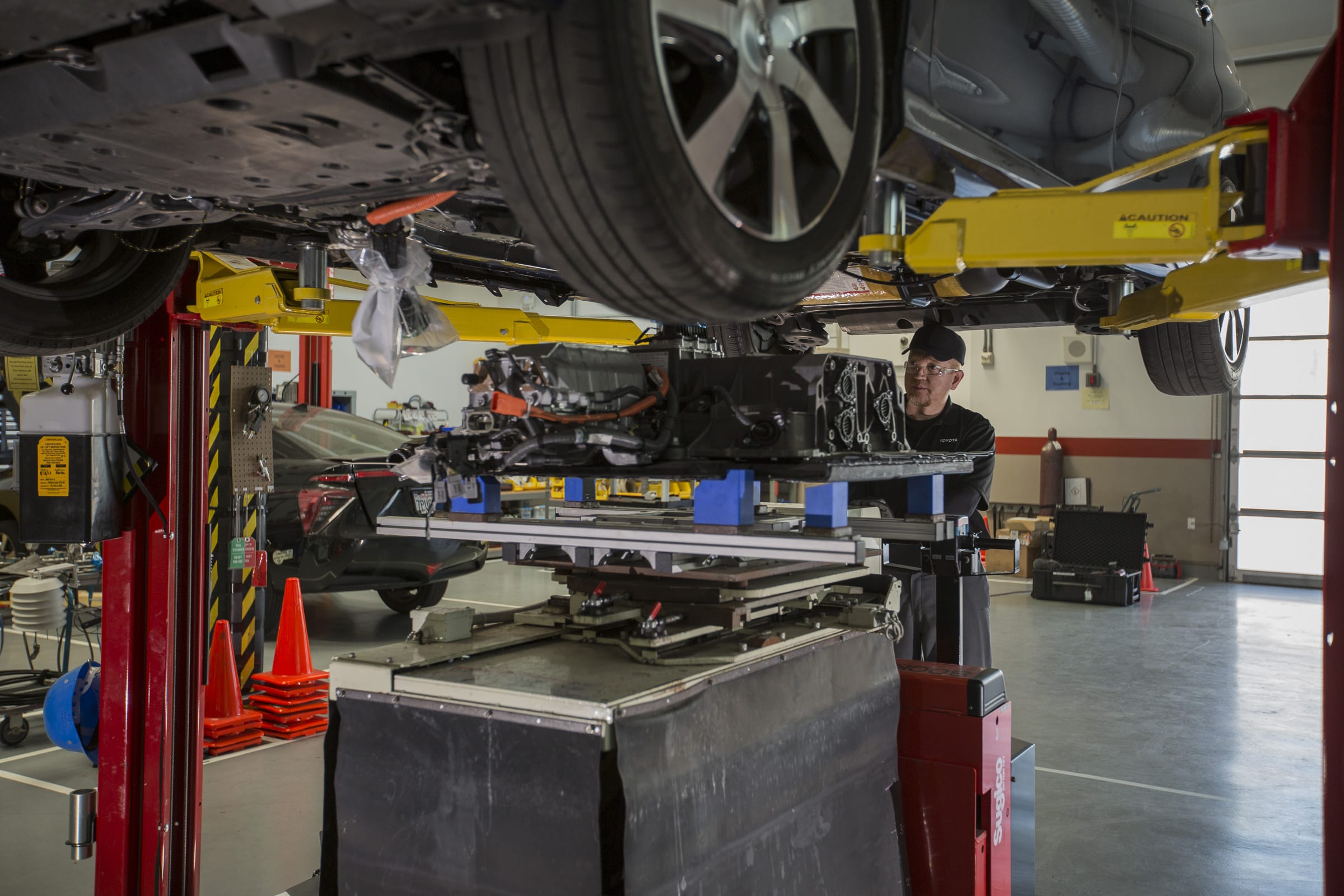
Engineering consultancy Ricardo assisted Toyota with systems integration and packaging on both the Beta and Alpha trucks, including work on the fuel cells, power electronics, hydrogen tanks, cooling systems, batteries, electric motors and transmission. Many of the ancillary systems such as the air compressor, power steering and HVAC were electrified and their controls integrated into the vehicle’s J1939 CAN bus.
The Beta truck was constructed by Ricardo at its Detroit Technology Campus in Belleville, Mich.
Emissions reductions for busy ports
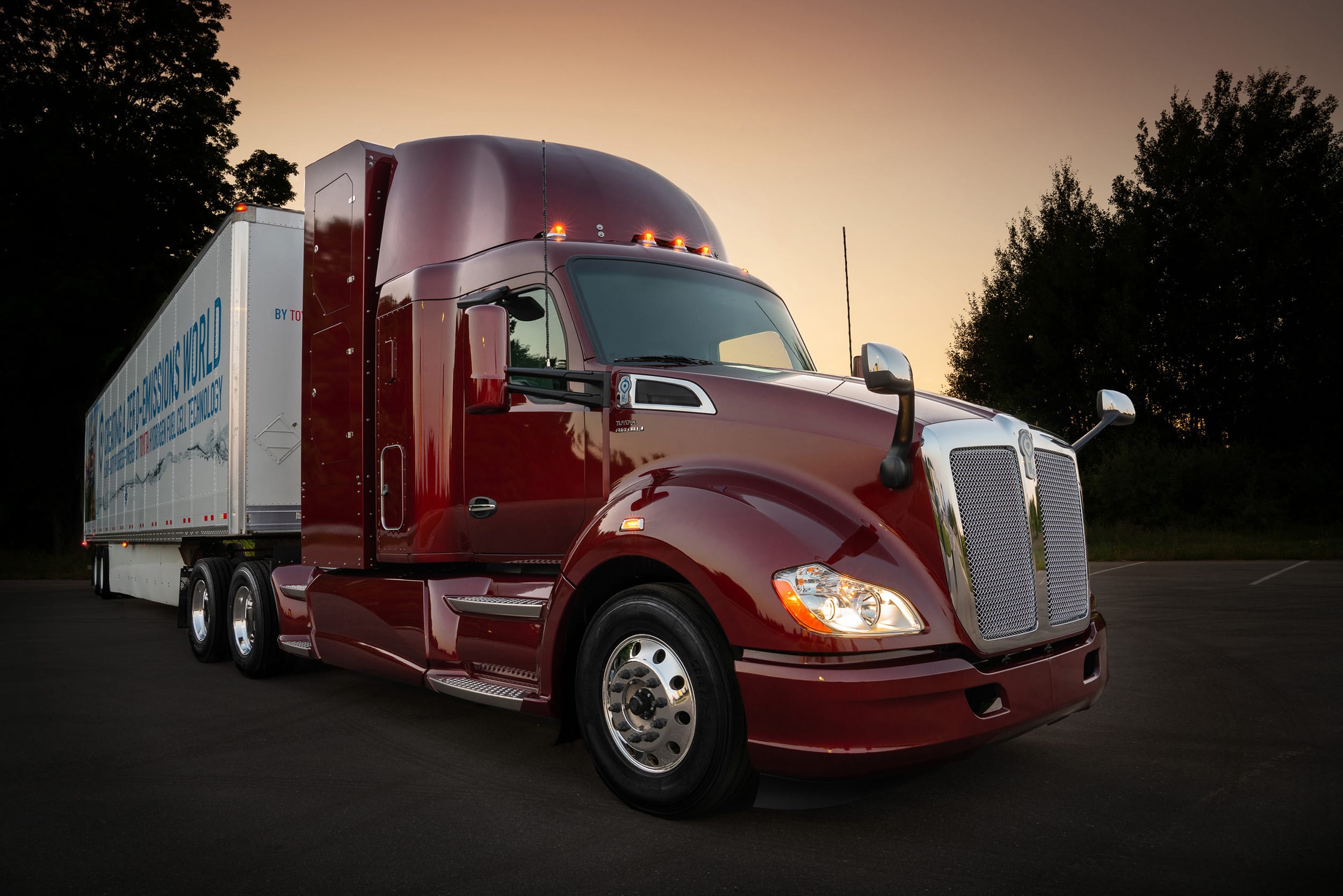
With more than a year of service and nearly 10,000 mi (16,093 km) of testing and actual drayage service in and around the congested California ports of Los Angeles and Long Beach, the first Project Portal truck demonstrated electric propulsion via fuel cell is viable for such duty cycles. With the new, longer-range Project 2.0 truck, Toyota said it is one step closer to its goal of eliminating carbon-dioxide emissions from its Toyota Logistics operations at the port of Long Beach.
The company also believes fuel cell-powered heavy-duty trucks could be one solution to significantly cut the emissions related to the 16,000-plus trucks currently working in the environs of the Los Angeles and Long Beach ports—and that number of trucks is projected to double by 2030.
“Our goal with the first truck was to see if it could be accomplished, and we did that,” said Craig Scott, senior manager for Toyota’s North American Electrified Vehicle & Technologies Office, in a release. “This time we're looking at commercial viability. We want to help make a difference—a significant difference when it comes to the air quality not only in the LA area, but across the U.S. and around the globe.”
“Electrified vehicles are the future,” Lund said, adding that “Heavy-duty vehicles are perhaps where fuel-cell technology can make the most significant impact.”
More From SAE Media Group
Off-Highway Engineering
Hydrogen Shows Increased Commercial Interest
Off-Highway Engineering
Nikola Reveals Range of Hydrogen Fuel Cell and Battery-Electric Vehicles
Off-Highway Engineering
Truckin’ on Hydrogen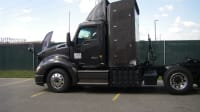
Off-Highway Engineering
Nikola Producing Battery-Electric Trucks, Fuel-Cell EVs Coming
Off-Highway Engineering
Toyota’s Proven Fuel-Cell Stack Reduces Cost, Complexity in H2 Semi-Truck
Off-Highway Engineering
Hexagon Agility Partners with Brudeli for Hybrid CNG Truck Powertrains
Off-Highway Engineering
ACT Expo 2022 Roundup: Bollinger, Hyundai and Volvo Clean-Vehicle Updates
Off-Highway Engineering
Paccar Reveals New and Future Tech at CES 2018
Off-Highway Engineering
GM Nikola Tie-Up Sparks Worldwide Hydrogen Fuel Cell Interest
Off-Highway Engineering
Fuel-Cell Power for Monster Mining Trucks in GM, Komatsu Deal
Automotive Engineering
Engineering ‘Electron Guzzlers’
Off-Highway Engineering
Volvo Charts Its Path Towards Zero Emissions
Off-Highway Engineering
Hydrogen ‘Inevitable’ for Commercial Vehicles
Automotive Engineering
Hydrogen Storage in a Box!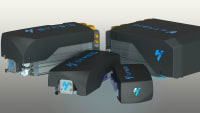
Off-Highway Engineering
REE Unveils P7-C Chassis Cab at ACT Expo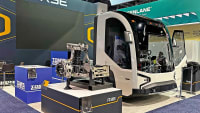
Automotive Engineering
Orbis Says HaloDrive Axial-Flux Motor Available for In-Wheel, Other Uses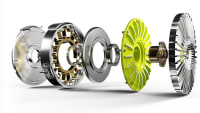
Automotive Engineering
Is Hydrogen the Future for Trucking?
Off-Highway Engineering
Batteries Not the Only Route to EV Efficiency
Off-Highway Engineering
ZF, Freudenberg Developing Integrated Fuel-Cell and E-Drive System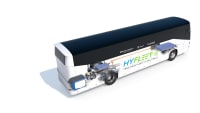
Off-Highway Engineering
Zeroing in on Zero Emissions
Automotive Engineering
Executive Insights: BorgWarner VP and CTO Hakan Yilmaz
Off-Highway Engineering
Hydrogen’s Humming in Power Generation
Off-Highway Engineering
Detailing Kenworth’s Sleek SuperTruck 2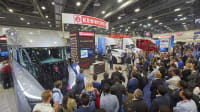
Off-Highway Engineering
Hydrogen Is Hitting Some Headwinds
Automotive Engineering
ICE and Hybrid-Electric Propulsion Show Staying Power
Off-Highway Engineering
Daimler Launches New EV Truck Brand for U.S. Market
Off-Highway Engineering
Starship Road Trip
Automotive Engineering
Williams Debuts New Flexible Platform for BEVs and FCVs
Off-Highway Engineering
Transmission Talk: Eaton Discusses Its Portfolio of Commercial Gearboxes
Off-Highway Engineering
Hybrids Are Having a Moment
Top Stories
NewsRF & Microwave Electronics
 Microvision Aquires Luminar, Plans Relationship Restoration, Multi-industry Push
INSIDERAerospace
 A Next Generation Helmet System for Navy Pilots
INSIDERDesign
 New Raytheon and Lockheed Martin Agreements Expand Missile Defense Production
INSIDERMaterials
 How Airbus is Using w-DED to 3D Print Larger Titanium Airplane Parts
NewsPower
 Ford Announces 48-Volt Architecture for Future Electric Truck
ArticlesAR/AI

Webcasts
Electronics & Computers
 Cooling a New Generation of Aerospace and Defense Embedded...
Automotive
 Battery Abuse Testing: Pushing to Failure
Power
 A FREE Two-Day Event Dedicated to Connected Mobility
Unmanned Systems
 Quiet, Please: NVH Improvement Opportunities in the Early Design Cycle
Automotive
 Advantages of Smart Power Distribution Unit Design for Automotive &...
Energy
 Sesame Solar's Nanogrid Tech Promises Major Gains in Drone Endurance