




Q&A: AVL Addresses Path to Greater Hybridization
Hybrid-electric technology holds promise for commercial vehicles, but its impact will depend greatly on determining the appropriate applications.
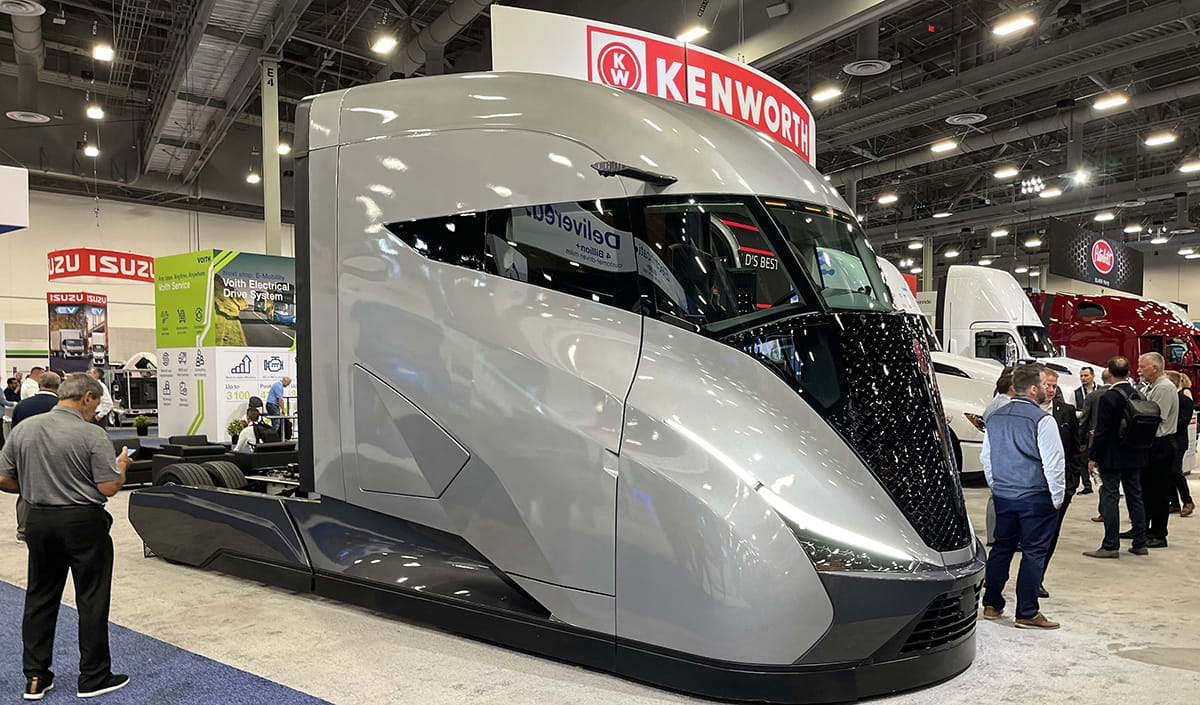
The powertrain landscape of the future is sure to be a mix that includes clean diesel engines and other ICE options running alternative fuels. Zero-emissions technology such as battery-electric also will play a greater role in certain applications – despite the policy headwinds it currently faces in the U.S.
“Eventually we have to decarbonize the heavy-duty industry,” Thomas Howell, segment lead for conventional powertrain, AVL in the U.S., told SAE Media. However, “the challenges with battery-electric are very significant for Class 8 in long haul.”
A promising “best of both worlds” technology could be hybrid-electric technology. But again, its impact will depend greatly on finding the right applications for it, Howell said. The following interview excerpts shed more light on his views of the challenges and opportunities hybridization presents in commercial vehicles.
Where do you see hybrids fitting in for medium- and heavy-duty?
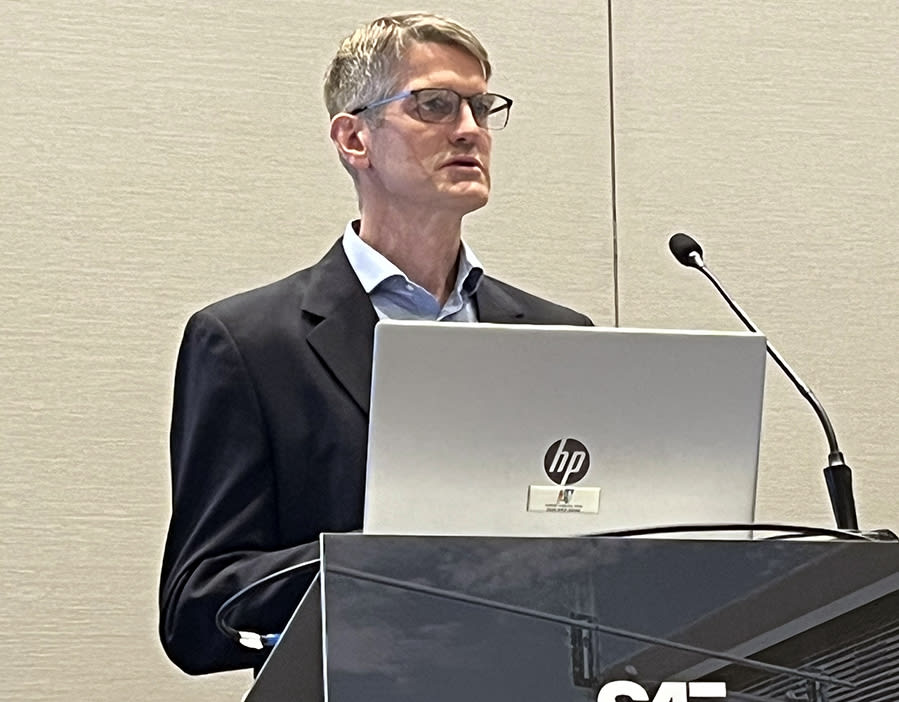
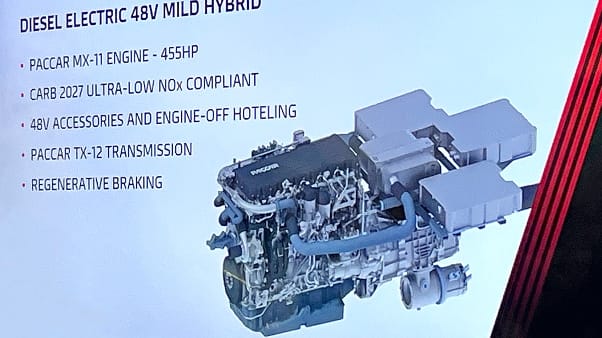
That’s part of the challenge: there’s a lot of variability in the answer depending upon what the end use is. In SuperTruck 2 [with PACCAR] we spent quite a lot of time looking at different hybrid architectures and what made sense for the duty cycle which was required. Having a mild hybrid made more sense because the best method of managing energy was using the momentum of the vehicle as a battery – so you go a little bit faster, you got a lot more energy stored; you go a little bit slower, you’re using that up.
So how can you optimize that with the way that the engine is always operating at its best point. If you try to have a battery which is sufficient to make any influence going over hills, it can end up being so large that it has a negative impact upon the overall mass of the vehicle. You rapidly run into this point where electrification of any significant method in the over-the-road, long haul application is really tough to justify from a hybrid standpoint. That changes as soon as you go to something which has far shorter range required, much more stop-start, then automatically you get into the world of, okay, hybrid makes sense.
Some of the other requirements which Europe has discussed around noise limitations, particularly when delivering at night. If that’s the case, then having an electric-only mode starts to make sense. I think there is a path to hybridization – what that path is becomes very difficult to state because the answer varies so much depending upon the final product.
So there’ll be different solutions that are more targeted?
Modularity is going to be the key here. You have to come out with something which can be utilized for multiple duty cycles and applications so that you achieve the economy of volume. The batteries in some respects are not the difficult part of this. A lot of this comes down to the propulsion systems and the transmission. Are you utilizing an e-axle? If so, do you want it with one e-machine, two e-machines? So you can manage these components in a way that you can build up to an appropriate overall propulsion system with doing as little reengineering as possible. One challenge which is going to come about is the certification for hybrid powertrains in heavy-duty is very difficult and expensive. I think that’s going to be a potential roadblock which might hold some people back.
What is that certification process? Is there a way to drive the cost down?
The way the regulation is written at the moment for a pure hybrid – not plug-in hybrid – needs to be a powertrain testbed. You’re looking at taking out either at the wheels or potentially if there’s no electrification you can just have the transmission out if the electric machine is in the transmission. That itself is not so terrible, it’s not so different from the way a lot of people are looking at it. But it means that you certainly can’t go down the engine-only path. There are only so many heavy-duty-capable powertrain dynos which are available.
For a plug-in hybrid, it’s a lot more difficult. You almost need to have a full chassis dyno for the truck, and it’s a very complex process to run the different cycles to establish your charge depleting and charge sustaining mode and to establish what that greenhouse gas emission is at the end. So I think that’s going to hold people back from going down that path potentially. Unless there’s a significant enough market – that’s the chicken-and-egg scenario.
When will mild hybrids gain more steam in commercial use?
That’s a good question. The technology has been proven. Is it proven enough to be fully production-capable to the point of durability which is required from a legislative standpoint? So there are warranty requirements associated with components of the mild hybrid that could potentially have an impact upon greenhouse gas emissions. I think at the moment, more people are working on the 2027 model year emissions, and they want to get through that [first]. There is a path to achieve Phase 2 greenhouse gas requirements already which does not need mild hybrids. I don’t know at what point Phase 3 greenhouse gas emissions will drive the next technology change to adopt hybrids. This also depends on the fleet makeup of each OEM with the way the regulation is written, similar to the light-duty GHG regulatory approach.
When that next step does occur, what technologies are in line to fulfill those requirements?
For long haul and over-the-road, I think mild hybrids work pretty well. It’s not a significant benefit as far as greenhouse gases, you really get more out of the operation of the vehicle. The main advantage we had with the mild hybrid was making sure that we had a battery which was capable of doing a hoteling load on the sleeper cab. Also enabling full sailing mode when you’re going downhill you turn the engine off completely. As soon as you do that you need to consider that you don’t have the auxiliary anymore, so you need to make sure you still have your A/C, your power steering, etcetera. Mild hybrid enabled increased electrification of the supplementary systems while you were sailing as well as supplying the battery with more power.
It’s a 48V system because you need that extra power. That then enables you to do the electrification on those systems, so you need to make sure those other systems are available and ready for production as well. You need to have electric power steering, electrified A/C, it enables you to have e-heaters for your aftertreatment to increase efficiency associated with the engine as catalyst warm-up is independent of engine operation. Does that mean you can get rid of some of the 12V and 24V systems? Maybe.
How about the potential for gasoline hybrids in commercial vehicles?
What’s traditionally held gasoline back is efficiency. Now there are plenty of engines out in the market at 42-43% BTE [brake thermal efficiency] which is knocking on the door of where diesel engines were 10 to 15 years ago. We’re now more in the 46% range [with diesel]. However, with that 46% you get a very expensive aftertreatment system, which also [comes with high] maintenance costs. The beautiful thing about a gasoline engine is the three-way catalyst. Not to say it’s cheap, it still has quite a chunk of precious metal there. But it is a simple, proven technology which could be deployed quite effectively. That coupled with a hybrid system would enable a more cost-efficient hybrid powertrain. I don’t think this is appropriate for over-the-road, long haul, but for some of the medium-duty applications, I think there is potential.
More From SAE Media Group
Off-Highway Engineering
Hybrid Powertrains in the Product Mix
Automotive Engineering
Suppliers Prepare for a Drop in EV Market Share
Off-Highway Engineering
Hexagon Agility Partners with Brudeli for Hybrid CNG Truck Powertrains
Off-Highway Engineering
Cummins and Isuzu Announce Battery-electric Truck Collaboration
Off-Highway Engineering
Hydrogen ‘Inevitable’ for Commercial Vehicles
Off-Highway Engineering
Volvo Charts Its Path Towards Zero Emissions
Off-Highway Engineering
SAE WCX 2022: Paving the Way for the Hydrogen Highway
Off-Highway Engineering
Battery of Issues Surrounds Large-Vehicle Electrification
Off-Highway Engineering
Schneider Continues Zero-Emission Goal at Nikola
Automotive Engineering
Handicapping the ‘Race Toward Zero’
Off-Highway Engineering
Combustion Engines Carry on in Construction
Off-Highway Engineering
GM Nikola Tie-Up Sparks Worldwide Hydrogen Fuel Cell Interest
Off-Highway Engineering
Hyliion, Cummins Collaborate on Electric and NG Range-Extender
Off-Highway Engineering
Battery Innovation Key for Commercial and Off-Highway EVs
Automotive Engineering
Tension and the Electric Takeover
Off-Highway Engineering
Detailing Kenworth’s Sleek SuperTruck 2
Automotive Engineering
Orbis Says HaloDrive Axial-Flux Motor Available for In-Wheel, Other Uses
Off-Highway Engineering
ACT Expo 2025: Heavy-Duty EVs, H2 Trucks and Tariff Talk Dominate Day One
Automotive Engineering
U.K.’s Advanced Propulsion Center Lays out Roadmap for High-Tech, Low-Carbon Transportation
Automotive Engineering
For Aptiv, More EVs Mean More Profit with SVA
Off-Highway Engineering
Cummins Unveils PowerDrive Hybrid-Electrics, Euro 7 Diesel Concept
Off-Highway Engineering
Zeroing in on Zero Emissions
Automotive Engineering
CES 2025: Bosch Goes Right with Wrong-Way Alerts, Racing Hand Controls
Off-Highway Engineering
Truck OEMs Invested in Infrastructure
Automotive Engineering
Making H2 Fuel Cells Happen
Automotive Engineering
Charting the ICE Future with Mahle’s Martin Berger
Off-Highway Engineering
Kalmar Launches 3rd-Gen Electric Terminal Tractor
Automotive Engineering
Extending a Wankel Future on Hydrogen Fuel
Automotive Engineering
Quicker Pathways to Reduce Transportation’s Climate Impact
Off-Highway Engineering
Hybrids Are Having a Moment
Top Stories
INSIDERManufacturing & Prototyping
 How Airbus is Using w-DED to 3D Print Larger Titanium Airplane Parts
INSIDERManned Systems
 FAA to Replace Aging Network of Ground-Based Radars
NewsTransportation
 CES 2026: Bosch is Ready to Bring AI to Your (Likely ICE-powered) Vehicle
NewsSoftware
 Accelerating Down the Road to Autonomy
EditorialDesign
 DarkSky One Wants to Make the World a Darker Place
INSIDERMaterials
 Can This Self-Healing Composite Make Airplane and Spacecraft Components Last...
Webcasts
Defense
 How Sift's Unified Observability Platform Accelerates Drone Innovation
Automotive
 E/E Architecture Redefined: Building Smarter, Safer, and Scalable...
Power
 Hydrogen Engines Are Heating Up for Heavy Duty
Electronics & Computers
 Advantages of Smart Power Distribution Unit Design for Automotive...
Unmanned Systems
 Quiet, Please: NVH Improvement Opportunities in the Early Design...
