




Navy to Evaluate Three Large Displacement Unmanned Underwater Vehicle Prototypes
Defense Innovation Unit
Washington D.C.
This email address is being protected from spambots. You need JavaScript enabled to view it.
www.DIU.mil
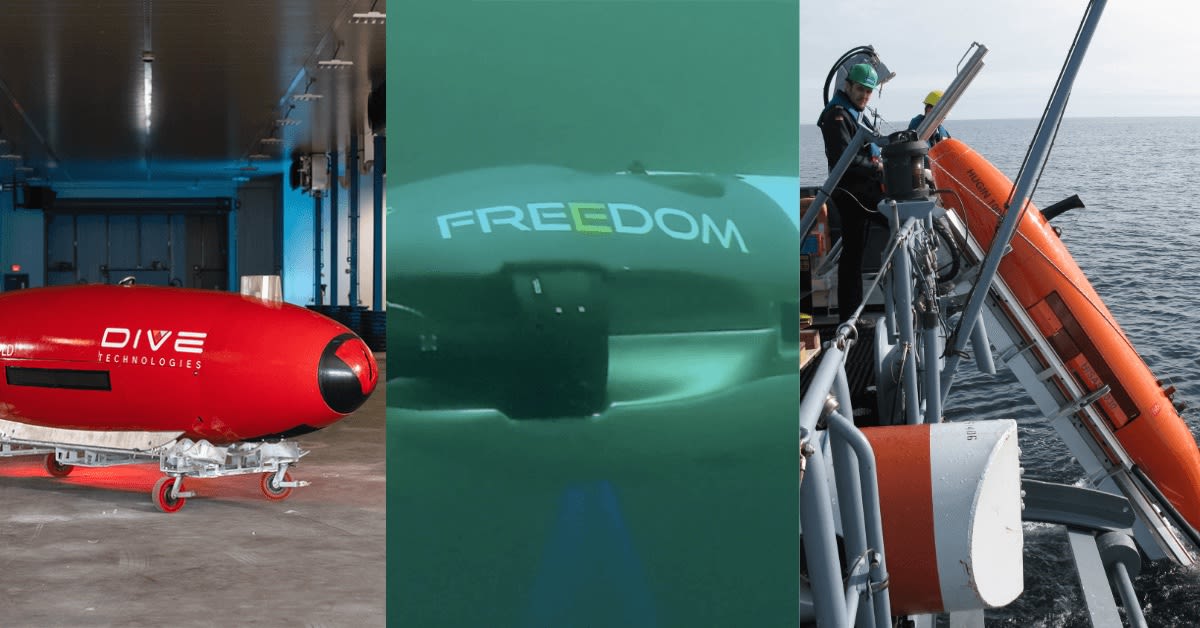
Undersea warfare is critical to success in the Pacific and other contested environments, providing needed autonomous underwater sensing and payload delivery in dispersed, long-range, deep, and contested environments is key. Crewed submarines are high-value, high-resource capital platforms necessary for crucial combat missions. In particular, the U.S. military requires a fleet of Large Displacement Unmanned Underwater Vehicles (LDUUVs) with diverse capabilities.
One of the critical capability areas of the LDUUV effort is the need for long-endurance undersea vehicles that can deliver payloads and effectors against adversaries for Subsea and Seabed Warfare (SSW) as well as Undersea Warfare (USW) scenarios. To solve this, the U.S. Navy's Program Office for Advanced Undersea Systems (PMS 394) partnered with the Defense Innovation Unit (DIU) to identify commercial technology that delivers a potentially transformative effect in these maritime scenarios.
DIU has awarded three prototype agreements to Oceaneering International, Kongsberg Discovery, and Anduril Industries. These agreements highlight the importance of improving underwater capabilities, leveraging unmanned systems, and tackling present and future maritime dangers in a cost-effective and scalable manner. The successful prototypes will enable future capabilities in SSW and USW missions. This project will also drive advancements in underwater engineering, autonomous systems, communications, and shape the use of LDUUV in future Naval operations.
"NAVSEA, in partnership with the DIU, has selected the best in industry from industry to rapidly advance new undersea capabilities in the Subsea and Seabed Warfare domain,” said Capt. Grady Hill, Program Manager for PMS 394. “We are accelerating our development plans by utilizing rapid contracting authorities to speed capability to the fleet."
The prototyping program is a joint effort, also supported by Program Manager Expeditionary Missions (PMS 408), Program Office for Unmanned Maritime Systems (PMS 406), the United States Pacific Fleet (PACFLT), Navy Undersea Warfare Center (NUWC) Division Newport, Naval Surface Warfare Center Carderock Division (NSWCCD), Johns Hopkins University Applied Physics Laboratory (JHU APL), Penn State Applied Research Laboratories (PSU ARL), and Undersea Unmanned Vehicle Squadron ONE (UUVRON ONE). Collectively, with DIU and PMS 394, these organizations will provide assessments and testing beginning with live demonstrations occurring this year.
Visit Here
More From SAE Media Group
Aerospace & Defense Tech Briefs
Mk 18 Unmanned Underwater Vehicle Systems
Aerospace & Defense Tech Briefs
Autonomous Undersea Vehicle Completes 100-Hour Demonstration
Aerospace & Defense Tech Briefs
Investigation of Requirements and Capabilities of Next-Generation Mine Warfare Unmanned Underwater Vehicles

Aerospace & Defense Tech Briefs
Autonomous Navigation Kits
Aerospace & Defense Tech Briefs
Enabling Off-the-Shelf Autonomous Naval Warfare
Aerospace & Defense Tech Briefs
UUV Developments for Defense and Commercial Applications
Aerospace & Defense Tech Briefs
Underwater Security System
Aerospace & Defense Tech Briefs
Diesel Frigate Engines
Aerospace & Defense Tech Briefs
Underwater Acoustic Communication System
Aerospace & Defense Tech Briefs
Applying UUV Advances to Safeguard Harbors and Littoral Waters
Aerospace & Defense Tech Briefs
Unmanned Aerial Vehicles
Aerospace & Defense Tech Briefs
Underwater Drone Technology
Aerospace & Defense Tech Briefs
Airfield Matting System
Aerospace INSIDER
Four Companies to Design Air Force Enterprise Test Drone Prototypes
Aerospace & Defense Tech Briefs
Using Underwater Robotics for Autonomous Deep-Sea Exploration
Aerospace & Defense Tech Briefs
Evaluation of Future Unmanned Underwater Vehicle Capabilities in an Automated Computer-Aided Wargame
Aerospace & Defense Tech Briefs
Torpedo Transducer Array/Nose Shell Assembly
Aerospace & Defense Tech Briefs
3D Printing Metal Parts on a Ship
Aerospace & Defense Tech Briefs
Experimental Assessment of Entanglement for an Unmanned Underwater Vehicle with an Open, Three-Bladed Propeller
Aerospace & Defense Tech Briefs
Using Low-Frequency Broadband Sonar on UUVs
Aerospace & Defense Tech Briefs
Counter-UAS Technology
Tech Briefs
Compact 3D LiDAR Imaging System
Aerospace & Defense Tech Briefs
Development of a Vision-Based Situational Awareness Capability for Unmanned Surface Vessels
Automotive Engineering
New Chemistry Aims to Slash Fuel-Cell PGM Costs by 50%
Aerospace & Defense Tech Briefs
Navy Lasers, Railgun, and Hypervelocity Projectile: Background and Issues for Congress
Aerospace & Defense Tech Briefs
Multi-Mission UAS (MMU) Systems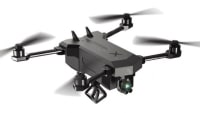
Tech Briefs
Products of Tomorrow
Aerospace & Defense Tech Briefs
DoD to Deploy Thousands of Low Cost Autonomous Systems Under Replicator Program
Aerospace & Defense Tech Briefs
Electric-Powered Warship
Top Stories
NewsSensors/Data Acquisition
 Microvision Aquires Luminar, Plans Relationship Restoration, Multi-industry Push
INSIDERRF & Microwave Electronics
 A Next Generation Helmet System for Navy Pilots
INSIDERWeapons Systems
 New Raytheon and Lockheed Martin Agreements Expand Missile Defense Production
NewsAutomotive
 Ford Announces 48-Volt Architecture for Future Electric Truck
INSIDERAerospace
 Active Strake System Cuts Cruise Drag, Boosts Flight Efficiency
ArticlesTransportation

Webcasts
Aerospace
 Cooling a New Generation of Aerospace and Defense Embedded...
Energy
 Battery Abuse Testing: Pushing to Failure
Power
 A FREE Two-Day Event Dedicated to Connected Mobility
Automotive
 Quiet, Please: NVH Improvement Opportunities in the Early Design Cycle
Electronics & Computers
 Advantages of Smart Power Distribution Unit Design for Automotive &...
Unmanned Systems
 Sesame Solar's Nanogrid Tech Promises Major Gains in Drone Endurance