




AUSA 2023: Long Range Hypersonic Weapon Leads Army’s Modernization Priorities
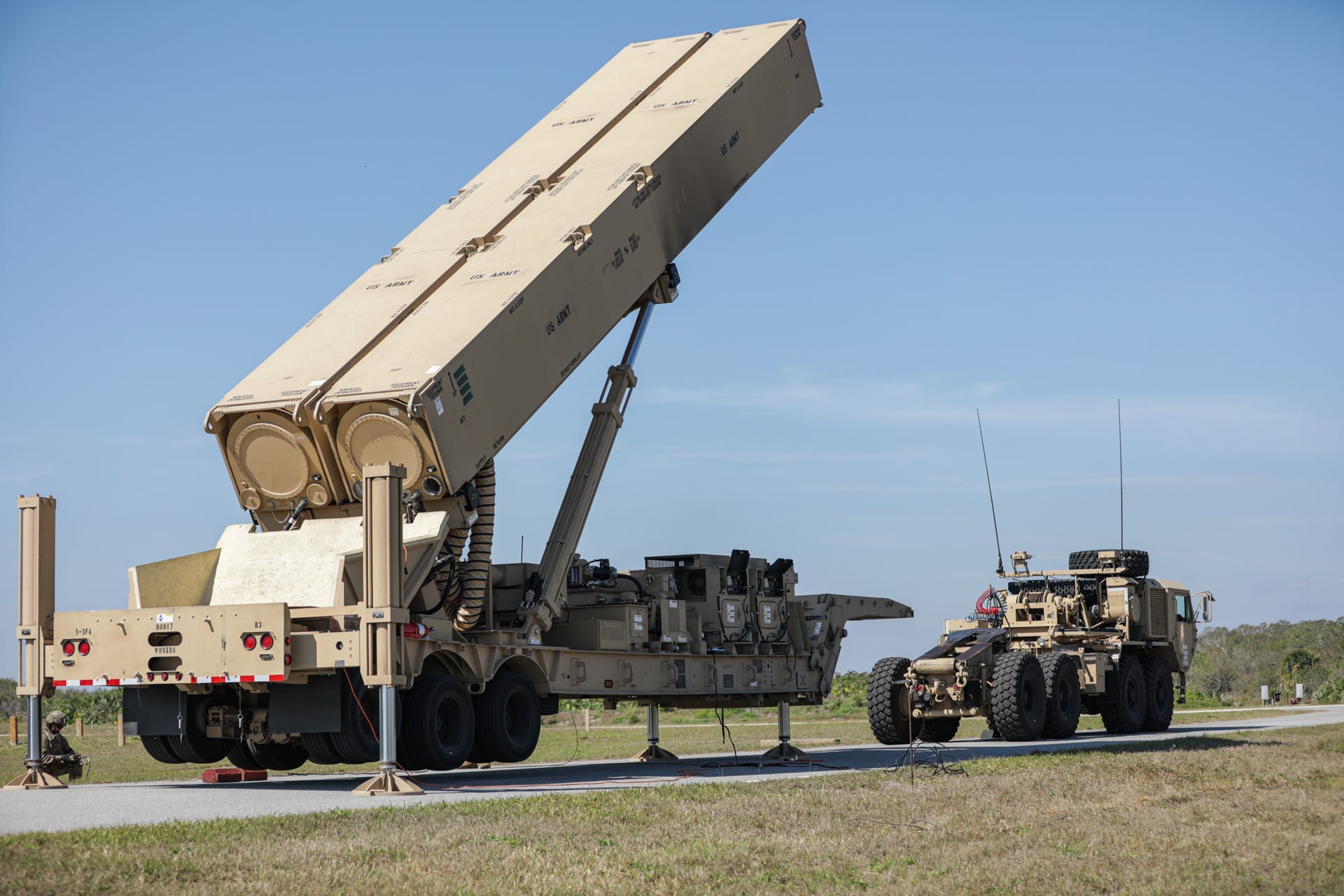
One of the top modernization efforts for the Army is the development of long-range hypersonic capabilities, according to comments made by Secretary of the Army Christine E. Wormuth on the opening day of the 2023 Association of the United States Army Annual Meeting and Exposition in Washington, D.C.
Wormuth spoke about the Army's need to innovate and transform its modernization efforts, force structure and recruiting during the speech. Among the technologies and weapons systems that the Army is prioritizing right now is fielding its first hypersonic weapon.
"We are continuing to develop our long-range hypersonic capabilities. We have already delivered the first battery of Long-Range Hypersonic Weapon ground support equipment and are aggressively pursuing the testing and fielding of the complete system," Wormuth said. "This is a top modernization priority for the Army and the entire Department of Defense."
In February, the 1st Multi-Domain Task Force deployed the Long-Range Hypersonic Weapon during Operation Thunderbolt Strike, according to an Oct. 9 Army press release. The Army has also made progress on issuing hypersonic weapon development contracts, including a Common Hypersonic Glide Body missile awarded to Leidos subsidiary Dynetics that will be designed in collaboration with the Navy.
Chris Mills, Deputy Director for the Army's hypersonics project office, also discussed some of the challenges associated with the development and fielding of hypersonic weapons during an Oct. 9th Defense News panel discussion.
"One of the challenges we have in hypersonics is some of the hypersonic technologies and some of the hypersonic supply chain is immature. DoD has put a pretty sizable amount of investment into improving that, primarily in the areas of hypersonic materials to deal with high temperature applications on hypersonic vehicles," Mills said.
Mills would also like to see progress from industry on improving thermal protection for materials and components used in hypersonic weapon system designs.
In the February 2023 edition of Aerospace & Defense Technology, the article "Can Embedded Electronics Components Meet the Demands of Hypersonic Missiles?" outlines some of the challenges of designing embedded electronic and radio frequency components used in missiles that travel at Mach 5 hypersonic speeds. Among those challenges are the intense shock and vibration generated from "uncontrolled energies at resonant frequencies, temperatures pushing beyond 2,000 °F because of friction, and intense pressure from the extreme G forces experienced during acceleration," according to the article.
During a question and answer portion of the AUSA 2023 panel discussion, Mills noted that dealing with "heat and plasma and the like" are among the challenges of designing and manufacturing materials used in hypersonic weapons. Thermal management challenges associated with materials used in making hypersonic weapons are further complicated by the small size of the industrial base that even has the capability of making them.
"Part of the problem with the hypersonic industrial base, it is small and we're talking small quantities right now. So we've got to keep these companies that have that technology in business and producing and leveraging that capability," Mills said.
The weapons-making industrial base is already facing "huge demand" on booster and missile technology used across other DoD missile systems, Mills said.
"It's almost like across the board, DoD in some areas is having to re-learn how to design and build new missiles. And now we're ramping up the supply chain with that. So you see the common problems people have with the supply chains across DoD electronic components, there's a huge demand on those. Even stuff like forgings and alloys, there's a big demand on precision forgings. So that's some of the challenges we have," he added.
In spite of those challenges however, Mills said the Army is still confident it can field its first long range hypersonic weapon units by the end of 2023.
More From SAE Media Group

Aerospace INSIDER
Using Ultrabright X-Rays to Test Materials for Ultrafast Aircraft
Aerospace & Defense Tech Briefs
Can Embedded Electronics Components Meet the Demands of Hypersonic Missiles?


Aerospace Manufacturing and Machining INSIDER
Army Launches $50 Million Advanced Manufacturing Initiative for Aviation and Weapon Systems
Defense INSIDER
Wind Tunnel, Lasers Provide Hypersonic Proving Ground
Aerospace & Defense Tech Briefs
Notre Dame’s New Boundary Breaking Mach 10 Quiet Wind Tunnel




Aerospace INSIDER
Hermeus Quarterhorse Joins Hypersonic High Cadence Testing Program
Aerospace & Defense Tech Briefs
Raytheon, DARPA Push Forward with Hypersonic Weapon Design
Aerospace & Defense Tech Briefs
Hypersonic Propulsion System Manufacturing
Tech Briefs
3D-Printed Catalysts Propel Hypersonic Flight
Aerospace & Defense Tech Briefs
Approximating the Material Stresses and System Requirements for Hypersonic Flight
Tech Briefs
Thin Film Sensor for Ultra High-Temp Measurement
Aerospace INSIDER
How the Air Force's B-21 Raider is Advancing Across Test and Production
Tech Briefs
Heat Pipe Assembly Passes NASA Hypersonic Tests
Defense INSIDER
Hypersonic Glide Vehicle Successfully Tested

Aerospace Manufacturing and Machining INSIDER
DARPA Completes Key Milestone on Hypersonic Air-breathing Weapons Program
Defense INSIDER
Advanced Hypersonic Weapon Technology Undergoes Flight Test
Aerospace Manufacturing and Machining INSIDER
Army Seeks to Expand 3D Printing to the Tactical Edge
Aerospace Manufacturing and Machining INSIDER
Next Generation Fuselage Structures for Launched Effects
Aerospace INSIDER
Purdue Strengthens National Security Focus with New Propulsion Lab
Aerospace INSIDER
Air Force Tests 3D Printing for Hypersonic Flight Vehicles
Aerospace INSIDER
Navy Selects Lockheed Martin and Raytheon to Develop Hypersonic Missile
Aerospace & Defense Tech Briefs
Acquiring and Telemetering Test Data from Hypersonic Platforms
Top Stories
INSIDERLighting Technology
 Using Ultrabright X-Rays to Test Materials for Ultrafast Aircraft
INSIDERManufacturing & Prototyping
 New 3D-Printable Nanocomposite Prevents Overheating in Military Electronics
INSIDERDefense
 F-22 Pilot Controls Drone With Tablet
Technology ReportAR/AI
 Talking SDVs and Zonal Architecture with TE Connectivity
INSIDERManufacturing & Prototyping
 New Defense Department Program Seeks 300,000 Drones From Industry by 2027
INSIDERAerospace
 Anduril Completes First Semi-Autonomous Flight of CCA Prototype
Webcasts
Test & Measurement
 SAE Automotive Engineering Podcast: Additive Manufacturing
Information Technology
 A New Approach to Manufacturing Machine Connectivity for the Air Force
Automotive
 Optimizing Production Processes with the Virtual Twin
Power
 EV and Battery Thermal Management Strategies
Manufacturing & Prototyping
 How Packet Digital Is Scaling Domestic Drone Battery Manufacturing
Automotive
 Advancements in Zinc Die Casting Technology & Alloys for Next-Generation...