




New Defense Department Program Seeks 300,000 Drones From Industry by 2027
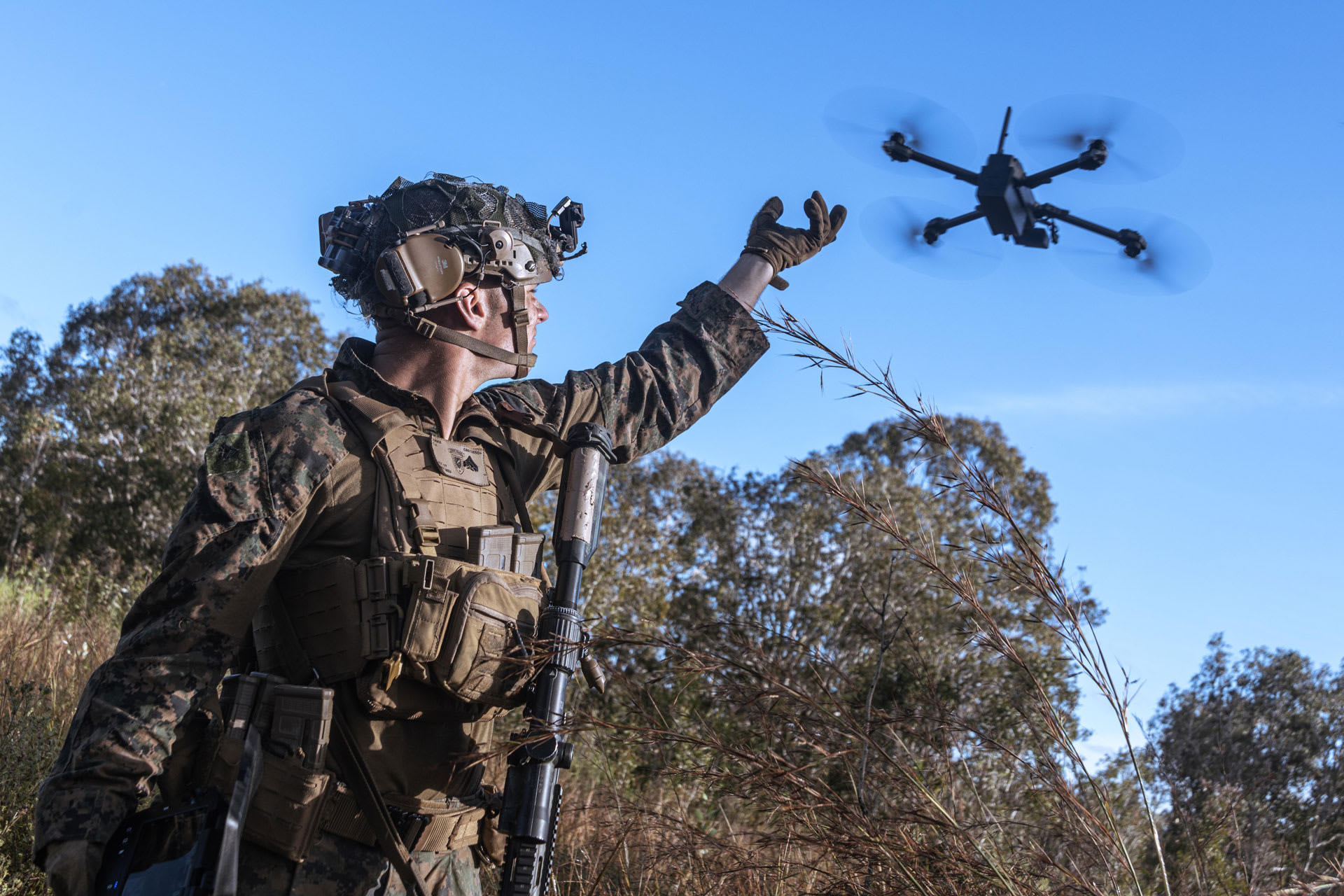
The U.S. Department of War, on Dec. 2, outlined a new program where it is seeking the development of more than 300,000 drones "quickly and inexpensively" from U.S.-based manufacturers by 2027.
On June 6, President Donald J. Trump signed the "Unleashing American Drone Dominance" executive order outlining how the United States would up its drone game in both the commercial and military sectors, including how it would deliver massive amounts of inexpensive, American-made, lethal drones to U.S. military units to amplify their combat capabilities.
Secretary of War Pete Hegseth followed up in July with the "Unleashing U.S. Military Drone Dominance" memorandum, in which he laid out his plan for how the department would meet the president's intent.
Part of the secretary's plan included participating with other parts of government in building up the nascent U.S. drone manufacturing base by approving hundreds of American products for purchase by the department, powering a "technological leapfrog" by arming combat units with the very best of low-cost American-made drones, and finally, training as the department expects to fight.
"Next year I expect to see [drone] capability integrated into all relevant combat training, including force-on-force drone wars," the secretary said.
At that time, Hegseth said, he had already advanced American drone dominance by stripping away regulations that hindered the military's adoption of small drones and shifting the necessary authorities away from the department's bureaucracy and into the hands of unit commanders.
"This was the first step in the urgent effort to boost lethality across the force," Hegseth said in a video posted today to social media.
Now the War Department is moving out in a new way on the drone dominance initiative, Hegseth said.
"The second step is to kickstart U.S. industrial capacity and reduce prices, so our military can adequately budget for unmanned weapons," the secretary said.
He noted that, with help from Congress, the department will initially focus on small attack drones.
"Drone dominance is a billion-dollar program funded by President Trump's Big Beautiful Bill," Hegseth said. "It is purpose-built on the pillars of the War Department's new acquisition philosophy: a stable demand signal to expand the U.S. drone industrial base by leveraging private capital, paired with flexible contracting built for commercial companies, founded by our best engineers and entrepreneurs."
A stable demand signal means the War Department will make concrete plans to buy lots of drones, on a regular schedule, over a long period of time. When that happens, American industry will step up to the plate to satisfy the department's needs, including by investing in and building out its own capacity to produce in the long term.
The request for information released to industry this week spells out a plan that'll begin early next year, when the department will, over the course of two years, and within four phases, offer $1 billion to industry to build a large number of small unmanned aerial systems capable of conducting one-way attack missions.
The first of those four phases, called "gauntlets," runs from February to July 2026. During that time, 12 vendors will be asked to collectively produce 30,000 drones at a cost of $5,000 per unit, for a total of $150 million in department outlays.
Over the course of the next three gauntlets, the number of vendors will go down from 12 to five, the number of drones ordered will increase from 30,000 to 150,000, and the price per drone will drop from $5,000 to $2,300.
"Drone dominance will do two things: drive costs down and capabilities up," Hegseth said. "We will deliver tens of thousands of small drones to our force in 2026, and hundreds of thousands of them by 2027."
Through the drone dominance program, $1 billion will fund the manufacture of approximately 340,000 small drones for combat units over the course of two years.
More From SAE Media Group
Aerospace & Defense Tech Briefs
Key Reasons to Attend the UAV Technology USA Conference 2022
Defense INSIDER
Conference to Focus on Counter-Drone Technology
Defense INSIDER
DoD Signs New Strategy for Countering Unmanned Systems
Aerospace INSIDER
New UK Drone Strategy to Invest Billions in Unmanned Systems
Aerospace INSIDER
New Drones and Software Selected for DoD's Replicator 1.2
Aerospace Manufacturing and Machining INSIDER
Counter UAS Systems Tested Against Swarms of 50 Drones in Latest Yuma Exercise

Defense INSIDER
In-Flight 3D Printing of Drone Parts on a Black Hawk Helicopter

Aerospace & Defense Tech Briefs
Calling All US DOD to Attend SMi’s Counter UAS Technology Conference

Aerospace INSIDER
BAE Systems Acquires Developer of Electric Heavy Lift Quadcopters

Defense INSIDER
JPADS Brings New Sustainment Capability to Future Fight
Aerospace INSIDER
Unmanned "Urban Beat Cop" Surveillance System Protects Soldiers
Aerospace & Defense Tech Briefs
Register Now: Counter UAS Technology 2021
Aerospace Manufacturing and Machining INSIDER
Teledyne FLIR to Produce 1,000 Pocket-Sized Drones for Use in Ukraine
Aerospace INSIDER
Two Startups Partner to Expand Hydrogen-Powered Drone Production
Aerospace INSIDER
Honeywell Launches New System to Counter Drone Swarms
Aerospace & Defense Tech Briefs
Autonomous Collaborative Platform
Aerospace INSIDER
Air Force Performs First Test of Microwave Counter Drone Weapon THOR

Aerospace & Defense Tech Briefs
Counter Unmanned Aircraft System


Aerospace INSIDER
Paris Air Show: New Aerospace Technologies, Updates and Research
Aerospace & Defense Tech Briefs
Unmanned Aircraft Training Materials
Top Stories
INSIDERManufacturing & Prototyping
 How Airbus is Using w-DED to 3D Print Larger Titanium Airplane Parts
INSIDERManned Systems
 FAA to Replace Aging Network of Ground-Based Radars
NewsTransportation
 CES 2026: Bosch is Ready to Bring AI to Your (Likely ICE-powered) Vehicle
NewsSoftware
 Accelerating Down the Road to Autonomy
EditorialDesign
 DarkSky One Wants to Make the World a Darker Place
INSIDERMaterials
 Can This Self-Healing Composite Make Airplane and Spacecraft Components Last...
Webcasts
Defense
 How Sift's Unified Observability Platform Accelerates Drone Innovation
Automotive
 E/E Architecture Redefined: Building Smarter, Safer, and Scalable...
Power
 Hydrogen Engines Are Heating Up for Heavy Duty
Electronics & Computers
 Advantages of Smart Power Distribution Unit Design for Automotive...
Unmanned Systems
 Quiet, Please: NVH Improvement Opportunities in the Early Design...
