




Air Force Performs First Test of Microwave Counter Drone Weapon THOR
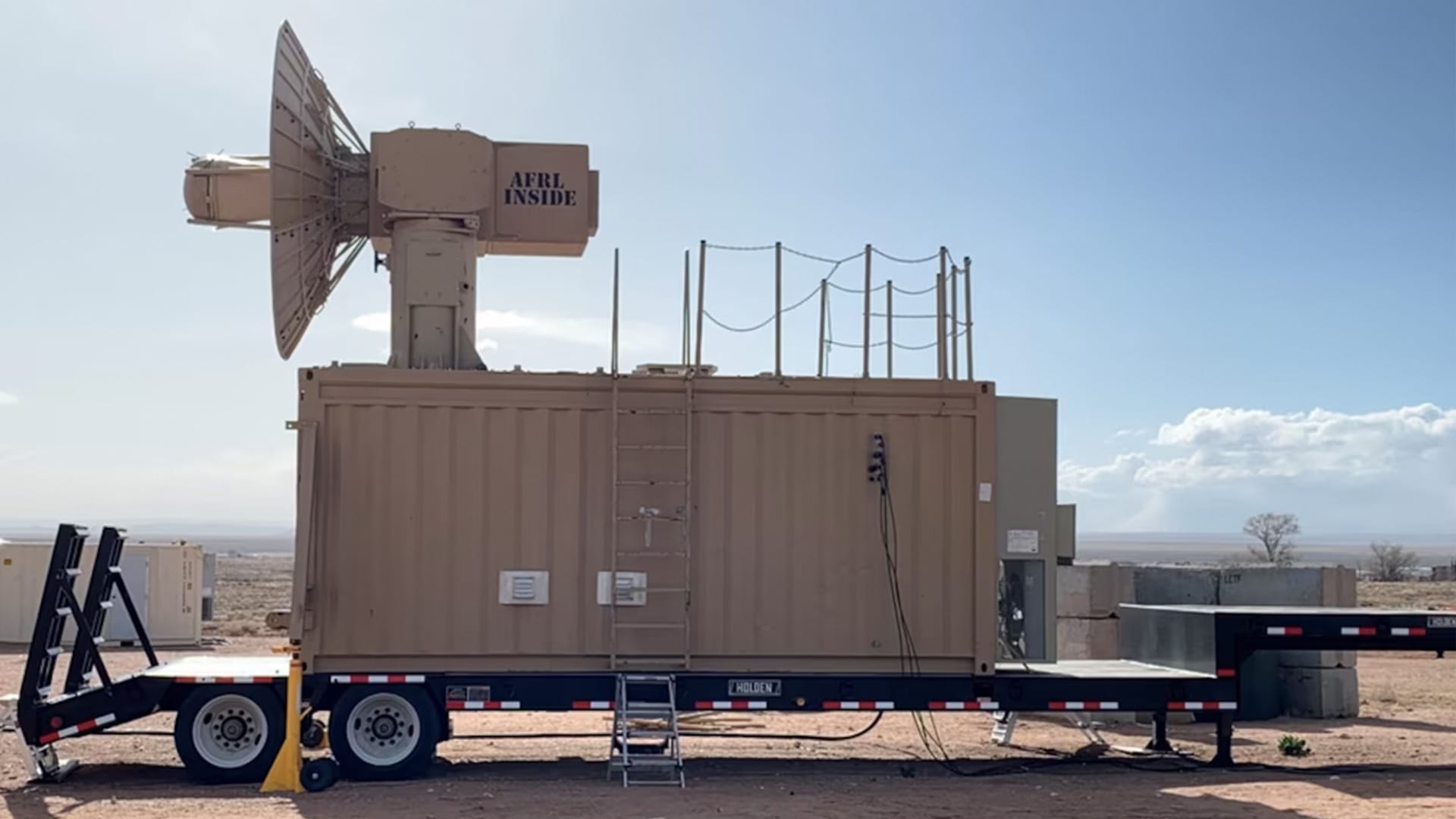
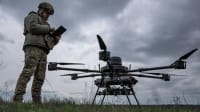
The Air Force Research Laboratory (AFRL) conducted a demonstration on April 5, 2023, of its high-power microwave counter drone weapon, the Tactical High-power Operational Responder (THOR) as it engaged a swarm of multiple targets at the Chestnut Test Site, Kirtland Air Force Base.
“The THOR team flew numerous drones at the THOR system to simulate a real-world swarm attack,” said Adrian Lucero, THOR Program Manager at AFRL’s Directed Energy Directorate. “THOR has never been tested against these types of drones before, but this did not stop the system from dropping the targets out of the sky with its non-kinetic, speed-of-light High-Power Microwave, or HPM pulses,” he said.
As the dangers from drone swarms evolve, leaders from across the Department of Defense are working closely to ensure we are exploring different technologies like directed energy to support the needs of the warfighter in the future against such threats.
“THOR was extremely efficient with a near continuous firing of the system during the swarm engagement,” said Capt. Tylar Hanson, THOR deputy program manager. “It is an early demonstrator, and we are confident we can take this same technology and make it more effective to protect our personnel around the world.”
While AFRL celebrates the success of the demonstration, leaders at Kirtland are recognizing the hard work of their team who have decades of research in high-power electromagnetic technologies.
“We couldn’t have come this far without the perseverance and professionalism of the entire THOR team,” said Ken Miller, AFRL’s high power electromagnetics division chief. “Our scientists, Airmen and contractors worked early mornings and late nights to make this swarm demo…a great success. AFRL is committed to developing such advanced technologies to defend our service members on the front lines.”
More From SAE Media Group
Aerospace & Defense Tech Briefs
Cutting-Edge Drone Killer Radio Wave Weapon Developing at Pace
Aerospace INSIDER
Honeywell Launches New System to Counter Drone Swarms

Aerospace & Defense Tech Briefs
British Army Completes First Test of Drone Killing Radio Frequency Weapon
Defense INSIDER
Conference to Focus on Counter-Drone Technology
Defense INSIDER
DoD Signs New Strategy for Countering Unmanned Systems
Aerospace Manufacturing and Machining INSIDER
Counter UAS Systems Tested Against Swarms of 50 Drones in Latest Yuma Exercise
Defense INSIDER
AgilePod Flies on U.S. Air Force MQ-9 Reaper

Aerospace INSIDER
New Drones and Software Selected for DoD's Replicator 1.2
Aerospace & Defense Tech Briefs
Register Now: Counter UAS Technology 2021
Aerospace & Defense Tech Briefs
Counter-UAS Technology
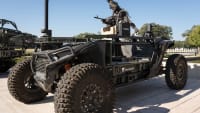

Aerospace INSIDER
Air Force Pilots Control XQ-58s from Fighter Jets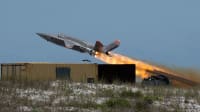
Defense INSIDER
SDPE’s Rapid Dragon Capability Demonstrated in Norway
Aerospace & Defense Tech Briefs
Autonomous Collaborative Platform
Aerospace INSIDER
Air Force Forecasts 2040 Operating Environments in Global Futures Report

Aerospace & Defense Tech Briefs
Key Reasons to Attend the UAV Technology USA Conference 2022
Defense INSIDER
JPADS Brings New Sustainment Capability to Future Fight

Aerospace & Defense Tech Briefs
H4 Palletized Laser Weapon
Aerospace & Defense Tech Briefs
Ghoul Tool: The Weapon-Mountable Counter UAS Transmitter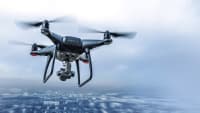
Aerospace & Defense Tech Briefs
Hardening Unmanned Aerial Systems Against High-Power Microwave Threats in Support of Forward Operations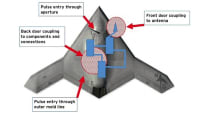

Aerospace INSIDER
Four Companies to Design Air Force Enterprise Test Drone Prototypes
Aerospace & Defense Tech Briefs
Foreign Counter-Unmanned Aerial Systems: Developments in the International Arms Markets

Top Stories
NewsAutomotive
 Microvision Aquires Luminar, Plans Relationship Restoration, Multi-industry Push
INSIDERDesign
 A Next Generation Helmet System for Navy Pilots
INSIDERWeapons Systems
 New Raytheon and Lockheed Martin Agreements Expand Missile Defense Production
NewsPower
 Ford Announces 48-Volt Architecture for Future Electric Truck
INSIDERAerospace
 Active Strake System Cuts Cruise Drag, Boosts Flight Efficiency
ArticlesTransportation

Webcasts
Aerospace
 Cooling a New Generation of Aerospace and Defense Embedded...
Test & Measurement
 Battery Abuse Testing: Pushing to Failure
Internet of Things
 A FREE Two-Day Event Dedicated to Connected Mobility
Transportation
 Quiet, Please: NVH Improvement Opportunities in the Early Design Cycle
Electronics & Computers
 Advantages of Smart Power Distribution Unit Design for Automotive &...
Aerospace
 Sesame Solar's Nanogrid Tech Promises Major Gains in Drone Endurance