




Foreign Counter-Unmanned Aerial Systems: Developments in the International Arms Markets
Counter-UAV Technologies Are Evolving in Response to Weaponization
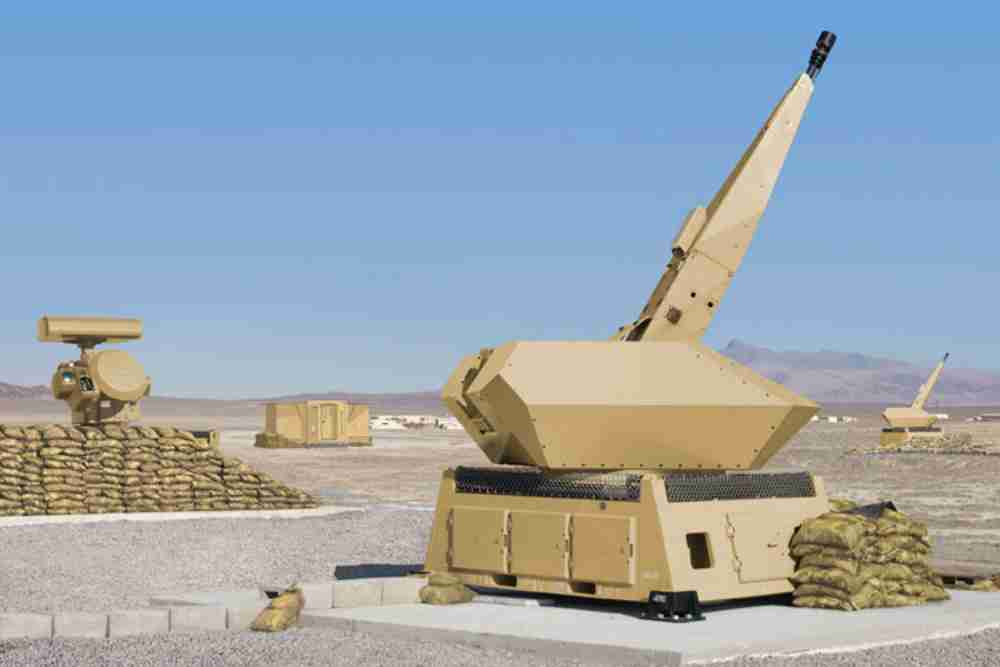
Over the last decade the numbers, types, and capabilities of unmanned aerial vehicles (UAVs) available to military forces, domestic security forces, non-state actors, commercial interests, and even private citizens have grown substantially. Offerings range from large, expensive fixed-wing high-altitude/long- endurance UAVs, which are affordable only to nation states, down to low-cost, low-flying small and micro vertical take-off- and-landing (VTOL) models available to everyone. Both armed and unarmed models are marketed. Some unarmed models are being upgraded with aftermarket lethal capabilities by third parties or private individuals using do-it-yourself techniques.
Today, some kind of UAV capability is available to virtually all nations, non-state actors, commercial interests, and individuals. Availability is now generally a function of the price point, rather than technological or regulatory constraints. UAVs are becoming ubiquitous.
The capabilities of both large and small UAVs are constantly evolving. They are becoming faster, capable of carrying heavier and more diverse payloads, have longer endurance, and are more autonomous. At the same time, economies of scale are driving down costs of both large and small UAVs.
UAVs offered in the international arms market have attributes that make them formidable military tools. They can distract, disorient, and disrupt military operations, as well as provide direct and indirect support to destroying military equipment and structures. Likewise, some individuals and groups have taken advantage of the wide-scale availability of small commercial UAVs for malicious purposes. The Islamic State of Iraq and the Levant (ISIS), for example, has weaponized small commercial drones using improvised grenades as a lethal payload. Other individuals and groups have used small UAVs to overfly sensitive military and infrastructure facilities, fly in restricted airspace around airports, and spy on famous personalities and their neighbors. Two years ago, an individual even landed a small UAV carrying a bottle with traces of radioactive material onto the roof of the Japanese Prime Minister’s office.
Predictably, demand from military, police, and homeland security agencies for technical counters to UAVs is growing. Counter-UAV systems are now a major marketing thrust at international arms and homeland security exhibitions. Options offered encompass a wide variety of approaches, including: (1) destroying the UAV, (2) deceiving or evading on-board sensors, (3) disrupting/jamming navigation systems and data links, (4) third-parties taking control of the UAV, and (5) catch/capture systems. A few systems combine several of those approaches. International arms trade shows now offer the full spectrum of countermeasures designed to deal with both large and small UAVs, but with a heavy emphasis on kinetic approaches that destroy UAVs. Security exhibitions, on the other hand, generally concentrate on non-kinetic/not-destructive counters targeted at small, low-flying UAVs.
This work was done by Andrew Hull and David Markov for the Institute for Defense Analyses. For more information, download the Technical Support Package (free white paper) below. IDA-0003
This Brief includes a Technical Support Package (TSP).
Foreign Counter-Unmanned Aerial Systems: Developments in the International Arms Markets
(reference IDA-0003) is currently available for download from the TSP library.
Don't have an account?
More From SAE Media Group
Aerospace & Defense Tech Briefs
Autonomous Air Defense Production
Aerospace & Defense Tech Briefs
Unmanned Hover Plane
Aerospace & Defense Tech Briefs
Autonomous Collaborative Platform
Aerospace & Defense Tech Briefs
Unmanned Aerial Vehicle
Aerospace & Defense Tech Briefs
Enabling Off-the-Shelf Autonomous Naval Warfare
Aerospace & Defense Tech Briefs
Drone Control System
Aerospace & Defense Tech Briefs
Counter-UAS Technology
Aerospace & Defense Tech Briefs
Nano-UAV Systems
Aerospace & Defense Tech Briefs
A New Approach to Counter-UAS Technology
Aerospace & Defense Tech Briefs
British Army Completes First Test of Drone Killing Radio Frequency Weapon
Aerospace & Defense Tech Briefs
Encapsulated Drone System
Aerospace & Defense Tech Briefs
Vertical Takeoff and Landing Drone
Aerospace & Defense Tech Briefs
Remotely Piloted Air Systems
Aerospace & Defense Tech Briefs
Counter-Drone Technology

Aerospace & Defense Tech Briefs
PHASA-35 Stratospheric Flight
Aerospace & Defense Tech Briefs
Cutting-Edge Drone Killer Radio Wave Weapon Developing at Pace
Aerospace INSIDER
MQ-1C Completes First Air-Launched Effect Flight Demonstration
Aerospace & Defense Tech Briefs
Vertical Take-Off and Landing UAV
Aerospace & Defense Tech Briefs
Convertible Drones
Aerospace & Defense Tech Briefs
Insitu ScanEagle SUAS Boosts Coast Guard Mission Effectiveness
Aerospace Manufacturing and Machining INSIDER
Counter UAS Systems Tested Against Swarms of 50 Drones in Latest Yuma Exercise
Aerospace INSIDER
GA-ASI Announces Gray Eagle 25M for Multi-Domain Operations
Aerospace & Defense Tech Briefs
Register Now: Counter UAS Technology 2021
Aerospace & Defense Tech Briefs
Deceiving the Enemy: These Are the Drones You Are Looking For
Aerospace & Defense Tech Briefs
MUSHER Demonstrates Manned-Unmanned Aircraft Teaming Applications
Aerospace INSIDER
Radar and Weapons Upgrades for Netherlands Air Force MQ-9A Reapers
Aerospace & Defense Tech Briefs
Fully Autonomous Unmanned Vehicles
Overview
The document discusses the growing prevalence and capabilities of unmanned aerial vehicles (UAVs), highlighting their dual role as valuable military tools and potential threats to homeland security. As UAV technology advances, the demand for effective countermeasures has surged among military, police, and homeland security agencies. This has led to a significant focus on counter-UAV systems at international arms and security exhibitions.
Counter-UAV systems employ various strategies to neutralize threats posed by UAVs. These strategies include destroying the UAV, deceiving or evading its onboard sensors, disrupting or jamming its navigation systems and data links, taking control of the UAV through third-party intervention, and using capture systems. Some systems integrate multiple approaches to enhance effectiveness.
The document references several technologies and companies involved in counter-UAV solutions. For instance, high-power spotlights and commercial lasers are used by anti-drone activists to blind the electro-optical sensors of low-flying UAVs. Additionally, systems like Skyshield utilize high-energy laser beams focused on a single point to disable UAVs.
The document also mentions specific products and companies in the counter-UAV market, such as Drone Defence Services Ltd.'s Net Gun XI, OpenWorks Engineering's SkyWall, and Thales Group's RAPIDFire. These products represent a range of innovative solutions designed to address the challenges posed by UAVs.
Furthermore, the document highlights the increasing sophistication of UAVs, which can carry out complex missions, including the delivery of hazardous materials. This capability raises significant security concerns, prompting a proactive response from defense and security sectors.
Overall, the document underscores the urgent need for effective counter-UAV technologies as UAVs become more prevalent and capable. It emphasizes the importance of ongoing research and development in this field to ensure that security agencies can adequately respond to the evolving threats posed by UAVs. The interplay between UAV advancements and countermeasures is a critical area of focus for maintaining safety and security in various contexts.
Top Stories
NewsSensors/Data Acquisition
 Microvision Aquires Luminar, Plans Relationship Restoration, Multi-industry Push
INSIDERRF & Microwave Electronics
 A Next Generation Helmet System for Navy Pilots
INSIDERWeapons Systems
 New Raytheon and Lockheed Martin Agreements Expand Missile Defense Production
NewsAutomotive
 Ford Announces 48-Volt Architecture for Future Electric Truck
INSIDERAerospace
 Active Strake System Cuts Cruise Drag, Boosts Flight Efficiency
ArticlesTransportation

Webcasts
Aerospace
 Cooling a New Generation of Aerospace and Defense Embedded...
Energy
 Battery Abuse Testing: Pushing to Failure
Power
 A FREE Two-Day Event Dedicated to Connected Mobility
Automotive
 Quiet, Please: NVH Improvement Opportunities in the Early Design Cycle
Electronics & Computers
 Advantages of Smart Power Distribution Unit Design for Automotive &...
Unmanned Systems
 Sesame Solar's Nanogrid Tech Promises Major Gains in Drone Endurance