




Hardening Unmanned Aerial Systems Against High-Power Microwave Threats in Support of Forward Operations
Counter-UAS (C-UAS) weapons utilizing pulsed high-power microwave (HPM) energy pose a significant problem for UAS in offensive and defensive combat roles by causing electromagnetic interference (EMI) that can produce effects ranging from upset to system damage.

Unmanned Aerial Systems (UAS) continue to play an increasing role across the spectrum of military operations. Advances in human-machine teaming, additive manufacturing, power cell density, and autonomy will position these systems to become an integral part of missions that fall inside an adversary's operational reach in the near future.
The global power projection capability of the United States, largely unchallenged since the end of the Cold War, is increasingly in question. State adversaries are rapidly developing and extending the range of anti-access/area denial (A2/AD) capabilities, while seeking inexpensive counters to exquisite US systems. Consequently, the US will likely be forced to operate within the reach of its enemies in the very near future. In this context, the execution and defense of rapid-deployable, distributed forward operations will be essential. The Airpower Vistas Research Task Force (AVRTF) 2017, comprised of students from the Air War College and Air Command and Staff College, was tasked by the Chief of Staff of the Air Force with detailing the scope of these anticipated threats in 2025 to forward operations and operating locations across the Combatant Commands. While unmanned aerial systems (UAS) will play an increasing and integral role in these operations, their vulnerability to counter-UAS weapons utilizing high power microwaves (HPM) must be explored and mitigated.
Defining this unique problem set requires looking two steps ahead in the development and implementation of UAS and C-UAS technology. The capability of UAS to fill greater combat roles within an adversary's operational reach is being recognized and developed at several Department of Defense institutions, including the Air Force Research Laboratory (AFRL) and Sandia National Laboratory (SNL). Advancements in automation, power cell capacity, additive manufacturing, and swarming algorithms position UAS as a formidable and highly flexible part of operations ranging from ISR to attacking air, ground, and maritime targets. Counter-UAS (C-UAS) technology is also in rapid development and includes weapons that disrupt the electromagnetic spectrum.
High power microwave weapons use intentional electromagnetic interference (EMI) to disrupt, damage, or destroy electronic systems. Unlike other directed energy (DE) weapons, HPM are not attenuated greatly by atmospheric obstacles such as clouds, rain and fog. While currently expensive to develop, the cost-per-shot of these systems is relatively low. Unlike lasers, they typically have a wide aperture and are of particular use as area weapons against electronics.
These characteristics make HPM systems ideal for use against UAS being utilized either individually or in swarms. C-UAS systems that use HPM have been just out of reach for decades, as the massive power requirements for such weapons have been impractical. Recent advances in this field, however, have produced capable systems that, if used in an offensive posture, can pose a threat to defensive UAS constructs. Therefore, the US cannot continue to increase the role of UAS without likewise considering their vulnerabilities to HPM weapons.
This work was done by Major Coningsby J. Burdon for the Air University.For more information, download the Technical Support Package (free white paper) below. AFIT-0006
This Brief includes a Technical Support Package (TSP).
Hardening Unmanned Aerial Systems Against High-Power Microwave Threats in Support of Forward Operations
(reference AFIT-0006) is currently available for download from the TSP library.
Don't have an account?
More From SAE Media Group
Aerospace & Defense Tech Briefs
Ghoul Tool: The Weapon-Mountable Counter UAS Transmitter
Aerospace & Defense Tech Briefs
Anti-Drone Jammer
Off-Highway Engineering
Addressing Electromagnetic Compatibility in the Context of Aircraft Electrification
Aerospace & Defense Tech Briefs
Cutting-Edge Drone Killer Radio Wave Weapon Developing at Pace
Aerospace & Defense Tech Briefs
British Army Completes First Test of Drone Killing Radio Frequency Weapon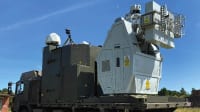
Aerospace & Defense Tech Briefs
Counter UAS Defense System
Aerospace & Defense Tech Briefs
Persistent Systems Auto-Tracking Antenna Adds Aircraft to Network, Enhances Data Sharing
Aerospace & Defense Tech Briefs
Directed-Energy System to Defeat Small Unmanned Aircraft System Swarms
Aerospace & Defense Tech Briefs
ONR Short Pulse Research, Evaluation and non-SWaP Demonstration for C-sUAV Study
Aerospace & Defense Tech Briefs
Raytheon Invests in Advanced, Autonomous Manufacturing Technologies for Radar Development, Testing
Aerospace INSIDER
Air Force Performs First Test of Microwave Counter Drone Weapon THOR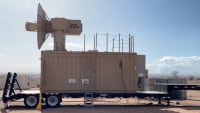
Aerospace & Defense Tech Briefs
Counter-UAS Technology
Aerospace & Defense Tech Briefs
New Products
Aerospace & Defense Tech Briefs
Precision Attack Drone
Aerospace & Defense Tech Briefs
Martin UAV VTOL Unmanned Aircraft Taps Persistent Systems Wave Relay Data Link Technology
Aerospace & Defense Tech Briefs
Unmanned Aerial Systems Electromagnetic Induction Sensor Development
Aerospace & Defense Tech Briefs
Curtiss-Wright Black Boxes Receive European Approval
Defense INSIDER
Conference to Focus on Counter-Drone Technology
Aerospace & Defense Tech Briefs
Multi-Mission UAS (MMU) Systems
Aerospace & Defense Tech Briefs
Anti-Drone Remote Weapon System
Aerospace INSIDER
Northrop's New Multifunction Active Electronically Scanned Array
Aerospace & Defense Tech Briefs
Autonomous Air Defense Production

Aerospace & Defense Tech Briefs
Automatic Drone Detection System
Defense INSIDER
MAPS GEN II: Navigation System Upgrades for Army Vehicles
Aerospace & Defense Tech Briefs
Key Measurements to Maintain Performance of Critical Electronic Systems on Military Aircraft and Warships
Aerospace & Defense Tech Briefs
A New Approach to Counter-UAS Technology
Aerospace INSIDER
F-22 Pilot Controls Drone With Tablet
Aerospace & Defense Tech Briefs
Heterogeneous Integration and SiPs Benefit SWaP-C Reduction
Overview
The document titled "HARDENING UNMANNED AERIAL SYSTEMS AGAINST HIGH POWER MICROWAVE THREATS IN SUPPORT OF FORWARD OPERATIONS" by Major Coningsby J. Burdon examines the increasing role of Unmanned Aerial Systems (UAS) in military operations and the emerging threats they face, particularly from counter-UAS (C-UAS) technologies utilizing high power microwave (HPM) energy.
The abstract highlights that UAS are becoming integral to military missions, especially as state adversaries develop advanced anti-access/area denial (A2/AD) capabilities. The Air Command and Staff College's Airpower Vistas Research Task Force (AVRTF) was tasked with assessing threats to forward operations through 2025, emphasizing the vulnerability of UAS to HPM weapons. These weapons can disrupt UAS operations through electromagnetic interference, potentially leading to system damage.
The introduction outlines the context of U.S. military operations, which are increasingly challenged by adversaries capable of targeting U.S. systems. The report stresses the need for the U.S. to adapt to these threats by enhancing the resilience of UAS against C-UAS technologies. It discusses the rapid advancements in UAS capabilities, including automation, power cell capacity, and swarming algorithms, which position them as versatile tools for various military operations, from intelligence, surveillance, and reconnaissance (ISR) to offensive strikes.
The document further explores the development of C-UAS technologies, which are also advancing quickly, necessitating a proactive approach to hardening UAS against HPM threats. It emphasizes the importance of creating cost-effective and practical solutions for protecting sensitive electronics in UAS, which have traditionally been difficult to implement due to weight and cost constraints.
The report is structured into several sections, including an analysis of UAS and HPM technology, considerations for electronic protection, and recommendations for prioritizing research and development in this area. The conclusion reiterates the necessity of addressing these vulnerabilities to maintain operational effectiveness in distributed forward operations.
Overall, Major Burdon's research underscores the critical need for the U.S. military to enhance the resilience of UAS against emerging threats, ensuring their continued effectiveness in future combat scenarios. The findings advocate for a strategic focus on electronic protection measures to safeguard UAS capabilities in the evolving landscape of military operations.
Top Stories
NewsRF & Microwave Electronics
 Microvision Aquires Luminar, Plans Relationship Restoration, Multi-industry Push
INSIDERAerospace
 A Next Generation Helmet System for Navy Pilots
INSIDERDesign
 New Raytheon and Lockheed Martin Agreements Expand Missile Defense Production
INSIDERMaterials
 How Airbus is Using w-DED to 3D Print Larger Titanium Airplane Parts
NewsPower
 Ford Announces 48-Volt Architecture for Future Electric Truck
ArticlesAR/AI

Webcasts
Electronics & Computers
 Cooling a New Generation of Aerospace and Defense Embedded...
Automotive
 Battery Abuse Testing: Pushing to Failure
Power
 A FREE Two-Day Event Dedicated to Connected Mobility
Unmanned Systems
 Quiet, Please: NVH Improvement Opportunities in the Early Design Cycle
Automotive
 Advantages of Smart Power Distribution Unit Design for Automotive &...
Energy
 Sesame Solar's Nanogrid Tech Promises Major Gains in Drone Endurance