




Air Force Tests 3D Printing for Hypersonic Flight Vehicles
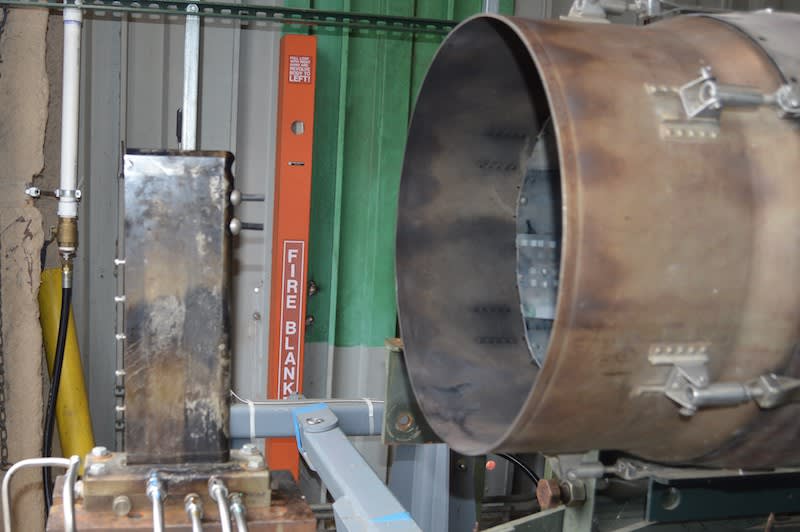
The Air Force is testing materials produced through ceramic additive manufacturing to advance their potential future use in hypersonic flight vehicles. The Air Force and its commercial partner are testing additively manufactured silicon oxycarbide (SiOC) materials that could withstand temperatures of about 3200 degrees Fahrenheit.
Current aircraft fly at supersonic speeds of more than 768 miles per hour, or MACH 1. If achieved, hypersonic fight – speeds exceeding Mach 5 – would allow for much faster military response times, more advanced weapons, and drastically decreased travel times for the military and commercial sectors, with speeds of more than 4000 miles per hour.
More From SAE Media Group

Aerospace & Defense Tech Briefs
Notre Dame’s New Boundary Breaking Mach 10 Quiet Wind Tunnel


Aerospace INSIDER
Quarterhorse Hypersonic Test Aircraft Completes First Flight
Aerospace INSIDER
Air Force to Inspect KC-135 Fleet for Non-Conforming Tail Pins

Tech Briefs
Spanwise Adaptive Wing

Aerospace INSIDER
Research Highlights Future Hypersonic Flight Challenges


Aerospace INSIDER
Can Microvanes Improve Fuel Efficiency for Legacy Air Force Aircraft?


Aerospace INSIDER
Using Ultrabright X-Rays to Test Materials for Ultrafast Aircraft

Aerospace INSIDER
Scientists Work to Enhance Faster-Than-Sound Jet Engines

Aerospace INSIDER
New DARPA X-Plane Will Have No Moving Control Surfaces
Aerospace & Defense Tech Briefs
Raytheon, DARPA Push Forward with Hypersonic Weapon Design
Aerospace INSIDER
Hermeus Quarterhorse Joins Hypersonic High Cadence Testing Program

Aerospace INSIDER
Hermeus Rolls Out First Quarterhorse Hypersonic Test Aircraft

Aerospace INSIDER
NASA’s Folding Wing Reduces Drag and Increases Efficiency
Aerospace INSIDER
Turkey's KAAN Combat Aircraft Completes First Flight
Aerospace INSIDER
Engineers Assess Flow Quality in Wind Tunnel Test Facility
Aerospace & Defense Tech Briefs
Cold Spray Technology
Aerospace & Defense Tech Briefs
Rear Fuselage Packer
Top Stories
INSIDERManufacturing & Prototyping
 How Airbus is Using w-DED to 3D Print Larger Titanium Airplane Parts
INSIDERManned Systems
 FAA to Replace Aging Network of Ground-Based Radars
NewsTransportation
 CES 2026: Bosch is Ready to Bring AI to Your (Likely ICE-powered) Vehicle
NewsSoftware
 Accelerating Down the Road to Autonomy
EditorialDesign
 DarkSky One Wants to Make the World a Darker Place
INSIDERMaterials
 Can This Self-Healing Composite Make Airplane and Spacecraft Components Last...
Webcasts
Defense
 How Sift's Unified Observability Platform Accelerates Drone Innovation
Automotive
 E/E Architecture Redefined: Building Smarter, Safer, and Scalable...
Power
 Hydrogen Engines Are Heating Up for Heavy Duty
Electronics & Computers
 Advantages of Smart Power Distribution Unit Design for Automotive...
Unmanned Systems
 Quiet, Please: NVH Improvement Opportunities in the Early Design...
