




NASA’s Folding Wing Reduces Drag and Increases Efficiency

NASA’s Spanwise Adaptive Wing (SAW) concept permits the outboard portions of the wings to move to the optimal position during operation. This could increase efficiency by reducing drag, and increasing lift and performance. The ability to achieve an optimal wing position for different aspects of flight may also produce enough yaw control to allow for rudder reduction on subsonic and supersonic aircraft.
Wing-folding articulation, or shaping, has generally been used to conserve deck space on aircraft carriers and aircraft storage areas. NASA is looking at ways to apply these methods to aircraft in flight. Advanced actuation makes possible a design that is both compact and lightweight, minimizing stress on the wing and allowing for more compact packaging. These solid-state actuators can be driven by an all-electric mechanism.
More From SAE Media Group
Tech Briefs
Outer Aileron Yaw Damper
Aerospace INSIDER
NASA Alloy Could Fold Wings in Flight
Aerospace INSIDER
NASA Test Flights Will Study Improved Efficiency of Supersonic Aircraft
Tech Briefs
Spanwise Adaptive Wing
Aerospace INSIDER
NASA’s Quiet Supersonic Demonstrator Jet Completes First Flight

Motion Design INSIDER
Tailless Jet Flies Free with Novel Control Technique
Tech Briefs
Winglet with Injected Flow
Aerospace INSIDER
New DARPA X-Plane Will Have No Moving Control Surfaces
Tech Briefs
Flap Device for Airframe Noise Reduction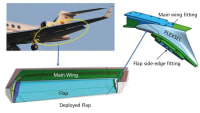
Aerospace INSIDER
Engineers Assess Flow Quality in Wind Tunnel Test Facility
Aerospace INSIDER
Airbus Starts Testing Airplane Wing That Changes Shape In-Flight



Aerospace INSIDER
NASA Tests Aircraft Wing Coatings that Slough Bug Guts
Tech Briefs
Bio-Inspired Wing Design for Small Drones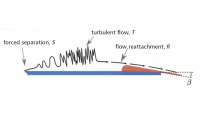

Aerospace & Defense Tech Briefs
Flight Testing Microvanes and Riblets
Aerospace INSIDER
Turkey's KAAN Combat Aircraft Completes First Flight
Aerospace INSIDER
Electra Starts Proving Blown Lift eSTOL Technology

Aerospace INSIDER
NASA Flight-Tests Flexible, Twistable Wing Flaps


Aerospace INSIDER
Shaping Aviation: Metal with Memory

Aerospace INSIDER
Quarterhorse Hypersonic Test Aircraft Completes First Flight

Top Stories
INSIDERManufacturing & Prototyping
 How Airbus is Using w-DED to 3D Print Larger Titanium Airplane Parts
INSIDERManned Systems
 FAA to Replace Aging Network of Ground-Based Radars
NewsTransportation
 CES 2026: Bosch is Ready to Bring AI to Your (Likely ICE-powered) Vehicle
NewsSoftware
 Accelerating Down the Road to Autonomy
EditorialDesign
 DarkSky One Wants to Make the World a Darker Place
INSIDERMaterials
 Can This Self-Healing Composite Make Airplane and Spacecraft Components Last...
Webcasts
Defense
 How Sift's Unified Observability Platform Accelerates Drone Innovation
Automotive
 E/E Architecture Redefined: Building Smarter, Safer, and Scalable...
Power
 Hydrogen Engines Are Heating Up for Heavy Duty
Electronics & Computers
 Advantages of Smart Power Distribution Unit Design for Automotive...
Unmanned Systems
 Quiet, Please: NVH Improvement Opportunities in the Early Design...
