




NASA Flight-Tests Flexible, Twistable Wing Flaps

NASA has conducted a series of flights investigating the benefits of twistable, flexible wing flaps to improve flight efficiency. The Adaptive Compliant Trailing Edge (ACTE II) flights investigated the ability of shape-changing surfaces to determine if advanced flexible trailing-edge wing flaps can both improve aircraft aerodynamic efficiency, and reduce airport-area noise generated during takeoffs and landings.
The flight featured the flap set in such a way that different areas of the flap were deflected in different positions. The purpose of this flight was to demonstrate the ability to fly with a twisted configuration. The potential advantage of such a configuration is the ability to change where the center of lift is on the wing, such as how and where the wing responds to wind gusts. Accomplishing this can lead to future wing designs that are much lighter, making the aircraft more efficient.
More From SAE Media Group
Tech Briefs
Fixed-Wing Angle eVTOL
Aerospace INSIDER
NASA Tests Revolutionary Shape-Changing Aircraft Flap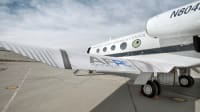
Aerospace INSIDER
Electra Starts Proving Blown Lift eSTOL Technology
Aerospace INSIDER
NASA Alloy Could Fold Wings in Flight
Tech Briefs
Flap Device for Airframe Noise Reduction
Aerospace INSIDER
NASA Tests Aircraft Wing Coatings that Slough Bug Guts

Tech Briefs
Improved Fixed-Wing Gust Load Alleviation Device
Aerospace INSIDER
Air Force Develops Morphing Aileron for Aircraft Wing
Tech Briefs
Algorithms Improve Quadrotor Drone Performance
Aerospace INSIDER
NASA’s Quiet Supersonic Demonstrator Jet Completes First Flight
Aerospace INSIDER
Slim Wing Can Reduce Aircraft Fuel Use and Emissions by 50%
Aerospace INSIDER
Lilium Starts Production of eVTOL Jet Batteries
Aerospace INSIDER
Active Strake System Cuts Cruise Drag, Boosts Flight Efficiency
Aerospace INSIDER
NASA Test Flights Will Study Improved Efficiency of Supersonic Aircraft
Tech Briefs
Novel Control Method in Tailless Aircraft
Aerospace INSIDER
NASA’s Folding Wing Reduces Drag and Increases Efficiency
Aerospace INSIDER
NASA Tests Green Aviation Technology
Aerospace & Defense Tech Briefs
Airbus to Fly Prototype eVTOL This Year
Aerospace INSIDER
Hermeus Rolls Out First Quarterhorse Hypersonic Test Aircraft
Aerospace INSIDER
A Next Generation Helmet System for Navy Pilots
Aerospace INSIDER
Airbus Starts Testing Airplane Wing That Changes Shape In-Flight
Aerospace INSIDER
Archer Achieves First Untethered Flight with Midnight eVTOL
Motion Design INSIDER
Tailless Jet Flies Free with Novel Control Technique
Aerospace INSIDER
Morphing Wings Make Jets More Efficient


Top Stories
INSIDERDefense
 New Raytheon and Lockheed Martin Agreements Expand Missile Defense Production
NewsAutomotive
 Ford Announces 48-Volt Architecture for Future Electric Truck
INSIDERManufacturing & Prototyping
 Active Strake System Cuts Cruise Drag, Boosts Flight Efficiency
ArticlesTransportation
 Accelerating Down the Road to Autonomy
INSIDERMaterials
 How Airbus is Using w-DED to 3D Print Larger Titanium Airplane Parts
Road ReadyTransportation

Webcasts
Electronics & Computers
 Cooling a New Generation of Aerospace and Defense Embedded...
Power
 Battery Abuse Testing: Pushing to Failure
Connectivity
 A FREE Two-Day Event Dedicated to Connected Mobility
Automotive
 Quiet, Please: NVH Improvement Opportunities in the Early Design Cycle
Transportation
 Advantages of Smart Power Distribution Unit Design for Automotive &...
Aerospace
 Sesame Solar's Nanogrid Tech Promises Major Gains in Drone Endurance