




Morphing Wings Make Jets More Efficient
University of Michigan engineers have developed improved wing designs capable of burning less fuel, as well as tools that help the aerospace industry build more efficient aircraft. In areas where new technologies are being applied – such as for wings made of composite materials or wings that morph during flight – improved design tools can provide insights when intuitive understanding is lacking.

Tow-steered composites can reduce the structural weight of an aircraft by 10 percent when compared to conventional composite designs, while reducing the fuel burn by 0.4 percent. Morphing wings that change shape can maintain maximum performance regardless of flight speed, altitude, and aircraft weight.
More From SAE Media Group
Aerospace INSIDER
Turkey's KAAN Combat Aircraft Completes First Flight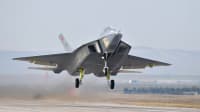
Aerospace INSIDER
NASA and Boeing Partner to Advance Aviation
Aerospace INSIDER
Slim Wing Can Reduce Aircraft Fuel Use and Emissions by 50%
Aerospace INSIDER
Embraer Completes First Flight of E-Freighter Jet





Aerospace INSIDER
First Air-to-Air Refueling Using an Unmanned Aircraft
Aerospace INSIDER
NASA’s Quiet Supersonic Demonstrator Jet Completes First Flight
Aerospace INSIDER
X-59 Supersonic Aircraft Cleared for Final Assembly
Aerospace INSIDER
NASA Tests Aircraft Wing Coatings that Slough Bug Guts
Aerospace INSIDER
NASA Tests Green Aviation Technology
Aerospace & Defense Tech Briefs
Rear Fuselage Packer
Aerospace INSIDER
Airbus Reveals Blended Wing Aircraft Demonstrator

Aerospace INSIDER
A Next Generation Helmet System for Navy Pilots
Tech Briefs
Novel Control Method in Tailless Aircraft
Aerospace INSIDER
Delta Air Lines, JetZero to Design Commercial Blended Wing Body Airliner
Aerospace Manufacturing and Machining INSIDER
GA-ASI Installs First V-Tail from GKN Aerospace onto MQ-9B RPA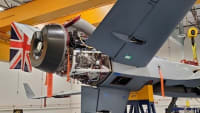
Aerospace INSIDER
NASA Tests Revolutionary Shape-Changing Aircraft Flap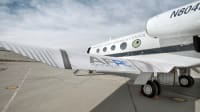
Aerospace INSIDER
Embraer Subsidiary Shows First Full-Scale eVTOL Prototype
Aerospace INSIDER
Archer Delivers First Midnight eVTOL to US Air Force
Aerospace & Defense Tech Briefs
Anthem Flight Deck First Flight
Motion Design INSIDER
Tailless Jet Flies Free with Novel Control Technique
Aerospace INSIDER
Air Force to Inspect KC-135 Fleet for Non-Conforming Tail Pins

Aerospace INSIDER
NASA Test Flights Will Study Improved Efficiency of Supersonic Aircraft
Aerospace INSIDER
NASA Alloy Could Fold Wings in Flight
Top Stories
INSIDERDefense
 New Raytheon and Lockheed Martin Agreements Expand Missile Defense Production
NewsAutomotive
 Ford Announces 48-Volt Architecture for Future Electric Truck
INSIDERManufacturing & Prototyping
 Active Strake System Cuts Cruise Drag, Boosts Flight Efficiency
ArticlesTransportation
 Accelerating Down the Road to Autonomy
INSIDERMaterials
 How Airbus is Using w-DED to 3D Print Larger Titanium Airplane Parts
Road ReadyTransportation

Webcasts
Electronics & Computers
 Cooling a New Generation of Aerospace and Defense Embedded...
Power
 Battery Abuse Testing: Pushing to Failure
Connectivity
 A FREE Two-Day Event Dedicated to Connected Mobility
Automotive
 Quiet, Please: NVH Improvement Opportunities in the Early Design Cycle
Transportation
 Advantages of Smart Power Distribution Unit Design for Automotive &...
Aerospace
 Sesame Solar's Nanogrid Tech Promises Major Gains in Drone Endurance