




Research Highlights Future Hypersonic Flight Challenges

Southwest Research Institute engineers are conducting tests that elucidate the conditions a future aircraft may experience traveling faster than 10 times the speed of sound. Because that environment is so unique, recreating realistic flight conditions to test vehicles for hypersonic flight is a challenge.
Wind tunnels can match some of the conditions but don’t replicate the chemical effects that a hypersonic vehicle would experience in the real flight environment. So, engineers utilized SwRI’s two-stage light gas gun system to propel objects at speeds from Mach 10 to 15 to study how the hypersonic flight conditions would affect a variety of materials and geometries.
More From SAE Media Group

Aerospace & Defense Tech Briefs
A Rainfield Simulator for Hypersonic Testing
Aerospace INSIDER
Engineers Assess Flow Quality in Wind Tunnel Test Facility

Aerospace INSIDER
Hermeus Quarterhorse Joins Hypersonic High Cadence Testing Program

Aerospace & Defense Tech Briefs
Notre Dame’s New Boundary Breaking Mach 10 Quiet Wind Tunnel
Aerospace INSIDER
Scientists Work to Enhance Faster-Than-Sound Jet Engines
Aerospace & Defense Tech Briefs
Uncrewed Solar Aircraft Passes Key Ground Tests
Aerospace INSIDER
Using Ultrabright X-Rays to Test Materials for Ultrafast Aircraft

Aerospace INSIDER
Quarterhorse Hypersonic Test Aircraft Completes First Flight
Aerospace INSIDER
NASA’s Quiet Supersonic Demonstrator Jet Completes First Flight
Aerospace & Defense Tech Briefs
Instrumentation for Fabrication and Testing of High-Speed Single-Rotor and Compound-Rotor Systems
Aerospace INSIDER
Air Force Tests 3D Printing for Hypersonic Flight Vehicles
Aerospace Manufacturing and Machining INSIDER
Virtual Flight-Test Campaign Paving Way for A321XLR’s First Flight
Aerospace INSIDER
Joby Aviation Announces Acoustic Data from NASA Testing
Aerospace INSIDER
Flight-Testing of New Airbus A321XLR Gathers Momentum
Defense INSIDER
Wind Tunnel, Lasers Provide Hypersonic Proving Ground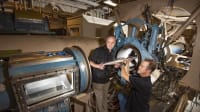
Aerospace INSIDER
Electra Starts Proving Blown Lift eSTOL Technology
Aerospace INSIDER
NASA Tests Electric Aircraft Power Systems


Aerospace INSIDER
Turkey's KAAN Combat Aircraft Completes First Flight

Aerospace INSIDER
Ursa Major Performs First Successful Hotfire of Hypersonic Draper Engine
Tech Briefs
UCF’s Hypersonic Technology Advances
Top Stories
INSIDERDefense
 New Raytheon and Lockheed Martin Agreements Expand Missile Defense Production
NewsAutomotive
 Ford Announces 48-Volt Architecture for Future Electric Truck
INSIDERManufacturing & Prototyping
 Active Strake System Cuts Cruise Drag, Boosts Flight Efficiency
ArticlesTransportation
 Accelerating Down the Road to Autonomy
INSIDERMaterials
 How Airbus is Using w-DED to 3D Print Larger Titanium Airplane Parts
Road ReadyTransportation

Webcasts
Electronics & Computers
 Cooling a New Generation of Aerospace and Defense Embedded...
Power
 Battery Abuse Testing: Pushing to Failure
Connectivity
 A FREE Two-Day Event Dedicated to Connected Mobility
Automotive
 Quiet, Please: NVH Improvement Opportunities in the Early Design Cycle
Transportation
 Advantages of Smart Power Distribution Unit Design for Automotive &...
Aerospace
 Sesame Solar's Nanogrid Tech Promises Major Gains in Drone Endurance