




Making Sense of Hybrids
Developers focus on applications that boost productivity while they strive to improve the efficiency of alternative power sources.
In contrast to the automotive market, where battery-powered hybrids are the dominant alternative to internal-combustion engines, multiple powertrain options are vying to gain acceptance in the off-highway market. Hydraulics, flywheels, and batteries are all being used to power various elements on vehicles.
Off-highway vendors have learned from automakers, who spent millions and rolled out several hybrid vehicles that have not yet come close to hitting double-digit market shares. Off-highway development teams are focusing in on applications where alternative powertrains bring solid benefits that users will pay for. Design teams are targeting specific tasks that are well-suited to the performance characteristics of their technologies.
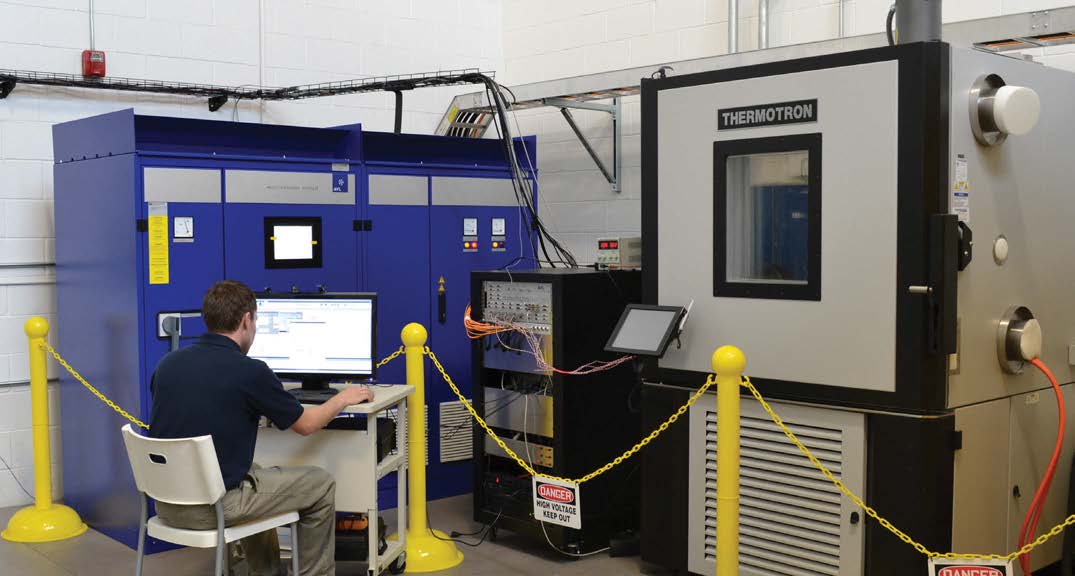
“Electrification works well with transient use, something like a power digger where you see a tremendous increase in power demand when it digs into the earth,” said Jason McConnell, Business Unit Director of Hybrid & Electrification at IaV automotive engineering. “When you provide an electric boost for these demands, you may be able to downsize the engine.”
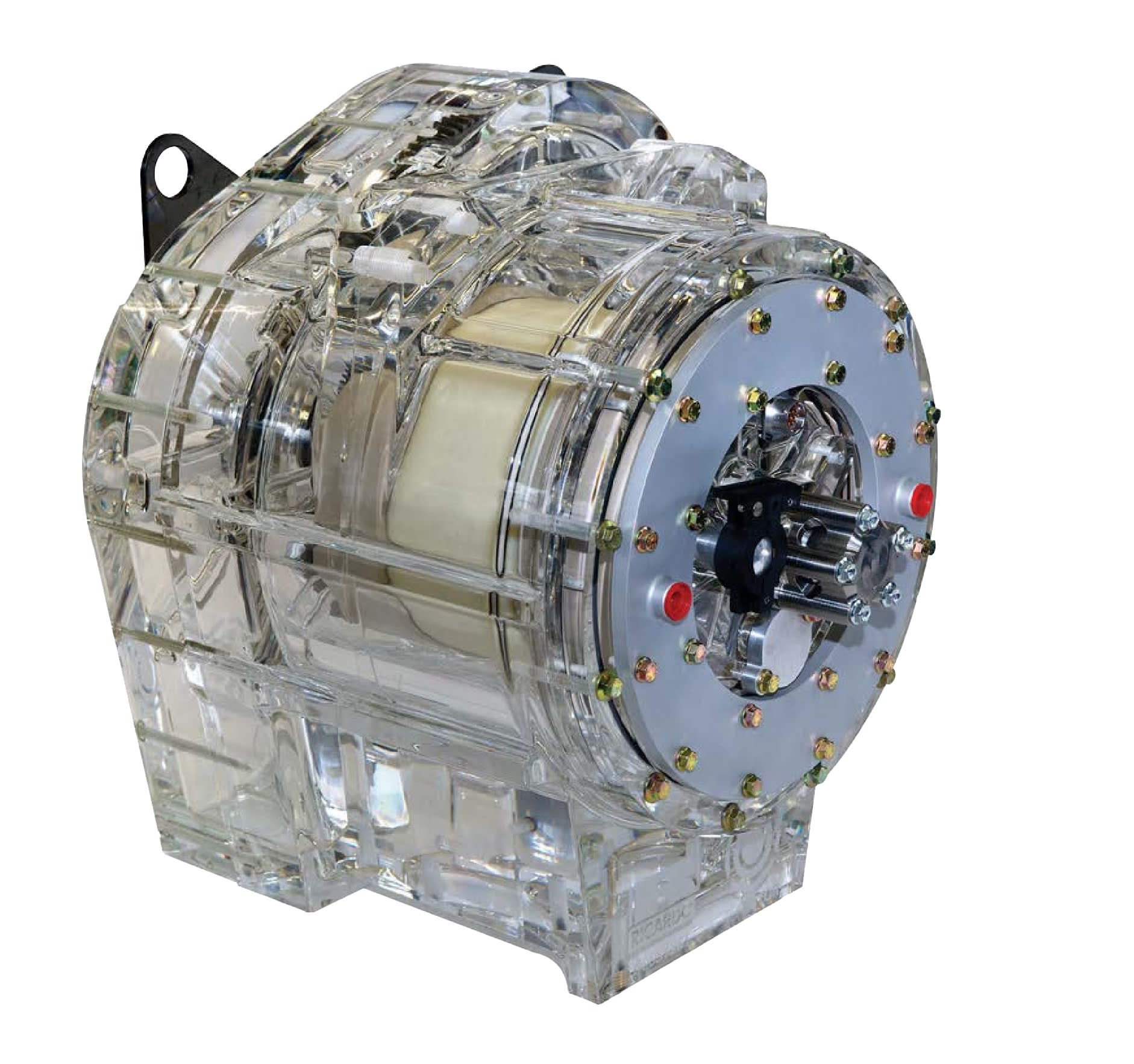
Another design company, Ricardo, feels flywheel systems have some promise for niche applications that have the ability to recover a lot of power in a short period, in contrast to conventional systems that rely on large energy-storage systems.
“Applications of this nature are excavators and loaders where they are making hundreds of the same motions that require the system to brake the motion once it reaches the end position of a cycle,” said Ali Maleki, Business Unit Director for Hybrid and Electrical Systems, Ricardo. “The kinetic energy of moving a ton of dirt can be recovered with a flywheel system and used to propel the excavator to the next cycle.”
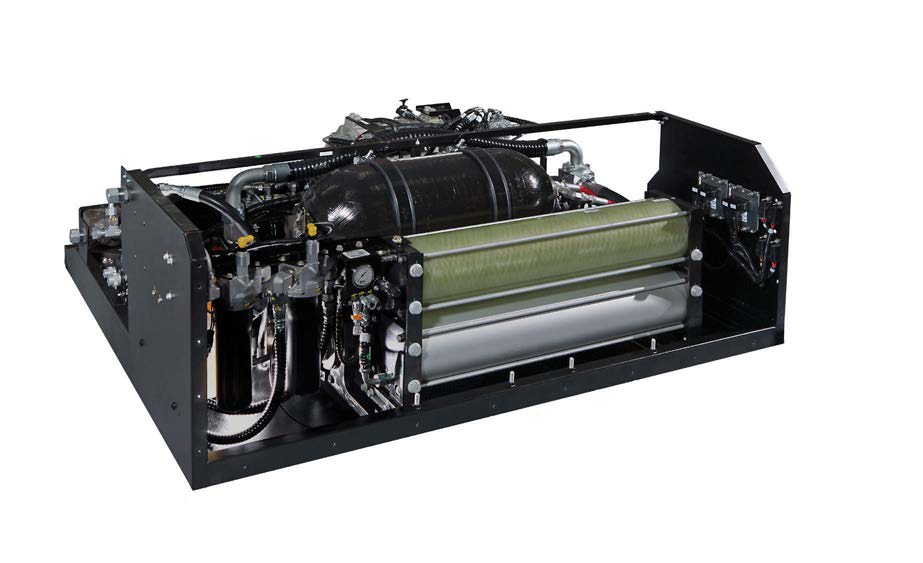
Dana Holding Corp. is broadening its efforts to commercialize its Spicer PowerBoost system. At the recent ConExpo conference, Dana described another field test platform for its hydraulic hybrid technology. It is now being tested on a telescopic boom handler powered by a 111-hp (83-kW) engine. Previously, the Spicer PowerBoost had been field tested on a 17.5-ton (16-t) front-end loader.
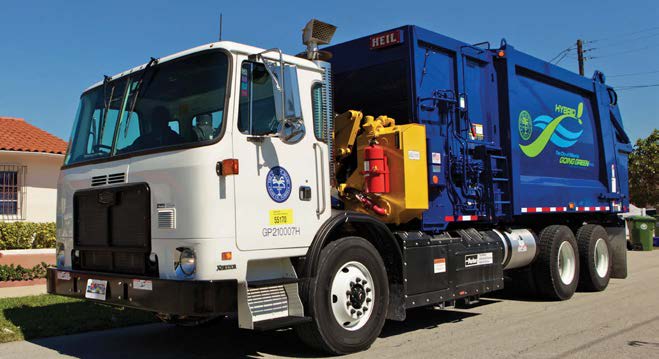
Other suppliers are currently focusing on narrow targets. Refuse trucks are a target for Parker Hannifin’s RunWise Advanced Series Hybrid Drive System. A fleet of refuse trucks that use this hydraulic hybrid technology recently surpassed 1 million mi (1.6 million km) of operation. This fleet saw a 43% reduction in fuel consumption compared to conventional diesel trucks.
Live long and prosper
Long lifetimes are one of the key requirements for the off-highway market, where return on investment is a critical parameter. Though hybrids add components and complexity, developers must ensure that downtime is equal if not better than with conventional vehicles.
For electric hybrids, managing the battery pack is a central element in the effort to eliminate costly failures. New strategies make it easier to get more energy from cells without impacting their lifetimes.
“We’re seeing incremental improvements in batteries, though a better understanding of discharge rates and failure modes is really changing things,” McConnell said. “Some applications now use only 50-60% of the available energy to ensure long lifetimes. When you don’t put the cell in a position where it will fail, you don’t have to use nearly that large a margin.”
Alternative technologies also boast of long lifetimes. Dana and Parker tout the high reliability and low maintenance of hydraulics. Ricardo noted that its flywheel has few points of failure.
“Flywheel performance does not have significant degradation to age or use as a battery system would have,” Maleki said. “A battery loses capacity and power capabilities due to age and usage. A sealed fly-wheel system will not lose this performance as it ages or it is being used. Flywheels also perform better in cold operation where advanced chemistry batteries have significant limitation in cold conditions.”
Safe not sorry

Whenever energy is stored, safety becomes more of a concern. The issues related to hydraulics generally follow many of the same principles used for conventional hydraulics, scaled to size.
Hybrids typically move elements like wheels and booms that can cause damage or injuries. That means systems must go through risk assessments to ensure that when any kind of fault is detected, operations can be stopped or set to a safe state.
“The electronic control of torque to wheels requires a high level of integrity in design to allow torque security to avoid unintended acceleration or loss of power,” Maleki said. The safety integrity levels are therefore high and the designs must take into account redundant methodologies to ensure safe operation in presence of partial failures or safely shut down in catastrophic failures.
The addition of battery packs introduces new complexities for maintenance and post-crash situations. Most hybrids use very high voltage levels, making them much more dangerous than conventional electrical systems. After accidents, safe discharge of the high-voltage busses must occur to avoid electric and thermal hazards.
“It adds some complexity when you go up to 300-800 V,” McConnell said. “You need protection to ensure that people aren’t exposed to high voltages.”
Advancing technologies

Ongoing improvements in efficiency will help hybrid systems gain market share. Designers are looking at many options to help reduce costs and improve performance. For electric powertrain systems, augmenting batteries with supercapacitors may be a viable alternative.
“We want to take advantage of supercapacitors, especially in applications with very high discharge and charging rates,” McConnell said. “If you use a conventional battery pack to meet a very high power demand, you’ve got to have tremendous capacity in the battery pack. If you take advantage of supercaps and batteries, you can reduce battery cost even though you have the cost-adder of supercaps.”
Another technique is to maximize the performance of components like sensors. Some vendors have turned to sensor fusion, using information from two or more sensors to determine information that would otherwise require an additional sensor. While some developers work to reduce the number of sensors, other researchers say that it’s important to leave the door open for additional sensors that may be needed as technology evolves.
“One main issue is properly defining what the core structure versus custom features is, while offering flexibility for future expansion as more sensors are introduced into the controller,” said Joe Steiber, Principal Engineer for Engine, Emissions, and Vehicle Research, Southwest Research Institute.
More From SAE Media Group
Off-Highway Engineering
ZM Trucks Starts Production in Fontana, California
Automotive Engineering
Toyota Stretches SUV Line-Up with World Debut of Grand Highlander
Off-Highway Engineering
Heavy-Duty Engine Design
Off-Highway Engineering
Advances for Off-highway Engine Design
Off-Highway Engineering
Expediting Engine Design
Automotive Engineering
Bentley Develops W12 Cylinder Deactivation
Automotive Engineering
Renault Applies Model-Based Systems Engineering to Dual-Clutch Transmission
Automotive Engineering
Inside Honda’s New Two-motor 50-mpg Accord Hybrid
Automotive Engineering
Mazda Plots Wankel-powered Range Extenders, HCCI Mild Hybrids
Automotive Engineering
Will ‘Recalls’ Become ‘Upgrades’?
Off-Highway Engineering
Reshaping the Mobile-hydraulic Ecosystem
Off-Highway Engineering
FEV Simplifies Off-Highway Electrification
Automotive Engineering
First Drive: 2027 Mercedes-Benz CLA Hybrid
Off-Highway Engineering
Cummins Unveils New B7.2 Diesel Engine
Automotive Engineering
AVSC Develops Best Practices for Traceable AV Safety Inspection Protocols
Tech Briefs
Making Diesel Engines Nearly Emission-Free
Automotive Engineering
2026 Nissan Sentra Review: Putting the Pieces Together
Off-Highway Engineering
Komatsu Augments Intelligent Machine Control in New Excavator
Off-Highway Engineering
First Drive: Drifting in the Electric 2027 Mercedes GLC 400

Power Electronics INSIDER
World’s Strongest Battery Paves Way for Light, Energy-Efficient Vehicles
Power Electronics INSIDER
Polyphase Wireless Power Transfer System
Automotive Engineering
MAGNA Say Some Hurdles of Seat-reconfiguration System to Be Addressed by OEMs
NASA Spinoff
NASA Gives the World a Brake
Motion Design INSIDER
Megawatt Electrical Motor Could Help Electrify Aviation

Motion Design INSIDER
Autonomous Bus Sounds: It’s All About When, Not How
Off-Highway Engineering
Danfoss and Sany Extend Electrification of Off-Highway Machines
Tech Briefs
How Much Do You Know About GPS and its History?
Top Stories
INSIDERManufacturing & Prototyping
 How Airbus is Using w-DED to 3D Print Larger Titanium Airplane Parts
INSIDERManned Systems
 FAA to Replace Aging Network of Ground-Based Radars
NewsTransportation
 CES 2026: Bosch is Ready to Bring AI to Your (Likely ICE-powered) Vehicle
NewsSoftware
 Accelerating Down the Road to Autonomy
EditorialDesign
 DarkSky One Wants to Make the World a Darker Place
INSIDERMaterials
 Can This Self-Healing Composite Make Airplane and Spacecraft Components Last...
Webcasts
Defense
 How Sift's Unified Observability Platform Accelerates Drone Innovation
Automotive
 E/E Architecture Redefined: Building Smarter, Safer, and Scalable...
Power
 Hydrogen Engines Are Heating Up for Heavy Duty
Electronics & Computers
 Advantages of Smart Power Distribution Unit Design for Automotive...
Unmanned Systems
 Quiet, Please: NVH Improvement Opportunities in the Early Design...
