




Kia Reveals Sportpace Concept, Three-Cylinder

This four-door, four-seater Sportpace previews the estate version of Kia’s Optima sedan that will appear in the next 36 months and follows similar styling themes to Jaguar’s XF Sportbrake that is more about style than practical load-lugging capability.
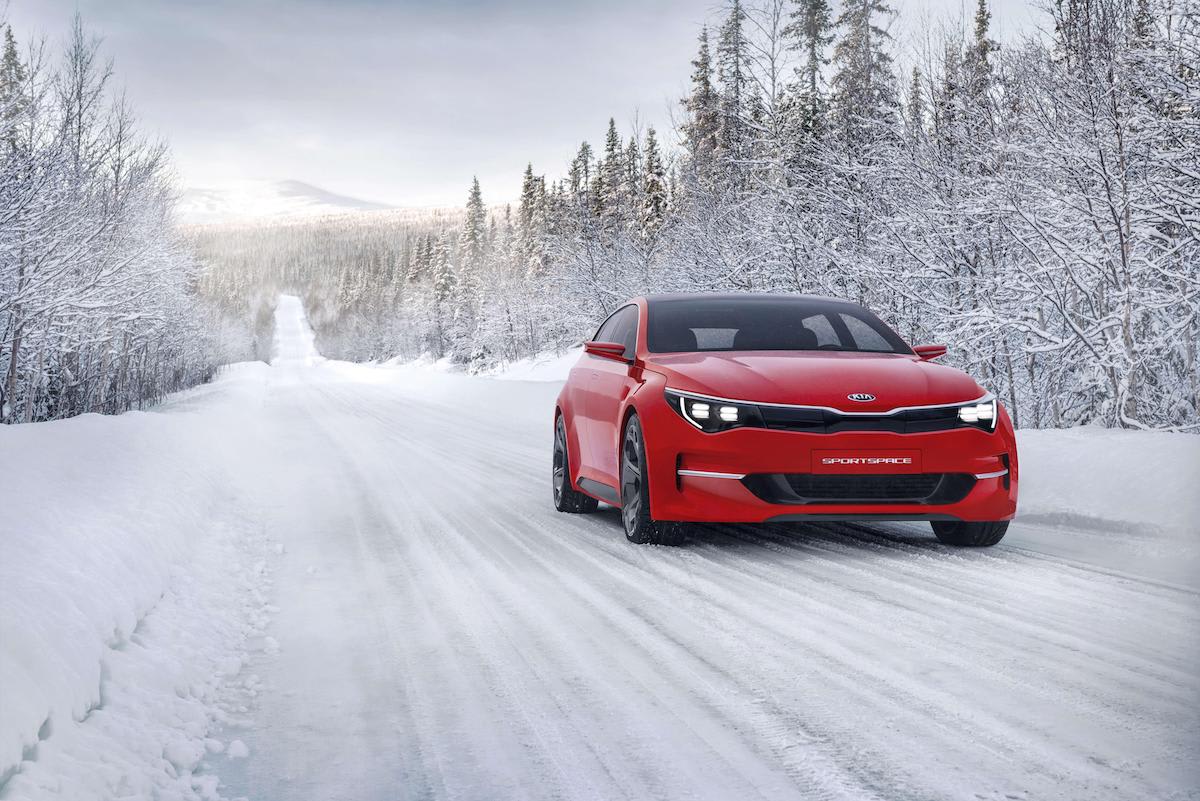
Nevertheless it is still a handsome looking car designed under the guidance of Kia’s Chief Designer, Gregory Guillaume: “The normal wagon treatment would include a long third window to suggest and show the luggage carrying capacity. But by applying a strong D-pillar treatment and a much more swept back rear hatch, we have given the rear of the car a strong character—muscular and athletic. It has great power and strength within its mass.
“The visual weight of the rear is reduced with careful shaping of screen, door, and rear bumper. The edges cut into the mass to make its raked appearance believable and less wagon-like.”
Kia also debuted its all-new 1.0-L T-GDi (turbo gasoline direct injection) Kappa engine. Developed in-house at its Korean Namyang R&D center, the three-cylinder engine develops 118 hp (88 kW) and 126 lb·ft (171 N·m). “The key benefit over the 1.6-L engine,” explained head of powertrain, Michael Winkler, “is that the increased torque is produced at 1500 rpm, whereas the 1.6 only developed 98 lb·ft at the same engine speed.
“The key problem with a four-cylinder engine is that you get an exhaust pulse from a neighboring cylinder when the gas exchange occurs, delivering unwanted gas into the cylinder; with three cylinder engine’s firing order this is eliminated.”
As is becoming increasingly common with three-cylinder engines, the single-scroll turbocharger—here with a 38-mm (1.5-in) compressor and 34-mm (1.3 in) turbine—is paired with an electric wastegate to improve performance with a highly efficient air-scavenging strategy. As well as scavenging clean air for the engine to re-use for combustion, it is able to open the wastegate at the same time to improve waste airflow.
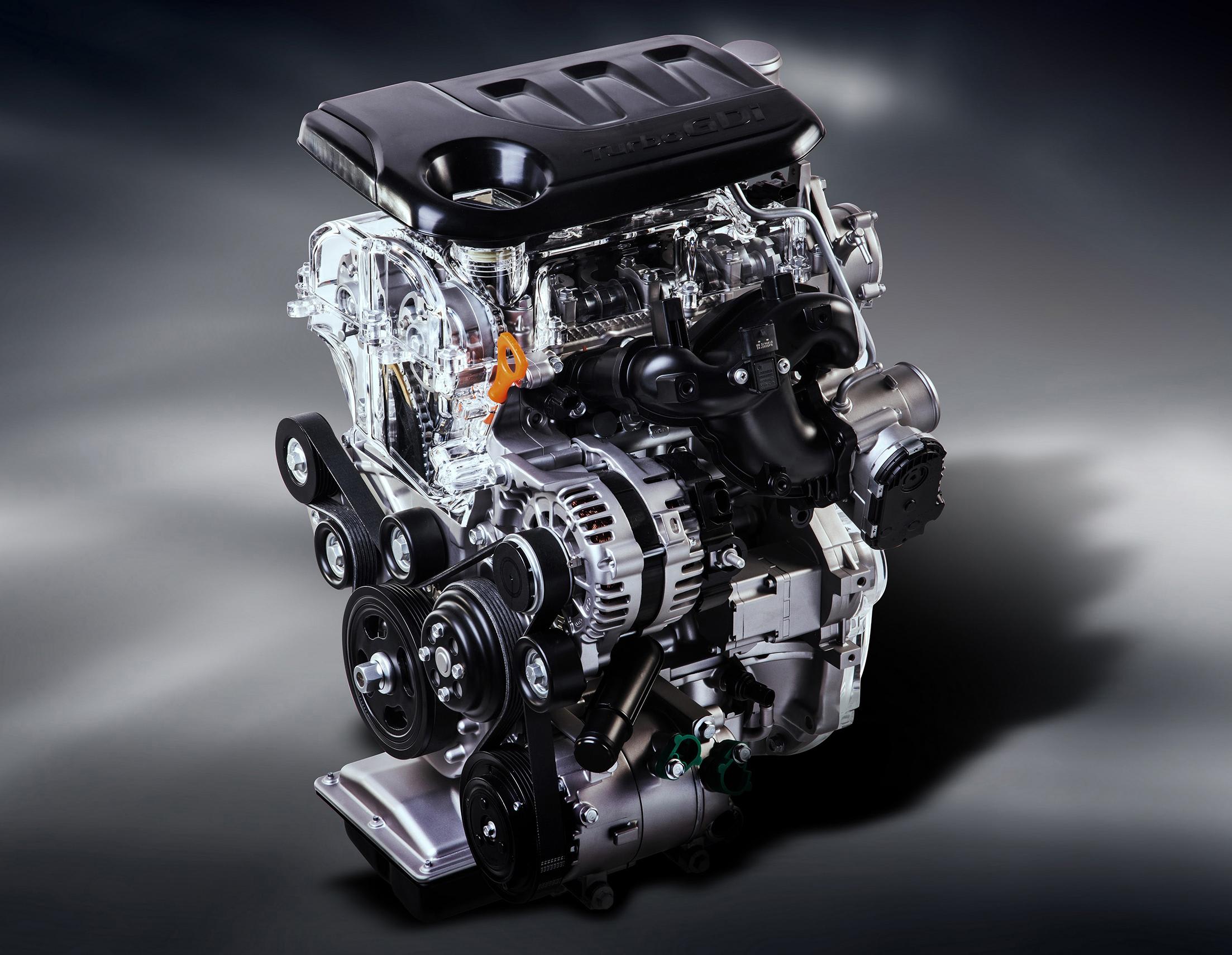
Direct injection from the intake side at 2900 psi (200 bar) features newly developed, by Kefico, laser drilled injectors with six nozzles in a pyramid pattern delivering an even spread of fuel and air throughout the cylinder while at higher engine loads, with double injections occurring.
The engine also features an integrated inlet manifold and a new dual-thermostat split-cooling system. This allows the engine block and cylinder heads to be cooled independently: the main thermostat controlling the flow of engine coolant to cylinder heads above 190°F (88°C) to reduce knocking, and an engine block thermostat shutting off coolant flow above 221°F (105°C) to reduce mechanical friction and improve efficiency.
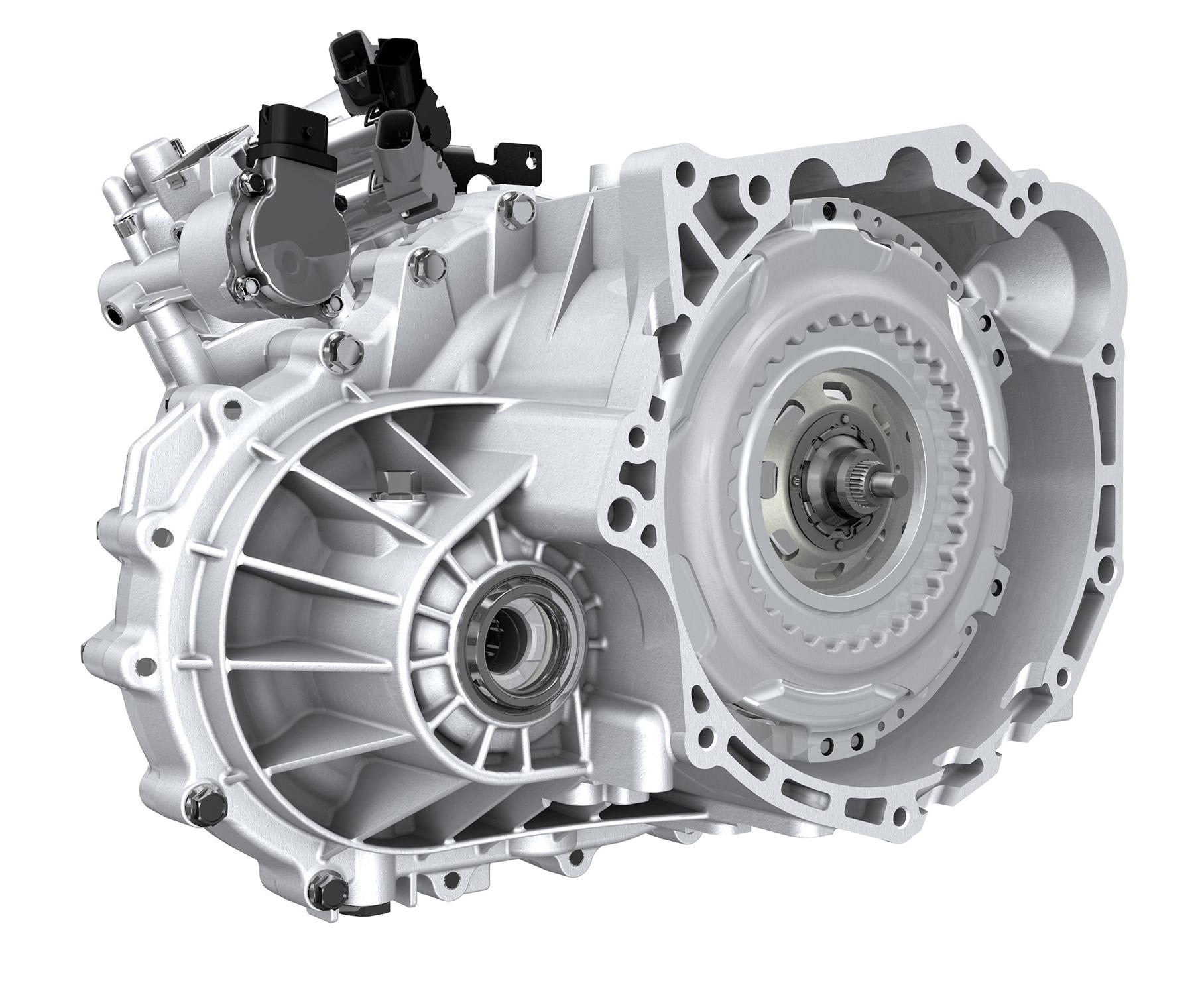
Kia also revealed its in-house developed seven-speed, 221-lb·ft (300-N·m) capacity dry dual clutch transmission (DCT) replacing the six-speed automatic and improving economy by up to 7% depending on its application.
The first of its type to be developed in-house, it features a hollow double-gear input shaft that allows the system to quickly engage even gears, while a solid shaft that runs through the middle operates odd gears.
“Downsizing is just one approach to achieve future emissions levels, so I am sure we will have to introduce more technology in the future," said Winkler. "If we look at 95 grams, there is still a long way to go to reduce emissions so we will have to go down the electrification route.”
More From SAE Media Group
Off-Highway Engineering
Navistar Updates A26 Engine, Improves FE by 4%
Automotive Engineering
Porsche Unveils New Downsized, Boosted 3.0-L Boxer Six
Off-Highway Engineering
Cummins Unveils New B7.2 Diesel Engine
Automotive Engineering
'Reman' Engine Market Steady, but Complexity Challenges Production Efficiency
Automotive Engineering
Ferrari Massages 458 to Create 488 GTB
Automotive Engineering
JLR's All-New 2015 Modular Engines Feature Roller-Bearing Cams, Balance Shaft
Off-Highway Engineering
Volvo Reveals New VNL with SuperTruck Influence
Off-Highway Engineering
Miserly Power Systems
Automotive Engineering
Lexus Equips NX Entry-Level SUV with New Turbo Gasoline Engine
Automotive Engineering
Bentley Develops W12 Cylinder Deactivation
Automotive Engineering
Audi's New V6 Diesel to Feature Electric Turbocharging, New NOx Technology
Automotive Engineering
Future ICEs: What Comes After 2025?
Automotive Engineering
Balancing GDI Fuel Economy and Emissions
Off-Highway Engineering
Mahle, Liebherr Develop Active Pre-Chamber for Hydrogen ICE
Automotive Engineering
Cooled EGR Shows Benefits for Gasoline Engines
Off-Highway Engineering
Navistar’s ‘Ground Up’ Approach to All-New Diesel Engine
Off-Highway Engineering
Garrett Two-Stage Turbos Ramp up Off-Highway
Off-Highway Engineering
Detroit DD15 Gen 5 Showcases Durability of New Diesel Tech
Off-Highway Engineering
FEV Simplifies Off-Highway Electrification
Off-Highway Engineering
Cummins Mid-bore X10 Engine Raises the Performance Bar
Off-Highway Engineering
Could This Infinitely Variable Compression Mechanism Be the Next Piston Engine Game-Changer?
Off-Highway Engineering
Delphi Injects Life into Diesel
Automotive Engineering
Renault Applies Model-Based Systems Engineering to Dual-Clutch Transmission
Automotive Engineering
2015 Engines Ride a Technology Tidal Wave
Automotive Engineering
Mazda Plots Wankel-powered Range Extenders, HCCI Mild Hybrids
Off-Highway Engineering
Cummins’ New Mid-Displacement Turbos Quieter and More Efficient
Off-Highway Engineering
New Volvo D13 VGT Utilizes 24V Architecture
Off-Highway Engineering
Developing a NEXT-GEN VGT
Automotive Engineering
Ford Revisits OHV Layout, Big Displacement for New Commercial-Truck V8
Automotive Engineering
Mercedes-AMG Extracts World-Record Power from New Four-Cylinder Engine
Top Stories
NewsSensors/Data Acquisition
 Microvision Aquires Luminar, Plans Relationship Restoration, Multi-industry Push
INSIDERRF & Microwave Electronics
 A Next Generation Helmet System for Navy Pilots
INSIDERWeapons Systems
 New Raytheon and Lockheed Martin Agreements Expand Missile Defense Production
NewsAutomotive
 Ford Announces 48-Volt Architecture for Future Electric Truck
INSIDERAerospace
 Active Strake System Cuts Cruise Drag, Boosts Flight Efficiency
ArticlesTransportation

Webcasts
Aerospace
 Cooling a New Generation of Aerospace and Defense Embedded...
Energy
 Battery Abuse Testing: Pushing to Failure
Power
 A FREE Two-Day Event Dedicated to Connected Mobility
Automotive
 Quiet, Please: NVH Improvement Opportunities in the Early Design Cycle
Electronics & Computers
 Advantages of Smart Power Distribution Unit Design for Automotive &...
Unmanned Systems
 Sesame Solar's Nanogrid Tech Promises Major Gains in Drone Endurance
Similar Stories
NewsPower
 Doosan Introduces Tier 4 Final Wheeled Excavator
NewsTransportation
 Cummins Unveils New B7.2 Diesel Engine
NewsPropulsion
 Porsche Unveils New Downsized, Boosted 3.0-L Boxer Six
NewsTransportation
 How Porsche Met Cooling Challenges on the New 4-Cylinder Boxster
NewsPower
 'Reman' Engine Market Steady, but Complexity Challenges Production Efficiency
