




US and Japanese Scientists Conduct Joint Composites Study
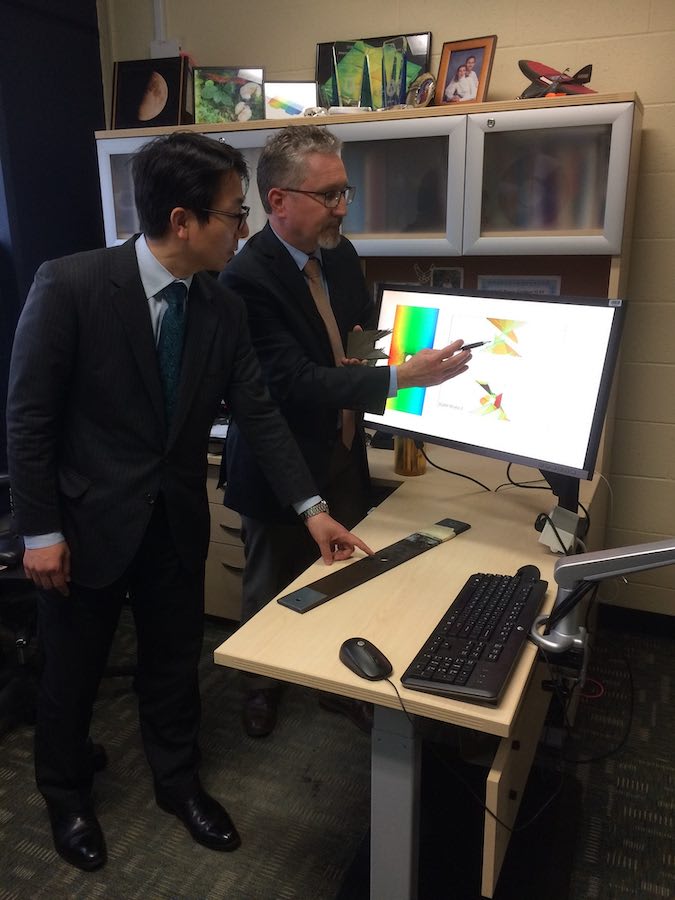
Dr. Keisuke Umezawa of the Air Systems Research Center in the Japanese Ministry of Defense (JMoD) recently joined the Air Force Research Laboratory on an engineers and scientists exchange program (ESEP). The JMoD chose Umezawa for the ESEP based on his experience as a stress analysist of polymer matrix composite materials. Also, Umezawa has been heavily involved in the development of the next generation Japanese fighter aircraft, including the development of the test program for prototype PMC structures.
PMC materials consist of strong fibers embedded in a resilient plastic that hold them in place. The Air Force uses PMCs on many parts of an aircraft because they are much lighter and cheaper than other materials.
Umezawa’s primary work focuses on the modeling of damage evolution in PMC materials using an AFRL-developed research software package. This tool, known as BSAM, is a result of many years of research and development led by Dr. David Mollenhauer, a member of AFRL’s Composite Performance Research Team. The stress analysis software simulates damage processes in composite materials. Specifically, damage in PMCs is characterized by complex networks of cracking in the polymer matrix, delamination between layers and fiber fractures.
Umezawa is training on the software and then developing a variety of PMC damage simulations. His primary simulation campaign will focus on simulations of laminated PMCs that have a long, thin saw-cut, mimicking a crack, and observe how damage grows from these “cracks” within the BSAM simulation environment.
As with AFRL, the JMoD has come to the realization that commercial PMC damage codes are lacking in capability. BSAM has limited, but growing exposure in the research and design community. Training Dr. Umezawa in the use of this advanced code is a continuing step in spreading the word about this new useful tool. His efforts aid an ongoing experimental effort that examines damage in PMCs. Additionally, Umezawa brings insight to the U.S. Air Force on composite research and development at the JMOD, especially in relation to the new Japanese fighter program.
More From SAE Media Group
Aerospace & Defense Tech Briefs
‘Nanostitches’ Enable Lighter and Tougher Composite Materials
Aerospace Manufacturing and Machining INSIDER
Can This Self-Healing Composite Make Airplane and Spacecraft Components Last for Centuries?
Aerospace & Defense Tech Briefs
Sensing Applied Load and Damage Effects in Composites with Nondestructive Techniques
Aerospace INSIDER
Composites Self-Heal at Very Low Temperatures
Aerospace Manufacturing and Machining INSIDER
Researchers Push Limits in High-Temp, Polymer Additive Manufacturing
Aerospace INSIDER
Air Force Explores Use of Thermoplastic Fin for F-16


Tech Briefs
Self-Healing Aluminum Metal Matrix Composite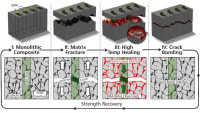
Aerospace & Defense Tech Briefs
Microstructural and Mechanical Characterization of 2-D and 3-D SiC/SiNC Ceramic-Matrix Composites
Aerospace & Defense Tech Briefs
Portable 3D Printing Factory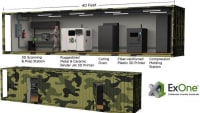

Aerospace & Defense Tech Briefs
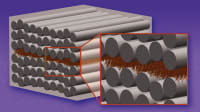
Burner Rig Testing of A500® C/SiC
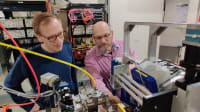

Aerospace & Defense Tech Briefs
Faster, Lighter, Stronger: Aerospace Composites Join Together Advanced Materials
Aerospace & Defense Tech Briefs
Unlocking the Power of Ceramic Matrix Composites

Tech Briefs
Fiber-Metal Laminate Manufacturing Technique
Aerospace & Defense Tech Briefs
Robotic Paint Removal System
Air Force Research Laboratory Technology Horizons
Composite Material Fire Safety Training Course
Aerospace & Defense Tech Briefs
Designing Sensory and Adaptive Composite Materials
Aerospace & Defense Tech Briefs
Evaluation of Peel Ply Surface Preparation of Composite Surfaces for Secondary Bonding
Tech Briefs
Sensor Film for Aerospace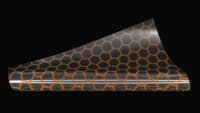
Aerospace & Defense Tech Briefs
Molecular Engineering for Mechanically Resilient and Stretchable Electronic Polymers and Composites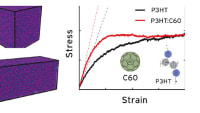
Aerospace & Defense Tech Briefs
Metal-Plated, High-Temperature Plastics
Aerospace & Defense Tech Briefs
Thermal Conductivities of Some Polymers and Composites
Top Stories
INSIDERManufacturing & Prototyping
 How Airbus is Using w-DED to 3D Print Larger Titanium Airplane Parts
INSIDERManned Systems
 FAA to Replace Aging Network of Ground-Based Radars
NewsTransportation
 CES 2026: Bosch is Ready to Bring AI to Your (Likely ICE-powered) Vehicle
NewsSoftware
 Accelerating Down the Road to Autonomy
EditorialDesign
 DarkSky One Wants to Make the World a Darker Place
INSIDERMaterials
 Can This Self-Healing Composite Make Airplane and Spacecraft Components Last...
Webcasts
Defense
 How Sift's Unified Observability Platform Accelerates Drone Innovation
Automotive
 E/E Architecture Redefined: Building Smarter, Safer, and Scalable...
Power
 Hydrogen Engines Are Heating Up for Heavy Duty
Electronics & Computers
 Advantages of Smart Power Distribution Unit Design for Automotive...
Unmanned Systems
 Quiet, Please: NVH Improvement Opportunities in the Early Design...
