




Air Force Explores Use of Thermoplastic Fin for F-16

Collins Aerospace was awarded a contract by the Air Force Research Laboratory to build an advanced, high-impact resistant, F-16 ventral fin using Collins’ thermoplastic welding technology, which will significantly reduce weight and cost of the current design.
Collins is investing approximately $100 million dollars over the next five years toward the advancement of its thermoplastic technology and plans to qualify and process thermoplastic materials for both military and commercial use. Under the three-year contract, the proposed work includes application of a specialized welding process, component design, and prototype fabrication for the F-16 ventral fin. The effort will leverage best practices from similar programs including the recent composite-based F-16 horizontal stabilator.
“We are seeing an increased demand and opportunity to replace legacy aircraft components with thermoplastics,” said Stan Kottke, vice president and general manager of Aerostructures for Collins Aerospace. “The trend is using advanced thermoplastic materials to lower the cost and weight while reducing our overall environmental footprint, and those benefits are directly passed on to our customer.”
Through automation processes on the manufacturing floor, the cost savings are expected to be upward of 30% where Collins can use thermoplastic composite materials. Thermoplastic resin is inherently tougher than thermoset resins typically used in production. Tougher materials reduce the overall weight, allowing for thinner design and increased range of the payload. Thermoplastic materials have an indefinite shelf life, can be stored at room temperature, and can be reused or recycled. This eliminates the need for energy intensive cold storage required for thermoset raw materials.
The next step is to advance and mature the unique designs and manufacturing technologies specific to forming and thermally joining thermoplastics to create component assemblies. This work will be accomplished within the Riverside composites center.
More From SAE Media Group
Aerospace & Defense Tech Briefs
Thermoplastic Composites to Play Enhanced Role in Next-Generation Aerospace Applications
Aerospace Manufacturing and Machining INSIDER
How Airbus is Using w-DED to 3D Print Larger Titanium Airplane Parts

Aerospace INSIDER
A New Aircraft Recycling Program for Thermoplastic Composites
Tech Briefs
Automated Tow/Tape Placement System
Aerospace Manufacturing and Machining INSIDER
Researchers Push Limits in High-Temp, Polymer Additive Manufacturing
Aerospace Manufacturing and Machining INSIDER
Can This Self-Healing Composite Make Airplane and Spacecraft Components Last for Centuries?

Aerospace Manufacturing and Machining INSIDER
Clean Sky Demonstrator Fuselage Shows Potential of Thermoplastics in Aircraft Production
Aerospace Manufacturing and Machining INSIDER
NASA to Increase Sustainable Aircraft Manufacturing with HiCAM
Aerospace & Defense Tech Briefs
Faster, Lighter, Stronger: Aerospace Composites Join Together Advanced Materials
Aerospace INSIDER
Composites Self-Heal at Very Low Temperatures
Aerospace INSIDER
A New Approach to 3D Printing Tool Recycling for Aerospace Manufacturers
Aerospace & Defense Tech Briefs
Portable 3D Printing Factory
Aerospace Manufacturing and Machining INSIDER
Thermoplastic Drive Shaft System Developed for Aerospace Applications
Aerospace & Defense Tech Briefs
Developing Thermoplastic Composites for Use in Commercial Aircraft
Aerospace INSIDER
Ceramic Matrix Composites Offer Lighter, More Durable Engine Parts
Aerospace & Defense Tech Briefs
Thermoplastic Fuselage Demonstrator


Tech Briefs
2025 Award Finalists

Aerospace & Defense Tech Briefs
Fiber-Reinforced Thermoplastic Composites
Aerospace & Defense Tech Briefs
‘Nanostitches’ Enable Lighter and Tougher Composite Materials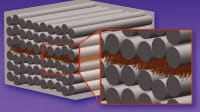
Tech Briefs
Healable Carbon Fiber Composite
Aerospace & Defense Tech Briefs
How Advanced Vacuum Bag Kits Streamline Composite Parts Manufacturing
Aerospace & Defense Tech Briefs
Cold Spray Technology
Aerospace & Defense Tech Briefs
Metal-Plated, High-Temperature Plastics
Tech Briefs
Compact, Lightweight, CMC-Based Acoustic Liner
Top Stories
NewsRF & Microwave Electronics
 Microvision Aquires Luminar, Plans Relationship Restoration, Multi-industry Push
INSIDERAerospace
 A Next Generation Helmet System for Navy Pilots
INSIDERDesign
 New Raytheon and Lockheed Martin Agreements Expand Missile Defense Production
INSIDERMaterials
 How Airbus is Using w-DED to 3D Print Larger Titanium Airplane Parts
NewsPower
 Ford Announces 48-Volt Architecture for Future Electric Truck
ArticlesAR/AI

Webcasts
Electronics & Computers
 Cooling a New Generation of Aerospace and Defense Embedded...
Automotive
 Battery Abuse Testing: Pushing to Failure
Power
 A FREE Two-Day Event Dedicated to Connected Mobility
Unmanned Systems
 Quiet, Please: NVH Improvement Opportunities in the Early Design Cycle
Automotive
 Advantages of Smart Power Distribution Unit Design for Automotive &...
Energy
 Sesame Solar's Nanogrid Tech Promises Major Gains in Drone Endurance