




Composites Self-Heal at Very Low Temperatures
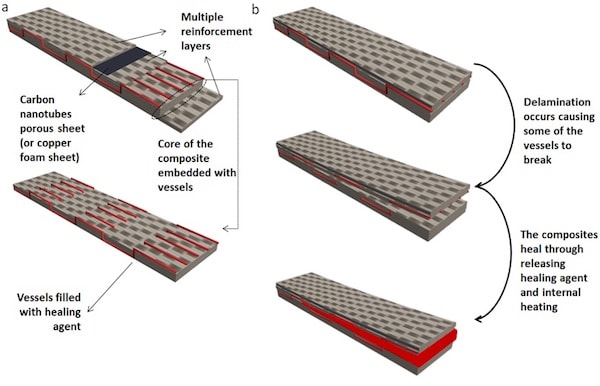 Scientists developed a method of allowing materials, commonly used in aircraft, to self-heal cracks at temperatures well below freezing. A healing efficiency of more than 100% at temperatures of -60 °C was obtained in a glass fiber-reinforced laminate, but the technique could be applied across a majority of self-healing composites.
Tests were run using a copper foam sheet or a carbon nanotube sheet as the conductive layer. The latter of the two was able to self-heal more effectively, with an average recovery of 107.7% in fracture energy and 96.22% in peak load. The group will look to develop new healing mechanisms for more composites that can recover effectively, regardless of the size of faults in any condition.
More From SAE Media Group
Aerospace Manufacturing and Machining INSIDER
Can This Self-Healing Composite Make Airplane and Spacecraft Components Last for Centuries?
Aerospace & Defense Tech Briefs
‘Nanostitches’ Enable Lighter and Tougher Composite Materials
Aerospace Manufacturing and Machining INSIDER
Researchers Push Limits in High-Temp, Polymer Additive Manufacturing
Aerospace INSIDER
Air Force Explores Use of Thermoplastic Fin for F-16
Aerospace & Defense Tech Briefs
Thermal Conductivities of Some Polymers and Composites
Aerospace & Defense Tech Briefs
Unlocking the Power of Ceramic Matrix Composites
Aerospace & Defense Tech Briefs
Sensing Applied Load and Damage Effects in Composites with Nondestructive Techniques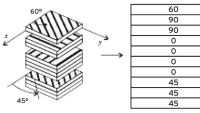
Tech Briefs
Thin Heat Shield for Superfast Aircraft
Aerospace INSIDER
Ceramic Matrix Composites Offer Lighter, More Durable Engine Parts


Aerospace & Defense Tech Briefs
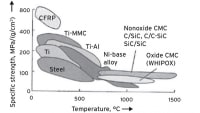
Toho Tenax Develops 'Super-Heat-Resistant' Prepreg for Engine Apps
Aerospace & Defense Tech Briefs
Progress on Zirconia-Polyurea Matrix Hybrid Composites

Tech Briefs
Fiber-Metal Laminate Manufacturing Technique
Tech Briefs
Self-Healing Aluminum Metal Matrix Composite
Aerospace & Defense Tech Briefs
Molecular Engineering for Mechanically Resilient and Stretchable Electronic Polymers and Composites
Defense INSIDER
US and Japanese Scientists Conduct Joint Composites Study
Aerospace & Defense Tech Briefs
Burner Rig Testing of A500® C/SiC
Aerospace & Defense Tech Briefs
Biobased Carbon Fibers and Thermosetting Resins for Use in DOD Composites Applications
Tech Briefs
Compact, Lightweight, CMC-Based Acoustic Liner
Aerospace & Defense Tech Briefs
Aerospace Production: Overcoming Challenges in Composite Machining
Aerospace & Defense Tech Briefs
Designing Sensory and Adaptive Composite Materials
Tech Briefs
Aerogel-Reinforced Composites
Top Stories
NewsSensors/Data Acquisition
 Microvision Aquires Luminar, Plans Relationship Restoration, Multi-industry Push
INSIDERRF & Microwave Electronics
 A Next Generation Helmet System for Navy Pilots
INSIDERWeapons Systems
 New Raytheon and Lockheed Martin Agreements Expand Missile Defense Production
NewsAutomotive
 Ford Announces 48-Volt Architecture for Future Electric Truck
INSIDERAerospace
 Active Strake System Cuts Cruise Drag, Boosts Flight Efficiency
ArticlesTransportation

Webcasts
Aerospace
 Cooling a New Generation of Aerospace and Defense Embedded...
Energy
 Battery Abuse Testing: Pushing to Failure
Power
 A FREE Two-Day Event Dedicated to Connected Mobility
Automotive
 Quiet, Please: NVH Improvement Opportunities in the Early Design Cycle
Electronics & Computers
 Advantages of Smart Power Distribution Unit Design for Automotive &...
Unmanned Systems
 Sesame Solar's Nanogrid Tech Promises Major Gains in Drone Endurance