




Counter-Directed Energy Weapons: Defense of Air Assets
The global proliferation of directed energy weapon technology presents a new threat for the United States as competitors try to capitalize on the technology's relative high potential of mission success and low operational costs.
High-energy laser (HEL) weapons are receiving increasing interest from armed forces around the globe. Technology has reached a point where HEL weapons are being exploited by peer competitor nations due to the higher potential of mission success and lower operational cost when compared to traditional weapons.
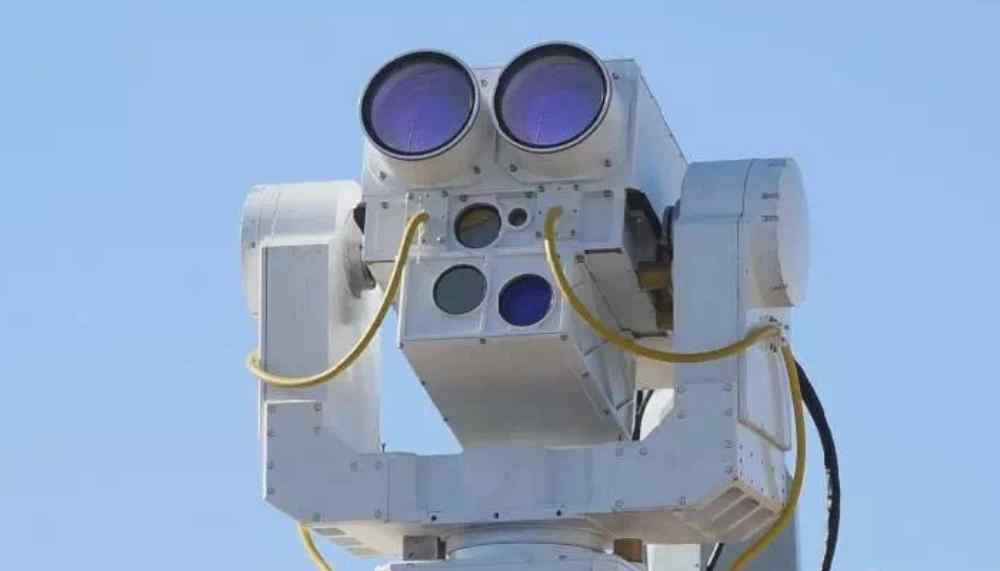
The use of these weapons will affect our naval tactics and necessitate new solutions to manage the threat. U.S. naval tactics use forward-deployed unmanned aerial vehicles (UAVs), putting them in close proximity to adversaries. This makes naval UAVs more susceptible to being targeted and damaged by HELs. Once HEL weapons are integrated into the littoral and maritime environments, U.S. naval assets must be capable of protecting themselves against such threats.
This research focused on characterizing future adversarial-directed energy weapon (DEW) threat environments and evaluating solution concepts for countering, evading, and neutralizing the threat. In particular, this study focused on HEL weapon systems as the directed energy threat and their effects on naval UAVs. The results of the research provide an understanding of projected UAV susceptibility to future HEL threats and identified countermeasure, or counter-directed energy weapon (CDEW), concepts that can be applied to protect naval UAV assets.
HEL weapon systems focus a beam of electromagnetic radiation onto a small spot to burn through the target material and render a target incapable of accomplishing its mission. Directed energy weapons (DEWs) have been under development since the 1960s, but recent developments indicate that they will soon be fielded in combat operations. A HEL’s ability to precisely deliver energy at the speed-of-light targeting, low per-engagement cost, and “unlimited” magazine (limited only by the power available) make it a desirable weapon. Unclassified new reports have indicated that countries such as China and Russia have been demonstrating this weapon technology operationally; therefore, the U.S. must be prepared for such threats.
The research began by characterizing the DEW threat environment, which included studying the limitations and strengths of HEL systems. The HEL requires a finite amount of time, referred to as dwell time, to achieve a hard or soft kill on the target. A “hard kill” refers to structurally damaging the UAV whereas a “soft kill” may disrupt the function but not permanently damage the target. The length of the required dwell time can be impacted by the output power of the HEL, the distance to the target, the line-of-sight requirements, the atmospheric conditions, and the material of the target.
The atmosphere itself poses significant limitations for HEL weapons. Limitations include the effects of molecular and aerosol absorption and scattering of the laser beam. Turbulence, which is due to air cells of varying temperature and density along the beam that can act as tiny “lenses,” limits the effect of HEL by causing the beam to break apart or wander. Thermal blooming, which is due to heating of air in a column along the beam, can also limit HEL by defocusing the beam. Atmospheric effects also include scattering due to smoke particles, which could be used in expendables to exploit in the counter-measure solution. Other factors affecting HEL lethality are the thickness, thermodynamic properties, and reflectivity of the target material. All of these target characteristics will affect the required HEL dwell time needed for a soft-kill or hard-kill. A general rule for a hard-kill is on the order of five to ten seconds per target.
Naval UAVs were evaluated in terms of their vulnerabilities in a HEL threat environment based on their type and assigned missions. Possible destructive effects were considered, and component-based evaluation was performed to determine which UAV components would have the highest probability of being targeted and the type of damage that would be inflicted. The team identified four specific UAVs as use-cases for countermeasure concepts based on the potential to operate in a DEW environment, the general operating altitude, the maneuverability, the missions employed, the general operational conditions, and the aircraft material. The four UAVs that were identified as use cases were the MQ-4C “Triton,” the X47B “Pegasus,” the MQ-8C “Fire Scout,” and the STUAS “ScanEagle” aircraft.
Information gathered on HEL weapons and UAVs as targets was used to develop CDEW solution concepts. The CDEW solution concepts depended on the operational environment; atmospheric conditions; the size weight and power (SWaP) of the UAVs; and the UAV missions that dictated operational altitudes, maneuvers, and proximity to HEL threats.
This work was done by James A. Ansley Jr., Kyle Buffin, Victoria E. Couture, Eranga A. Gonaduwage, Stephen A. Hakimipour, and Lisa Nguyen for the Naval Postgraduate School. For more information, download the Technical Support Package (free white paper) below. NPS-0019
This Brief includes a Technical Support Package (TSP).
Counter-Directed Energy Weapons: Defense of Air Assets
(reference NPS-0019) is currently available for download from the TSP library.
Don't have an account?
More From SAE Media Group
Aerospace & Defense Tech Briefs
sUAS-Based Payload Development and Testing for Quantifying Optical Turbulence
Aerospace & Defense Tech Briefs
High-Energy Laser Weapon Systems
Aerospace & Defense Tech Briefs
Thermal Management for Directed Energy Weapons
Aerospace & Defense Tech Briefs
Navy Lasers, Railgun, and Hypervelocity Projectile: Background and Issues for Congress
Aerospace & Defense Tech Briefs
Nonlinear Effects in Transformation Optics-Based Metamaterial Shields for Counter Directed Energy Weapon Defense
Aerospace & Defense Tech Briefs
Making Laser Weapons a Reality
Aerospace & Defense Tech Briefs
Experimental Design of a UCAV-Based High-Energy Laser Weapon
Aerospace & Defense Tech Briefs
New Diamond Super-Material Enhances Aircraft Survivability
Aerospace & Defense Tech Briefs
Directed-Energy System to Defeat Small Unmanned Aircraft System Swarms
Aerospace & Defense Tech Briefs
Beam Propagation Model Selection for Millimeter-Wave Directed Energy Weapons
Aerospace & Defense Tech Briefs
Bore Elevation and Azimuth Measurement System (Beams)
Aerospace & Defense Tech Briefs
On the Pulsed Laser Ablation of Metals and Semiconductors
Aerospace & Defense Tech Briefs
British Army Completes First Test of Drone Killing Radio Frequency Weapon
Aerospace & Defense Tech Briefs
New Class of Excimer-Pumped Atomic Lasers (XPALS)
Aerospace & Defense Tech Briefs
Integration of Adaptive Optics Into High-Energy Laser Modeling And Simulation
Aerospace & Defense Tech Briefs
Development of Photoacoustic Sensing Platforms
Aerospace & Defense Tech Briefs
Compact Thermal Management Solutions for Mobile Laser Weapon Systems
Aerospace & Defense Tech Briefs
Taming the Thermal Behavior of Solid-State Military Lasers
Aerospace & Defense Tech Briefs
Laser Detecting Systems
Tech Briefs
Optimal Information About the Invisible
Aerospace & Defense Tech Briefs
Advanced Airborne Defensive Laser for Incorporation on Strike Fighter Aircraft
Aerospace & Defense Tech Briefs
A New Approach to Counter-UAS Technology
Aerospace & Defense Tech Briefs
Autonomous Surveillance Technologies Relating to Dismounted Soldiers
Aerospace & Defense Tech Briefs
Light Tactical Vehicle
Tech Briefs
High-Power, Portable Terahertz Laser
Aerospace & Defense Tech Briefs
H4 Palletized Laser Weapon
Aerospace & Defense Tech Briefs
AI Automates Drone Defense With High Energy Lasers
Aerospace & Defense Tech Briefs
Fighter Jet Armaments
Photonics & Imaging Technology
A Laser That Could Reshape the Landscape of Integrated Photonics
Overview
The document is a Systems Engineering Capstone Report titled "Counter-Directed Energy Weapons: Defense of Air Assets," authored by James A. Ansley Jr., Kyle Buffin, Victoria E. Couture, Eranga A. Gonaduwage, Stephen A. Hakimipour, and Lisa Nguyen, and published by the Naval Postgraduate School in March 2020.
The report addresses the growing threat posed by directed energy weapons (DEWs) to air assets, particularly in military contexts. As DEWs become more prevalent, understanding their capabilities and developing effective countermeasures is crucial for maintaining air superiority and ensuring the safety of aerial operations.
The authors explore various types of directed energy weapons, including lasers and high-power microwave systems, detailing their operational principles and potential applications in combat scenarios. The report emphasizes the need for a comprehensive defense strategy that incorporates systems engineering principles to mitigate the risks associated with these advanced technologies.
Key sections of the report likely include an analysis of current DEW technologies, their effectiveness against traditional air defense systems, and the implications for military strategy. The authors may also discuss the integration of countermeasures into existing defense frameworks, highlighting the importance of adaptability and innovation in response to evolving threats.
Additionally, the report likely outlines recommendations for future research and development efforts aimed at enhancing the resilience of air assets against DEWs. This may involve collaboration between military and civilian sectors, investment in new technologies, and the establishment of training programs to prepare personnel for the challenges posed by directed energy threats.
Overall, the report serves as a critical resource for military planners, engineers, and policymakers, providing insights into the intersection of technology and defense strategy in the context of modern warfare. It underscores the necessity of proactive measures to safeguard air assets in an era where directed energy weapons are becoming increasingly sophisticated and accessible.
In summary, this Capstone Report is a vital contribution to the discourse on military defense strategies, emphasizing the importance of understanding and countering the threats posed by directed energy weapons to ensure the effectiveness and safety of air operations.
Top Stories
INSIDERManufacturing & Prototyping
 New Raytheon and Lockheed Martin Agreements Expand Missile Defense Production
NewsAutomotive
 Ford Announces 48-Volt Architecture for Future Electric Truck
INSIDERTest & Measurement
 Active Strake System Cuts Cruise Drag, Boosts Flight Efficiency
ArticlesUnmanned Systems
 Accelerating Down the Road to Autonomy
INSIDERManufacturing & Prototyping
 How Airbus is Using w-DED to 3D Print Larger Titanium Airplane Parts
Road ReadyTransportation

Webcasts
Electronics & Computers
 Cooling a New Generation of Aerospace and Defense Embedded...
Energy
 Battery Abuse Testing: Pushing to Failure
Communications
 A FREE Two-Day Event Dedicated to Connected Mobility
Transportation
 Quiet, Please: NVH Improvement Opportunities in the Early Design Cycle
Semiconductors & ICs
 Advantages of Smart Power Distribution Unit Design for Automotive &...
Energy
 Sesame Solar's Nanogrid Tech Promises Major Gains in Drone Endurance