




Nadcap at 35 Still Defining Excellence in Aviation, Defense and Space Manufacturing

Celebrating its 35th year, the National Aerospace Defense Contractors Accreditation Program (Nadcap) continues to advance quality assurance and regulatory compliance for aviation, defense, and space OEMs and suppliers. This article summarizes how Nadcap accreditation works, its benefits for manufacturers, and its role in expanding additive manufacturing through industry-wide consensus.
The Nadcap program was first established in 1990 by a small group of aerospace and defense OEMs. Their goal was to create an accreditation initiative that provides a common approach to auditing the manufacturing and production processes used by companies supplying parts, components, structures, and services to major aerospace and defense OEMs. This foundation set the stage for Nadcap’s continued focus on quality assurance and regulatory compliance in the industry.
How does the accreditation and auditing program work?
The criteria guiding the supplier audit process are organized and defined by a council of aerospace and defense “subscribers,” who require audits based on these standards for supplier compliance to ensure part quality and performance. These “subscribers” are primarily leading aerospace and defense companies globally.
Richard Freeman, Principal Staff Engineer at Performance Review Institute (PRI) — the organization that administers Nadcap certification audits — described the industry reasons for the establishment of the program during a May 2025 webinar hosted by the America Makes - National Additive Manufacturing Innovation Institute.
“It was pulled together by major OEMs in the aerospace industry, and the main reason for that was to have a common approach to auditing. The goal was to reach agreement on a unified audit method among multiple OEMs. We describe these OEMs as subscribers because they subscribe to the Nadcap program. The subscribers create all the criteria for special processes,” Freeman said. “When they audit their supply base, which is often shared by many subscribers, there is a common audit for processes like heat treatment, welding, NDT, chemical processing, and others. This approach really helps reduce the number of audits a supplier faces from different OEM customers.”
According to Freeman, with the addition of Honda Aero and Honda R&D earlier this year there are now a total of 65 OEM subscribers managing the audit criteria for the Nadcap program.
To demonstrate the prominence of Nadcap as a global standard for quality assurance in aerospace and defense manufacturing, below is a partial list of significant organizations that are Nadcap subscribers:
BAE Systems • General Dynamics • Mitsubishi • Boeing • Gulfstream • Raytheon • Bombardier • Honeywell • Safran • Embraer • L3Harris • Textron Aviation • Collins Aerospace • Leonardo • Northrop Grumman • NASA • ST Aerospace • Spirit Aerosystems • Liebherr Aerospace • Thales • Rolls-Royce • GKN Aerospace • Dassault Aviation
The subscribers have established audit criteria for 26 total accredited manufacturing processes, each considered critical by the aerospace and defense industry.
Two recent processes additions to the audit criteria are counterfeit mitigation, and cybersecurity of physical products, according to Freeman.
Below is a list of the different manufacturing processes that the Nadcap program provides for aviation, defense and space manufacturers:
Aero Structure Assembly • Materials Testing Laboratories • Aerospace Quality System • Measurement & Inspection • Chemical Processing • Metallic Materials Manufacturing • Coatings • Non-Destructive Testing • Composites • Non Metallic Materials Manufacturing • Conventional Machining (Special) • Non Metallic Materials Testing • Elastomer Seals • Nonconventional Machining • Electronics – Cable & Harness • Sealant • Electronics – Printed Boards • Surface Enhancement • Electronics – Printed Assemblies • Welding • First Article Inspection • Fluid Distribution Systems.
The three types of audits that are most in demand are chemical processing (which involves monitoring and managing chemical reactions in industrial processes), heat treatment (a process used to alter the physical and sometimes chemical properties of materials), and non-destructive testing (a method for evaluating the properties of a material or component without causing damage). Freeman estimates that globally, there are over one thousand audits performed per year for these processes. The program provides Nadcap accreditation for an average of more than 4,300 suppliers annually. In 2024 there were 6,224 Nadcap audits conducted in 53 countries.
PRI’s 2019 “Supplier Satisfaction Survey” previously found that 70 percent of suppliers participating in the program have reported a decrease in product defect rates.
How is Nadcap Helping Suppliers?
In recent years, aviation, defense, and space companies have demonstrated the Nadcap program’s global impact by publicizing their successful audits and new accreditations. Thirty-five years after its development, Nadcap remains a valued certification to showcase product and service quality.
Liebherr Aerospace and Transportation recently provided an example of this. Based in Toulouse, France, the company manufactures air management systems, flight control and actuation systems, gears and gearboxes, and electronics. In a January 2025 LinkedIn update, the company described earning Nadcap Gold Status.

“The successful Nadcap audits regarding the recertification of chemical processes within the production department took place at Liebherr-Aerospace Lindenberg GmbH, Lindenberg (Germany) and Liebherr Aerospace Brazil LTDA in Guaratinguetá (Brazil),” the company said. “With this result, we have achieved Nadcap Gold Status in Lindenberg, which is associated with an extended audit interval of 24 months. Furthermore, we were able to extend the Silver Status in Guaratinguetá, which is associated with an extended audit interval of 18 months. As the review and assessment is done objectively and transparently by PRI, our progress towards business excellence is well traceable also for third parties.”
Michelin Group company CDI Products recently achieved Nadcap accreditation and explained its significance in an April press release. The Houston, Texas-based company offers in-house engineering, material development, and manufacturing. Its full vertical integration spans from raw materials to finished products, according to its website. CDI Products provides polymer and graphite products, including seals, bearings, wear and functional components, for a wide range of aerospace and defense OEMs.
In an emailed statement to A&DT, Steve James, CDI’s Commercial Director of Aerospace, explained that transitioning from individual customer audits to centralized Nadcap audits presented both a substantial challenge and a unique opportunity.
“A single audit can serve as a substitute for multiple audits tailored to individual customers. The standards are universally recognized and often more rigorous. The outcome, whether positive or negative, carries significant implications since the accreditation is visible to all subscribing aerospace clients,” James said. “Calibration is essential for maintaining equipment precision and ensuring compliance with aerospace regulations. While CDI has always calibrated its equipment, our recent review of post-cure oven calibration against the specifications in AS6414 Appendix A introduced new challenges for the team to meet specifications.”
James said calibrating their post-cure oven was insufficient to meet Nadcap’s rigorous standards. They also had to verify the calibration method itself, necessitating closer collaboration with their external calibration provider.
As part of its ongoing investment in the aerospace market, CDI is expanding its Arylast™ material portfolio, offering a complete range of high-performance elastomers engineered for extreme environments. Each new material is created following Nadcap-compliant processes.
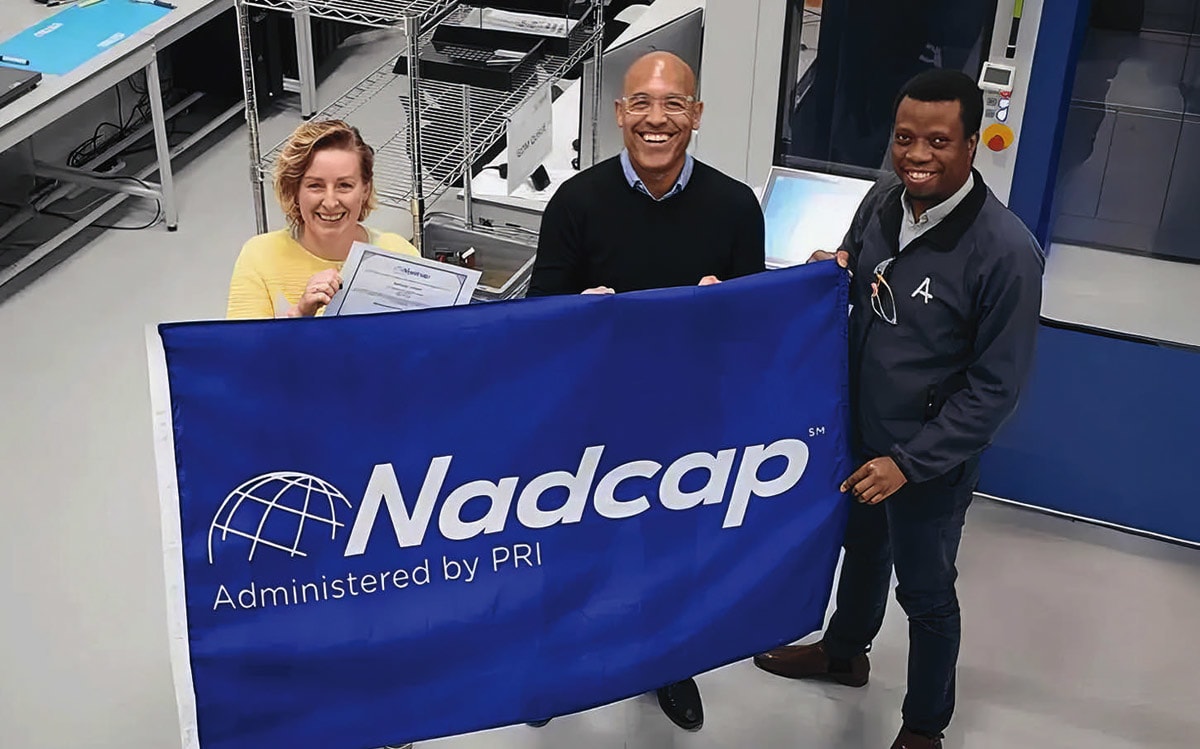
“Our Nadcap certification shows customers that every new material we create adheres to the same stringent, industry-recognized quality standards as our current offerings. This certification also assures that new Arylast materials are designed, tested, and qualified under highly controlled and reliable processes. This ensures consistent performance and compliance with demanding aerospace and industrial requirements,” James said.
The Nadcap accreditation ensures their quality management system takes corrective action, minimizes risk, and improves processes, all verified by independent recurring audits. James believes the certification provides a faster route to material and sealing solution qualifications versus non-accredited competitors. While the audit validated their current systems’ performance, CDI is using the results for ongoing improvement.
“A prominent illustration is our deflashing process. The team recognized areas for improvement in efficiency and product quality during the evaluation. Consequently, CDI is investing strategically in advanced deflashing equipment that enhances throughput and overall productivity, while also delivering a more consistent and higher-quality finished product. As we progress, these enhancements will guarantee that our materials consistently meet or surpass customer expectations while upholding the stringent standards confirmed by our Nadcap certification,” James said.
Expanding Additive Manufacturing Oversight
In 2025, PRI is expanding its oversight of additive manufacturing (AM), although this critical manufacturing process is nothing new for Nadcap. The Nadcap program first added an additive manufacturing focus to its Welding Task Group in 2014. In 2023, an Additive Manufacturing Task Group was added to the accreditation program. The group is chaired by Dave Abbott, a principal engineer at GE Aerospace and Freeman, PRI’s principal engineer.
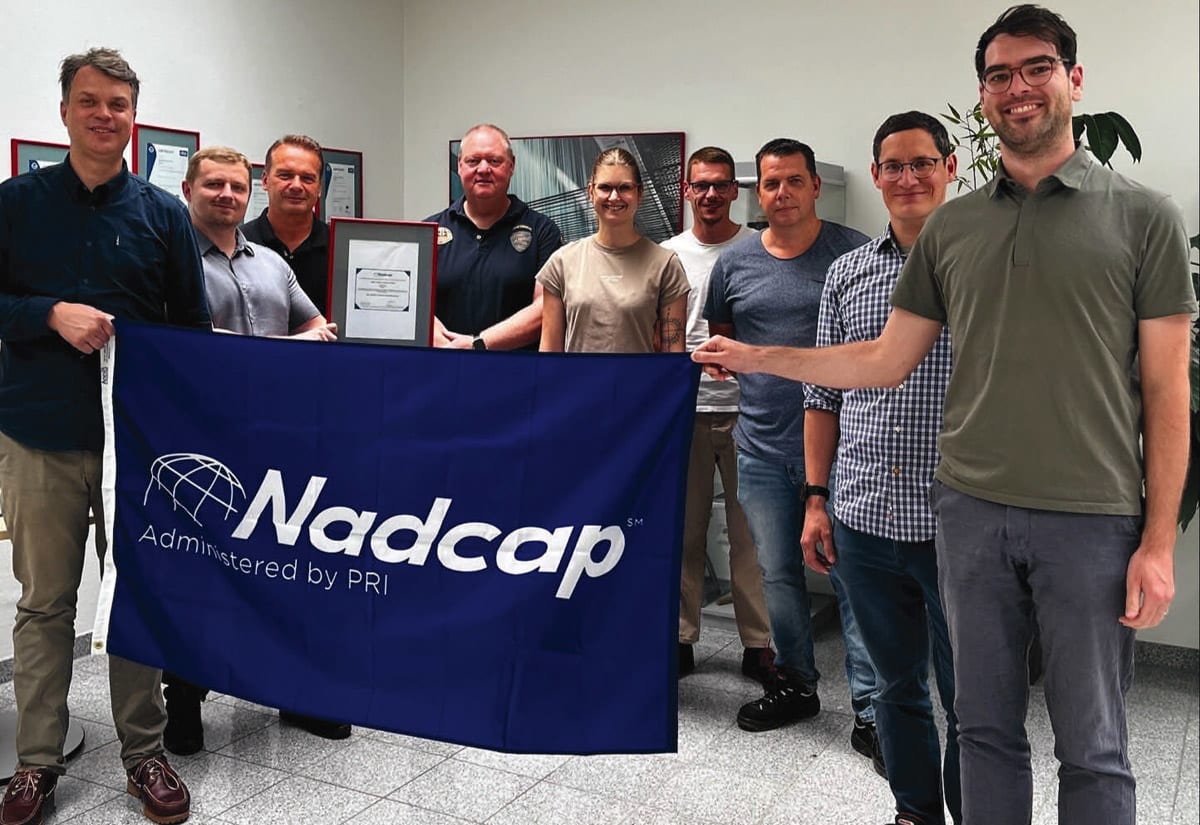
Nadcap’s AM Task Group currently covers Laser and Electron Beam Powder Bed Fusion (PBF). Powder Bed Fusion is an additive manufacturing (AM) process where a heat source, such as a laser or electron beam, fuses layers of powdered material to build parts. This process is denoted AC7131/1. A newly revised audit criteria was published for new PBF audits in August, according to an update on the PRI website. The sub-team that developed the updated Audit Criteria included GE Aerospace, GKN Aerospace, Raytheon, General Atomics, Safran, BAE Systems, Rolls-Royce, GF Additive, and Divergent Technologies. The revision reflects increasing industrial maturity and tighter process expectations, according to PRI.
PRI has also published Audit Criteria for Directed Energy Deposition (DED), denoted AC7131/2. This includes Laser powder DED, Laser wire DED, Electron beam wire DED, and Plasma-assisted and Gas Metal Arc wire DED processes. Audits will begin in October 2025, with several suppliers preparing for audits specific to DED processes. The sub-team that developed this document included Boeing, Spirit, Rolls-Royce, General Atomics, GE Aerospace, GKN Aerospace, Raytheon, Norsk Titanium, and RPM Innovations.
In the non-metallic segment, PRI is conducting its second Task Group ballot of the Audit Criteria for powder bed fusion of non-metallic materials, a 3D printing process also known as Selective Laser Sintering (SLS). This ballot is denoted AC7131/3. The sub-team responsible includes Boeing, Safran, Airbus, General Atomics, Textron, Raytheon, Leonardo, and Materialise. 3D Systems will train Additive Manufacturing (AM) auditors in the SLS process at the October 2025 Auditor Conference in Pittsburgh.
This article was written by Woodrow Bellamy III, Senior Editor, SAE Media Group (New York, NY), with material supplied by the Performance Review Institute. For more information about Nadcap, visit here .
More From SAE Media Group

Aerospace Manufacturing and Machining INSIDER
Navy Uses Stratasys F-900 to 3D Print F/A-18 Jet’s Button Plug
Aerospace Manufacturing and Machining INSIDER
Meeting the Demands of Defense Production and Sustainment Through Additive Manufacturing


Aerospace & Defense Tech Briefs
Reclaiming Readiness: Advancing US Defense Through Scalable Additive Manufacturing
Aerospace INSIDER
Boeing's New Approach to 3D Printing Solar Arrays for Satellites
Aerospace & Defense Tech Briefs
New Laser Technique Revolutionizes Ultra-High Ceramic Manufacturing for Spacecraft
Aerospace & Defense Tech Briefs
Lockheed Martin and Arconic Collaborate on 3D Printing and Advanced Aerospace Materials
Aerospace & Defense Tech Briefs
SAE International Issues First Technical Standards for Aerospace Additive Manufacturing
Aerospace Manufacturing and Machining INSIDER
How the Navy is Using Additive Manufacturing to Protect Submarine Hatch Bolts
Aerospace & Defense Tech Briefs
Additive Manufacturing: How 3D Printing Will Transform the A&D Support Chain

Aerospace Manufacturing and Machining INSIDER
Collins Opens $14 Million Aerospace Additive Manufacturing Facility in Iowa
Aerospace & Defense Tech Briefs
Norsk and SAE International Collaborate on World’s First Directed Energy Deposition Specification
Aerospace & Defense Tech Briefs
Physics-Guided Neural Network for Regularization and Learning Unbalanced Data Sets
Aerospace INSIDER
Two Startups Partner to Expand Hydrogen-Powered Drone Production
Aerospace & Defense Tech Briefs
Lasers Destroy Drones as Additive Manufacturing Builds Them
Aerospace Manufacturing and Machining INSIDER
Reclaiming Readiness: Advancing US Defense Through Scalable Additive Manufacturing
Aerospace & Defense Tech Briefs
Additive Manufacturing Adoption Up, Growing Rapidly in Aerospace
Aerospace & Defense Tech Briefs
Lifting 3D Printing to New Heights
Tech Briefs
Magazine Archives

Aerospace Manufacturing and Machining
Getting the Most Out of Industrial CT Scanning
Aerospace & Defense Tech Briefs
The F-22 Raptor Gets Its First Metallic 3D-Printed Part
Aerospace Manufacturing and Machining INSIDER
3D Printing in Combat Zones: A Paradigm Shift for Marine Corps Logistics
Aerospace Manufacturing and Machining INSIDER
3D-Printed C-17 Replacement Part Saves Thousands for Air Force
Top Stories
NewsRF & Microwave Electronics
 Microvision Aquires Luminar, Plans Relationship Restoration, Multi-industry Push
INSIDERAerospace
 A Next Generation Helmet System for Navy Pilots
INSIDERDesign
 New Raytheon and Lockheed Martin Agreements Expand Missile Defense Production
INSIDERMaterials
 How Airbus is Using w-DED to 3D Print Larger Titanium Airplane Parts
NewsPower
 Ford Announces 48-Volt Architecture for Future Electric Truck
ArticlesAR/AI

Webcasts
Electronics & Computers
 Cooling a New Generation of Aerospace and Defense Embedded...
Automotive
 Battery Abuse Testing: Pushing to Failure
Power
 A FREE Two-Day Event Dedicated to Connected Mobility
Unmanned Systems
 Quiet, Please: NVH Improvement Opportunities in the Early Design Cycle
Automotive
 Advantages of Smart Power Distribution Unit Design for Automotive &...
Energy
 Sesame Solar's Nanogrid Tech Promises Major Gains in Drone Endurance