




Boeing's New Approach to 3D Printing Solar Arrays for Satellites
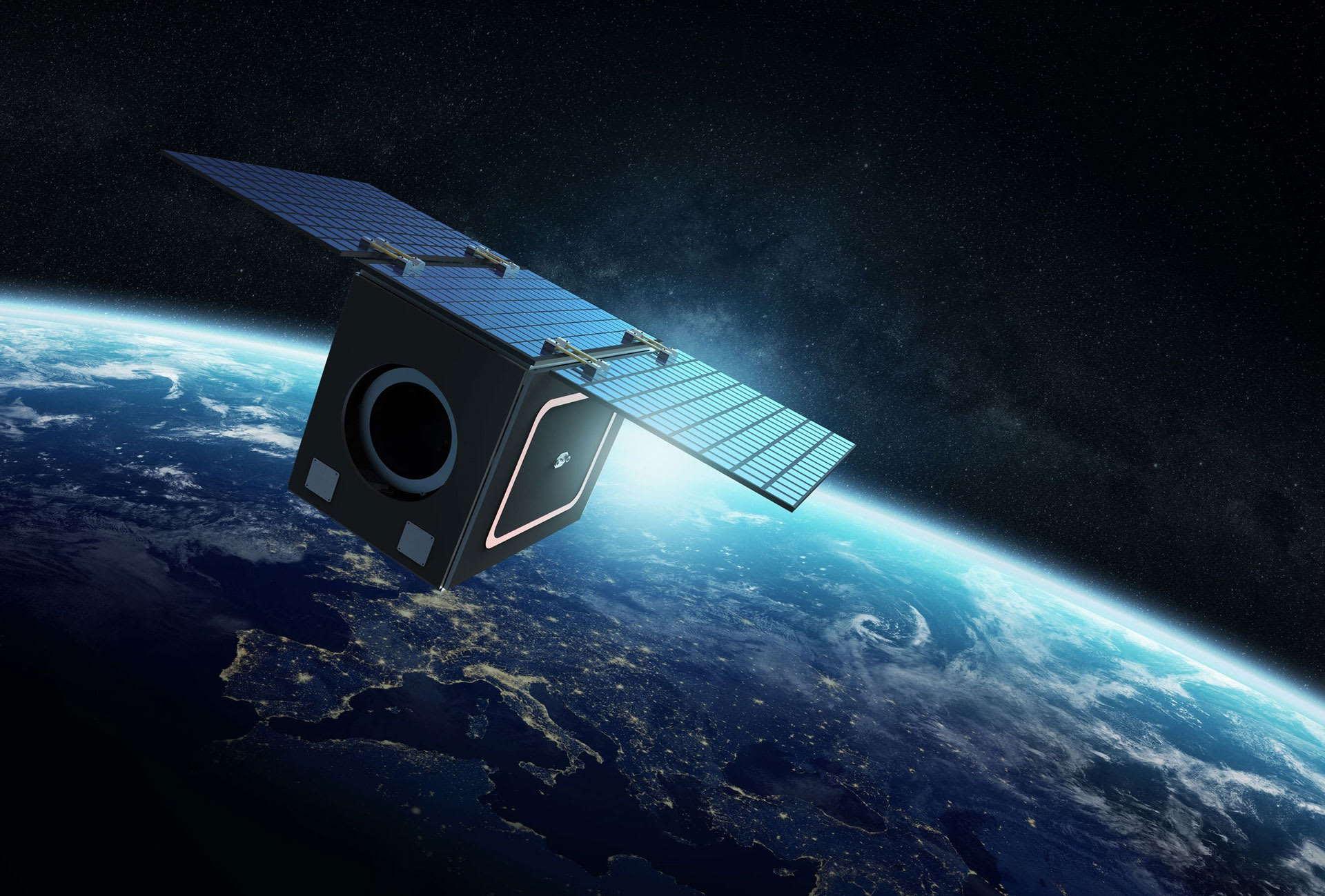
Boeing has unveiled a 3D‑printed solar array substrate approach that compresses composite build times by up to six months on a typical solar array wing program from print to final assembly. This represents a production improvement of up to 50 percent when compared to current cycle times.
Flight‑representative hardware has completed engineering testing and is progressing through Boeing's standard qualification path ahead of customer missions.
"Power sets the pace of a mission. We reached across our enterprise to introduce efficiencies and novel technologies to set a more rapid pace," said Michelle Parker, Vice President of Boeing Space Mission Systems. "By integrating Boeing's additive manufacturing expertise with Spectrolab's high‑efficiency solar tech and Millennium's high‑rate production line, our Space Mission Systems team is turning production speed into a capability, helping customers field resilient constellations faster."
The first 3D-printed solar arrays will fly Spectrolab’s solar cells aboard small satellites built by Millennium Space Systems. Both non-integrated subsidiaries are part of Boeing's Space Mission Systems organization.
Beyond the arrays themselves, Boeing's approach enables a parallel build of the complete array, pairing a printed, rigid substrate with flight-proven modular solar technologies.
By printing features such as harness paths and attachment points directly into each panel, the design replaces dozens of separate parts, long‑lead tooling, and delicate bonding steps with one strong, precise piece that is faster to build and easier to integrate. It is built upon the foundation of Boeing's qualified additive, flight-proven materials and processes.
"As we scale additive manufacturing across Boeing, we're not just taking time and cost out, we're putting performance in," said Melissa Orme, Vice President, Materials & Structures, Boeing Technology Innovation. "By pairing qualified materials with a common digital thread and high‑rate production, we can lighten structures, craft novel designs, and repeat success across programs. That's the point of enterprise additive; it delivers better parts today and the capacity to build many more of them tomorrow."
Across the Boeing portfolio, the company has incorporated more than 150,000 3D‑printed parts, yielding significant schedule, cost, and performance benefits. This includes more than 1,000 radio-frequency parts on each Wideband Global SATCOM (WGS) satellite currently in production and multiple small‑satellite product lines with fully 3D‑printed structures.
The new array approach is designed to scale from small satellites to larger platforms, including Boeing 702‑class spacecraft, targeting market availability for 2026.
By printing the panel's structure and built‑in features, Boeing can assemble the array in parallel with cell production. Robot‑assisted assembly and automated inspection at Spectrolab further reduce handoffs, improving speed and consistency.
A leading global aerospace company and top U.S. exporter, Boeing develops, manufactures and services commercial airplanes, defense products and space systems for customers in more than 150 countries. Our U.S. and global workforce and supplier base drive innovation, economic opportunity, sustainability and community impact. Boeing is committed to fostering a culture based on our core values of safety, quality and integrity.
More From SAE Media Group
Aerospace INSIDER
Boeing to Develop New Space Force Nuclear Communications Satellites
Aerospace INSIDER
Aitech’s New Palm-Sized Satellite Enables Space-Based AI Processing
Tech Briefs
Student-Built Satellite Tests 3D Printing
Aerospace & Defense Tech Briefs
In-Space Upgrade Satellite System
Aerospace & Defense Tech Briefs
Techstars and Starburst Start New Space Technology Business Accelerator

Aerospace Manufacturing and Machining INSIDER
Developing Design Tools for Outer Space Structures

NASA Spinoff
Keeping the Connection
Aerospace INSIDER
Characterizing the Performance of Variable Emissivity Materials in Space


Aerospace & Defense Tech Briefs
Pushing the Boundaries of Rapid Production of Spacecraft: Flight Results from NearSpace Launch’s TROOP and ThinSat Platforms
Aerospace INSIDER
Three Companies to Build New Multi-Orbit Logistics Prototype Spacecraft

Aerospace INSIDER
ESA’s Future Low Earth Orbit Cargo Return Service Spacecraft
NASA Spinoff
A Huge Development for Tiny Satellites

Aerospace & Defense Tech Briefs
Solar-Powered Satellite Hardware in Orbit
Tech Briefs
Robust Bus Systems for CubeSats

Aerospace & Defense Tech Briefs
A New Clean Room for Missile and Satellite Propulsion Components
Tech Briefs
3D-Printed Parts Key to NASA’s Orion Mission

Aerospace Manufacturing and Machining INSIDER
How AR, Robotics are Increasing Speed of Space Payload Manufacturing at Northrop
Tech Briefs
Building Technology to Clean Up Space

Aerospace & Defense Tech Briefs
IQSat: Aitech’s AI-Enabled Picosatellite for Earth Observation and Imaging Applications
Aerospace & Defense Tech Briefs
Orbex Debuts Innovative Smallsat Launch Vehicle
Top Stories
INSIDERManufacturing & Prototyping
 How Airbus is Using w-DED to 3D Print Larger Titanium Airplane Parts
NewsAutomotive
 Microvision Aquires Luminar, Plans Relationship Restoration, Multi-industry Push
INSIDERAerospace
 A Next Generation Helmet System for Navy Pilots
INSIDERDesign
 New Raytheon and Lockheed Martin Agreements Expand Missile Defense Production
ArticlesAR/AI
 CES 2026: Bosch is Ready to Bring AI to Your (Likely ICE-powered) Vehicle
Road ReadyDesign

Webcasts
Semiconductors & ICs
 Advantages of Smart Power Distribution Unit Design for Automotive...
Unmanned Systems
 Quiet, Please: NVH Improvement Opportunities in the Early Design...
Electronics & Computers
 Cooling a New Generation of Aerospace and Defense Embedded...
Power
 Battery Abuse Testing: Pushing to Failure
AR/AI
 A FREE Two-Day Event Dedicated to Connected Mobility
