




How the Navy is Using Additive Manufacturing to Protect Submarine Hatch Bolts

Commander, Submarine Forces is researching the usage of additive manufacturing (AM) technology to address operational needs, in collaboration with midshipmen from the U.S. Naval Academy (USNA), Submarine Squadron Two (CSS-2), Submarine Squadron Four (CSS-4), and the Portsmouth Naval Shipyard (PNSY).
CSS-4 identified a need for plastic dust caps, a material item essential for preventing dirt and debris from fouling the heads of submarine hatch tightening bolts, that was not readily available in the U.S. Navy’s supply chain system and had an acquisition time of nearly a year as of August 2024.
To address this shortfall, CSS-2’s AM team consulted with the USNA Mechanical and Nuclear Engineering Department, where Permanent Military Professor Cmdr. Jonathan “Buddy” Slager, challenged midshipmen with a goal to find a solution.
MIDN 1st Class Abby Palaia and MIDN 1st Class Carolyn Thurlby led initial efforts, with support from Slager, Lt. Derek Pomer, CSS-2, and Alex Kartaszewicz, PNSY. Their manufacturing solution landed on utilizing AM to rapidly produce end use dust caps.
This effort has already produced operational benefits, to include an increase in the completion rate of submarine maintenance tasks and the creation of technical drawings for new AM parts, for addition to the Navy’s library for maintenance and onboard operations.

“This collaboration highlights the value of partnerships between academia and the fleet,” said Vice Adm. Rob Gaucher, commander, Submarine Forces. “The Naval Academy was an obvious initial partner for us, but since launching this effort, we have seen great interest with many potential partner universities. We hope to build more partnerships that will help us get after parts obsolescence and supply chain issues to make our force more ready and more resilient.”
The project utilizes several advanced AM technologies, including Fused Deposition Modeling (FDM), Stereolithography (SLA), and Selective Laser Sintering (SLS) with specified materials, creating functional parts that are designed to meet the demands of submarine operations.
More From SAE Media Group

Defense INSIDER
3D Printing Parts for Ships, Submarines and Underwater Vehicles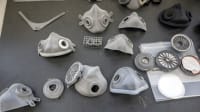
Aerospace & Defense Tech Briefs
Selective Laser Sintering System
Medical Design Briefs
Reimagining Innovation: Additive Manufacturing
Aerospace Manufacturing and Machining INSIDER
Navy Uses Stratasys F-900 to 3D Print F/A-18 Jet’s Button Plug
Automotive Engineering
Optimizing Design for Additive Manufacturing
Aerospace Manufacturing and Machining INSIDER
US Navy Taps Hunt Valve for First 3D-Printed Submarine Assemblies

Aerospace & Defense Tech Briefs
Additive Manufacturing of Small Tactical Munitions
Off-Highway Engineering
Caterpillar Eyes 3D Printing for Production Parts
Automotive Engineering
Toyota R&D Ups Its Additive Manufacturing Game
Aerospace & Defense Tech Briefs
Streamlining Post-Processing in Additive Manufacturing
Aerospace & Defense Tech Briefs
New Laser Technique Revolutionizes Ultra-High Ceramic Manufacturing for Spacecraft
Tech Briefs
Large-Volume Extruder for 3D Printers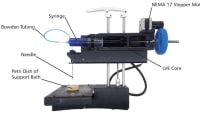
Aerospace & Defense Tech Briefs
Additive Manufacturing Adoption Up, Growing Rapidly in Aerospace
Aerospace & Defense Tech Briefs
SAE International Issues First Technical Standards for Aerospace Additive Manufacturing
Tech Briefs INSIDER
How 3D Printing Began, Layer by Layer
Aerospace & Defense Tech Briefs
3D Printing Parts for Ships, Submarines and Underwater Vehicles
Aerospace Manufacturing and Machining
Lightweighting Parts Using 3D Metal Printing
Medical Design Briefs
Winter 2022 Resource Guide
Medical Design Briefs
Summer 2022 Resource Guide

Aerospace Manufacturing and Machining INSIDER
Meeting the Demands of Defense Production and Sustainment Through Additive Manufacturing
Aerospace & Defense Tech Briefs
Additive Manufacturing Utilizing a Novel In-Line Mixing System for Design of Functionally Graded Ceramic Composites
Off-Highway Engineering
Adding 3D Printing to Design, Manufacturing Processes
Medical Design Briefs
Summer 2023 Resource Guide
Medical Design Briefs
Winter 2021 Resource Guide
Medical Design Briefs
Summer 2021 Resource Guide

Tech Briefs
3D-Printed Composites for High-Temperature Uses
Top Stories
NewsSensors/Data Acquisition
 Microvision Aquires Luminar, Plans Relationship Restoration, Multi-industry Push
INSIDERRF & Microwave Electronics
 A Next Generation Helmet System for Navy Pilots
INSIDERWeapons Systems
 New Raytheon and Lockheed Martin Agreements Expand Missile Defense Production
NewsAutomotive
 Ford Announces 48-Volt Architecture for Future Electric Truck
INSIDERAerospace
 Active Strake System Cuts Cruise Drag, Boosts Flight Efficiency
ArticlesTransportation

Webcasts
Aerospace
 Cooling a New Generation of Aerospace and Defense Embedded...
Energy
 Battery Abuse Testing: Pushing to Failure
Power
 A FREE Two-Day Event Dedicated to Connected Mobility
Automotive
 Quiet, Please: NVH Improvement Opportunities in the Early Design Cycle
Electronics & Computers
 Advantages of Smart Power Distribution Unit Design for Automotive &...
Unmanned Systems
 Sesame Solar's Nanogrid Tech Promises Major Gains in Drone Endurance