




Toyota R&D Ups Its Additive Manufacturing Game
A recent peek inside Toyota’s Michigan R&D center reveals expanding applications for additive-manufacturing (AM) technology.
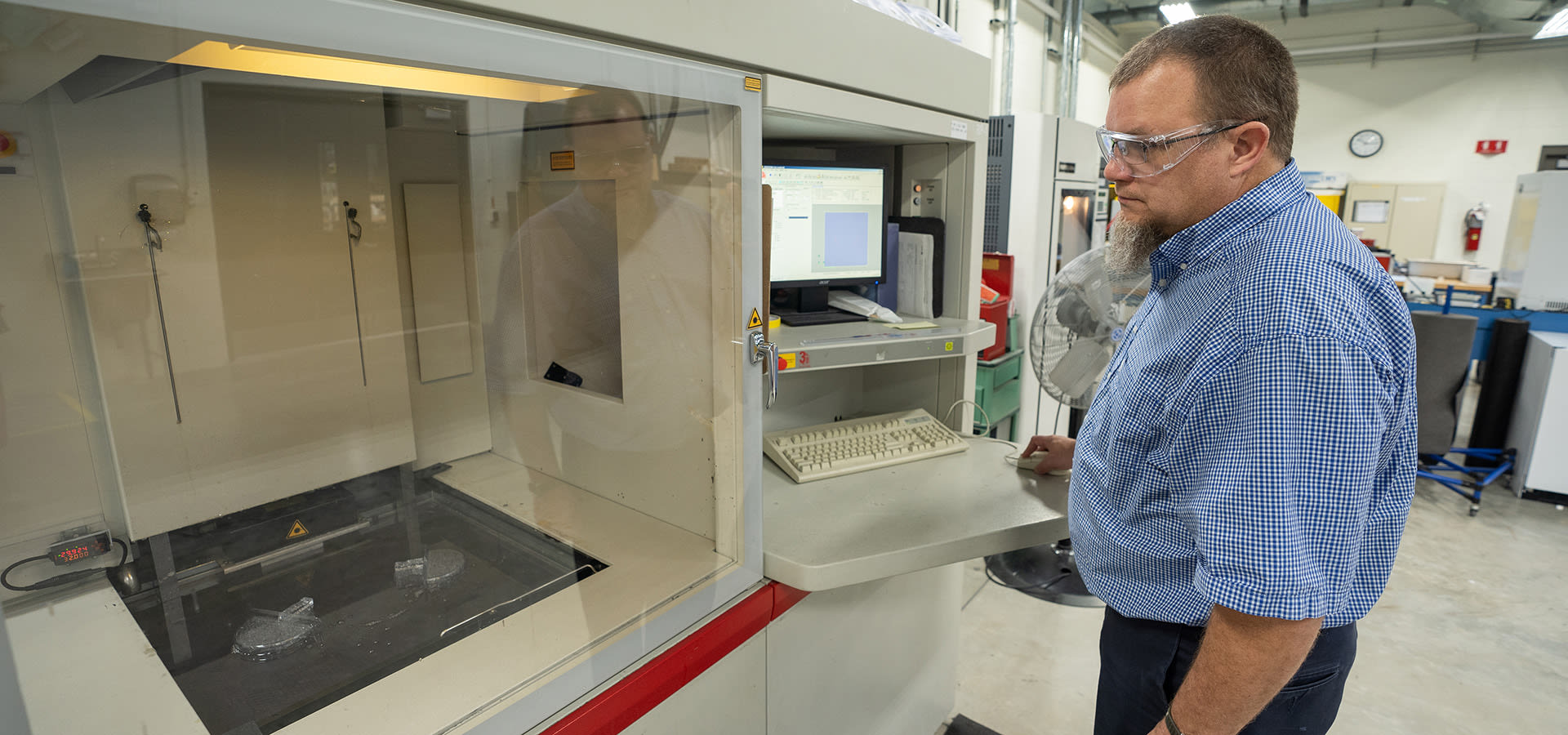
Toyota Motor North America Research & Development (TMNA R&D) in York Township, Michigan, is Toyota’s largest R&D center outside of Japan. The team there performs engineering design and prototype building, vehicle testing and evaluation, technical research, and more. Vehicles like the new 2021 Sienna minivan and the current generation Tundra pickup were developed at the center.
Not surprisingly, the TMNA team relies on additive manufacturing (AM) – the term that Toyota uses on a global level – for many of its activities. On the R&D level, however, TMNA staff also use “rapid prototyping” (RP) and “3D printing” interchangeably. The facility is outfitted with equipment from 3D Systems, EOS, Stratasys and Carbon 3D.
The additive processes performed at the center include:
- Fused deposition modeling (FDM)
- Selective laser sintering (SLS)
- Stereolithography (SLA)
- Multi-jet modeling (MJM)
- Digital light processing (DLP)
Prototype builds – scale models and full-size mock-ups for proof-of-concept – are a primary focus at TMNA. Some prototypes are used for appearance confirmation, some for functional checks and still others for workability studies. The models are used to support both traditional vehicle development projects as well as new mobility and advanced development initiatives that Toyota is undertaking.
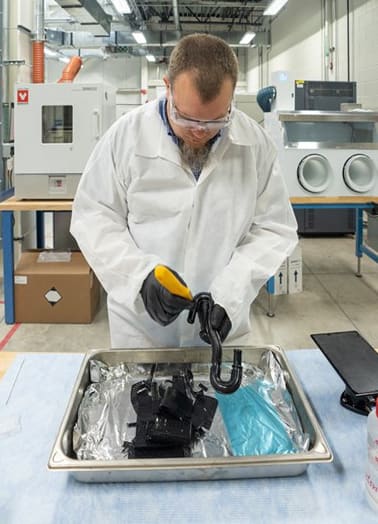
Another focus of TMNA R&D is tooling builds. An example: process jigs that are used to ensure that the vehicles’ exterior emblems are correctly assembled during pre-production trials at the facility. The jigs are then used in production operations at Toyota North America’s facilities in the U.S., Canada and Mexico.
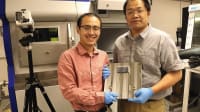
Toyota is not yet using AM to manufacture production parts (at right, Toyota engineer Matt Mahaffy is cleaning and inspecting prototype parts). The company is currently investigating and developing the means by which it could produce production parts. “At Toyota we have high standards for part performance and quality that we must consider first and foremost,” explained a Toyota R&D spokesperson. The organization is finding significant value in AM for eliminating long tooling lead times needed to produce parts early in the development cycle. It also helps address the related tooling costs associated with early builds.
Major challenges in AM applications being addressed at TMNA include matching the properties of the materials currently being used in production operations; being able to scale up additive output to support high-volume production needs; and faster processing speeds. Engineers also are seeking higher quality, lower-cost materials for use in the AM processes, the spokesperson noted.
The driver behind Toyota’s increasing use of AM was asserted by Akio Toyoda, president of Toyota Motors and grandson of the company’s founder, in his 2018 CES speech. “It’s my goal to transition Toyota from an automobile company to a mobility company,” he stated, emphasizing his determination “to create new ways to move and connect our customers across the country, across town, or just across the room.” To that end, TMNA R&D is working on advanced mobility solutions – products that are well beyond Camrys and RAV4s. The developers there say that AM capabilities are an important tool in advanced-mobility vehicle development.
More From SAE Media Group
Automotive Engineering
3D Printing Scales-Up
Automotive Engineering
Systems-engineering a New 4x4 Benchmark
Automotive Engineering
Directing GM’s 3D-Printed Future
Medical Design Briefs
As 3D Printing Grows, Compounders Become Production Partners
Medical Design Briefs
Reimagining Innovation: Additive Manufacturing
Aerospace & Defense Tech Briefs
Lockheed Martin and Arconic Collaborate on 3D Printing and Advanced Aerospace Materials
Aerospace & Defense Tech Briefs
SAE International Extends Call for Abstracts, Seeks Submissions for AeroTech Conference
Aerospace & Defense Tech Briefs
Northrop Grumman Opens Innovation Lab
Automotive Engineering
German OEMs Flex 3D Manufacturing Muscle
Automotive Engineering
Stratasys LPM Technology Marries Additive Manufacturing, Short-Run Metal Parts Production
Off-Highway Engineering
Additive Manufacturing Is Transforming Mobility Engineering, Driving the Factory of the Future
Aerospace & Defense Tech Briefs
Centre for Modelling & Simulation to Develop Digital Twins for GKN Aerospace Additive, Composite, and Industry 4.0 Technologies
Off-Highway Engineering
Bosch Invested in Large-Scale Metal 3D Printing
Medical Design Briefs
Move to Rapid Prototyping Cut Costs by Millions
Off-Highway Engineering
Adding 3D Printing to Design, Manufacturing Processes
Aerospace & Defense Tech Briefs
Reusable Rapid Prototyped Blunt-Impact Simulator
Automotive Engineering
2016 SAE Congress: Clemson University and Toyota Unveil UBox Concept
Automotive Engineering
The Haters Go After Toyota

Automotive Engineering
Toyota Improves ‘Little Things’ to Refine 2020 Highlander Manufacturing
Automotive Engineering
Cadillac's Future-Tech Flagship
Off-Highway Engineering
Caterpillar Eyes 3D Printing for Production Parts
Off-Highway Engineering
John Deere 3D-Prints Production Fuel Valves for Tractors
Medical Design Briefs
Additive Manufacturing: New Frontiers for Production and Validation
Aerospace Manufacturing and Machining
How Additive Manufacturing is Changing the Aerospace Industry
Automotive Engineering
A Divergent Approach to Vehicle Development and Production
Motion Design
IMTS2018 Preview
Medical Manufacturing and Machining
Makerspace: Rapid Prototyping Facility Offers Hands-On Learning
Tech Briefs
3D Printing: The Impact of Post-Processing
Top Stories
NewsSensors/Data Acquisition
 Microvision Aquires Luminar, Plans Relationship Restoration, Multi-industry Push
INSIDERRF & Microwave Electronics
 A Next Generation Helmet System for Navy Pilots
INSIDERWeapons Systems
 New Raytheon and Lockheed Martin Agreements Expand Missile Defense Production
NewsAutomotive
 Ford Announces 48-Volt Architecture for Future Electric Truck
INSIDERAerospace
 Active Strake System Cuts Cruise Drag, Boosts Flight Efficiency
ArticlesTransportation

Webcasts
Aerospace
 Cooling a New Generation of Aerospace and Defense Embedded...
Energy
 Battery Abuse Testing: Pushing to Failure
Power
 A FREE Two-Day Event Dedicated to Connected Mobility
Automotive
 Quiet, Please: NVH Improvement Opportunities in the Early Design Cycle
Electronics & Computers
 Advantages of Smart Power Distribution Unit Design for Automotive &...
Unmanned Systems
 Sesame Solar's Nanogrid Tech Promises Major Gains in Drone Endurance