




Switching to Comfort Mode
Switches, knobs, and touch panels evolve to reduce operator fatigue.

Programmability has become a central design element for engineers tasked with making work environments more comfortable for commercial-vehicle operators. Touchscreens continue to handle more functions, while switches, knobs, and joysticks are all becoming more versatile as embedded electronics turn them into multi-function controls.
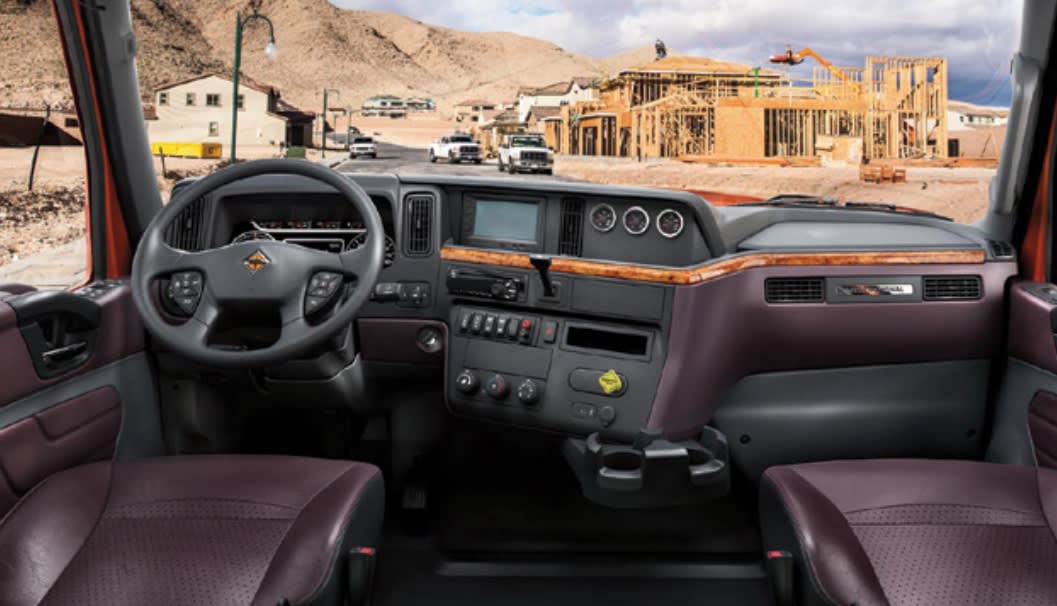
There’s a shortage of drivers in trucking and operators in off-highway, prompting a major focus on making sure that workers in both fields stay on the job. A range of control technologies play a major role in the effort to improve comfort for those who spend long hours working in cabs.
One aspect of cabin designs focuses on reducing movement by placing controls within easy reaching distance. At the same time, these controls must reduce the cognitive load on drivers and operators who are pressed to work the maximum number of permitted hours without any reduction in the quality of their work. That’s especially important in fields like construction and agriculture, where operators perform a wide range of tasks.
“In off-highway equipment, we’re seeing a shift toward integrating CAN switches, controls and keypads,” said Erik Westergaard, senior systems engineer, Integrated Solutions Development, Danfoss Power Solutions. “Traditional options would have one function, while multiple actions can be programmed into one CAN control. Now, a double tap on the switch could produce a different outcome than a single tap, for example. More functions from less controls allows cabin design to be simplified, as well.”
Integration, location
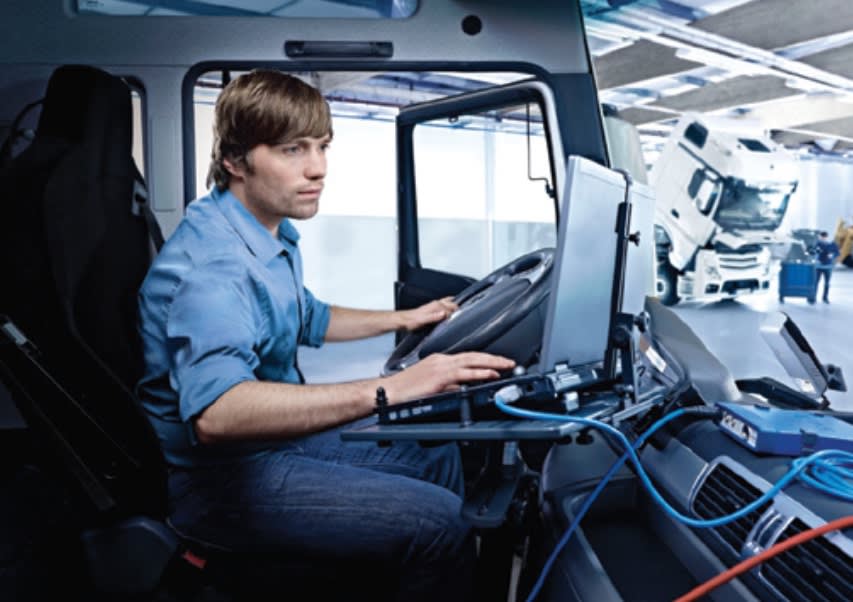
When these mechanical controls manage multiple functions, users must be able to quickly navigate to the operations they need. Menus displayed on center stack screens make it a straightforward task to get to the right functions.
“For the operation of settings in the deeper menus, you can use different input techniques like rotary pushbuttons and touchscreens, using nicknames like radio, media or phone that get users to the right settings quickly,” said Frank Bueter, product manager at IAV Automotive Engineering Inc. “For the keys at the first menu level, dedicated hardware knobs are best for working machines.”
Knobs and buttons once ruled the roost, but now they must work in tandem with touchscreens, which are ubiquitous in vehicles of all types. As they handle more functions, design teams are coming up with techniques that reduce operator movement by making them easier to reach.

“The center stack is now the focal point of the truck,” said Ryan Nagode, chief interior designer for Ram Trucks. “The screens have been pulled rearwards, coming out towards the occupant. We want to pull as much as possible close to the occupant.”
Electromechanical controls and touch-sensitive displays are part of a holistic approach that includes a range of functions, even extending outside the cab. When International Trucks unveiled its MV line at The Work Truck Show early this year, it touted a flat-panel dash that has space for up to 30 customizable switches and a digital display that has up to 15 customizable digital gauges. Together, they let operators easily control the many functions that the Class 6/7 truck can be used for.
While much of the focus was on interior design, International also moved to reduce operator fatigue by looking outside the vehicle. Optional pedestal mirrors are positioned to reduce operators’ head movements.
“Our pedestal mirrors reduce head turn 5 percent to the left and 15 percent to the right, so drivers have less head movement,” said Jeff Sass, International’s senior vice president, marketing. “If you’re driving for 10 hours, 5 percent less head movement means a lot less fatigue.”
Though reducing movement is beneficial, most commercial-vehicle designers aren’t turning to voice recognition as a way to shift movement from arms to jawbones. Voice is sometimes not effective in the comparative quiet of automotive interiors, so it can be error-prone in harsh industrial environments.
“Currently you find in the passenger-car environment a lot of voice-recognition systems with a bad level of quality,” Bueter said. “Additionally, the basic problems of the voice recognitions, you may have a very high noise level within a truck or off-highway machine cabin and very high-quality voice recognition has a very high price.”
The joy of steering
In some off-highway equipment, design engineers are turning to the joystick to reduce operator stress and discomfort. Steering wheels are being replaced by dual joysticks, letting operators rest their arms in a natural position instead of extending them to hold a steering wheel.
“The off-highway industry is moving away from traditional steering wheel control with an increase in joystick steering, especially in wheel loaders,” said Danfoss’ Westergaard. “This is possible due to electro-hydraulic controls, which allow the steering system to adjust to the application at hand while also taking operator preferences into account. Joystick steering promotes symmetrical posture — with a steering joystick to one side and a work function joystick to the other — and thereby produces less stress.”
Danfoss made its change after conducting a study with students at Aalborg University in Denmark. Researchers determined that joystick steering produced a 6 percent increase in productivity and reduced relevant muscle activity by 65 percent compared to traditional steering methods.
More From SAE Media Group
Off-Highway Engineering
Freightliner’s Medium-Duty Makeover
Off-Highway Engineering
Bosch Electrohydraulic Steering Advances Driver Assistance
Off-Highway Engineering
Touch Takes Hold, Switches Lend a Hand
Battery Technology
Advancing Battery Technology: THE 2021 BATTERY SHOW Preview
Off-Highway Engineering
Autonomous Quarry Haulage in High Demand
Off-Highway Engineering
ZM Trucks Starts Production in Fontana, California
Automotive Engineering
MAGNA Say Some Hurdles of Seat-reconfiguration System to Be Addressed by OEMs

Autonomous Vehicle Engineering
Platform-Agnostic Interface Aims to Accelerate Truck Autonomy
Off-Highway Engineering
Nikola Producing Battery-Electric Trucks, Fuel-Cell EVs Coming
Off-Highway Engineering
Over-The-Air Affair
Tech Briefs
Are In-Wheel Motor Systems Catching On?
Tech Briefs
SAE WCX™ Digital Summit Preview
Off-Highway Engineering
Removing Complexity for Autonomous Trucks
Automotive Engineering
2026 Nissan Sentra Review: Putting the Pieces Together
Automotive Engineering
Electronic Stability Control Builds the Foundation for Safer Roads
Off-Highway Engineering
Controls, Connectivity Case’s Focus for G Series Loader Updates
Tech Briefs
High-Reliability Radio Frequency MEMS Switch
Off-Highway Engineering
Komatsu Targets Productivity, Operator Comfort With New WA480-8 Wheel Loader
Off-Highway Engineering
Electrification’s Impact on Commercial-Vehicle Chassis Design
Automotive Engineering
FEV/DGE System Automates HMI Validation Process
Off-Highway Engineering
Yanmar CE Adds to Growing Compact Track Loader Segment
Autonomous Vehicle Engineering
When Steering Isn’t Steering Anymore

Sensor Technology
New Products

Off-Highway Engineering
Streamlined HMIs Do More with Less
Motion Design INSIDER
Autonomous Bus Sounds: It’s All About When, Not How
Autonomous Vehicle Engineering
Predicting the Road to Efficiency
Off-Highway Engineering
Not Quite Your Father’s Cab
Top Stories
INSIDERManufacturing & Prototyping
 How Airbus is Using w-DED to 3D Print Larger Titanium Airplane Parts
INSIDERManned Systems
 FAA to Replace Aging Network of Ground-Based Radars
NewsTransportation
 CES 2026: Bosch is Ready to Bring AI to Your (Likely ICE-powered) Vehicle
NewsSoftware
 Accelerating Down the Road to Autonomy
EditorialDesign
 DarkSky One Wants to Make the World a Darker Place
INSIDERMaterials
 Can This Self-Healing Composite Make Airplane and Spacecraft Components Last...
Webcasts
Defense
 How Sift's Unified Observability Platform Accelerates Drone Innovation
Automotive
 E/E Architecture Redefined: Building Smarter, Safer, and Scalable...
Power
 Hydrogen Engines Are Heating Up for Heavy Duty
Electronics & Computers
 Advantages of Smart Power Distribution Unit Design for Automotive...
Unmanned Systems
 Quiet, Please: NVH Improvement Opportunities in the Early Design...
