




Not Quite Your Father’s Cab
As commercial and off-highway vehicles inch closer to becoming software-defined vehicles, the UX within a cab takes on added significance.
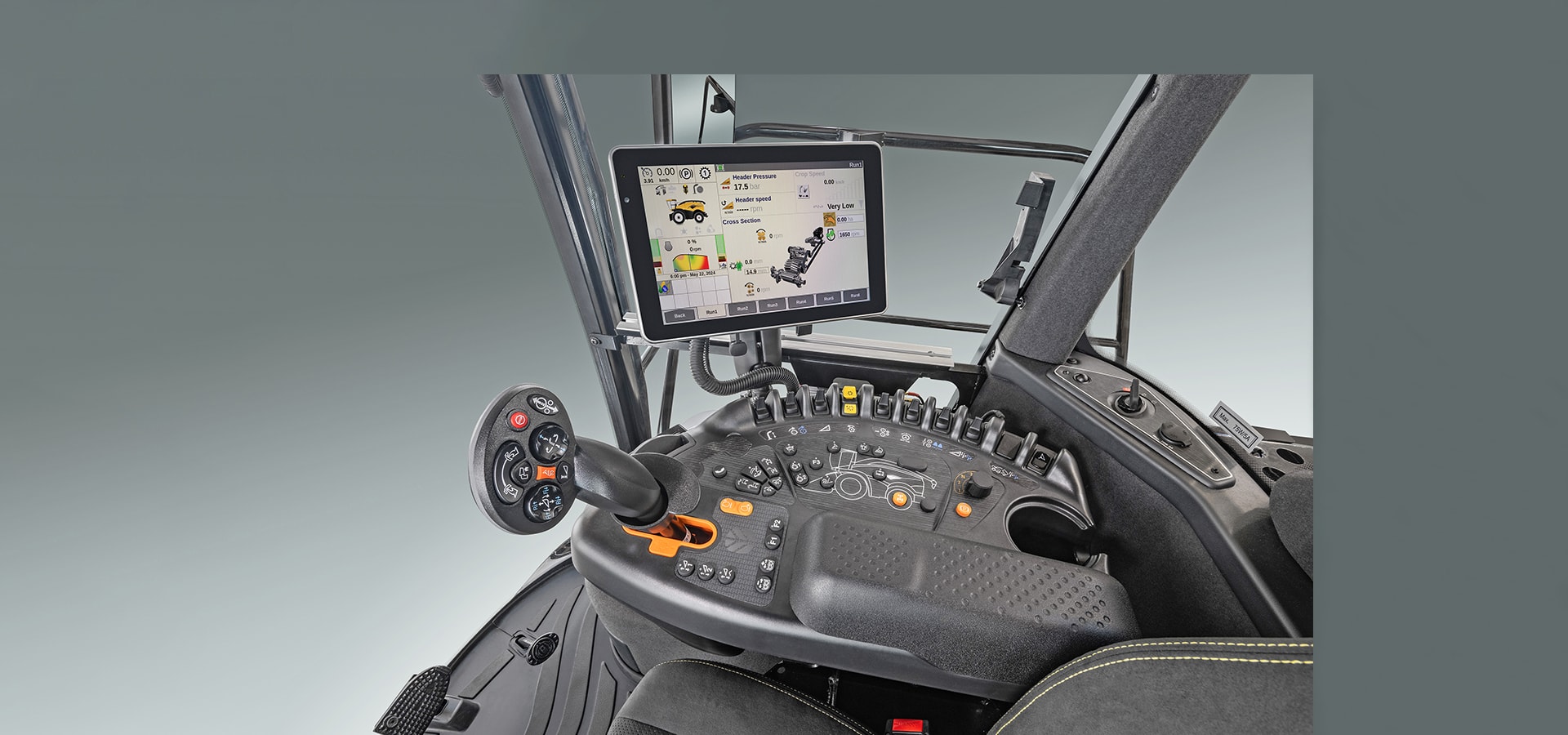
When New Holland developed its model year 2025 FR Forage Cruiser self-propelled forage harvester, the operator environment was top of mind, evidenced by the “more informative cab” leading the list of multiple upgrades for the model.

The cab interior features refined controls and electronics, including a larger (12-in vs. previous 10.4-in) IntelliView IV PLUS touchscreen display with enhanced graphics. More processing power results in a faster bootup time and improved reactivity. Engineers updated the complete electronics architecture throughout the machines to accommodate the improved responsiveness.
Of course, improving the in-cab experience in a new model-year vehicle is nothing new or extraordinary. But as commercial and off-highway vehicles inch closer to becoming software-defined vehicles (SDVs), the user experience (UX) within a cab takes on added significance. User interfaces (UI) are a crucial component of this, obviously, and can also help an OEM strengthen its brand identity.
That’s exactly what HERE Technologies set out to achieve with its CES 2025 product reveal – a variant of its HERE Navigation that’s customized to meet the demands of SDVs. The cloud-based, “AI-powered” platform reportedly offers a completely configurable UX and map design, supports larger and more immersive screens, and “seamlessly integrates” infotainment and ADAS functionalities. Its first application is on the automotive side, for Sony Honda Mobility’s Afeela brand, but such technology inevitably will find its way inside work vehicles.
And when it does, vehicle designers will have to integrate it thoughtfully. Human-machine interface (HMI) is important to consider particularly as over-the-air updates become increasingly common. An industry expert recently lamented, “Every time I get a software update [in my passenger EV], I have to look around the HMI to see where all the stuff went. We have to be really careful that we don’t do everything we possibly could just because we can. Especially for commercial vehicles, these by and large are tools used to do a job and to make money.”

Replicating a smartphone’s interfaces for touchscreens used inside vehicles may be enticing, but it may not be the best approach. Dr. Moritz Neukirchner, senior director of strategic product management for SDVs at Elektrobit, noted, “Smartphone interfaces are designed to maximize user attention, and as long as we’re not autonomously driving, that’s the wrong way. Whatever interface we introduce it must be context aware, so it must understand what the surroundings of the vehicle are, what the operation mode of the vehicle is, and it must be intent driven.”
Transformation inside cabs is afoot, but I’m reminded of one of my first assignments in the off-highway sector – attending the launch of Caterpillar’s first motor grader that replaced the steering wheel and levers with two electrohydraulic joysticks to control the machine. This “UI shakeup,” which occurred in 2006 with the M Series motor graders, was said to reduce the operator’s hand and wrist movements by more than 80%. I recall the impetus was an aging workforce and operator shortages (challenges still) – and thus an appeal to a younger generation who grew up playing video games and was accustomed to joystick-and-button controls.
Nearly 20 years later, Caterpillar still offers “lever models” for its motor graders. It’s a reminder that while in-cab innovations continue to progress, and step changes do occur, a complete shift away from your father’s cab is not imminent.
More From SAE Media Group
Off-Highway Engineering
Streamlined HMIs Do More with Less
Off-Highway Engineering
UX Designers and “Engineering Chefs” Cook up Unique User Interfaces
Automotive Engineering
Ford Announces All-New SYNC 4 Connectivity Suite
Off-Highway Engineering
Argus Cyber Security Responds Quickly to New Threats Via Over-The-Air Updates
Off-Highway Engineering
COMVEC 2022: Hiring Talent to Meet High-Tech Demands
Automotive Engineering
CES 2024: VW, Cerence Integrate ChatGPT in IDA Voice Assistant
Off-Highway Engineering
Security, Bandwidth Drive Over-The-Air Development
Off-Highway Engineering
Making Software-Defined Vehicles Cyber-Secure
Off-Highway Engineering
Over-The-Air Affair
Off-Highway Engineering
Softing Supports a Standardized Diagnostic Protocol

Off-Highway Engineering
Increasing Connectivity in Construction
Automotive Engineering
Closing Gap to Leverage Enhanced Computational Power for SDV Advancement
Off-Highway Engineering
Cellular-Key Solution Augments Commercial-Vehicle Security
Off-Highway Engineering
CrossControl Advances Virtual Fencing and Object Detection
Autonomous Vehicle Engineering
Deere Touts Software, AI Tech at CES
Automotive Engineering
CES 2021: Bosch Consolidates Computing Talent in New Mobility Division
Automotive Engineering
Bosch Debuts First Motorcycle Split-Screen Display
Automotive Engineering
Defrosting Tech Saves EV Battery Energy
Automotive Engineering
Cybersecurity Firm Enlists AI in Battle as Threats Increase
Automotive Engineering
BlackBerry’s CTO Points to a Holistic and Standards-Based Future for Vehicle Cybersecurity
Off-Highway Engineering
Mentor Design Tool Simplifies J1939 Development
Autonomous Vehicle Engineering
Sly HMI
Automotive Engineering
Volvo EX90 Uses AI, NVIDIA SoC to Make Automated Driving Safer
Automotive Engineering
ZF Builds Its Computational-Power Assets
Automotive Engineering
Continental’s New CTO to Lead Retooled R&D Pillar
Off-Highway Engineering
Securing CAN Networks in Commercial Vehicles
Automotive Engineering
Talking SDVs and Zonal Architecture with TE Connectivity
Off-Highway Engineering
Software's Growth Shines Spotlight on Eliminating Defects
Off-Highway Engineering
Upstream Devoted to Truck Cybersecurity Threats
Top Stories
NewsRF & Microwave Electronics
 Microvision Aquires Luminar, Plans Relationship Restoration, Multi-industry Push
INSIDERAerospace
 A Next Generation Helmet System for Navy Pilots
INSIDERDesign
 New Raytheon and Lockheed Martin Agreements Expand Missile Defense Production
INSIDERMaterials
 How Airbus is Using w-DED to 3D Print Larger Titanium Airplane Parts
NewsPower
 Ford Announces 48-Volt Architecture for Future Electric Truck
ArticlesAR/AI

Webcasts
Electronics & Computers
 Cooling a New Generation of Aerospace and Defense Embedded...
Automotive
 Battery Abuse Testing: Pushing to Failure
Power
 A FREE Two-Day Event Dedicated to Connected Mobility
Unmanned Systems
 Quiet, Please: NVH Improvement Opportunities in the Early Design Cycle
Automotive
 Advantages of Smart Power Distribution Unit Design for Automotive &...
Energy
 Sesame Solar's Nanogrid Tech Promises Major Gains in Drone Endurance